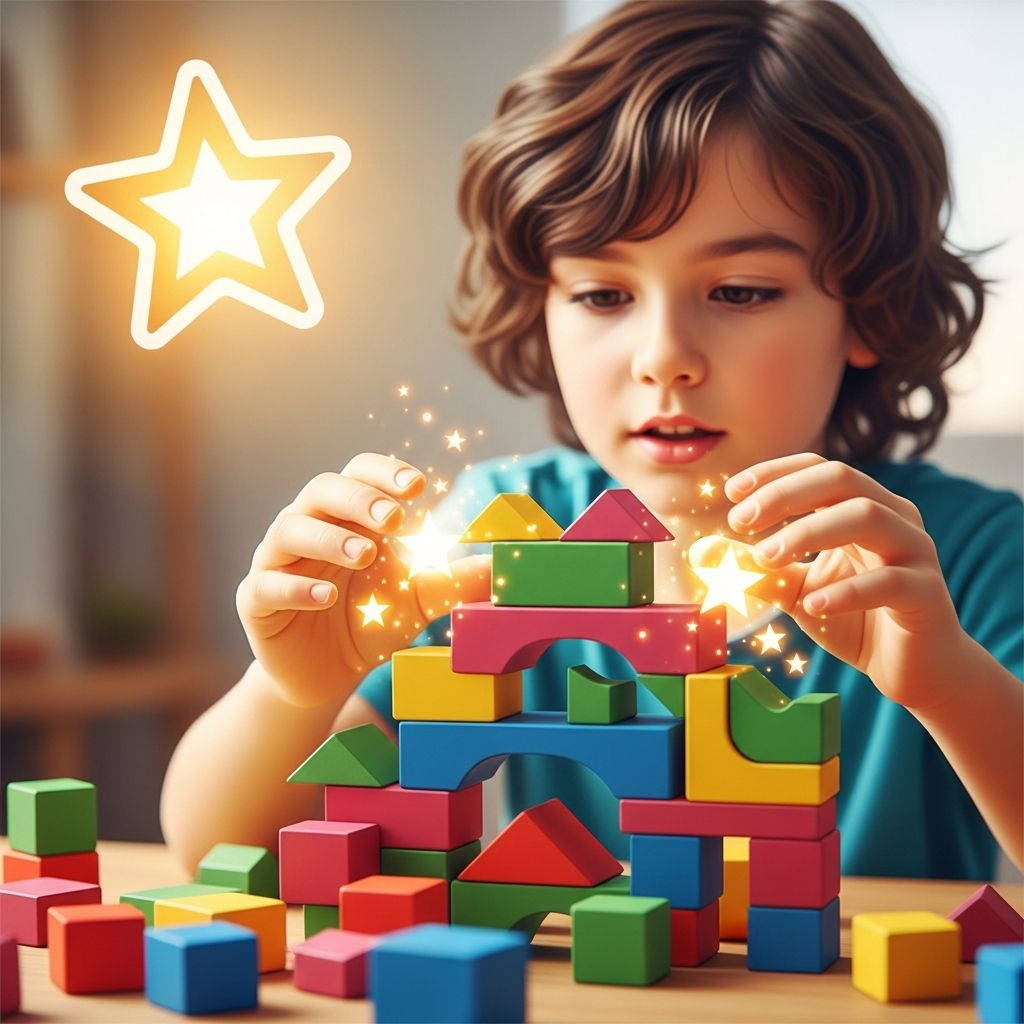
Construction toys like building blocks, magnetic sets, and engineering kits transform simple playtime into powerful learning experiences. These hands-on tools immerse children in **STEM** principles—science, technology, engineering, and mathematics—while sharpening essential life skills from an early age.
Unlike passive screen time, construction play demands active engagement, encouraging kids to experiment, fail, iterate, and succeed. This process mirrors real-world problem-solving, laying a foundation for academic success and innovative thinking. Parents often notice immediate improvements in focus, confidence, and creativity as children stack, connect, and create.
The Science Behind Hands-On Construction Play
Research highlights how manipulative play with construction toys strengthens neural pathways associated with executive function, spatial reasoning, and logical thinking. When children manipulate pieces to form stable structures, they practice planning sequences, predicting outcomes, and adjusting strategies—core elements of cognitive growth.
For instance, assembling a tower requires balancing height against stability, teaching physics basics like gravity and leverage without lectures. This tactile exploration makes abstract concepts concrete, enhancing retention and understanding far beyond traditional teaching methods.
- Cognitive Boost: Enhances working memory as kids hold multiple steps in mind.
- Spatial Mastery: Improves visualization of 3D forms from 2D plans.
- Resilience Building: Teaches perseverance through trial-and-error cycles.
Key Developmental Milestones Unlocked by Building Toys
Construction toys target multiple growth areas simultaneously, making them ideal for holistic child development. From infancy to tween years, these toys adapt to evolving abilities, providing challenges that grow with the child.
Enhancing Fine and Gross Motor Abilities
Snapping blocks together hones fine motor precision, while constructing large-scale models develops gross motor control and coordination. These activities strengthen hand muscles, improve dexterity, and foster body awareness—prerequisites for writing, sports, and daily tasks.
Children as young as 18 months benefit, progressing from stacking to intricate designs that demand steady hands and keen eye coordination.
Fostering Creativity and Imagination
Open-ended construction sets free children from rigid instructions, sparking boundless invention. A single set of blocks can become a castle, spaceship, or cityscape, promoting divergent thinking and artistic expression.
This unstructured play counters the limits of digital games, allowing kids to author their own narratives and solutions, which research links to higher innovation potential later in life.
Problem-Solving and Critical Thinking in Action
At the heart of construction toys lies their power to cultivate problem-solvers. Faced with a wobbly bridge or collapsing arch, children must diagnose issues, hypothesize fixes, and test repeatedly—a miniature scientific method.
| Challenge Type | Skill Developed | Example Activity |
|---|---|---|
| Structural Stability | Engineering Basics | Building a tower that withstands shaking |
| Connection Mechanics | Critical Analysis | Linking magnetic pieces without gaps |
| Optimization | Iteration | Redesigning for taller, stronger builds |
These experiences build confidence as kids witness their ideas materialize, turning ‘I can’t’ into ‘I figured it out.’ Over time, this mindset transfers to schoolwork and beyond.
Social and Emotional Growth Through Collaborative Builds
Group construction play turns solo tinkering into teamwork triumphs. Siblings or friends negotiate designs, share pieces, and compromise on visions, learning empathy, communication, and conflict resolution organically.
- Teamwork: Dividing roles like architect and builder.
- Communication: Verbalizing ideas to align group efforts.
- Emotional Regulation: Handling disappointments when plans change.
Such interactions mirror future workplaces, preparing children for collaborative environments while boosting self-esteem through shared successes.
Language Expansion and Storytelling Skills
Describing a creation aloud—’This is the rocket’s booster for extra power!’—expands vocabulary and narrative abilities. Construction toys prompt questions, explanations, and storytelling, enriching language centers in the developing brain.
Parents can amplify this by asking open-ended queries: ‘Why did you choose that shape?’ or ‘What happens if we add wheels?’ These dialogues enhance expressive skills and critical reflection.
Age-Specific Benefits: From Toddlers to Tweens
Selecting the right construction toy ensures sustained engagement across stages.
- Toddlers (1-3 years): Large, soft blocks for basic stacking and knocking down, building cause-effect understanding.
- Preschoolers (3-5 years): Interlocking sets introducing colors, shapes, and simple patterns.
- School-Age (6-8 years): Complex kits with gears, axles, and instructions for proto-engineering.
- Tweens (9+ years): Advanced modular systems for robotics or architectural models.
This scalability makes construction toys a long-term investment in learning.
Bridging Play to Classroom Success
Early construction play primes children for formal education by instilling focus, following multi-step directions, and sustaining attention—key predictors of academic performance. Studies show kids with strong spatial skills from building toys excel in math and science.
Moreover, the joy of play reduces learning anxiety, making school feel like an extension of fun rather than a chore.
Choosing the Best Construction Toys for Maximum Impact
Not all building sets are equal. Prioritize durable, expandable systems with diverse pieces for versatility. Look for non-toxic materials, clear age guidelines, and expandability to avoid quick outgrowing.
Opt for toys promoting open play over app-dependent ones to maximize unguided creativity. Magnetic connectors add ease for younger users, while snap-fit blocks challenge dexterity.
Real Parent Stories: Transformations Through Building
Many families report profound changes. One parent shared how their reluctant learner built confidence solving block puzzles, later tackling math homework eagerly. Another noted improved sibling bonds during joint fortress builds, reducing conflicts.
These anecdotes align with evidence: consistent play yields measurable gains in executive function and social competence.
Frequently Asked Questions
What age is best to start with construction toys?
From 12-18 months with oversized, soft pieces, scaling up complexity as motor skills develop. Always supervise young toddlers.
Do construction toys really improve STEM skills?
Yes, through practical application of physics, geometry, and logic, fostering interest and aptitude in these fields.
Are expensive kits worth it over basic blocks?
Basic blocks offer endless value for imagination; premium kits add specialized challenges like motors for advanced learning.
Can construction play help shy children?
Absolutely—success in building boosts self-esteem, while group play encourages social outreach gradually.
How much daily play is ideal?
20-45 minutes suffices for benefits, ideally daily, balancing with other activities for well-rounded growth.
References
- Child Mind Institute – Learning & Development — Child Mind Institute. 2023-06-15. https://childmind.org/article/learning-development-stem-toys/
- Benefits of STEM Toys for Kids: Building Skills Through Play — Engino. 2024-02-10. https://engino.com/collections/benefits-of-stem-toys-for-kids-building-skills-through-play
- Benefits of STEAM Toys for Kids — Clixo. 2024-01-22. https://clixo.com/blogs/classroom-blog/benefits-of-steam-toys-for-kids
- What Are S.T.E.M Toys and Why They Matter for Your Child’s Growth — Tiny Learns. 2023-11-05. https://tinylearns.com/blogs/learn/what-are-stem-learning-toys
- Benefits Of Using STEM Toys In The Classroom — Matatalab. 2024-03-18. https://matatalab.com/en/node/280