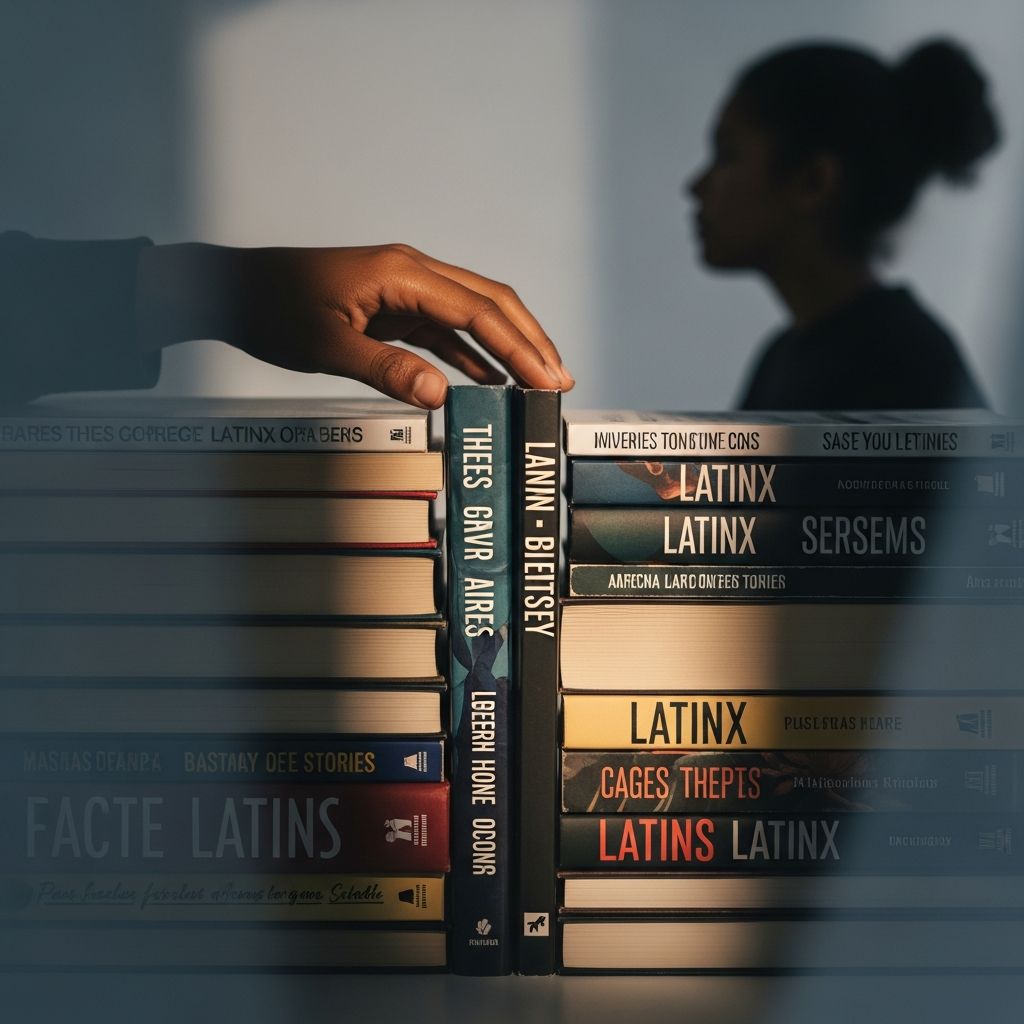
Recent surges in book challenges across U.S. schools have disproportionately affected literature featuring Latinx experiences, erasing vital narratives that help young people build identity and empathy. This censorship not only limits access to diverse stories but also perpetuates underrepresentation in education.
The Alarming Rise of Educational Censorship
Book bans have reached record levels, with the American Library Association reporting over 4,000 instances in the first half of the 2023-2024 school year alone—nearly double the previous year’s figures. PEN America data highlights activity in 42 states, led by Florida, Texas, and Wisconsin, driven by both legislation and groups like Moms for Liberty. These efforts often target books without public input, pulling titles from shelves abruptly and reshaping library collections.
For Latinx students, this trend compounds historical underrepresentation. A study in the Quarterly Journal of Economics analyzed children’s books from 1923-2019, finding only 4% featured Latinx characters, underscoring how bans further diminish scarce resources for cultural reflection.
Erasing Latinx Voices in Literature
Latinx-authored books and those depicting Latinx themes face heightened scrutiny, forming part of the 47% of targeted titles by or about BIPOC and LGBTQ+ communities. Teachers College at Columbia University notes that post-2022’s 38% ban increase, most removals involved works by people of color. This pattern echoes past suppressions, like 19th-century efforts against abolitionist texts, signaling a recurring tactic to control narratives around race and identity.
Examples include memoirs and novels exploring immigration, family heritage, and cultural duality—stories essential for Latinx youth navigating dual worlds. Removing them silences personal histories, making students feel invisible in their own education.
Psychological Toll on Latinx Students
Without books mirroring their lives, Latinx youth experience isolation, impacting mental health and self-esteem. Research shows representation fosters resilience; its absence heightens vulnerability to anxiety and disconnection. Marginalized students already engage less with non-reflective content, and bans strip away rare validating choices, hindering empathy development across all students.
- Identity Formation: Books validate heritage, reducing alienation.
- Mental Health Risks: Lack of mirrors correlates with higher stress levels.
- Empathy Gaps: Peers miss windows into Latinx realities, breeding misunderstandings.
Broader Ramifications for School Diversity
Bans extend beyond Latinx texts to any challenging ‘traditional’ views, enforcing narrow worldviews. Beacon Press documents how such actions uphold supremacist ideologies by distorting history and lived experiences. Libraries, key for literacy, face ‘wholesale bans’ emptying shelves, with threats against staff fostering self-censorship—untrackable but pervasive.
In Latinx-heavy districts, this sabotages goals of inclusive education, where texts on racism and migration are crucial. Students lose tools for critical thinking, threatening democratic discourse.
| Impact Area | Description | Data Insight |
|---|---|---|
| Latinx Representation | Scarce characters in kids’ books | 4% Latinx in 1923-2019 titles |
| Ban Targets | Books by POC/LGBTQ+ | 47% of challenges |
| Geographic Spread | 42 states affected | Top: FL, TX, WI |
| Psychological Effect | Isolation for marginalized youth | Disproportionate harm |
Historical Context of Cultural Suppression
Book censorship against minority voices isn’t new; it mirrors efforts to bury narratives of resistance. Today, it intersects with laws mandating scrutiny of all titles, punishing non-compliance and chilling educators. For Latinx communities, this revives traumas of assimilation pressures, where language and stories were policed to fit dominant molds.
Lehigh University scholars argue denying past knowledge stakes future justice, as youth can’t envision equity without historical reckonings.
Community and Educator Responses
Resistance grows through read-ins, clubs, and advocacy. Kentucky’s Lexington Public Library launched teen banned book clubs during Banned Books Week 2022, empowering youth to discuss challenged works. Successes like retaining Gender Queer in Jefferson County schools cite literary value, offering models.
Educators face backlash but persist; supporters urge thanking librarians amid criticism. Connecting with locals on governance equips students to influence policy.
Strategies for Families and Advocates
Latinx families can counter by:
- Organizing home reading groups with diverse titles.
- Attending school board meetings to voice support.
- Partnering with libraries for uncensored access.
- Promoting authors via social media and purchases.
Broader action includes voting for pro-literacy officials and supporting ALA/PEN America trackers.
Frequently Asked Questions
Why are Latinx books disproportionately banned?
They often address immigration, identity, and history, challenging dominant narratives; 30% of 2022-2023 bans involved race/racism themes.
How do book bans affect non-Latinx students?
They limit exposure to diverse perspectives, stunting empathy and global understanding.
What can parents do to fight bans?
Review challenged lists, attend hearings, and donate diverse books to school libraries.
Are bans only in certain states?
No, 42 states report surges, bipartisan in impact.
Do bans improve education?
No evidence supports this; they shelter students from real-world complexities.
Path Forward: Reclaiming Narratives
To protect Latinx stories, coalitions must amplify voices, challenge laws, and affirm literature’s role in democracy. Sustained advocacy ensures youth access mirrors and windows, building inclusive futures.
References
- Educational Censorship: Book Bans and Their Impact on Student Identity Expression — YIP Institute. 2024. https://yipinstitute.org/policy/educational-censorship-impact-on-student-identity-expression
- The Impact of Book Bans — Lehigh University News. 2023. https://news.lehigh.edu/the-impact-of-book-bans
- A War Beyond Words: How book bans perpetuate the underrepresentation of vulnerable communities — KSVT. 2023. https://www.ksvt.org/article/a-war-beyond-words-how-book-bans-perpetuate-the-underrepresentation-of-vulnerable-communities
- Book Bans are Threatening Communities — Beacon Press. 2023-08. https://www.beacon.org/Assets/PDFs/BookBanningResources_August2023.pdf
- Books heal, censorship steals — Latinitas Magazine. 2023. https://latinitasmagazine.org/books-heal-censorship-steals/