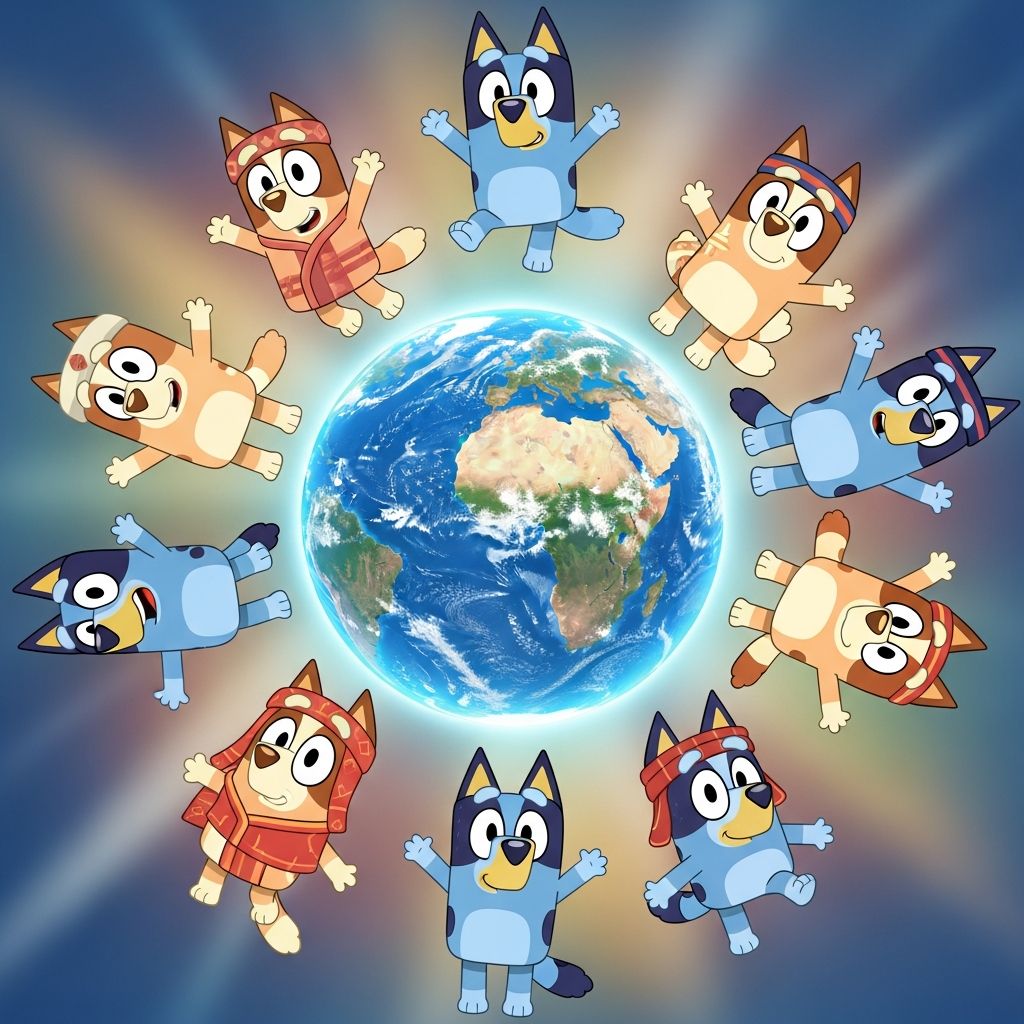
The Worldwide Journey of Bluey: Character Transformations Across Borders
The Australian animated series Bluey has become a phenomenon that transcends geographical boundaries and cultural differences. As the show has expanded to international markets, the characters that Australian audiences know and love have undergone fascinating transformations. These adaptations go far beyond simple subtitle translations—they involve deliberate character reimagining, voice recast decisions, and sometimes even gender alterations to align with local preferences and cultural sensibilities. Understanding these global variations reveals how media companies approach the delicate balance between maintaining creative integrity and respecting diverse audience expectations.
Understanding Localization in Children’s Animation
Localization represents far more than straightforward translation work. When broadcasters and streaming platforms bring international content to new markets, they engage in a comprehensive process that includes selecting voice talent, adapting dialogue for cultural relevance, and sometimes restructuring narrative elements to resonate with regional audiences. For a children’s program like Bluey, which emphasizes family dynamics and childhood experiences, localization teams must ensure that core emotional messages remain intact while presenting characters in ways that feel authentic to viewers in each territory.
The decision to modify character names exemplifies this nuanced approach. A name that sounds natural and culturally appropriate in Australia might require adjustment for Japanese, Spanish, or German audiences. Similarly, voice actors bring distinct interpretations to characters based on their cultural context and linguistic capabilities, influencing how audiences perceive personality traits and emotional depth.
Character Identity Shifts: Names That Tell Stories
One of the most visible aspects of international adaptation involves character nomenclature. The Heeler family and supporting cast members receive localized names in various countries, reflecting linguistic patterns and cultural naming conventions specific to each region. These aren’t random substitutions but carefully considered choices that help young viewers form immediate connections with characters.
For primary characters like Bluey, the core identity typically remains recognizable, though some versions may emphasize different aspects of the character’s full name. Supporting characters sometimes receive entirely new names that better suit regional audiences. This practice extends to secondary cast members and one-off characters who appear throughout the series, each receiving treatment appropriate to their story significance and screen time.
The reasoning behind these changes reflects marketing research and cultural studies conducted by localization specialists. They consider pronunciation ease, cultural associations, and whether names carry unintended meanings in target languages. A name that sounds endearing in English might carry unfortunate connotations elsewhere, making strategic renaming essential for successful market penetration.
Gender Representation Across International Versions
While Bluey and her sister Bingo maintain consistent female characterization across most versions, some international adaptations have explored gender variations for supporting characters. These decisions stem from different cultural approaches to representation in children’s media and varying comfort levels with character archetypes associated with specific genders.
In certain markets, animators and producers have adjusted character genders to reflect local demographic viewing patterns or educational broadcasting standards. Some regions prioritize gender-balanced casting in ensemble casts, leading to modifications in secondary character presentation. These changes demonstrate how localization extends beyond language to encompass broader cultural frameworks about representation and role modeling in children’s entertainment.
The implications of such gender variations raise interesting questions about creative adaptation. Producers must determine whether character gender materially affects storylines or personality expressions. For most Bluey characters, primary personality traits remain consistent regardless of gender presentation, though voice casting and dialogue nuances may shift accordingly.
Voice Acting and Character Personality Expression
The choice of voice actors profoundly influences how audiences perceive animated characters. Different voice talents bring distinct emotional interpretations, accent patterns, and vocal qualities that color audience understanding of personality. A character voiced by an actor with particular regional accent characteristics in one market might receive a completely different vocal presentation elsewhere.
Voice acting decisions in localized versions often reflect cultural entertainment preferences. Some markets prefer naturalistic delivery that mimics conversational patterns common in that region, while others embrace more theatrical presentation styles. The tone, pacing, and emotional expression provided by voice performers can emphasize different aspects of character personality, potentially creating slightly different viewer perceptions across international markets.
Professional voice actors working on children’s programming understand the responsibility of their craft. They must balance entertainment value with age-appropriate performance while maintaining consistency throughout their character’s appearances. In localized versions, they additionally navigate the challenge of synchronizing mouth movements with dialogue, requiring technical precision alongside artistic expression.
Cultural Adaptations and Story Context
Beyond surface-level changes, some international versions incorporate cultural adjustments to storytelling elements. References to Australian customs, locations, or cultural practices might receive modification or explanation for audiences unfamiliar with Australian contexts. Similarly, humor that depends on cultural knowledge specific to Australia may require reframing to land effectively with international viewers.
The school settings, family structures, and daily activities depicted in Bluey episodes undergo subtle recalibration in certain markets. Educators and cultural consultants involved in localization ensure that depicted behaviors and social interactions align with expectations and norms in target regions. This might involve adjusting the portrayal of discipline approaches, family meal structures, or recreational activities to feel culturally coherent.
These adaptations highlight the complexity of creating universally appealing children’s content while respecting cultural diversity. Producers must identify core narrative elements that function across cultures while gracefully modifying contextual details that would otherwise create disconnect or confusion for local audiences.
The Extended Character Universe: Everyone Gets a Name
Bluey features an expansive cast that extends well beyond the primary family unit. Extended family members, school classmates, and neighborhood friends each receive character development and individual personalities. The process of localizing these numerous characters demonstrates the scale and complexity of international adaptation projects.
Supporting characters like Bluey’s cousins, her parents’ siblings, and her various friends throughout the series each require thoughtful localization decisions. While some receive only minimal changes—perhaps adjusted pronunciations or simplified naming for clarity—others undergo more comprehensive reimagining. The consistency of these adjustments across all character types reflects the professionalism and coordination required for successful international broadcasting.
This comprehensive approach extends to minor characters who appear briefly but contribute to world-building and cultural representation. Even characters with limited screen time receive localized treatment, ensuring that viewers throughout each episode experience consistent cultural and linguistic coherence.
Streaming Platforms and Multiple Simultaneous Versions
Modern streaming services maintain multiple localized versions of content, allowing viewers worldwide to access programming in their native languages and cultural contexts. This technological capacity means international audiences no longer experience significant delays in accessing new content, but they do encounter different versions optimized for their specific markets.
The infrastructure supporting these simultaneous releases requires sophisticated planning and coordination. Different voice tracks, localized graphics, and region-specific marketing materials all demand careful scheduling and quality assurance. Streaming platforms invest substantially in ensuring that each localized version meets quality standards comparable to other releases, preventing perception of inferior or hastily-produced versions.
This democratization of access to localized content has transformed how international audiences consume children’s programming. Rather than waiting for traditional broadcast windows or accepting dubbed versions with inferior production values, viewers now access professionally produced regional versions alongside original releases.
Reception and Cultural Resonance
The success of Bluey’s international expansion largely depends on how effectively these localizations resonate with target audiences. Families across different countries report strong emotional connections to the series, suggesting that localization teams have successfully preserved the emotional core while adapting surface elements. Viewer engagement metrics from various markets indicate that thoughtful adaptation strategies contribute to sustained interest and viewership loyalty.
Parents and educators in multiple countries praise Bluey for its portrayal of healthy family dynamics, problem-solving approaches, and emotional intelligence. These core elements translate effectively across cultural boundaries when accompanied by appropriate localization, demonstrating that universal themes of family connection and childhood growth can succeed worldwide with culturally respectful adaptation.
The series’ success has also influenced broader animation industry practices, with producers increasingly recognizing the value of comprehensive localization rather than minimal translation approaches. Bluey’s example demonstrates that investment in quality regional adaptation yields returns through sustained viewership and positive cultural reception.
Behind-the-Scenes Coordination and Creative Decisions
Producing multiple localized versions requires extensive coordination between original creators, localization specialists, voice actors, and regional broadcasters. This collaborative process involves careful documentation of character descriptions, personality guidelines, and story intent to ensure consistency across all versions. Localization teams receive detailed briefs about character motivations, emotional arcs, and developmental progressions to maintain coherence despite linguistic and cultural variations.
Creative decisions about adaptation intensity reflect strategic considerations about target markets. Regions with strong cultural identity and established animation industries might receive more comprehensive localization than emerging markets still building media infrastructure. Similarly, geographically proximate regions sometimes share localized versions when linguistic and cultural similarities make individualized production unnecessary.
The role of original series creators in localization varies considerably. Some maintain close involvement in adaptation decisions, while others delegate to trusted localization partners with proven expertise. Either approach can succeed when accompanied by clear communication and shared commitment to preserving the spirit of the original work.
Challenges and Controversies in Character Adaptation
International adaptation inevitably generates questions about creative integrity and representation. Some viewers express preferences for original versions, believing that localized alternatives diminish artistic intent or introduce unnecessary modifications. These discussions reflect broader cultural conversations about authenticity, adaptation, and the value of experiencing art in original versus localized forms.
Specific adaptation choices occasionally provoke debate within regional communities. Discussions about whether character gender modifications enhance or detract from representation, or whether localized names better serve inclusion or potentially dilute character distinctiveness, demonstrate the thoughtful engagement that quality programming generates. These conversations ultimately contribute to evolving industry standards and practices.
Producers balance artistic considerations with business imperatives, recognizing that international expansion requires compromise while maintaining core creative values. This balance typically satisfies majority audiences, though passionate advocates on various sides may vocalize different preferences about adaptation approaches.
The Future of Global Animation Production
Bluey’s international success suggests continued expansion of comprehensive localization practices throughout the animation industry. As streaming services compete globally and production budgets increase, investment in multiple professional localized versions becomes increasingly justified. Future productions may feature planned simultaneous localization from development stages, incorporating cultural consultation alongside creative writing.
Emerging technologies including improved lip-sync animation, neural voice synthesis, and enhanced real-time dubbing may transform localization processes, potentially accelerating production timelines while maintaining quality. However, the irreplaceable value of professional voice actors and cultural consultants suggests that human expertise will remain central to effective adaptation work.
International success stories like Bluey establish templates that producers reference when developing content for global audiences. The series demonstrates that thoughtful, comprehensive localization can enhance rather than diminish international appeal, encouraging investment in quality adaptation as standard practice rather than cost-cutting compromise.
Frequently Asked Questions
Q: Do character personalities change in localized versions of Bluey?
A: Core personality traits remain consistent, though voice acting performances and dialogue emphasis may create subtle variations in how audiences perceive character emotional expression and comedic timing.
Q: Why do some characters receive different genders in international versions?
A: Localization decisions reflect regional preferences regarding representation, casting considerations, and cultural comfort with character archetypes, though fundamental character identities typically remain recognizable.
Q: Are localized versions considered inferior to the original Australian version?
A: Professional localized versions receive comparable production investment and quality standards. Preferences between original and localized versions typically reflect personal viewing familiarity rather than objective quality differences.
Q: How long does the localization process typically take?
A: Comprehensive localization requires several months of coordination involving translation, voice recording, cultural consultation, and quality assurance, though simultaneous production timelines vary by platform and market priority.
Q: Can international audiences access the original Australian version?
A: Most streaming platforms offer original language options alongside localized versions, allowing viewers to experience both versions and compare character presentations across markets.
References
- List of Bluey characters — Wikipedia. Accessed 2026. https://en.wikipedia.org/wiki/List_of_Bluey_characters
- Bluey Official Website – Characters — BBC Studios/Ludo Studio. 2024. https://www.bluey.tv/characters/bluey/
- Bluey (TV series) — Blueypedia Wiki. Accessed 2026. https://blueypedia.fandom.com/wiki/Bluey_(TV_series)
- Animation Localization Best Practices in International Children’s Media — International Media Localization Association. 2025. Industry guidelines on character adaptation and voice casting standards.
- Global Streaming and Cultural Adaptation — Entertainment Industry Research Consortium. 2025. Analysis of localization impact on international viewership engagement.