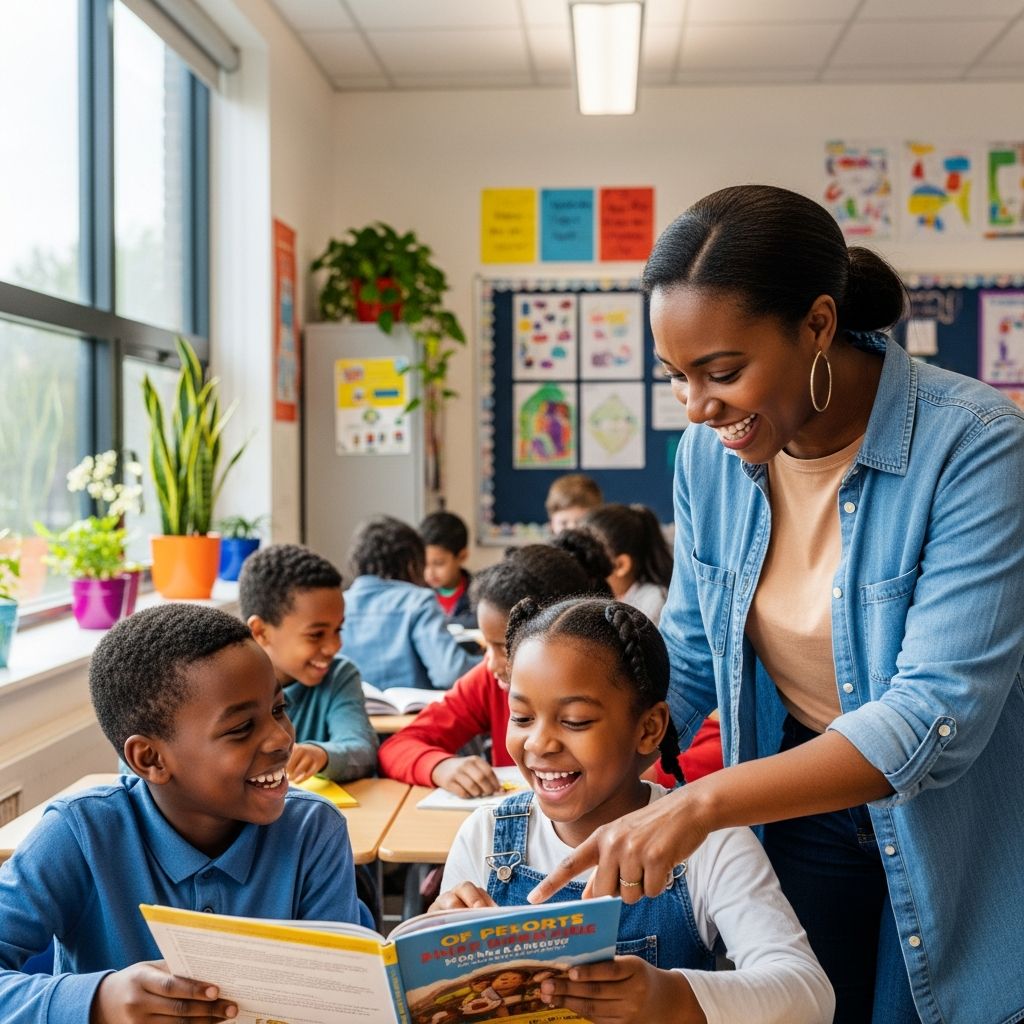
Black teachers play a pivotal role in redefining classroom dynamics by weaving cultural affirmation, high-energy activities, and unwavering belief in student potential into daily lessons. Their approaches not only captivate Black students but also model inclusive excellence for entire school communities.
The Power of Cultural Affirmation in Learning
Culturally responsive teaching forms the cornerstone of engaging Black students, emphasizing strengths rather than deficits. Educators who prioritize students’ backgrounds create environments where learners see themselves reflected in the curriculum, boosting motivation and self-efficacy.
By incorporating histories of Black excellence—such as stories of innovators, activists, and community leaders—teachers tap into students’ heritage. This ‘history and me’ method connects past triumphs to present possibilities, encouraging Black boys and girls to envision their own contributions. For instance, lessons on social justice figures can spark discussions that blend academic rigor with personal relevance, making abstract concepts tangible.
- Integrate visuals and books featuring Black protagonists to normalize diverse narratives.
- Design activities around community roles, highlighting local Black leaders.
- Encourage ‘verve’—high-energy expression—through movement-based learning like group dances or role-plays tied to historical events.
Such practices counteract disengagement caused by exclusionary materials, fostering a sense of belonging that correlates with improved attendance and achievement.
Building High Expectations with Warm Support
The ‘warm demander’ philosophy—high standards paired with relational care—distinguishes effective Black educators. This mindset communicates unshakeable faith in students’ abilities while providing scaffolds for success.
Teachers start by forging genuine relationships, learning students’ interests and cultures to tailor instruction. Clear success expectations follow, reinforced by consistent feedback and praise. Collaborative structures like pair-shares or group projects allow peer support, amplifying engagement through social interaction.
| Element of Warm Demanding | Implementation Strategy | Impact on Black Students |
|---|---|---|
| Relationship Building | Daily check-ins and interest surveys | Increased trust and participation |
| Cultural Learning | Incorporate family stories into lessons | Heightened relevance and motivation |
| High Expectations | Explicit goal-setting with rubrics | Improved self-efficacy |
| Learning Supports | Scaffolded tasks and peer tutoring | Better academic outcomes |
| Consistency | Routine classroom norms | Reduced behavioral issues |
Research shows Black teachers excel in these areas, often surpassing peers in growth mindset promotion and classroom organization, leading to broader student gains.
Infusing Energy and Movement into Lessons
Black educators harness ‘verve’—the spirited, active engagement that thrives in stimulating settings—to keep classrooms vibrant. Rather than stifling natural energy, they channel it into productive outlets like kinesthetic math games or dramatic history reenactments.
Indoor tumbling zones or outdoor challenges accommodate high-energy learners, turning potential disruptions into learning opportunities. This approach aligns with findings that physical activity enhances focus for Black boys, who often exhibit dynamic responses when intellectually excited.
- Math relays where teams solve problems to ‘win’ races.
- Science experiments with group hypotheses and explosive demos.
- Language arts through storytelling circles with call-and-response.
These methods create ‘active learning’ spaces where students hypothesize, debate, and create, respecting diverse expression styles.
Fostering Empathy and Emotional Connections
Beyond academics, Black teachers model vulnerability and empathy, inviting students to share emotions and experiences. Bidirectional listening—where educators reveal struggles and validate student feelings—builds profound trust.
Practices like morning circles for ‘having a day’ discussions normalize mental health support, equipping students with resilience tools. Cultural humility training encourages ongoing self-reflection, ensuring classrooms honor all voices.
In one approach, teachers facilitate race-conscious dialogues with open-minded guidelines, transforming tension into teachable moments. This equity-centered norming prioritizes wellbeing, yielding equitable, stimulating spaces.
Collaborative and Inclusive Classroom Designs
Group-oriented learning thrives among Black students, who benefit from peer discourse to clarify concepts. Black educators design quads, think-pair-shares, and extended projects that promote idea exchange, reducing isolation.
Diversity in leadership and restorative practices further enhances belonging. Professional development on cultural responsiveness equips all staff, while school-wide policies like empathy modeling amplify impact across ecological levels.
Role Modeling and Long-Term Impact
Black teachers serve as living proof of possibility, elevating self-efficacy through representation. Their effectiveness extends beyond measured practices, hinting at intangible benefits like inspiration and cultural mirroring.
Studies confirm same-race teaching boosts engagement universally, with Black students gaining most in motivation and persistence. Sustaining these educators requires listening to their insights, countering burnout with supportive policies.
Practical Strategies for Joyful, Equitable Schools
To replicate this magic:
- Educate continuously: Study Black histories and student lived experiences.
- Center equity: Embed wellbeing in every norm and lesson.
- Promote diversity: Advocate for inclusive hiring and PD.
- Use restoratives: Replace punishment with dialogue circles.
- Amplify strengths: Celebrate talents via showcases and portfolios.
These steps create conditions where Black students—and all—thrive, proving teachers hold the power to ignite lifelong learning.
Frequently Asked Questions (FAQs)
What makes Black teachers particularly effective with Black students?
They employ culturally responsive practices, high expectations, and role modeling, leading to greater engagement and self-efficacy.
How can any teacher adopt ‘warm demanding’?
Build relationships, learn cultures, set clear goals, provide supports, and maintain consistency while using relevant materials.
Why incorporate movement in classrooms?
It channels ‘verve,’ enhancing focus and excitement for active learners like many Black boys.
What role does empathy play in engagement?
Modeling vulnerability fosters trust and belonging, allowing emotional sharing that supports academic growth.
How do collaborative activities benefit Black students?
They leverage social learning preferences, promoting discussion and peer clarification for deeper understanding.
References
- Essential Strategies for Inclusive Teaching — ASCD. 2023. https://www.ascd.org/el/articles/essential-strategies-for-inclusive-teaching
- Black Boys Matter: Strategies for a Culturally Responsive Classroom — NAEYC. 2019-04-01. https://www.naeyc.org/resources/pubs/tyc/apr2019/strategies-culturally-responsive-classroom
- How Black Teachers Make a Difference — NCTQ. 2023. https://www.nctq.org/research-insights/how-black-teachers-make-a-difference/
- Supporting School Belonging Among Black Students — Taylor & Francis. 2025. https://www.tandfonline.com/doi/full/10.1080/10824669.2025.2545516?src=
- How to Sustain Black Educators — Harvard GSE. 2024-04. https://www.gse.harvard.edu/ideas/usable-knowledge/24/04/how-sustain-black-educators