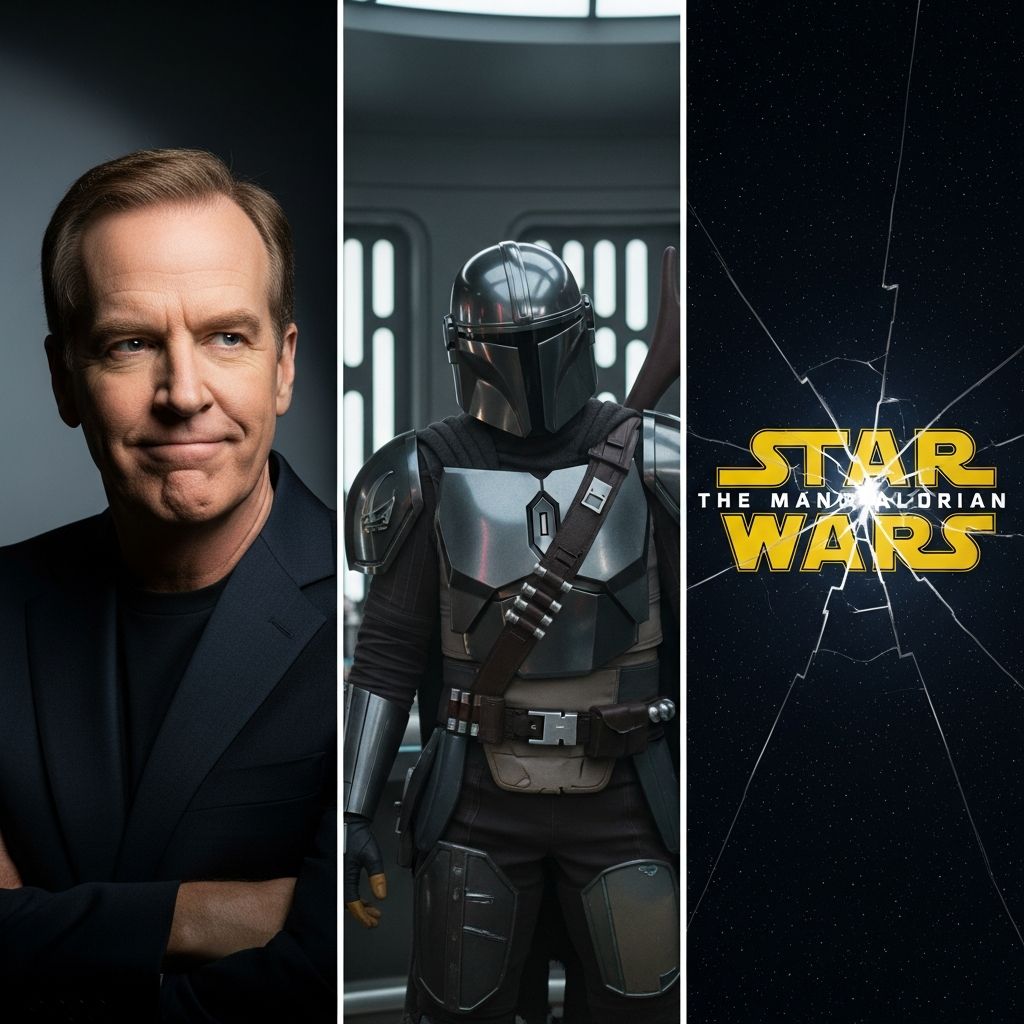
When comedian Bill Burr showed up in The Mandalorian, many fans were stunned that a guy famous for roasting pop culture had suddenly become part of the Star Wars galaxy. What followed was one of the sharpest blends of stand-up sensibility and space opera ever put on screen: a character full of cynical one-liners, a jab at stormtroopers’ terrible aim, and a pointed crack about Gungans that hit hardcore fans right in the prequels.
This article unpacks how Burr’s appearance reshaped expectations, why those jokes landed so hard, and what they reveal about the evolving relationship between Star Wars creators and their audience.
From Roast Comic to Galactic Mercenary
Before he boarded a Razor Crest, Bill Burr had built a reputation as a blunt, no-nonsense stand-up comic who often mocked blockbuster franchises and their fandoms. His inclusion in a flagship Star Wars series felt almost like a meta-prank.
On The Mandalorian, Burr plays Migs Mayfeld, an ex-Imperial sharpshooter turned mercenary. He’s not a noble Jedi, a tragic Sith, or a mythic hero. He’s something far more grounded:
- A working-class blaster-for-hire with a complicated past.
- A skeptic who mocks the mystique and seriousness surrounding Mando’s creed.
- A vehicle for commentary on both the Empire and the rebellion, without picking a side.
That everyman cynicism is precisely what makes his jokes land: he talks about the Star Wars universe the way fans talk about it with friends, not the way characters usually do inside the story.
Why Casting Bill Burr Was a Bold Star Wars Move
Bringing a high-profile comedian into a tightly curated franchise like Star Wars is not a trivial choice. Lucasfilm had already experimented with injecting modern humor and self-awareness into the saga, with mixed reactions from fans and critics. But The Mandalorian handled it differently by embedding the humor in character rather than winking at the audience.
Some reasons the casting worked so well include:
- Contrasting energy: Burr’s East Coast, contemporary delivery clashes (in a good way) with the mythic, Western tones of the show.
- Grounded perspective: Mayfeld talks like a guy who has survived too many jobs and knows every side is dirty.
- Authentic skepticism: His dismissive remarks echo real-world criticism of the franchise, turning fan commentary into in-world dialogue.
Instead of breaking the illusion, Burr’s presence underlines one of the show’s core strengths: it treats Star Wars as a lived-in universe where not everyone is awed by the Force or impressed by Mandalorian armor.
The Stormtrooper Aim Joke: Turning a Meme into Canon
For decades, fans have joked about one of the saga’s most obvious running gags: stormtroopers can’t hit anything. From missed shots in the original trilogy to notorious battles where heroes run through blaster fire unscathed, the bad-aim stereotype became a staple of fan humor.
The Mandalorian leaned into this idea by having Mayfeld and others explicitly acknowledge it, turning a long-standing in-joke into something characters themselves talk about.
Why the Bad Aim Gag Resonates So Much
The stormtrooper joke works on several levels:
- Meta recognition: It rewards longtime viewers who have noticed the pattern since the original films.
- Genre humor: It pokes at the convenient accuracy of heroes and the convenient inaccuracy of villains in action cinema.
- In-universe logic: It suggests the Empire may rely on fear, numbers, and propaganda more than real competence.
By letting Mayfeld bring this up, the show acknowledges the meme while staying in character: of course a former Imperial sharpshooter would have opinions about who can shoot straight.
Canonizing a Meme
Once a joke becomes part of canonical dialogue, it changes how fans perceive the universe. It implies that:
- The Empire’s effectiveness is not simply assumed; even insiders critique it.
- Star Wars is comfortable revisiting its own tropes rather than pretending they don’t exist.
- The line between fan commentary and franchise storytelling is thinner than ever.
This reflects a bigger trend in modern media: long-running franchises increasingly incorporate fan observations, criticism, and memes into ongoing stories.
The Gungan Crack: A Prequel-Era Pressure Point
If the stormtrooper joke is a gentle nod, the Gungan reference is a sharper elbow. Gungans, introduced in Star Wars: Episode I – The Phantom Menace, quickly became objects of controversy—especially Jar Jar Binks. For many older fans, Jar Jar symbolized what they disliked about the prequels: broad slapstick, exaggerated speech, and tonal whiplash.
When Mayfeld jokingly speculates that Mando might be a Gungan under his helmet, it hits several cultural nerves at once:
- It teases the mystery around Mando’s hidden face by suggesting the worst possible punchline, from a fan’s perspective.
- It reopens the Jar Jar discourse without ever saying his name, relying on the audience’s shared awareness.
- It signals hierarchy of coolness inside Star Wars: Mandalorian > Gungan, in Mayfeld’s worldview.
The joke lands because it doesn’t need explanation. Fans bring all their feelings about the prequels to that single word: Gungan.
How Burr’s Jokes Change the Tone of The Mandalorian
On paper, The Mandalorian is a stripped-down Western about a stoic bounty hunter and a mysterious child. Burr’s episodes add something different: a window into how regular people in the galaxy talk when heroes aren’t in the room.
His humor contributes to the show’s tone in several ways:
- Releasing tension: The quips make intense heist or infiltration scenes feel more human and less operatic.
- Exposing hypocrisy: Mayfeld calls out the moral grayness of the New Republic and the Empire alike, which deepens the political backdrop.
- Highlighting contrast: Mando’s laconic seriousness looks even more extreme when paired with Mayfeld’s chatter.
The result is a balance: the show remains respectful of Star Wars’ mythic roots, but it also allows for the kind of grounded banter audiences have come to expect from contemporary genre storytelling.
Mayfeld vs. Mando: A Character-Driven Comedy Clash
The jokes work not just because of what is said, but who is saying it to whom. The dynamic between Mayfeld and Mando is built on friction:
| Aspect | Migs Mayfeld | The Mandalorian (Din Djarin) |
|---|---|---|
| Personality | Talkative, sarcastic, cynical | Quiet, restrained, honor-bound |
| View of the galaxy | Everyone’s dirty; survival first | Code and loyalty still matter |
| Role in humor | Delivers punchlines, pokes at lore | Straight man; reacts with silence or minimal replies |
| Relationship to Star Wars tropes | Questions and mocks them | Embodies them |
This straight-man/comic pairing is a classic comedy structure. Mando’s stillness gives Burr’s lines more impact; Mayfeld’s mockery makes Mando’s code feel more deliberate and chosen, not just assumed.
Inside Jokes, Outside Fandom: Why This Matters
At first glance, these jokes seem like minor touches. But they reveal how modern Star Wars is crafted with an acute awareness of its audience’s history and debates.
Bridging Old and New Fans
The references operate on multiple levels:
- Longtime fans hear the echoes of decades of stormtrooper memes and prequel arguments.
- Casual viewers can still enjoy them as character-based teasing without deep knowledge.
- Younger audiences who grew up with the prequels may find the Gungan jab playful rather than hostile, reflecting shifting attitudes toward that era.
In other words, Burr’s lines are layered enough to mean different things to different segments of the fanbase, which is a valuable tool for a franchise trying to span multiple generations.
Comedy as Commentary on War and Loyalty
Mayfeld is more than a joke machine. His episodes underscore how humor can expose the absurdity and trauma of war. In later appearances, he confronts a former Imperial officer, and his sarcastic veneer cracks, revealing anger and guilt. This aligns with how modern television often uses humor to explore serious themes like conflict, loyalty, and survival.
Through Mayfeld, The Mandalorian suggests that:
- People who have served oppressive regimes may cope with dark experiences through sarcasm and deflection.
- Jokes about stormtrooper aim and Gungans are also jokes about institutions that fail, leaders that miscalculate, and wars that chew up ordinary people.
- Mistrust of grand causes is not just comic relief; it’s character depth.
This makes Burr’s presence not just fun, but thematically useful. His lines put a crack in the armor of Star Wars’ romantic view of rebellion and empire, without destroying it.
How Burr’s Appearance Reflects Modern Franchise Strategy
The decision to cast Bill Burr and give him meta-adjacent jokes fits into a broader trend in big franchises:
- Blending genres: Sci-fi/fantasy now routinely incorporates stand-up-style humor and naturalistic banter.
- Acknowledging criticism: Long-running series openly address fan complaints instead of ignoring them.
- Leveraging personalities: Creators use performers’ public personas to add an extra layer of meaning to their characters.
In this case, Burr’s reputation as someone who once mocked Star Wars becomes the subtext of his character arc: the outsider who ends up inside the machine, questioning it from within.
FAQs: Bill Burr, Mayfeld, and Star Wars Humor
Did Bill Burr actually dislike Star Wars before The Mandalorian?
Burr has said that he poked fun at Star Wars and its fans in his stand-up and interviews, but that it was more about observational jokes than genuine hatred for the franchise. His skepticism helped make Mayfeld feel authentic as a character who doesn’t romanticize the galaxy.
Why is the stormtrooper aim joke such a big deal?
Because it takes a long-standing fan meme about stormtroopers missing everything and acknowledges it inside the story. That blurs the boundary between viewer commentary and in-universe reality, showing that even characters notice the Empire’s flaws.
What is a Gungan, and why is it used as an insult?
Gungans are an amphibious species from the planet Naboo, introduced in The Phantom Menace. Jar Jar Binks, the most famous Gungan, sparked backlash among many fans, so calling someone a Gungan taps into that history as a playful but pointed jab.
Does this kind of humor disrespect Star Wars lore?
For many viewers, it does the opposite: it shows that the creators understand the fan conversation around the franchise and are confident enough to joke about it. Because the humor comes from characters with specific viewpoints, the universe itself isn’t undermined; instead, it feels more lived-in and diverse.
Could more comedians like Burr fit into Star Wars?
Possibly, but the key is balance. Burr works because Mayfeld’s humor grows naturally out of his background and worldview. Any future comedic roles would need the same grounding in character and story, rather than simply dropping modern stand-up routines into a galaxy far, far away.
References
- Star Wars: The Mandalorian – Production Notes — Lucasfilm. 2019-2020. https://www.starwars.com/series/the-mandalorian
- The Mandalorian Makes Bad Stormtrooper Aim Canon — Screen Rant. 2019-12-13. https://screenrant.com/mandalorian-stormtroopers-bad-aim-episode-6-joke-canon/
- Bill Burr Clears Up The ‘Misconception’ That He Hates ‘Star Wars’ — Uproxx. 2020-05-26. https://uproxx.com/tv/bill-burr-hates-star-wars-misconception-the-mandalorian/
- Star Wars: Episode I – The Phantom Menace Press Kit — Lucasfilm. 1999-05-01. https://www.starwars.com/films/star-wars-episode-i-the-phantom-menace
- Bill Burr Reveals The Unlikely Story Of How He Ended Up On The Mandalorian — GameSpot. 2020-06-09. https://www.gamespot.com/articles/bill-burr-reveals-the-unlikely-story-of-how-he-end/1100-6478274/
- Bill Burr Got ‘Mandalorian’ Part By Dissing ‘Star Wars’ on Podcasts — Cracked. 2023-08-30. https://www.cracked.com/article_41657_bill-burr-got-mandalorian-part-by-dissing-star-wars-on-podcasts.html