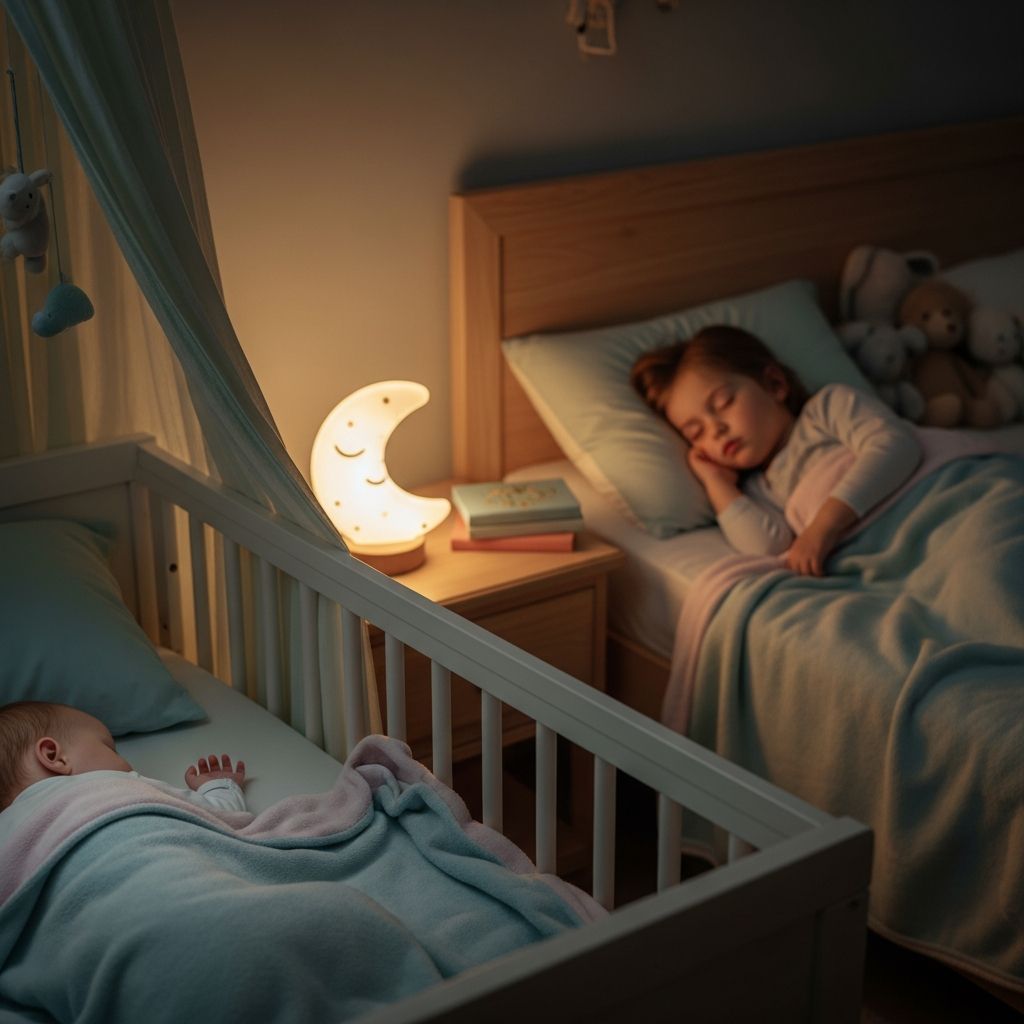
Understanding how sleep evolves from infancy through childhood is crucial for parents aiming to support their child’s growth, cognitive development, and emotional health. Children’s sleep requirements change dramatically with age, influenced by maturing brain waves, circadian rhythms, and physical milestones. This guide draws on established pediatric research to outline total sleep needs, nap frequencies, cycle structures, and practical strategies, helping families foster restorative rest.
Foundations of Infant and Child Sleep Cycles
Sleep cycles form the backbone of restful nights and days for children. Newborns experience shorter, more fragmented cycles dominated by active (REM) and quiet (NREM) phases, differing markedly from adult patterns that include four distinct stages. As infants mature, these cycles lengthen and align more closely with adult architecture, typically by age five.
In the earliest months, babies cycle through REM—marked by twitching limbs, rapid breathing, and eye movements under closed lids—and NREM, characterized by stillness and steady respiration. Newborn cycles last 20-50 minutes, prompting frequent awakenings every 1-3 hours. By three months, cycles extend, with increased quiet sleep time, paving the way for consolidated nighttime rest.
- Newborn (0-3 months): Equal REM/NREM split; 11-19 total hours daily.
- 3-6 months: More NREM; cycles grow to 40-60 minutes.
- 6+ months: Adult-like stages emerge, with deeper NREM phases.
These shifts support brain development, as REM sleep aids memory consolidation and learning.
Sleep Needs from Newborn to Toddler Years
Total sleep duration decreases gradually as children age, shifting from polyphasic (multiple naps) to biphasic or monophasic patterns. Newborns log 16-17 hours irregularly, while toddlers consolidate into longer nights with fewer naps.
| Age Group | Total Sleep (24 Hours) | Night Sleep | Daytime Naps |
|---|---|---|---|
| 0-3 Months | 14-17 hours | 8-10 hours (fragmented) | 5-7 hours (3-5 naps) |
| 3-6 Months | 12-15 hours | 9-11 hours | 2-4 hours (2-3 naps) |
| 6-12 Months | 11-16 hours | 10-12 hours | 2-4 hours (2 naps) |
| 1-2 Years | 11-14 hours | 10-12 hours | 1-3 hours (1-2 naps) |
This table synthesizes recommendations, noting variations based on individual temperament and health. By 12 months, about two-thirds of babies sleep through the night, though night wakings from teething or growth spurts persist.
Navigating Sleep in the First Year
The first year marks profound sleep maturation. From birth, babies enter drowsiness (Stage 1), progress to light sleep with startles (Stage 2), deep quiet phases (Stages 3-4), and REM. Cycles repeat every 45-60 minutes, often ending in light sleep where arousal is easiest.
At 3-6 months, infants spend more time in deeper NREM, enabling 6-8 hour stretches. Parents can aid transitions by watching cues like yawning or eye-rubbing. By 6-12 months, total sleep stabilizes at 11-16 hours, with 10-14 nighttime hours and 2-4 nap hours.
Challenges include the 4-month sleep regression, where cycles shorten amid developmental leaps, causing more wakings. Consistent bedtime routines—dim lights, white noise, feeding—help babies link cycles independently by 3-6 months.
Toddler Sleep: Balancing Naps and Nights
Toddlers (1-3 years) need 11-14 hours total, often with one nap of 1-2 hours. Night sleep dominates at 10-12 hours, but overtiredness from skipped naps leads to crankiness and resistance.
- Watch for nap transitions: Most drop to one nap by 18 months.
- Avoid naps past 3 PM to protect bedtime.
- Total awake windows: 3-4 hours between sleeps.
Sleep supports language bursts and motor skills; deficits link to behavioral issues. Teething or separation anxiety may disrupt patterns around 12-18 months.
Preschool and School-Age Sleep Essentials
By ages 3-5, children require 10-13 hours, typically sans naps, in 10-11 hour nights. Cycles fully resemble adults: 90-minute loops with NREM stages featuring sleep spindles and delta waves, followed by REM.
School-agers (6-12 years) thrive on 9-12 hours. Consistent schedules align with school, curbing bedtime battles. Screens disrupt melatonin; enforce 1-hour wind-downs.
| Age | Total Sleep | Naps | Key Tips |
|---|---|---|---|
| 3-5 Years | 10-13 hours | Rare | Fixed bedtime; active days |
| 6-12 Years | 9-12 hours | None | No screens pre-bed; routine |
These patterns foster focus and immunity.
Strategies for Optimal Child Sleep
Create a sleep sanctuary: Dark, cool (68-72°F), quiet rooms with safe sleep (back, firm mattress, no pillows under 12 months). Daytime rhythm matters—morning light sets circadian clocks.
Age-Specific Routines:
- Newborns: Feed on demand; cluster evenings.
- Infants: Dream feeds at 10-11 PM.
- Toddlers: Predictable books/baths.
Troubleshoot regressions with gentle response: Comfort without play. Track via apps for patterns. Consult pediatricians for persistent issues like snoring signaling apnea.
Common Sleep Disruptors and Fixes
Illness, travel, or milestones fragment sleep. Hunger drives wakings pre-6 months; post, soothe briefly to build self-settling. Over 70% of toddlers resist bedtimes—shorten transitions, praise calm.
Nutrition ties in: Evening carbs aid serotonin for sleep onset. Limit caffeine/juice post-noon.
Frequently Asked Questions
Why does my newborn wake every 2 hours?
Newborn cycles are 45-60 minutes, heavy on light REM, naturally causing frequent feeds and arousals for safety and growth.
When do babies sleep through the night?
Many by 3-6 months link cycles for 6-8 hours; full nights (10-12) common by 6-12 months, varying individually.
How many naps for a 9-month-old?
Typically two: Morning 1-2 hours, afternoon 1-2 hours, totaling 2-4 hours daytime.
Is it okay if my toddler skips naps?
Occasionally yes post-18 months, but consistent naps prevent overtired crashes until age 3-5.
What if my child snores or breathes oddly?
May indicate issues like allergies; monitor and seek pediatric evaluation promptly.
References
- Infant Sleep Cycles: How Are They Different From Adults? — Sleep Foundation. 2023. https://www.sleepfoundation.org/baby-sleep/baby-sleep-cycle
- The Science of Infant Sleep Cycles — Children’s Wellness Center Pediatrics. 2025-07-09. https://cwcpediatrics.com/2025/07/09/the-science-of-infant-sleep-cycles/
- Newborn Sleep Patterns — Children’s Hospital of Philadelphia. 2023. https://www.chop.edu/pages/newborn-sleep-patterns
- Understanding Baby Sleep Cycles and Phases — Pampers. 2023. https://www.pampers.com/en-us/baby/sleep/article/baby-sleep-cycles
- Baby Sleep Patterns by Age — Pregnancy Birth and Baby. 2023. https://www.pregnancybirthbaby.org.au/sleep-patterns-for-babies
- Baby Sleep Patterns — The Lullaby Trust. 2023. https://www.lullabytrust.org.uk/baby-safety/being-a-parent-or-caregiver/baby-sleep-patterns/
- Infant Sleep — Stanford Medicine Children’s Health. 2023. https://www.stanfordchildrens.org/en/topic/default?id=infant-sleep-90-P02237