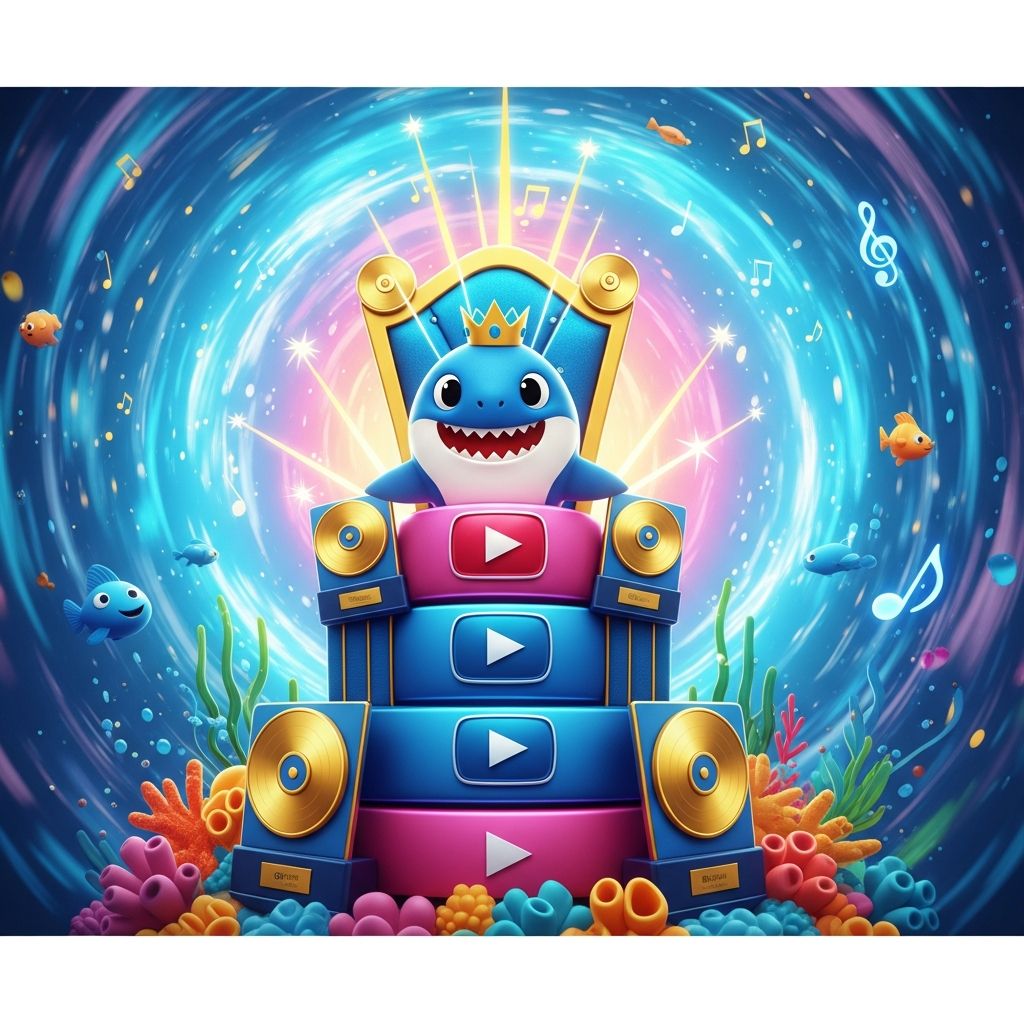
The simple, repetitive tune of Baby Shark has conquered YouTube like no other video before it. Uploaded by Pinkfong in 2016, this catchy children’s song has amassed over 16 billion views by mid-2025, making it the platform’s most-watched video ever. Its infectious “doo doo doo doo doo doo” melody resonates with kids worldwide, turning everyday moments into sing-alongs and dance parties.
From Obscure Upload to Global Phenomenon
Baby Shark didn’t start as an overnight hit. Pinkfong, a South Korean education brand, released the animated video on YouTube in June 2016 as part of their lineup of fun learning content. Initially targeted at young learners, it featured colorful sharks dancing through family roles—baby, mommy, daddy, grandma, and grandpa—culminating in a playful “safe at last.” What began as a modest educational tool exploded into a cultural juggernaut.
By late 2017, parents and daycare providers noticed its hypnotic appeal. Videos of children mimicking the dance surfaced organically, sparking a chain reaction. Soon, celebrities, athletes, and even politicians joined in, amplifying its reach. The song’s simplicity allowed anyone to participate, fueling user-generated content that propelled it forward.
Shattering YouTube Viewership Milestones
Baby Shark’s ascent up the charts was methodical and relentless. Here’s a timeline of its record-breaking achievements:
- November 2015/2016 Launch: Early uploads gain traction in Asia.
- 2020: Surpasses “Despacito” by Luis Fonsi and Daddy Yankee, becoming the most-viewed video at over 7 billion views.
- February 2021: First video to exceed Earth’s population in views (7.9 billion at the time).
- January 2022: Hits 10 billion views, a YouTube first.
- June 2025: Reaches 16 billion views, viewed in over 200 countries.
These numbers are staggering. If played continuously, 16 billion views would last over 80,000 years. Despite trailing “Despacito” in likes (33 million vs. 47 million), Baby Shark’s view count remains unmatched.
The Secret Sauce: Why It Resonates So Deeply
What makes Baby Shark stick? Psychologists point to its repetitive structure, mimicking nursery rhymes that aid early language development. The song’s rhythm aligns with natural child behaviors like clapping and swaying, making it developmentally perfect for toddlers.
Its visual simplicity—bright animations and relatable shark family—invites imagination. Parents appreciate the educational angle: counting family members reinforces basic math and social concepts. Meanwhile, the viral dance challenge lowered barriers to participation, generating millions of covers. Over one million user videos exist, from school performances to flash mobs.
| Milestone | Date Achieved | Views | Significance |
|---|---|---|---|
| First to 5 Billion | Pre-2020 | 5B | Matched by Despacito earlier |
| Most Viewed Overall | 2020 | 7B+ | Overtook Despacito |
| 10 Billion | Jan 2022 | 10B | YouTube record |
| 16 Billion | June 2025 | 16B | Global dominance |
Pinkfong’s Strategy: Mastering Viral Mechanics
Pinkfong didn’t just luck into success; they harnessed YouTube’s algorithm masterfully. Short runtime (under 2 minutes) encouraged replays. Uploading in multiple languages expanded accessibility—versions in Spanish, Hindi, and more broadened its appeal.
The company leaned into community building. They encouraged challenges with hashtags like #BabySharkChallenge, turning viewers into promoters. Cross-platform promotion via apps, merchandise, and live shows sustained momentum. By 2025, Baby Shark evolved into a franchise with toys, books, and TV specials, but YouTube remained its heartbeat.
Global Reach: A Worldwide Family Affair
Baby Shark transcends borders. The United States leads in total views, but Brazil tops likes, showing passionate engagement. It’s huge in India, Mexico, and the Philippines, where large families amplify its family-themed charm.
- Top Viewing Countries: US, Brazil, India, Mexico, Indonesia.
- Device Breakdown: Mobile dominates (80%+), perfect for on-the-go parenting.
- Demographics: Primarily 0-5 year-olds, but adults stream for nostalgia or kid-wrangling.
This ubiquity highlights YouTube’s power in shaping global childhoods. In regions with limited media, it fills educational gaps affordably.
Cultural Ripples and Lasting Legacy
Baby Shark infiltrated pop culture. It featured in NFL games, late-night shows, and even the White House (briefly). Schools integrated it into PE classes, while brands licensed it for ads. Its earworm status birthed memes and parodies, from horror versions to celebrity remixes.
Critics debate its overstimulation potential, but studies affirm benefits like improved phonemic awareness in preschoolers. Pinkfong’s success inspired a wave of kids’ content creators, proving simple ideas can yield empires.
Challenges Along the Way
Not all smooth sailing. Copyright disputes arose from pre-existing folk versions, but Pinkfong’s modern take prevailed. Overexposure fatigued some parents, yet demand persists—views grow monthly.
Competition from newer hits tests its throne, but algorithmic favoritism for established giants keeps it atop. As of 2026, no challenger nears 16 billion.
Lessons for Aspiring Creators
Baby Shark offers blueprints for virality:
- Target Niche Passions: Kids’ content has endless replays.
- Encourage UGC: Dances and covers multiply reach.
- Optimize for Algorithm: Short, engaging, multilingual.
- Build Ecosystem: Merch and spin-offs monetize fame.
- Stay Authentic: Fun trumps polish.
It’s a testament to user-driven growth on YouTube.
Frequently Asked Questions
What is the current view count for Baby Shark?
As of June 2025, it surpassed 16 billion views and continues climbing.
Who created Baby Shark?
Pinkfong, a South Korean edutainment company, uploaded the official version in 2016.
Why is Baby Shark so popular with kids?
Repetitive lyrics, simple dance, and family theme make it ideal for young children.
Has Baby Shark always been number one?
No, it overtook Despacito in 2020 after steady growth.
Is there an official dance?
Yes, the hand gestures mimicking shark mouths and family waves went mega-viral.
Looking Ahead: Will It Ever Stop?
With YouTube’s evolution—shorts, AI recommendations—Baby Shark adapts. Pinkfong plans VR experiences and AR filters. Its legacy? Redefining digital kids’ media, proving a shark song can rule the world.
References
- Baby Shark becomes most-viewed YouTube video in history — Sony Music UK. 2020-11-16. https://www.sonymusic.co.uk/baby-shark-becomes-most-viewed-youtube-video-in-history/
- Baby Shark becomes first YouTube video to reach 10 billion views — Guinness World Records. 2022-01-26. https://www.guinnessworldrecords.com/news/2022/1/baby-shark-becomes-first-youtube-video-to-reach-10-billion-views-689527
- How Baby Shark Became The Most Viewed YouTube Video Of All Time — Better Marketing (Medium). 2021. https://bettermarketing.pub/how-baby-shark-became-the-most-viewed-youtube-video-of-all-time-fb405183aa71
- How Baby Shark swam across the globe on YouTube — YouTube Blog. 2025. https://blog.youtube/culture-and-trends/baby-shark/