Bringing a dog into your home is about much more than cute photos and muddy pawprints. For many families, a dog quietly reshapes everyday life — nudging kids outside, easing tough emotions, and teaching responsibility in ways that no lecture ever could. Research increasingly supports what many parents already suspect: a well-matched, well-cared-for family dog can be a powerful positive influence on children’s health and development.
This article explores how a family dog can support kids’ physical, emotional, and social growth, what parents should consider before adopting, and how to make dog ownership work for the whole household.
1. How Dogs Nudge Kids Toward Healthier Habits
Modern childhood often involves long hours indoors, high screen time, and not enough movement. A family dog can gently push against these trends in surprisingly effective ways.
More Movement, Less Screen Time
Studies of preschool-aged children have found that kids who live with a dog are more likely to be physically active and spend less time on screens. When families walk or play with their dog several times a week, children:
- Spend more time in unstructured physical activity, like running, throwing, or chasing.
- Get outside more often, which is linked with better mental health and sleep quality.
- Accumulate additional minutes of sleep per night compared with peers who do not have a dog.
Kids rarely think of playtime with the dog as “exercise,” but the chasing, tug-of-war, and walks add up quickly—especially for younger children who may not participate in organized sports.
Everyday Activities That Add Up
Simple, regular routines around a dog can steadily improve kids’ daily habits. Helpful physical activities might include:
- Short morning or after-dinner walks with a parent and the dog.
- Active games in the yard or living room, such as fetch or hide-and-seek with treats.
- Including the dog in family hikes or outdoor playdates.
The goal is not perfection but consistency: small amounts of movement, day after day, supported by a dog who is always ready to go.
2. Emotional Comfort: Why Dogs Feel Like “Home” to Kids
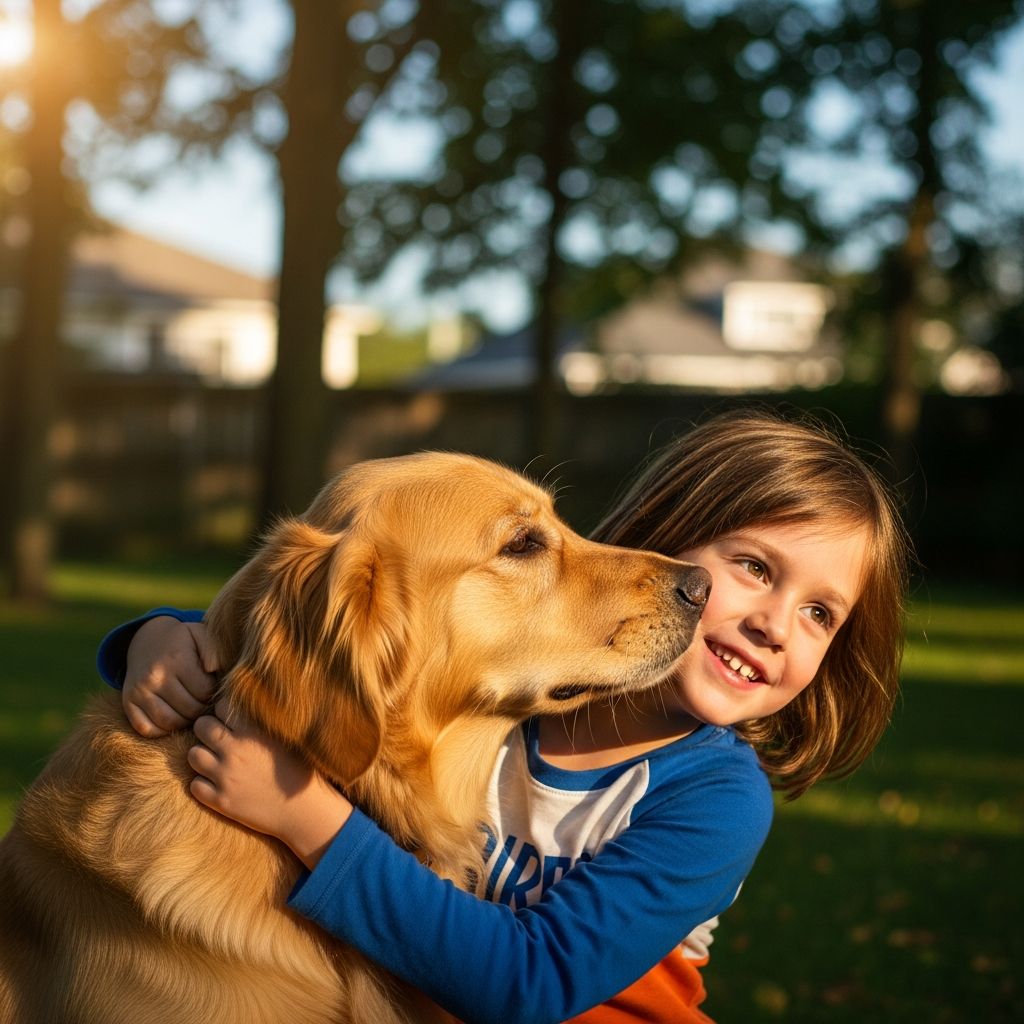
For many children, a dog becomes a quiet emotional anchor — always present, never judging, endlessly happy to see them. This can be especially valuable in stressful seasons like starting school, moving, or family changes.
Stress Relief and Calming Effects
Rhythmic petting, cuddling, or simply sitting with a dog can help lower physiological signs of stress. Research on human-animal interaction suggests that time with animals may:
- Reduce anxiety and perceived stress.
- Support more stable heart rate and blood pressure in stressful moments.
- Help kids feel safer and more grounded in new or challenging situations.
Clinicians who use therapy dogs in pediatric settings frequently observe children’s bodies visibly relax as they pet or lean against the animal. While not every family dog is a trained therapy animal, that same basic calming response often appears at home.
A Nonjudgmental Companion
Many children are more willing to talk, read, or emotionally open up around animals than adults. Research has shown that kids who read to animals demonstrate better social skills and cooperation compared with children who do not. The dog doesn’t correct pronunciation, laugh at mistakes, or interrupt—the child experiences:
- A sense of unconditional acceptance.
- Safe space to practice communication, storytelling, or reading aloud.
- Comfort after difficult days at school or with peers.
For children who feel lonely, left out, or worried, the simple act of being greeted enthusiastically at the door can be profoundly reassuring.
3. Social Skills, Empathy, and the “People Lessons” Dogs Teach
Dogs may not speak, but kids quickly learn to interpret their body language, moods, and needs. This can spill over into how children relate to people.
Reading Nonverbal Cues
Children who grow up with pets get repeated practice reading subtle signals: a wagging tail, pinned ears, relaxed vs. stiff posture. Over time, this helps kids learn:
- How to notice when someone (or some-animal) wants space or comfort.
- How to approach gently and respectfully.
- That not every being reacts the same way to touch, noise, or play.
Experts note that this kind of practice can support children’s empathy and their ability to navigate peer relationships. They are learning to pay attention to other beings’ feelings and adjust their behavior accordingly.
Building Trust and Attachment
The American Academy of Child and Adolescent Psychiatry notes that positive relationships with pets can foster self-esteem, self-confidence, and trust in others. When a child sees that their care, consistency, and kindness matter to the dog, they internalize several important lessons:
- Reliability: showing up every day with food, walks, and attention makes relationships stronger.
- Compassion: gentle treatment has clear positive effects on another living being.
- Respect: boundaries (like not climbing on a sleeping dog) keep everyone safe and comfortable.
These are the same skills that help kids become thoughtful friends, classmates, and later, partners and parents.
Support for Children With Extra Challenges
Animal interaction can be particularly helpful for some children with social or developmental differences. In classroom studies, children on the autism spectrum were calmer and more socially engaged during supervised play with small animals compared with toy-based activities. While a pet dog is not a replacement for therapy or specialized programs, for some families it can complement professional support by:
- Providing predictable, soothing companionship.
- Creating natural opportunities for interaction and shared focus.
- Encouraging structured routines (feeding times, walks) that help organize the day.
4. Responsibility, Routines, and Life Skills
A family dog brings real work into a household. For parents, that can feel daunting—but it is also one of the biggest developmental advantages for kids when managed thoughtfully.
Learning to Care for Another Living Being
Caring for a dog is a concrete, daily way for kids to practice responsibility. Over time, they see direct cause-and-effect:
- Food and fresh water lead to a healthy, energetic dog.
- Regular walks and play keep the dog calm and content.
- Neglecting tasks (like leaving a gate open) has real consequences.
Tasks can be scaled to a child’s age and abilities. For example:
- Young children (3–6): help scoop food with supervision, assist with brushing, or carry small treats.
- School-age kids (7–11): measure food, help with walks, refill water, track a simple chore chart.
- Teens: take full responsibility for some walks, bathing, and training sessions, while still guided by adults.
Habits That Support Both Kids and Dogs
Clear routines help the dog feel secure and help children learn planning and follow-through. A sample weekday rhythm might look like:
| Time of Day | Dog Task | Child Skill Practiced |
|---|---|---|
| Morning | Feeding, quick walk | Reliability, time management before school |
| After school | Playtime, water check | Stress relief, observation, empathy |
| Evening | Family walk, brushing | Teamwork, communication, consistency |
5. Safety, Allergies, and When a Dog May Not Be Right (Yet)
Despite the many benefits, a dog is not automatically a good fit for every family or every season of life. Thoughtful planning is essential for safety and well-being.
Physical Safety Around Dogs
Experts recommend close supervision for young children around any dog, even a familiar one. Key points include:
- Children under about four years old should never be left alone with a dog.
- Parents should actively teach kids how to approach, touch, and play safely.
- Some breeds and individual dogs are better suited to life with children; veterinarians and trainers can help families choose wisely.
Parents in national surveys often cite both safety and protection as reasons for and against having a dog. A dog may deter intruders, but poorly chosen or poorly supervised dogs can cause injury. The priority is always the safety of both children and the animal.
Health Considerations and Allergies
Before adopting a dog, families should consider:
- Known or suspected pet allergies in children or adults.
- Whether anyone in the household has immune conditions where infection risk is a concern.
- Capacity to maintain cleanliness (bathing, vacuuming, handwashing) to minimize allergens and germs.
For many families, these issues are manageable with guidance from pediatricians and veterinarians, but they should be part of the decision—not an afterthought.
Time, Budget, and Long-Term Commitment
Dogs require significant time, energy, and money. Realistic questions to ask include:
- Can adults consistently handle care when kids are sick, busy, or lose interest?
- Is there room in the budget for food, preventive veterinary care, and potential emergencies?
- Who will care for the dog during travel or schedule changes?
Children benefit from seeing adults keep long-term commitments, but that means parents—not kids—must ultimately be responsible for the dog’s welfare.
6. Strengthening Family Bonds Through a Dog
Beyond individual benefits for kids, a dog can also subtly reshape how the whole family spends time together.
Shared Activities and Routines
Because dogs thrive on routine, they create natural anchor points in the day. Families may find themselves:
- Walking together more often instead of sitting separately on devices.
- Gathering in the same room for play, training, or cuddling.
- Collaborating on decisions about training, feeding, and house rules.
These small patterns of shared activity can reinforce a sense of teamwork and connection, especially during busy or stressful seasons.
Opportunities to Talk About Big Topics
Owning a dog naturally opens conversations about health, feelings, and even life and death. As kids grow, parents can use the dog to gently introduce topics like:
- How bodies need movement, rest, and good nutrition—linking the dog’s needs to the child’s own.
- How to respect boundaries, apologize, and repair when mistakes happen.
- How to cope with illness, aging, and ultimately, loss.
For many children, the first deeply felt experience of grief is the loss of a pet. While painful, it can also be a powerful chance to learn about mourning, remembrance, and emotional support within the family.
Frequently Asked Questions (FAQs)
Q: What is the best age for a child to get a family dog?
There is no single “best” age. Many experts recommend that parents be prepared to supervise closely until at least age four and to assume primary responsibility for care throughout childhood. The right timing depends on your child’s temperament, your capacity to supervise, and your family’s stability and routines.
Q: Do children really get more exercise if we have a dog?
Studies of preschoolers show that kids in dog-owning families engage in more unstructured physical activity and outdoor play, and have less screen time, especially when the family regularly walks and plays with the dog.
Q: Can a dog help my child’s anxiety?
Time with animals has been associated with reduced stress and anxiety and improved emotional regulation in children, in settings ranging from hospitals to classrooms. A family dog cannot replace professional mental health care, but for many children, it can be a comforting, stabilizing presence alongside other supports.
Q: How involved should kids be in dog care?
Kids should be as involved as is safe and appropriate for their age, with adults overseeing and filling gaps. Younger children can assist with simple tasks, while older kids and teens can take on more responsibility, but parents must remain ultimately accountable for the dog’s well-being.
Q: What if our family isn’t ready for a full-time dog?
You can still give your child the benefits of animal interaction by spending time with friends’ or relatives’ dogs, volunteering at shelters (for older kids), or participating in library or school programs that involve reading to therapy animals. This can also be a helpful trial run before committing to a pet.
References
- Newly Published Study Shows Young Children with Pet Dogs Benefit from Greater Physical Activity and Reduced Screen Time — Human Animal Bond Research Institute (HABRI). 2022-03-29. https://habri.org/pressroom/20220329/
- Benefits of Pets for Kids — Children’s Hospital Colorado. 2023-05-23 (last updated, where noted). https://www.childrenscolorado.org/just-ask-childrens/articles/benefits-of-pets/
- Family pets: Pros and cons for kids — C.S. Mott Children’s Hospital National Poll on Children’s Health, University of Michigan. 2019-02-18. https://mottpoll.org/reports/family-pets-pros-and-cons-kids
- Pets and Children — American Academy of Child and Adolescent Psychiatry (AACAP). 2019-08-01. https://www.aacap.org/AACAP/Families_and_Youth/Facts_for_Families/FFF-Guide/Pets-And-Children-075.aspx
- The Power of Pets — NIH News in Health, National Institutes of Health. 2018-02-01. https://newsinhealth.nih.gov/2018/02/power-pets