When a preteen suddenly becomes obsessed with a colorful wristband or a trendy accessory, it can look like just another fad. But with a little guidance, that same accessory can become a doorway into meaningful conversations about cancer, compassion, and what it means to show up for others. This article explores how parents can transform a small fashion trend into a powerful life lesson—without overwhelming or frightening their child.
Why Preteens Gravitate Toward Symbols
Preteens love symbols: logos, team colors, favorite bands, and yes, rubber bracelets. At this age, kids are trying to answer a big question: “Who am I, and what do I stand for?” Visible symbols help them express identity in a way that feels safe and social. A bracelet or ribbon is a low-pressure way to say, “This matters to me” without needing a long speech.
Because symbols are so powerful in this stage of development, they are a natural bridge to deeper values. A bracelet that represents cancer awareness can become a first, gentle step into learning about illness, resilience, and community support.
Understanding Cancer at a Preteen Level
Cancer is a heavy topic, and many parents hesitate to raise it with preteens. Yet this age group is often already hearing about cancer at school, online, or from friends and relatives. Providing clear, calm explanations is more helpful than avoiding the subject, especially when a child’s interest is already sparked by an awareness item like a bracelet.
The goal is not to give a medical lecture, but to offer a simple, honest framework: cancer is a disease where certain cells grow in ways they shouldn’t, doctors have many treatments to help, and research and community support make a real difference.
Talking About Cancer Without Causing Panic
Preteens can easily slide from curiosity into fear, especially if they have heard scary words without context. Parents can counter that by matching the conversation to the child’s questions and emotional capacity. If the child only asks, “What does this bracelet stand for?”, then a short, reassuring answer is usually enough.
- Use everyday language rather than medical terms.
- Emphasize what doctors, nurses, and researchers are doing to help.
- Clarify that cancer is not anyone’s fault and is not something someone “causes” by being bad or careless.
If the child wants more details, follow their lead gradually instead of volunteering every fact at once. You are building a foundation, not teaching a semester-long course.
When a Bracelet Becomes a Conversation Starter
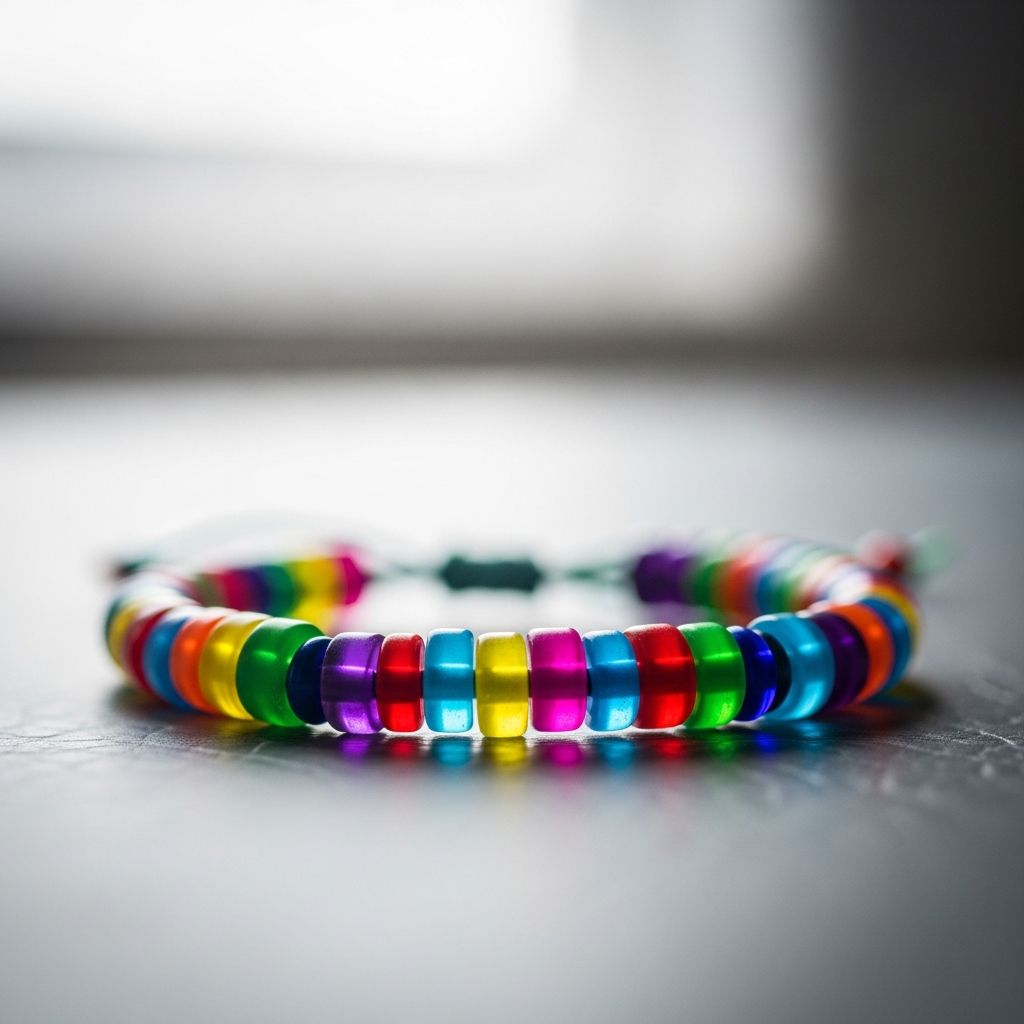
A bracelet or awareness accessory can be the safest way into a difficult topic. Instead of asking your preteen to sit down for a serious talk out of nowhere, you can start with what is already in front of both of you: the item on their wrist.
- Ask open questions like, “What made you pick that one?” or “What do you like about wearing it?”
- Offer a simple story about what the color or symbol usually represents.
- Check in gently: “How do you feel when you think about what it stands for?”
This approach respects your preteen’s growing independence while still keeping you in the conversation as a guide and support.
Values Hidden Inside Small Gestures
To an adult, a rubber bracelet may look like a cheap accessory. To a preteen, it can carry surprising emotional weight. It may signal loyalty to a friend or relative with cancer, admiration for a public figure who survived, or a wish to be seen as kind and socially aware.
Parents can use that emotional weight to talk about deeper values. Wearing a bracelet is an outward sign, but what matters more is the inner stance: being willing to care, to listen, and to notice when others are struggling.
Practical Ways to Channel Preteen Enthusiasm
If your child is excited about supporting a cancer cause, channeling that enthusiasm into concrete action helps them feel effective rather than helpless. They do not need to organize a massive fundraiser; small actions are more achievable and just as meaningful to a growing sense of purpose.
- Help them research the cause behind the item if it is tied to a particular organization.
- Brainstorm age-appropriate ways to help, like kindness notes, small school projects, or simple awareness activities.
- Encourage them to share what they are doing with close friends or classmates if they feel comfortable.
Ideas for Age-Appropriate Cancer Awareness Activities
Many preteens want to “do something” once they learn about cancer, but they may not know what is realistic. Parents can offer options that fit your family’s time, resources, and comfort level without making the child feel responsible for solving an enormous problem.
- Color day: Wear a specific color at home or with a small friend group, then talk briefly about what it represents.
- Mini poster or digital art: Invite your child to design a simple message of hope to hang in their room or share with a relative.
- Kindness jar: Write small supportive notes or jokes together, then send them to a family facing illness (with their permission).
Table: Simple Ways Preteens Can Support Cancer Awareness
| Activity | Time Needed | Emotional Focus |
|---|---|---|
| Wearing an awareness bracelet or ribbon | Ongoing, no extra time | Identity, quiet solidarity |
| Creating a hopeful drawing or poster | 30–60 minutes | Expression, creativity, empathy |
| Writing an encouraging card to someone in treatment | 15–30 minutes | Compassion, connection |
| Talking with a parent about cancer questions | As needed | Understanding, reassurance |
| Joining a small school or club awareness effort | Varies by project | Teamwork, shared purpose |
Balancing Hope and Honesty
Preteens notice when adults dodge hard topics. They may not always say it out loud, but they can sense tension or secrecy. When talking about cancer, it helps to strike a balance: acknowledge that it is a serious disease while highlighting the many people working hard to treat it and support families.
Honesty builds trust. You do not need to share every statistic or worst-case scenario; you simply need to avoid misleading answers. If you do not know how to answer a question, it is perfectly acceptable to say, “That’s a big question; let’s learn more together.”
What If Cancer Is Personal for Your Family?
Sometimes the bracelet on your child’s wrist is not about a distant cause but about a grandparent, neighbor, or even a parent in treatment. In those cases, emotions run higher, and the child’s questions may be mixed with worry, anger, or sadness. The bracelet may be their way of feeling close to the person who is sick.
Parents can honor that connection by inviting the child to share memories, hopes, or fears. Simple rituals—like wearing the bracelet to medical appointments, lighting a candle together, or setting aside a weekly check-in—can help your preteen feel included rather than shut out.
Supporting Emotional Reactions
As preteens learn about serious illness, they may shift quickly between curiosity and discomfort. One day they might talk nonstop about cancer and hospital stories; another day they might not want to hear the word at all. This is a normal part of processing big, complicated realities.
- Validate their feelings by naming them: “It sounds like you’re scared,” or “You seem frustrated today.”
- Offer a choice: “Do you want to talk more, or would you rather take a break and do something fun?”
- Normalize mixed emotions: it is possible to feel proud of helping and still feel nervous or sad.
When Peer Culture Meets Compassion
Preteens often pick up awareness items because their peers are wearing them. This can lead to awkward or shallow moments, like kids collecting bracelets without knowing what they stand for. Instead of criticizing this, parents can see it as a starting point and gently add depth.
If your child’s classmates are talking about awareness items, you might ask, “What do kids at school say this bracelet means?” or “How do you feel when you see lots of people wearing the same symbol?” These questions encourage reflection, not guilt.
Teaching Respectful Awareness (Not Performative Altruism)
Learning to care about causes comes with a risk: children may slide into performative behavior, where the main goal is to look kind rather than actually be kind. Parents can help by steering the focus back to impact and respect. Wearing something should connect to an attitude, not just a photo opportunity.
- Ask, “How do you think this helps people who are sick or their families?”
- Suggest at least one quiet, non-public way to help (like offering to walk a neighbor’s dog).
- Model humility by doing some supportive actions as a family without posting about them.
Using Stories Instead of Statistics
Preteens often connect more with stories than with numbers. While statistics might matter to adults, a preteen is more likely to be moved by hearing about another child who went through treatment, a caregiver’s experience, or a doctor working long hours to develop better medicine.
When sharing stories, keep them age-appropriate and balanced. Include challenges, but also include bravery, friendship, and moments of joy. This helps your child understand that even in illness, people continue to live full, meaningful lives.
Practical Ground Rules for Awareness Items
As awareness bracelets and similar items enter your home, you may want a few family guidelines. These are not about being strict, but about teaching respect. The bracelet is not just a decoration; it stands for real people and real experiences.
- Explain that awareness items should be worn respectfully, not as jokes or props for teasing.
- Discourage “collecting” bracelets from serious causes purely for bragging rights.
- Encourage your child to listen quietly if someone shares a personal story related to the symbol they’re wearing.
Strengthening the Parent–Child Bond Through Shared Causes
One surprising benefit of your child’s interest in a cause like cancer awareness is the chance it gives you to learn and grow together. When you take their interest seriously, you are sending a powerful message: “Your questions matter, and your compassion matters.” This builds trust and invites your preteen to keep coming back to you with their big feelings and ideas.
Even if you feel unsure or emotional about cancer yourself, it is enough to show up honestly and listen. You do not need perfect words to make a deep impact. Your attention, curiosity, and willingness to engage are what your child will remember.
FAQs: Preteens, Cancer Awareness, and Bracelets
Is my child too young to learn about cancer?
Most preteens are already hearing about serious illnesses in some form, whether from classmates, media, or family conversations. Age-appropriate, honest explanations are usually more reassuring than silence. You can keep details simple and answer only what they actually ask.
What if the bracelet makes my child more anxious?
If you notice that wearing or talking about the bracelet increases your child’s anxiety, invite a calm check-in. Ask what thoughts come to mind when they see or touch it. If needed, you can suggest taking occasional breaks from wearing it, while reassuring your child that caring about a cause does not require constant visible proof.
How much information is too much?
Let your preteen’s questions guide the depth of the conversation. If they ask broad questions, respond broadly. If they ask more specific or detailed questions, go one step deeper at a time and see how they respond emotionally. It is always acceptable to say, “We can talk more about that another day” if things feel too intense.
Should I correct my child if they misunderstand something about cancer?
Yes, gentle correction helps prevent unnecessary fear or stigma. If your child says something inaccurate, you can respond with, “That’s a common idea, but it actually works a bit differently,” and then give a clearer explanation. Avoid shaming them for not knowing; they are still learning, and so are you.
Can our family support cancer awareness without sharing our efforts publicly?
Absolutely. Many of the most meaningful acts of support happen quietly: checking in on a friend, sending a card, cooking a meal, or simply listening. Teaching your preteen that kindness does not always need an audience is a powerful lesson in integrity.
Helping a Small Symbol Carry Big Meaning
A single bracelet cannot cure cancer—but it can spark curiosity, conversation, and compassion in a young person who is just beginning to understand the wider world. When parents notice and nurture that spark, they help preteens learn that caring is not just something adults do; it is something they can do, right now, in ways that match their age and personality.
By treating awareness items as invitations rather than mere accessories, families can transform ordinary moments—a trip to the store, a chat in the car, a new bracelet on a wrist—into quiet, formative lessons about empathy, courage, and community.