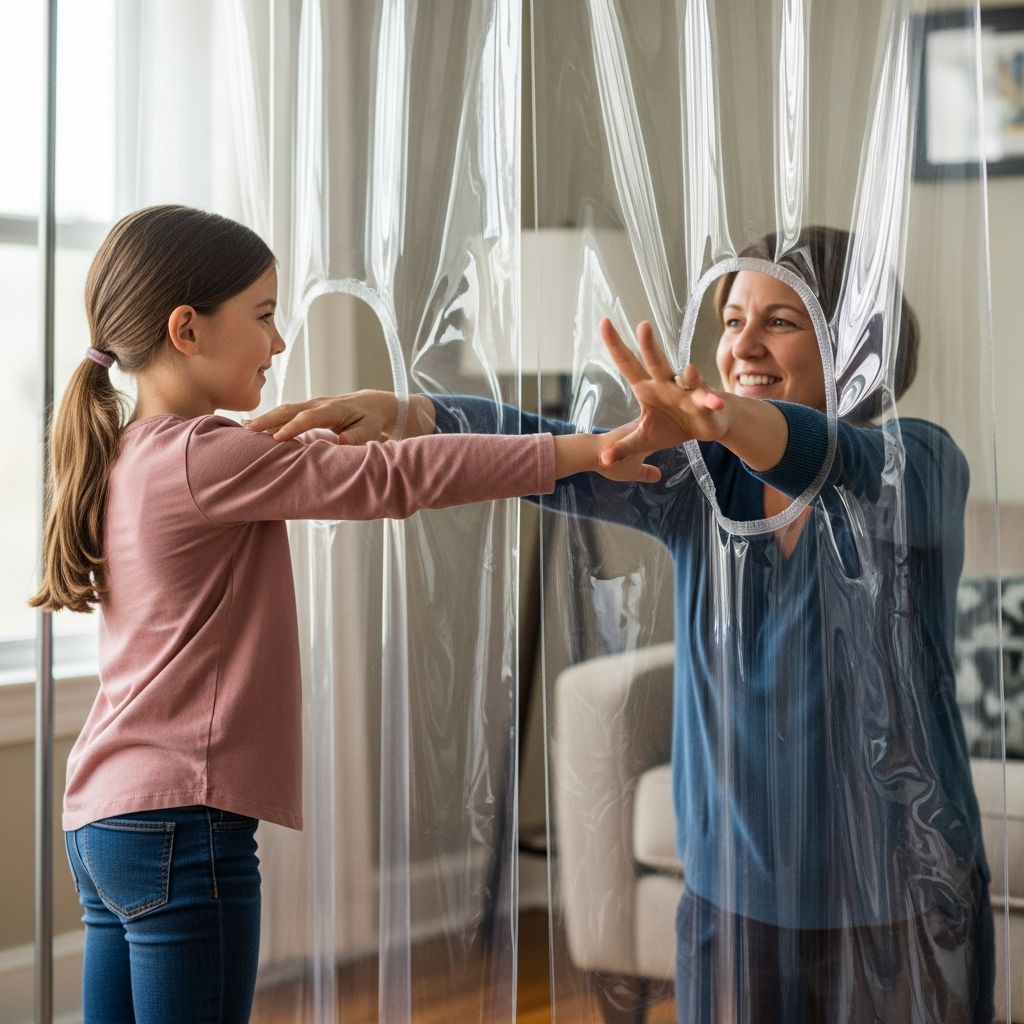
In times of global uncertainty, moments of human connection become priceless. During the early days of the COVID-19 pandemic, a 10-year-old girl named Paige Okray from Riverside, California, faced the heartbreaking challenge of not being able to hug her grandparents. Driven by love and ingenuity, she crafted what she called a “hug curtain”—a simple, transparent barrier that allowed safe physical embraces without risking viral transmission.
The Spark of Inspiration Behind a Child’s Breakthrough Idea
Paige’s story begins with the strict social distancing measures enforced worldwide in 2020. Like millions of families, the Okrays adhered to guidelines from health authorities, such as those from the Centers for Disease Control and Prevention (CDC), which recommended maintaining at least six feet of distance to curb the spread of SARS-CoV-2. For a young child, this meant forgoing the comforting hugs from “Nana and Papa,” her beloved grandparents.
The idea struck when Paige stumbled upon a social media video showing someone using a blanket as a protective shield for hugs. Undeterred by her age, she envisioned an improved version tailored for doorways. With guidance from her mother, Lindsay Okray—a nurse working in a COVID-19 unit—she sketched plans and gathered household supplies. This initiative highlights how children, often overlooked as innovators, can offer practical solutions to adult problems.
Breaking Down the Design: Simplicity Meets Effectiveness
What makes Paige’s hug curtain remarkable is its use of readily available materials, proving that innovation doesn’t require high-tech tools. Here’s how she assembled it:
- Core Barrier: A clear plastic shower curtain provided the see-through foundation, ensuring visual contact during interactions.
- Arm Access Points: Two sets of openings—one higher for adults and one lower for children—were reinforced with Ziploc bags to create flexible, sealable sleeves for arms.
- Reinforcements: Disposable plates were hot-glued around the armholes to prevent tearing and maintain structural integrity.
- Safety Measures: The entire setup was disinfected with Lysol wipes before use, aligning with CDC hygiene protocols.
Installed over the grandparents’ front door, the curtain transformed a standard entryway into a safe hugging station. Paige’s mother supervised the construction, emphasizing adult oversight for tools like the hot glue gun. This design’s dual-height arm slots accommodated intergenerational hugs, making it universally adaptable.
Emotional Reunion: The Heart of the Invention
Once completed, Paige transported the hug curtain to her grandparents’ home. The setup allowed her to slip her arms through the lower slots while her grandparents used the upper ones, enveloping each other in a long-overdue embrace. Lindsay captured the joyful moment on video, sharing it on social media where it quickly went viral, amassing thousands of views and shares.
“We were so happy to be able to hug them,” Lindsay posted, capturing the raw emotion of the reunion. The grandparents, visibly moved, praised Paige’s thoughtfulness. This event underscored the psychological toll of isolation, particularly on children and seniors, as noted in studies by the World Health Organization (WHO) on pandemic mental health impacts.
| Component | Material Used | Function |
|---|---|---|
| Main Sheet | Plastic Shower Curtain | Transparent barrier for visibility |
| Arm Sleeves | Ziploc Bags | Flexible entry for arms |
| Edge Supports | Disposable Plates | Prevents rips and adds durability |
| Disinfectant | Lysol Wipes | Surface sanitation |
This table illustrates the straightforward engineering, accessible to any household.
Broader Implications: Innovation from the Youngest Minds
Paige’s invention resonated globally, inspiring similar DIY projects. It demonstrated how children can contribute to crisis response, echoing historical examples like the young inventors during World War II who aided war efforts with simple gadgets. In the context of COVID-19, her curtain addressed a key gap: physical touch’s role in emotional well-being.
Research from the American Psychological Association (APA) shows that hugs release oxytocin, reducing stress hormones. Paige’s solution preserved this benefit safely. Her story also spotlights parental roles; Lindsay’s nursing background informed safe practices, blending family support with professional insight.
DIY Guide: Recreate the Hug Curtain at Home
Want to try this yourself? Follow these steps for a pandemic-proof hug station:
- Gather materials: shower curtain, gallon Ziploc bags (4-6), plastic plates (8-10), hot glue gun, scissors, and disinfectant wipes.
- Cut arm-sized holes in the curtain at appropriate heights (about 3 feet and 5 feet from the bottom).
- Seal Ziploc bags around holes with hot glue, creating sleeve tunnels.
- Glue plates over edges for reinforcement.
- Hang via curtain rod or tape over a doorway.
- Wipe down thoroughly before and after use.
Adults should handle gluing and cutting. Customize sizes for different users. While effective for low-risk outdoor use, consult local health guidelines.
Lessons for Parents: Fostering Creativity in Crisis
Paige’s tale offers parenting takeaways. First, encourage problem-solving by discussing challenges openly. Second, provide safe materials for experimentation. Third, model resilience—Lindsay’s frontline work didn’t deter family bonding efforts.
Experts from the National Institutes of Health (NIH) recommend hands-on projects to build kids’ STEM skills and emotional coping. This approach turned isolation into opportunity, teaching Paige engineering basics alongside empathy.
Global Echoes: Similar Innovations Worldwide
Paige wasn’t alone. In Italy, families used plastic sheets for “hug windows.” Brazil saw pool noodle barriers. These grassroots efforts filled voids before commercial products like hug pods emerged. According to a 2020 WHO report, community innovations were vital in low-resource settings.
Paige’s version stood out for its child-led origin and viral reach, covered by outlets like ABC News and Fox.
The Lasting Legacy of a Simple Curtain
Years later, Paige’s hug curtain symbolizes hope amid adversity. It reminds us that solutions often lie in everyday items and pure intent. As pandemics evolve, her story inspires preparedness—stocking plastics and bags isn’t just practical; it’s connective.
For families, it advocates balancing safety with humanity. Paige, now a teen, likely carries this inventive spirit forward, proving kids can change the world one hug at a time.
Frequently Asked Questions (FAQs)
Who invented the hug curtain?
Ten-year-old Paige Okray from Riverside, California, created it in 2020 to hug her grandparents safely during COVID-19.
What materials are needed for a hug curtain?
Key items include a plastic shower curtain, Ziploc bags, disposable plates, a hot glue gun, and disinfectant wipes.
Is the hug curtain still relevant post-pandemic?
Yes, for flu seasons, immunocompromised loved ones, or any distancing need, with updates per current CDC guidelines.
Can children safely build this project?
With adult supervision for tools like glue guns, it’s an excellent STEM activity promoting creativity and safety awareness.
How did the hug curtain gain attention?
Paige’s mother shared a reunion video on social media, leading to coverage by ABC, Fox, and others.
References
- A 10-Year-Old Designed A Contraption So She Can Safely Hug … — KBZK. 2020-04-15. https://www.kbzk.com/girl-designed-curtain-hug-grandparents-safely/
- This 10-year-old created a ‘hug curtain’ so she can hug her grandparents — Mother.ly. 2020-04. https://www.mother.ly/life/10-year-old-invents-hug-curtain-so-she-can-hug-her-grandmother/
- California girl, 10, creates ‘hug curtain’ to hug grandparents — Fox News. 2020-04-16. https://www.foxnews.com/lifestyle/girl-creates-hug-curtain-grandparents
- 10-Year-Old Invents Plastic Curtain to Enable Grandparent Hugging Amid COVID-19 — Interesting Engineering. 2020-04. https://interestingengineering.com/culture/10-year-old-invents-plastic-curtain-to-enable-grandparent-hugging-amid-covid-19
- 10-year-old Riverside girl creates plastic curtain with arm slots — ABC7. 2020-04. https://abc7.com/post/riverside-girl-makes-plastic-curtain-to-be-able-to-hug-grandparents/6172620/
- CDC Coronavirus Disease 2019 (COVID-19) Guidelines — Centers for Disease Control and Prevention. 2020-03-06 (ongoing updates). https://www.cdc.gov/coronavirus/2019-ncov/prevent-getting-sick/social-distancing.html
- WHO Mental Health and COVID-19 — World Health Organization. 2022-03-02. https://www.who.int/teams/mental-health-and-substance-use/covid-19
- The Power of Touch: Oxytocin and Stress Reduction — American Psychological Association. 2021-07-15. https://www.apa.org/monitor/2021/07/power-touch
- STEM Education for Children — National Institutes of Health. 2023-01-10. https://www.nichd.nih.gov/newsroom/releases/stem-education