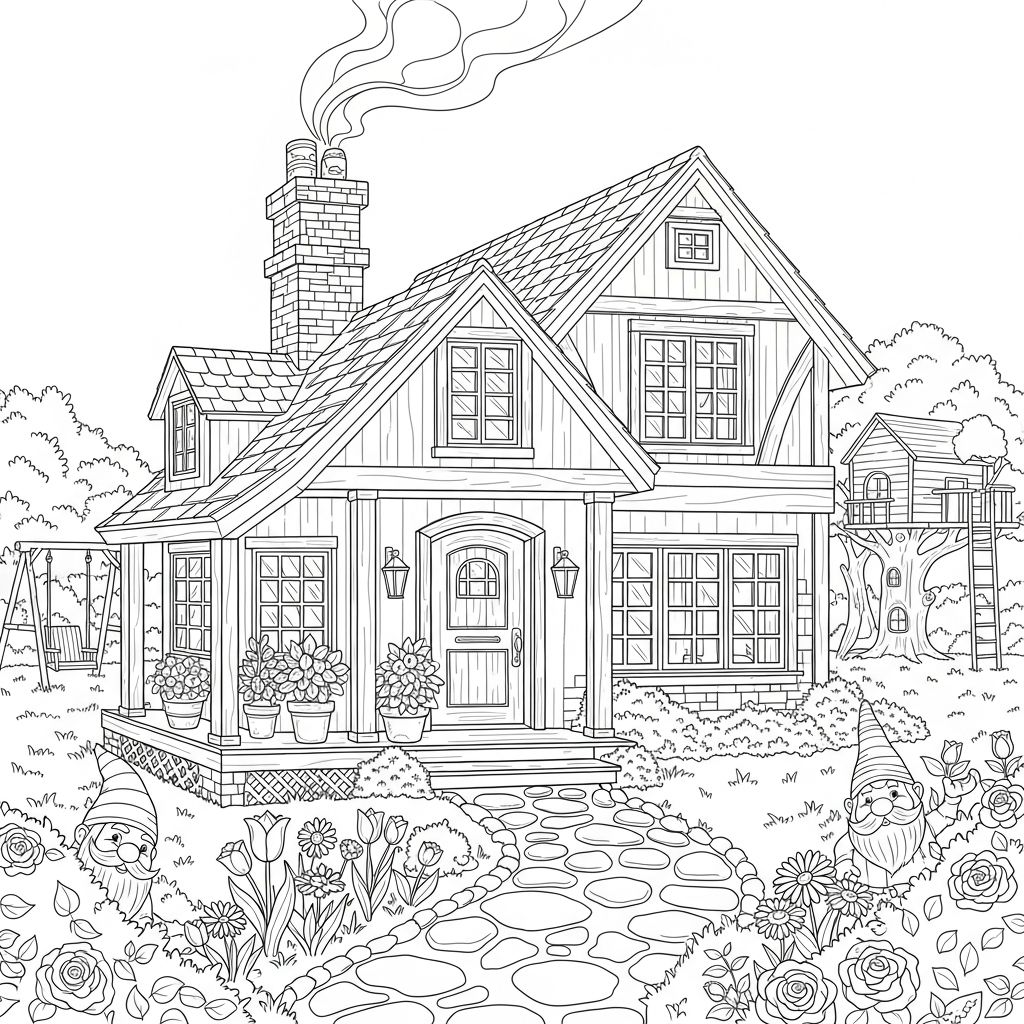
House coloring pages may look simple, but they offer powerful opportunities for children to practice coordination, express feelings, and explore their creativity in a safe, low-pressure way. Whether your child prefers a tiny cottage, a skyscraper, or a fairy-tale castle, a house picture can quickly become the setting for stories, emotions, and imaginative play.
Why House Coloring Pages Are So Appealing
Children are naturally drawn to pictures of houses because they feel familiar and comforting. A house represents safety, family, and daily life, which makes it an ideal subject for both creative experimentation and quiet relaxation. Unlike abstract designs, houses give kids something recognizable to start with while still leaving plenty of room for color choices and added details.
- Houses are easy to understand, even for young children.
- They can be adapted to any theme: seasons, holidays, fantasy, or real-world neighborhoods.
- They encourage kids to imagine who might live inside and what stories happen there.
Key Benefits of House Coloring Pages
Coloring house scenes does much more than fill time. It supports multiple areas of development and learning while still feeling like play. When used thoughtfully, even a simple sheet can become a tool for growth and conversation.
- Fine motor practice: Gripping crayons and filling in windows, doors, and roof tiles strengthens hand and finger muscles.
- Focus and patience: Working through all the parts of a house design teaches kids to stay with a task until it is complete.
- Emotional expression: Colors, weather, and added details give children a way to share their inner world without needing the perfect words.
Age-by-Age Ideas for Using House Coloring Pages
Different ages use coloring pages in different ways. Adjusting expectations and prompts makes the activity more rewarding and less frustrating, so kids stay engaged and confident.
For Toddlers (Ages 2–3)
At this stage, the goal is exploration, not perfection. Large, simple house outlines work best, with plenty of open space and thick lines that are easy to see. Offer chunky crayons or washable markers that small hands can grasp comfortably.
- Point to parts of the house and name them aloud (roof, door, window).
- Encourage big, sweeping strokes rather than focusing on staying in the lines.
- Praise effort and curiosity instead of how “neat” the picture looks.
For Preschoolers (Ages 3–5)
Preschoolers enjoy more detail and are starting to care about colors and recognizable shapes. House coloring pages with gardens, chimneys, clouds, or pets in the yard add interest and give them more to talk about. This is also a good time to introduce basic concepts like counting windows or comparing door shapes.
- Invite your child to color different parts with specific colors: “Can you make the door red and the roof any color you want?”
- Ask simple story prompts: “Who do you think lives in this house?”
- Let them add extra elements like trees, a sun, or a parked car to make the picture feel like their own.
For Early Elementary (Ages 6–8)
Children in early elementary grades often enjoy more complex house designs, such as multi-story buildings, cabins, or townhouses. They are also more capable of controlling their hand movements and may begin experimenting with shading, patterns, and symmetrical designs.
- Encourage attention to small details like window panes, bricks, or tiles.
- Introduce simple design vocabulary: porch, balcony, shutters, chimney.
- Suggest organizing the picture with a color plan, such as using cool colors for the house and warm colors for the background.
For Older Kids and Tweens
Older children benefit from more intricate house coloring pages that include multiple textures, overlapping structures, or elements like city streets and skylines. These designs can help them relax, relieve stress, or unwind after school while still challenging their sense of style and precision.
- Offer fine-tipped markers or colored pencils for detail work.
- Suggest experimenting with light and shadow by making one side of the house slightly darker.
- Encourage them to turn the colored page into a story, comic, or written description afterward.
Creative Variations on House Coloring
House coloring pages do not have to stay flat or predictable. With a few tweaks, you can turn an ordinary sheet into a multi-sensory project that keeps kids interested and invites them to think more deeply about design and storytelling.
- Seasonal houses: Add snow, leaves, flowers, or holiday decorations to match the time of year.
- Fantasy houses: Transform a basic house into a treehouse, castle, underwater dome, or space station.
- Neighborhood scenes: Tape several house pages together side by side to form a street or village that siblings and friends can color collaboratively.
Suggested Materials and Tools
Using the right materials can make coloring smoother, more comfortable, and far less messy. You do not need fancy art supplies, but a few thoughtful choices can help kids stay focused and feel proud of their work.
| Material | Best For | Why It Helps |
|---|---|---|
| Crayons | Toddlers and preschoolers | Thick, sturdy, and easy to grip; low risk of spills. |
| Washable markers | Bright, bold colors | Ideal for large house shapes and backgrounds. |
| Colored pencils | Older kids and tweens | Allow fine details, shading, and subtle color changes. |
| Thicker paper or card stock | Any age | Prevents tearing and makes finished pages suitable for display. |
Simple Ways to Turn Coloring Into Learning
House coloring pages can easily be integrated into early learning activities without feeling like a lesson. By weaving in gentle questions and playful challenges, you can boost language, math, and critical thinking skills while your child colors.
- Ask counting questions: “How many windows are on the top floor?”
- Introduce basic math concepts: “If there are two doors on each side, how many doors does the house have altogether?”
- Practice descriptive language: “Tell me three words that describe this house.”
Encouraging Storytelling Through House Scenes
A house automatically suggests characters, routines, and emotions. Prompting kids to tell stories about their colored house helps build narrative skills, vocabulary, and empathy. The picture becomes a springboard for imagination instead of just a finished product.
- Invite your child to name the people who live inside and describe their day.
- Ask what the house looks like at night versus during the day.
- Encourage them to draw additional panels that show what is happening inside different rooms.
Using House Coloring Pages in the Classroom
Teachers can use house coloring sheets as more than just a filler activity. With a bit of planning, they can support social-emotional learning, community themes, and even early geography. They also provide a calm transition when students arrive or during quiet centers.
- Have each child color a house and label it with their name for a classroom “community wall.”
- Use different house styles to discuss city, suburban, and rural environments.
- Incorporate house coloring into units on families, safety, or weather.
Display and Share Finished House Art
Displaying completed house coloring pages shows children that their effort matters and encourages them to keep practicing. A simple change in how you present their work can boost motivation and help kids feel proud of their progress over time.
- Create a rotating gallery on the fridge, a bulletin board, or a hallway wall.
- Bind several pages together into a “My Street” booklet.
- Take digital photos of favorite pieces to create a slide show or digital album.
Tips for Keeping Coloring Stress-Free
Coloring should feel calm and enjoyable, not like a test. Focusing too much on perfection or neatness can make kids anxious and less willing to try. A few simple habits can keep the atmosphere relaxed and positive.
- Avoid correcting how your child chooses colors, even if a purple sky or green roof seems unusual.
- Comment on effort and creativity: “You worked hard on those tiny windows,” or “You chose really bold colors for this house.”
- Limit comparisons between siblings or classmates so each child can develop at a comfortable pace.
Frequently Asked Questions About House Coloring Pages
How often should kids use coloring pages?
There is no strict rule about how often children should color. Many families find that short, frequent sessions—such as 10 to 20 minutes a few times per week—fit easily into routines and provide regular practice without feeling overwhelming. The key is to watch your child’s interest and energy and stop before they become frustrated or restless.
Is it better to use blank paper instead of printed coloring pages?
Both printed house pages and blank paper have value. Coloring pages give a sense of structure and accomplishment, which can be motivating for children who feel unsure of what to draw. Blank paper encourages open-ended creativity and invites kids to design their own houses from scratch. Offering a mix of both options helps children develop confidence in following prompts and inventing ideas on their own.
What if my child only scribbles or refuses to stay in the lines?
Scribbling is a normal and important stage in drawing and coloring. Young children are still building muscle control and coordination, so expecting neatness too early can create unnecessary pressure. Instead of focusing on the lines, celebrate improvement over time—perhaps noticing how their strokes become more controlled or how they start to choose specific areas of the house to fill.
How can I make house coloring more challenging for older kids?
To challenge older children, look for more detailed house designs or encourage them to transform a basic house into a complex scene. They can add surrounding buildings, include people and pets, or experiment with architectural styles such as cottages, modern homes, or historical buildings. Inviting them to add shadows, textures, or patterns also keeps the activity interesting and skills growing.
Are digital house coloring apps as beneficial as paper pages?
Digital coloring apps offer convenience, variety, and tools like undo buttons and pre-set palettes, which some children enjoy. Paper coloring, however, provides more direct practice for pencil grip, pressure control, and hand–eye coordination. Many families use a combination of both approaches, balancing the sensory experience and motor benefits of paper with the novelty and portability of digital tools.
Making House Coloring Pages Part of Everyday Life
House coloring pages fit naturally into many daily routines, from quiet weekend mornings to after-school wind-downs. They can be enjoyed alone or shared as a family, with each person coloring a different house or working together on a larger scene. Over time, a simple stack of pages can become a record of growth, creativity, and the unique way your child sees the world.
- Keep a small basket of house pages and coloring tools ready in a common area for easy access.
- Use coloring as a calm activity before bedtime instead of screen time.
- Invite grandparents or caregivers to color alongside your child to strengthen connections and conversation.
With just a few small adjustments and thoughtful prompts, house coloring pages move far beyond filling time. They become invitations to imagine, communicate, and build the fine motor and thinking skills children will carry into school and everyday life.