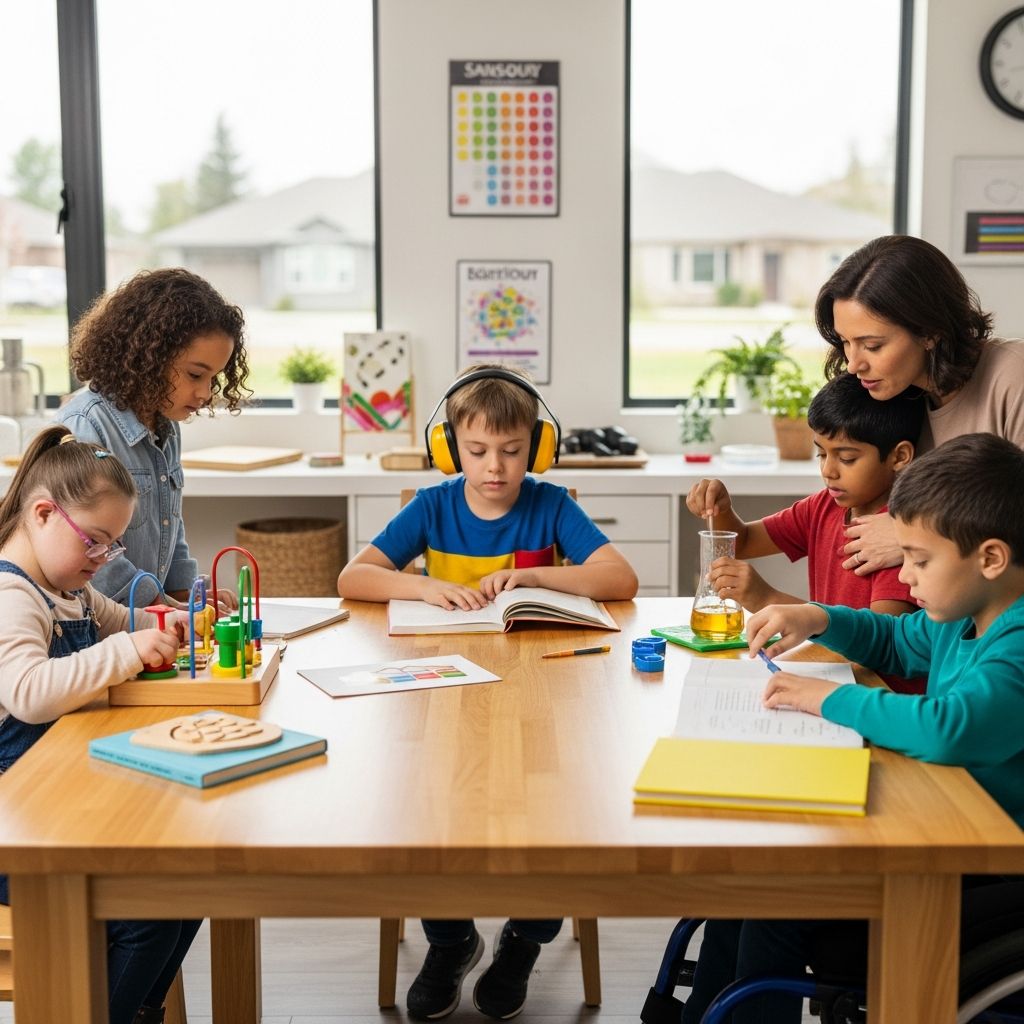
Parents facing school closures or choosing homeschooling for children with disabilities often worry about maintaining educational progress and accessing vital support services. This guide outlines legal entitlements, practical strategies, and resources to ensure continuity in learning.
Understanding Legal Rights to Special Services in Homeschool Settings
Children with disabilities enrolled in homeschool programs retain access to certain special education services through their local public school districts, provided specific requirements are met. Eligibility hinges on the child being entitled to free public education and having an approved homeschool plan.
In many jurisdictions, districts must develop an Individualized Education Services Program (IESP) for homeschooled students with disabilities, mirroring the structure of a traditional Individualized Education Program (IEP) but tailored to the home environment. Parents initiate this by submitting a written request to the school district’s board of education or Committee on Special Education (CSE) by key deadlines, such as June 1 for the upcoming school year.
- Submit requests within 30 days of identification or residency changes.
- Provide proof of an approved Individualized Home Instruction Plan (IHIP).
- Services are delivered equitably compared to public and nonpublic school peers.
Disagreements with proposed services grant parents due process rights, similar to those in traditional school settings. For instance, New York State mandates compliance with NYSED regulations, including vaccination requirements for on-site services.
Differentiating Home Learning from Traditional Homeschooling
During unexpected school closures, families engage in home learning rather than formal homeschooling, which implies deliberate, prepared withdrawal from public systems. Home learning emphasizes flexible, supportive activities without the pressure to replicate a full school curriculum.
This distinction reduces stress: parents facilitate teacher-assigned tasks or integrate everyday skills like cooking into lessons. Virtual sharing of projects fosters community, helping children feel connected despite physical separation.
| Aspect | Home Learning (Closures) | Formal Homeschooling |
|---|---|---|
| Preparation | Minimal; uses school resources | Extensive; custom curricula |
| Structure | Flexible daily routines | Scheduled like school |
| Services Access | Request via district CSE | IESP/IEP equivalent |
| Parental Role | Facilitator | Primary instructor |
Adapting Public School IEPs for Home Environments
Transitioning from public school IEPs to homeschooling requires proactive steps to sustain therapies and accommodations. States like New York allow homeschooled students to receive services outlined in an IESP, covering speech therapy, occupational support, and more.
Parents must file a Letter of Intent (LOI) and secure a Letter of Compliance (LOC) confirming regulatory adherence. For children aged 6-17 (or up to 21 for special needs), districts provide services off-campus or via approved venues. Funding options include state grants for diagnostics or materials.
- Request services annually by June 1.
- Coordinate with CSE for IESP development.
- Explore private therapies if public options fall short.
Benefits of Homeschooling for Mild to Moderate Needs
Homeschooling offers intensified, personalized instruction surpassing crowded public classrooms for students with mild to moderate disabilities. Parents leverage intimate knowledge of their child’s triggers and strengths for targeted interventions.
Multisensory methods and flexible pacing build core skills more effectively than accommodations alone. For severe cases, public schools may provide superior resources, but hybrids combining home focus with district services often optimize outcomes.
Practical Daily Routines and Activity Ideas
Structure home learning around short, engaging sessions to match attention spans. Incorporate movement breaks, visual schedules, and sensory tools for children with autism, ADHD, or learning differences.
- Morning Circle: Review goals, weather, and emotions (10 mins).
- Core Academics: Math/reading with hands-on manipulatives (20-30 mins each).
- Therapy Time: Integrate speech or OT exercises into play.
- Creative Projects: Art, cooking, or science experiments tied to themes.
- Afternoon Review: Reflect and share virtually with peers.
Track progress with simple journals or apps, adjusting based on weekly reviews. Safety during closures prioritizes routines amid parental concerns over service gaps.
Overcoming Common Parental Challenges
Families report anxiety over disrupted therapies and social isolation. Mitigate by joining online special needs homeschool co-ops, advocating firmly for services, and utilizing free resources from organizations like HSLDA.
Budget for supplemental tools: multisensory kits under $50 can replicate school aids. Burnout prevention involves self-care and partner involvement.
| Challenge | Solution |
|---|---|
| Service Delays | Early written requests; follow-up calls |
| Motivation Issues | Gamified apps; choice-based activities |
| Social Gaps | Virtual playdates; community groups |
| Curriculum Fit | Adapt IEPs to home; specialized programs |
State-Specific Variations and Resources
Regulations differ: New York requires IHIP approval and timely CSE requests, while others emphasize equitable service provision. Consult state education departments for forms and deadlines.
- New York: NYSED guidance for IESP.
- General: HSLDA state pages.
- NYC: Local CSE contacts.
Frequently Asked Questions
Can homeschooled children receive special education services?
Yes, eligible students can access IESP services equitably if parents request in writing and provide an approved homeschool plan.
What deadlines apply for service requests?
Typically June 1 annually, or 30 days post-identification/residency change.
Is home learning the same as homeschooling during closures?
No, home learning is informal support; formal homeschooling requires structured plans.
How do IEPs translate to homeschooling?
Districts create an IESP considering parental home choices, with similar goals and services.
What if my child needs severe support?
Public schools may be better for intensive needs; consider hybrids or private funding.
Long-Term Success Strategies
Sustain progress by annual IEP/IESP reviews, skill-building portfolios, and transition planning for higher education or vocations. Celebrate milestones to build resilience.
(Word count: 1782)
References
- Requirements for the Provision of Special Education Services to Home-Instructed (“Home-Schooled”) Students — New York State Education Department (NYSED). 2008-07-07. https://www.nysed.gov/special-education/requirements-provision-special-education-services-home-instructed-home-schooled
- Home Learning and Distance Learning: Supporting Students When Schools are Closed — Kennedy Krieger Institute. Accessed 2026. https://www.kennedykrieger.org/stories/linking-research-classrooms-blog/home-learning-and-distance-learning-supporting-students-when-schools-are-closed
- Homeschooling Special Needs Students: What You Need to Know — Classical Conversations. Accessed 2026. https://classicalconversations.com/blog/homeschooling-special-needs-students/
- How to Continue Your IEP, Even if You Start Homeschooling — My School Choice. Accessed 2026. https://myschoolchoice.com/opportunities/how-to-continue-your-iep-even-if-you-start-homeschooling
- Special Education Provisions for New York — Home School Legal Defense Association (HSLDA). Accessed 2026. https://hslda.org/post/special-education-provisions-for-new-york
- Home Schooling — New York City Department of Education (NYC Schools). Accessed 2026. https://www.schools.nyc.gov/enrollment/enrollment-help/home-schooling