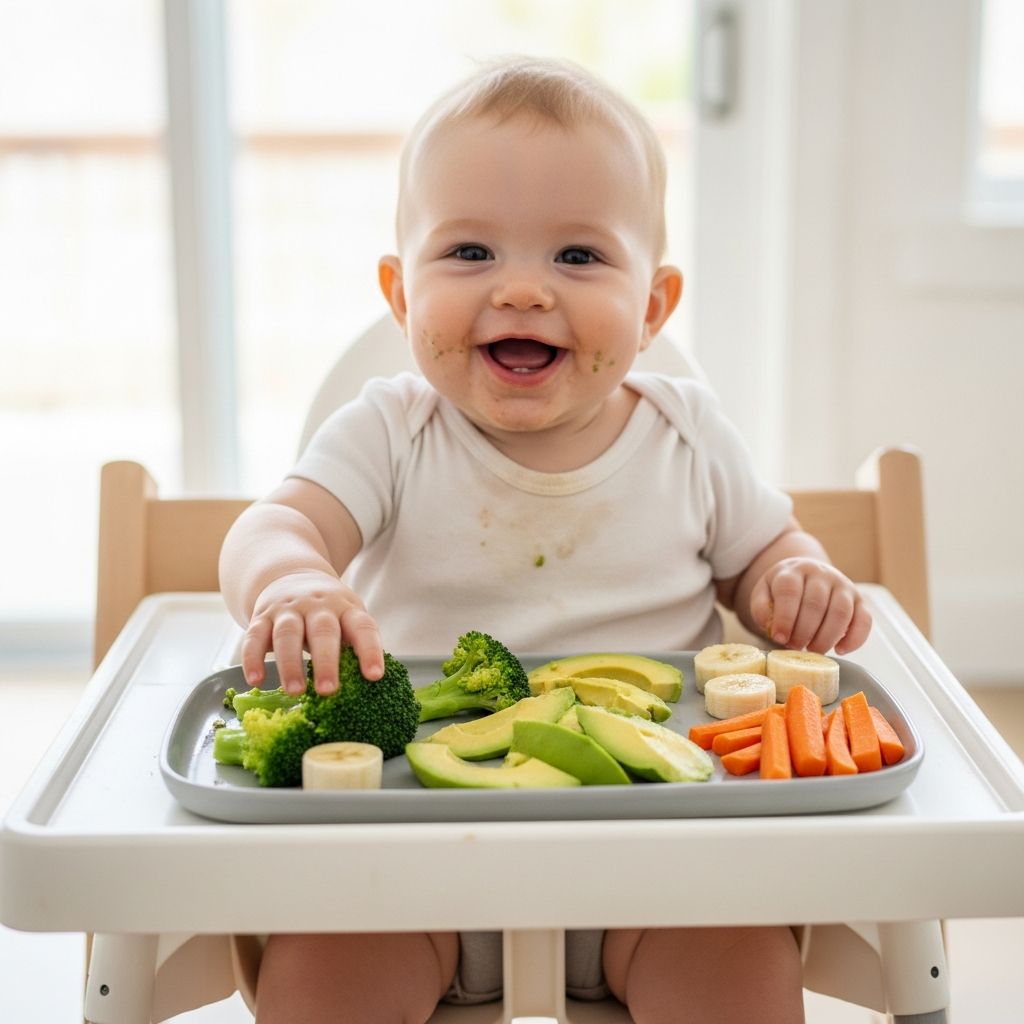
Baby-led weaning (BLW) allows infants to self-feed soft finger foods starting around six months, skipping purees in favor of family meals adapted for safety. This approach promotes autonomy while aligning with developmental readiness for solids.
Understanding the Baby-Led Weaning Approach
In BLW, babies grasp foods themselves, exploring textures and flavors at their pace. Introduced in the early 2000s, it contrasts traditional spoon-feeding by emphasizing whole, soft pieces over mashed foods. Babies must show signs of readiness: sitting upright with head control, good hand-eye coordination, and loss of tongue-thrust reflex.
Developmental milestones around 6 months make this feasible, as infants’ gag reflex positions forward to protect airways, distinguishing it from true choking.
Key Advantages of Self-Feeding for Infants
BLW fosters independence, allowing babies to control portions based on hunger cues, potentially reducing overeating risks compared to spoon-feeding.
- Enhanced Motor Development: Grasping and chewing build hand-eye coordination and oral skills essential for chewing and swallowing.
- Appetite Self-Regulation: Babies stop when full, learning satiety signals early, which may prevent obesity later.
- Reduced Picky Eating: Exposure to family foods introduces diverse tastes and textures, encouraging acceptance of varied diets.
- Family Meal Integration: Simplifies routines as babies join shared meals, saving time on separate purees.
- Cost and Time Savings: No need for blending or buying jarred foods; use household ingredients.
Studies indicate BLW infants often show better nutrient intake variety without deficiencies when planned well.
Potential Drawbacks and How to Address Them
Despite benefits, BLW presents challenges like messiness and monitoring intake. Babies may play with food more than eat, leading to waste, but this sensory exploration aids learning.
| Challenge | Impact | Solution |
|---|---|---|
| Messy Meals | Food everywhere, more cleanup | Use bibs, floor mats, and high chairs; embrace it as learning. |
| Hard to Track Intake | Uncertainty on calories/nutrients | Offer balanced options frequently; consult pediatricians for growth checks. |
| Increased Gagging | Normal but alarming for parents | Recognize gag vs. choke; supervise closely. |
| Nutrient Gaps | Possible low iron/energy if unbalanced | Prioritize iron-rich foods like meat, fortified cereals; continue breastmilk/formula. |
BLW does not inherently risk more choking than traditional methods if guidelines are followed, though evidence is limited.
Safety Essentials: Preventing Choking and Allergens
Supervision is non-negotiable; seat baby upright in a supportive chair. Learn infant CPR beforehand.
- Food Preparation: Offer soft, graspable pieces: steam veggies until mushy, cut into finger strips. Avoid hard/round items like whole grapes, nuts, popcorn, or raw carrots.
- No-Honey Rule: Under 12 months, skip honey due to botulism risk.
- Allergen Introduction: Offer high-risk foods (peanuts, eggs, fish) early around 6 months, in small amounts, per guidelines.
- Supervision Tips: No feeding in swings/car seats; stay calm during gagging.
Distinguish gagging (noisy, partial airway block) from choking (silent, full block). Proper cuts reduce risks significantly.
Nutritional Planning for Thriving Babies
BLW relies on breastmilk or formula as primary nutrition until 12 months. Solids complement, focusing on iron-rich options: soft meats, beans, fortified cereals.
Sample Daily Menu for 6-8 Months:
| Meal | Safe BLW Options |
|---|---|
| Breakfast | Mashed avocado on toast fingers, ripe banana strips |
| Lunch | Steamed broccoli florets, ground beef strips |
| Dinner | Baked sweet potato wedges, yogurt-dipped fingers |
| Snacks | Soft pear slices, cheese puffs (melted) |
Ensure vitamin D supplements and gradual cow’s milk intro post-12 months. Monitor growth; adjust if needed.
Comparing Baby-Led Weaning to Traditional Purees
Spoon-feeding offers precise intake control but may delay self-feeding skills and increase overfeeding.
| Aspect | Baby-Led Weaning | Spoon-Feeding |
|---|---|---|
| Independence | High; early self-regulation | Lower; parent-controlled |
| Mess Level | High | Low |
| Skill Building | Strong motor/oral development | Delayed self-feeding |
| Picky Eating Risk | Lower | Potentially higher |
| Prep Time | Minimal | High (pureeing) |
Hybrid approaches work: start with purees, transition to fingers. No method is superior; choose based on baby’s cues and parental comfort.
When Baby-Led Weaning Might Not Suit Your Family
Not ideal for all: babies with delays, low muscle tone, or special needs may need purees. If growth stalls or refusal persists, revert to spoons.
Consult pediatricians, especially for prematurity or allergies.
Frequently Asked Questions
Is choking more common with baby-led weaning?
No evidence shows higher risk when prepared properly; gagging is normal.
At what age should I start BLW?
Around 6 months, when baby sits supported and reaches for food.
Does BLW meet nutritional needs?
Yes, with planning; prioritize iron and continue milk feeds.
How do I handle messy meals?
Embrace it with protective gear; it aids sensory development.
Can I combine BLW with purees?
Absolutely; a hybrid builds skills gradually.
Embracing the Journey: Final Thoughts on BLW Success
BLW transforms mealtimes into joyful explorations. Patience yields confident eaters. Track progress, stay informed, and enjoy this milestone.
References
- “Baby-led weaning” – Progress in infant feeding or risky trend? — PubMed/NCBI. 2022-09-13. https://pubmed.ncbi.nlm.nih.gov/36109286/
- Baby-led weaning vs. spoon-feeding: Which is best? — CHOC Health. Accessed 2026. https://health.choc.org/baby-led-weaning-vs-spoon-feeding/
- Baby-Led Weaning: What You Need To Know — Cleveland Clinic. Accessed 2026. https://health.clevelandclinic.org/baby-led-weaning
- Baby-led weaning vs Puree: Which method is better? — Huckleberry. Accessed 2026. https://huckleberrycare.com/blog/baby-led-weaning-vs-purees
- Baby-led Weaning: What Parents Need to Know — Texas Children’s Hospital. Accessed 2026. https://www.texaschildrens.org/content/wellness/baby-led-weaning-what-parents-need-know
- Baby-led Weaning – Topic of the Month — Minnesota Department of Health (.gov). Accessed 2026. https://www.health.state.mn.us/docs/people/wic/localagency/topicmonth/blw.pdf
- Baby-Led Feeding Benefits & Safety Tips — Capital Area Pediatrics. Accessed 2026. https://www.capitalareapediatrics.com/blog/baby-led-feeding-potential-benefits-and-safety-tips