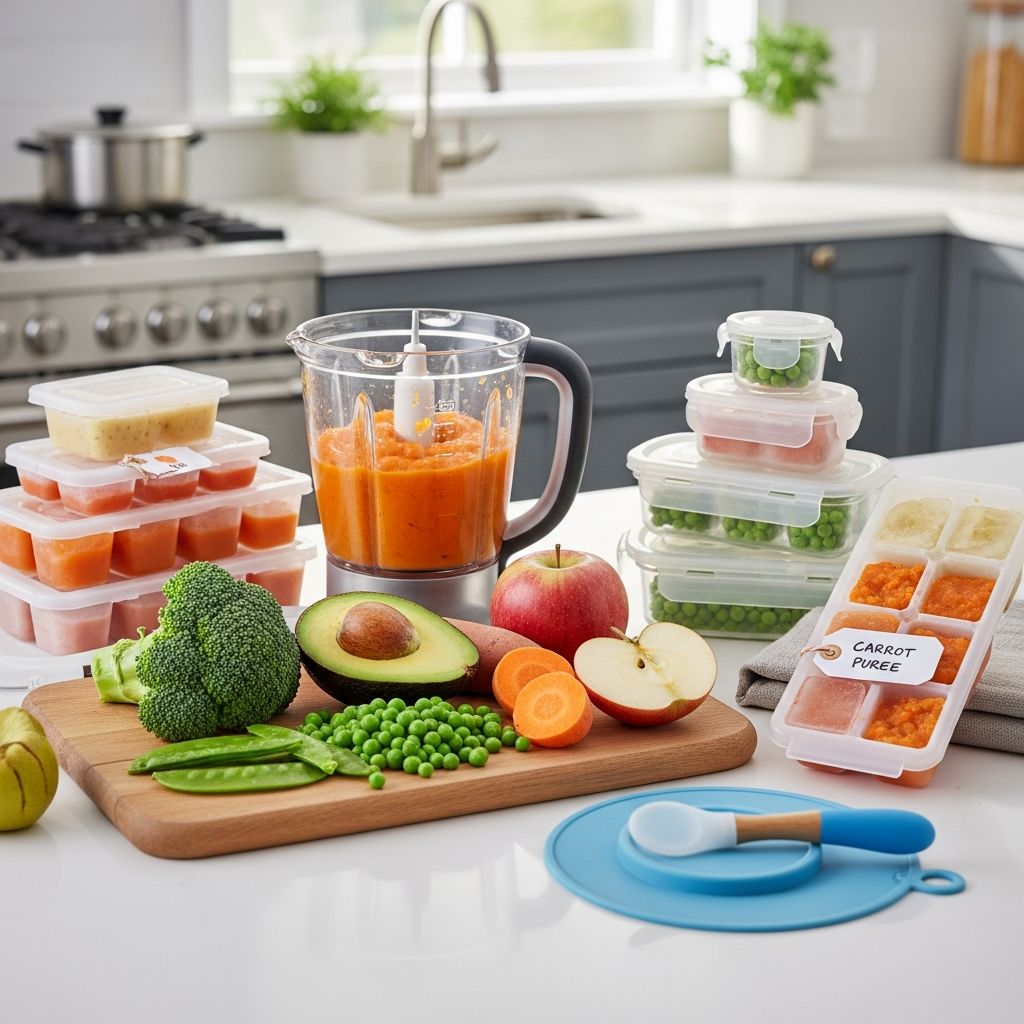
Creating homemade baby food offers parents control over ingredients, ensuring fresh, nutrient-rich meals tailored to a baby’s needs. This approach promotes healthy eating habits while being cost-effective. Key to success lies in rigorous hygiene, proper cooking, safe storage, and mindful serving practices to minimize risks like bacterial contamination or choking.
Why Choose Homemade for Your Little One
Homemade options allow customization for developmental stages, from smooth purees for newborns to chunkier textures for toddlers. Parents can incorporate seasonal produce, avoiding added sugars, salts, or preservatives common in commercial products. Studies show fresh preparations retain more vitamins through gentle cooking methods like steaming. Beyond nutrition, it fosters family mealtime bonds by adapting family recipes—simply reserve baby portions before seasoning.
Financially, batch-preparing saves money; a single batch of pureed carrots or apples yields multiple servings at a fraction of store-bought costs. Environmentally, it cuts packaging waste. However, safety is paramount—improper handling can lead to foodborne illnesses, which infants’ immature immune systems fight poorly.
Essential Ingredients and What to Skip
Start with high-quality, fresh produce: vibrant fruits and vegetables signal peak nutrition. Opt for seasonal items to maximize flavor and value. For frozen alternatives, select plain varieties without sauces, sugars, or salts. Canned goods should be low-sodium or packed in natural juices—rinse thoroughly if needed.
Proteins like poultry, fish, or meats must be lean, with fat, bones, and gristle removed pre-cooking. Eggs require full cooking to 160°F to eliminate salmonella risks. Dairy, if introduced per pediatric guidance, should be pasteurized.
Foods to Avoid Completely
- Honey: Poses botulism risk from bacterial spores; never offer to babies under 12 months.
- Raw or Undercooked Eggs/Meats: High contamination potential.
- Unpasteurized Juices or Dairy: Listeria threats.
- High-Nitrate Veggies Early On: Like beets or spinach for young infants, introduce gradually.
- Added Sugars/Salts: Babies’ kidneys can’t process excess; flavor develops naturally.
Introduce single-ingredient foods one at a time, waiting 3-5 days to monitor allergies, such as rashes or digestive upset.
Step-by-Step Preparation Guide
Hygiene forms the foundation: Wash hands for 20 seconds with soap and warm water. Clean counters, cutting boards, and tools with hot soapy water, rinsing thoroughly. Use separate boards for meats to prevent cross-contamination.
Cleaning and Prepping Produce
Scrub fruits and veggies under lukewarm running water, using a brush for firm skins. Peel where possible, removing seeds, pits, or tough cores. Root veggies like carrots demand extra scrubbing due to soil bacteria.
Cooking Methods for Nutrient Retention
Steaming preserves vitamins better than boiling, as nutrients don’t leach into water. Microwave in covered dishes for even cooking. Bake, poach, or broil meats to safe internal temperatures: 165°F for poultry, 160°F for ground meats, 145°F for fish. Cool cooked items fully before pureeing to avoid burns and ensure smooth blending.
| Food Type | Best Cooking Method | Safe Internal Temp (°F) | Texture Progression |
|---|---|---|---|
| Vegetables (e.g., carrots, peas) | Steam or microwave | N/A | Puree → Mash → Dice |
| Fruits (e.g., apples, pears) | Steam or bake | N/A | Puree → Mash |
| Poultry/Meat | Poach, bake, broil | 165/160 | Puree → Minced |
| Fish | Poach or bake | 145 | Flake finely |
Pureeing and Texturizing
Blend with breast milk, formula, or water for desired smoothness. Strain for lump-free results initially. As baby advances (around 6-9 months), transition to mashes; by 9-12 months, offer soft finger foods.
Freezing: Batch It Right
Freezing extends shelf life, allowing bulk prep. Portion 1-2 tablespoons per cube or mound on parchment-lined trays. Freeze solid (4-6 hours), then transfer to airtight bags or containers, labeled with contents and date. Avoid freezer burn by squeezing out air.
Storage durations: Fruits/veggies up to 3 months; meats 1-2 months. Thaw overnight in fridge, or gently via microwave/stovetop—never room temp to curb bacteria. Consume thawed food within 48 hours; discard uneaten servings.
- Pro Tip: Use ice cube trays for easy portions matching baby spoons.
- Family Hack: Freeze family meal purees pre-seasoning.
Serving and Reheating Safely
Transfer portions to clean bowls; never feed directly from storage to prevent saliva contamination speeding spoilage. Cool to lukewarm—test on inner wrist. Reheat gently, stirring to eliminate hot spots; microwaves demand 15-30 second bursts with standing time.
Room temp limit: 2 hours max. Discard leftovers immediately. Supervise eating to prevent choking; cut foods appropriately.
Common Pitfalls and Fixes
Avoid overfeeding from jars/bags, refreezing thawed food, or microwaving meats (high fat causes splatters). No chewing food for baby—transfers oral bacteria. Skip teas or unproven remedies like star anise.
Age-Based Feeding Milestones
- 4-6 Months: Single-ingredient purees (rice cereal, squash).
- 6-8 Months: Multi-veggie mixes, thinned yogurts.
- 8-12 Months: Mashed combos with proteins, soft finger foods.
Consult pediatricians for iron-rich intros like fortified cereals.
Frequently Asked Questions
Can I use family leftovers for baby food?
Not recommended; fresh prep is safest. If using, refrigerate immediately and consume within 24-48 hours, meats sooner.
How long does frozen baby food last?
1-3 months ideally; label and rotate stock.
Is microwaving safe for reheating?
Yes, if stirred and tested; avoid jars and high-fat meats.
What if baby refuses new flavors?
Persist gently; mix with favorites. One new food weekly.
Can I add spices?
Mild herbs post-6 months; no salt/sugar.
References
- Tips for safely making homemade baby food — Michigan State University Extension. 2023. https://www.canr.msu.edu/news/homemade_baby_food_is_healthy_and_cost-effective
- Scratch-Prepared Baby Food — National CACFP Sponsors Association. 2024-10-08. https://www.cacfp.org/2024/10/08/scratch-prepared-baby-food/
- Homemade Baby Food — Nebraska DHHS. 2025. https://dhhs.ne.gov/WIC%20Documents/Homemade-Baby-Food.pdf
- Once Baby Arrives (Food Safety for Moms-to-Be) — FDA. 2024. https://www.fda.gov/food/people-risk-foodborne-illness/once-baby-arrives-food-safety-moms-be
- Infant Feeding: Tips for Food Safety — USDA WIC Works. 2023. https://wicworks.fns.usda.gov/sites/default/files/media/document/Infant_Feeding_Food_Safety_Job_Aid.pdf
- Storing and Reheating — University of Illinois Extension. 2024. https://feedingmybaby.extension.illinois.edu/homemade-baby-food/storing/
- Safe Storage of Puréed and Solid Baby Food — FoodSafety.gov. 2023. https://www.foodsafety.gov/print/pdf/node/29?id=baby-food-storage