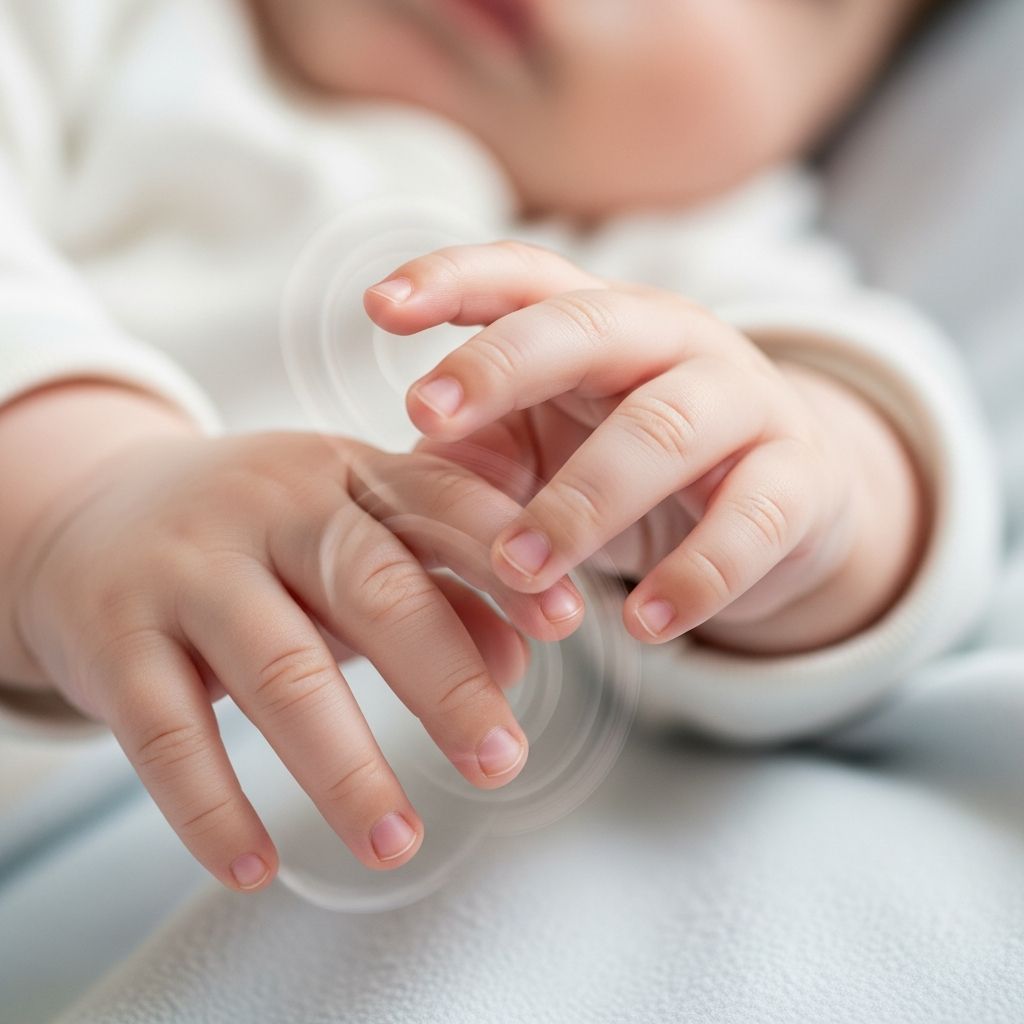
Observing subtle shakes or tremors in a newborn can spark immediate concern for parents. These involuntary movements, often seen in the limbs, head, or chin, are frequently a normal aspect of early neurological development but can occasionally signal underlying issues. This comprehensive guide explores the spectrum of infant tremors, from benign jitters to rarer syndromes, empowering parents with knowledge to differentiate routine behaviors from those needing professional evaluation.
Common Types of Movements in Newborns and Infants
Infants exhibit a variety of spontaneous movements as their central nervous system matures. Distinguishing these from pathological tremors is key to avoiding unnecessary anxiety.
- Jitteriness: Rapid, fine trembling typically in the arms and legs, most noticeable during crying or excitement. This is a primitive reflex that diminishes by 1-2 months as motor control strengthens.
- Shudders: Brief, shiver-like episodes in the head, shoulders, or arms lasting seconds. Often linked to neurological immaturity or minor adrenaline responses.
- Myoclonic Jerks: Sudden, twitchy contractions resembling startle responses, common in sleep transitions.
- Positional Tremors: Shaking during attempts to lift the head or grasp objects, reflecting emerging fine motor skills.
These movements usually resolve spontaneously with growth, peaking in the first few weeks of life.
Why Do Babies Shake? Insights into Normal Development
The immature brain and nervous system of a newborn are wired for rapid change, leading to uncoordinated signals that manifest as tremors. During the first two months, neural pathways are forming, causing intermittent instability in muscle control. For instance, fine tremors in the chin or limbs often coincide with motor milestones like head lifting, signaling active skill acquisition.
Hunger, discomfort from wet diapers, or overstimulation can amplify these shakes, serving as communication cues. Crying-induced trembling, in particular, stems from heightened arousal and typically halts with soothing. As myelin sheaths—insulating layers around nerves—thicken, movements smooth out, usually by 3-4 months.
| Movement Type | Typical Age | Triggers | Duration |
|---|---|---|---|
| Jitteriness | Birth-2 months | Crying, excitement | Seconds |
| Shudders | 1-6 months | Excitement, low blood sugar | 1-3 seconds |
| Chin Trembling | Newborns | Feeding, fatigue | Brief |
| Limb Twitches | 0-3 months | Sleep-wake transitions | Milliseconds |
This table summarizes benign patterns, helping parents track observations.
Beyond Normal: Nutritional Deficiencies and Infantile Tremor Syndrome
While most shakes are harmless, persistent or coarse tremors may indicate Infantile Tremor Syndrome (ITS), a condition tied to nutritional shortfalls, especially vitamin B12 deficiency. ITS features include developmental delays, head nodding, limb tremors, hyperpigmentation, and sparse hair, often in exclusively breastfed infants of vegetarian mothers lacking B12-fortified diets.
Research links low B12 to reduced cerebrospinal fluid levels, impairing neurological function and causing tremors that worsen with stress or infection but cease in sleep. Other deficiencies like iron, zinc, or magnesium exacerbate symptoms. Neuroimaging may reveal cortical atrophy or myelin changes, but symptoms improve dramatically with supplementation, underscoring prevention through timely complementary feeding.
Affected infants often present apathetic, with plump facies masking grade 2 malnutrition. Early intervention prevents regression, highlighting the need for maternal screening in at-risk groups.
Distinguishing Benign Tremors from Neurological Concerns
Not all shakes are innocuous. Essential tremor, a rhythmic shaking worse with action and potentially familial, can appear in infancy, affecting hands, head, or voice. Though rare in newborns, it intensifies with stress, low glucose, or medications.
More critically, differentiate from seizures. Infantile spasms (West syndrome), a severe epilepsy, involve clusters of brief flexor jerks, often post-wake, with developmental stagnation. Unlike jitters, spasms persist despite comfort and may include eye deviation or breathing changes.
Shuddering attacks mimic seizures but are benign, resolving quickly without post-ictal drowsiness. Key differentiators:
- Benign: Stops with holding/diaper change, no consciousness loss.
- Seizures: Rhythmic, repetitive, unresponsive to soothing, possible cyanosis.
When to Consult a Pediatrician: Red Flag Indicators
Trust parental intuition. Seek immediate care if tremors:
- Persist beyond 2 months or worsen.
- Occur during sleep or without triggers.
- Accompany vomiting, lethargy, poor feeding, or milestones regression.
- Are unilateral, rhythmic, or cluster in series.
- Feature eye rolling, stiffening, or breathing pauses.
Pediatric neurologists use EEGs, blood tests, and imaging for diagnosis. Early detection of treatable causes like B12 deficiency yields excellent prognoses.
Supporting Healthy Development and Preventing Issues
Promote optimal growth to minimize tremor risks:
- Ensure balanced maternal nutrition, especially B12 via meat, eggs, or supplements for vegetarians.
- Introduce iron-rich solids at 4-6 months alongside breastfeeding.
- Provide tummy time daily to build motor strength.
- Maintain feeding schedules to stabilize blood sugar.
- Track milestones with pediatric check-ups.
Gentle handling and responsive caregiving reduce stress-exacerbated shakes.
Parental Experiences and Expert Reassurance
Many parents recount initial panic over chin quivers during feeds, later confirmed normal. Forums echo relief post-doctor visits ruling out seizures. Experts emphasize 90% of newborn tremors self-resolve, but vigilance ensures rare issues like ITS are caught early.
Frequently Asked Questions About Baby Tremors
Are all baby shakes normal?
Most are, especially in the first months, due to nervous system maturation. Persistent or atypical ones warrant checking.
Can diet cause tremors?
Yes, vitamin B12 deficiency from exclusive breastfeeding without solids can lead to ITS. Supplement as advised.
How to stop jitteriness?
Swaddling, feeding, or skin-to-skin contact often calms it. If ongoing, see a doctor.
Is shuddering the same as seizures?
No, shudders are brief and benign; seizures are repetitive and alter awareness.
When do tremors go away?
Benign ones fade by 2-4 months; monitor for longer durations.
This FAQ section addresses top concerns for quick reference.
References
- Infantile Tremor Syndrome With Movement Disorder — National Institutes of Health (NIH). 2023. https://pmc.ncbi.nlm.nih.gov/articles/PMC9884106/
- Baby Tremors and Shakes: A New Mom’s Guide — TuMama Kids. 2023. https://tumama-kids.com/blogs/infant-growth-and-development/baby-tremors-and-shakes-a-new-moms-guide-to-baby-movements
- Essential Tremor — Child Neurology Foundation. 2024. https://www.childneurologyfoundation.org/disorder/essential-tremor/
- What Is Infant Shudder Syndrome? — Wagner Reese, LLP. 2023. https://www.wagnerreese.com/blog/what-is-infant-shudder-syndrome/
- Tremors in Children — UCSF Benioff Children’s Hospitals. 2024. https://www.ucsfbenioffchildrens.org/conditions/tremors
- Infantile Spasms: Causes, Symptoms & Prognosis — Cleveland Clinic. 2024. https://my.clevelandclinic.org/health/diseases/22494-infantile-spasms
- Infantile Spasms: What Parents Need to Know — American Academy of Pediatrics (HealthyChildren.org). 2023. https://www.healthychildren.org/English/health-issues/conditions/seizures/Pages/Infantile-Spasms-What-Parents-Need-to-Know.aspx
- Newborn Reflexes and Behavior — Seattle Children’s Hospital. 2024. https://www.seattlechildrens.org/conditions/a-z/newborn-reflexes-and-behavior/