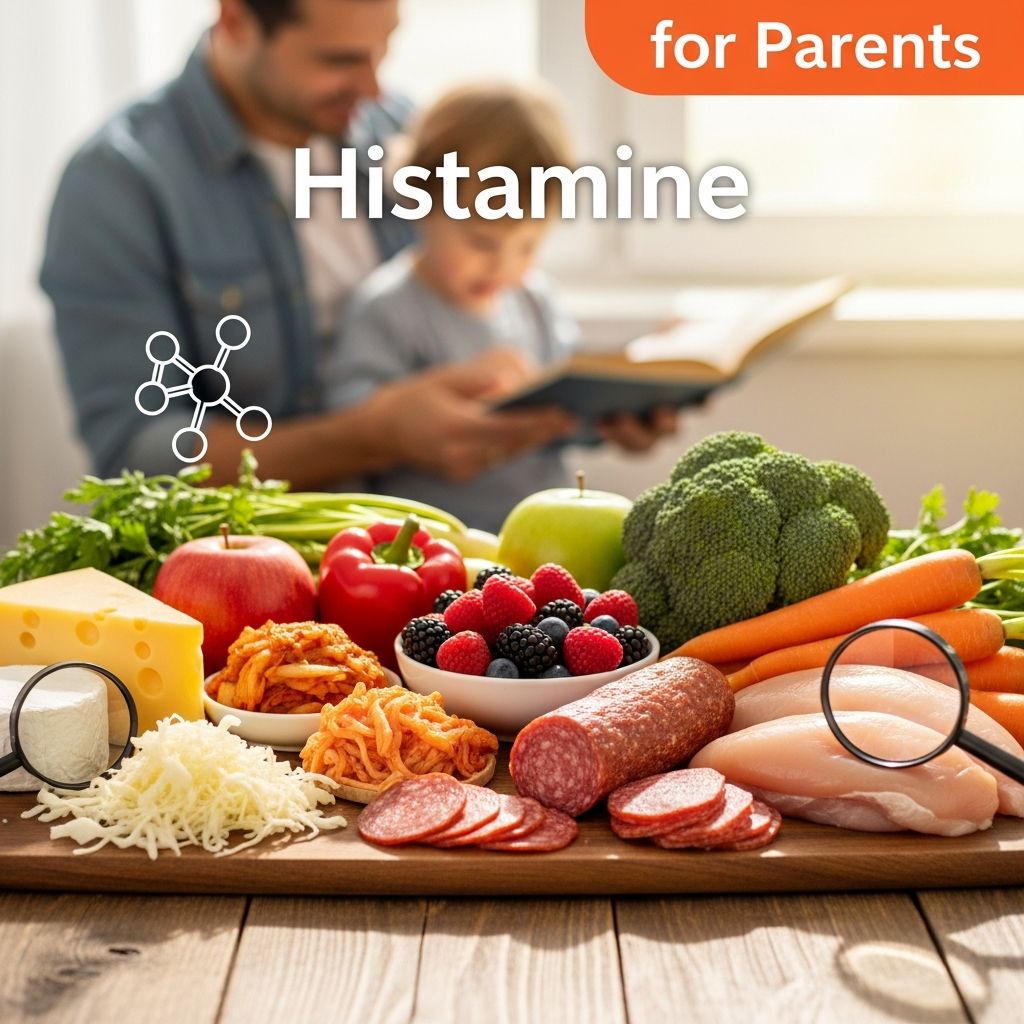
Histamine is a natural chemical in the body that plays crucial roles in keeping children healthy, but it can also trigger uncomfortable allergy symptoms. Understanding its functions helps parents recognize when it’s protecting the body or causing issues like sneezing or rashes.
The Building Blocks: How Histamine Forms in a Child’s Body
Produced from the amino acid histidine through a process called decarboxylation, histamine is made by specific cells like mast cells and basophils. These immune cells store histamine in granules, releasing it when needed to respond to threats.
In kids, this production ramps up during growth phases or immune challenges. While most histamine is quickly broken down by enzymes such as histamine-N-methyltransferase and diamine oxidase, imbalances can lead to excess buildup, especially in sensitive children.
Protective Powerhouse: Histamine’s Immune Defense Role
Histamine acts as the body’s alarm system during infections or injuries. When mast cells detect harmful invaders via immunoglobulin E (IgE) antibodies, they release histamine, causing blood vessels to widen (vasodilation) and become leakier. This brings immune cells to the site, creating swelling, redness, and warmth—classic inflammation signs that isolate and fight pathogens.
For children, this mechanism is vital against bacteria or viruses, signaling other white blood cells like neutrophils and eosinophils to join the battle. Without it, minor threats could escalate into serious infections.
Guiding Immune Traffic
- Chemoattraction: Draws leukocytes to inflamed areas for targeted defense.
- Vascular Changes: Increases permeability to flood tissues with healing fluids.
- Cell Activation: Stimulates monocytes, T cells, macrophages, and dendritic cells for broader immunity.
This coordinated response ensures quick recovery, but in allergies, it mistakenly targets harmless substances like pollen.
Digestive Guardian: Regulating Stomach and Gut Health
Beyond immunity, histamine fine-tunes digestion. In the stomach’s parietal cells, it binds to H2 receptors, prompting hydrochloric acid (HCl) release to break down food. This is essential for nutrient absorption in growing kids.
It also influences intestinal motility, helping food move smoothly. Disruptions here, from high-histamine foods or intolerance, can cause tummy troubles like cramps or diarrhea in sensitive children.
| Receptor | Location | Effect |
|---|---|---|
| H2 | Stomach parietal cells | Increases gastric acid for digestion |
| H2/H3 | Gut smooth muscle | Regulates motility and prevents spasms |
| H4 | Intestinal epithelia | Modulates inflammation in gut lining |
Parents should note that fermented foods (cheese, yogurt) naturally high in histamine might overwhelm a child’s system if they’re prone to reactions.
Brain Buddy: Histamine in Sleep, Alertness, and Learning
In the central nervous system, histamine serves as a neurotransmitter via H3 receptors in the brain. It promotes wakefulness, helping kids stay alert during school hours, and fine-tunes sleep cycles by inhibiting other chemicals like acetylcholine and serotonin at night.
H3 receptors also guard the blood-brain barrier, controlling what enters the brain. This supports focus, memory, and mood regulation—key for a child’s development.
- Daytime: Boosts histamine for attention and learning.
- Nighttime: Lowers levels for restful sleep.
- Imbalance: Can lead to drowsiness or hyperactivity in some kids.
Research shows histamine influences dopamine and norepinephrine, aiding cognitive functions essential for academic success.
When Protection Turns Problematic: Allergy Reactions in Children
Allergies occur when the immune system overreacts to innocent triggers like dust mites, pet dander, or peanuts, flooding the body with histamine. Symptoms hit fast: itchy eyes, runny nose, hives, or wheezing as H1 receptors on skin, lungs, and airways react.
In severe cases, anaphylaxis causes throat swelling and breathing trouble—a medical emergency. Kids with asthma or eczema are at higher risk, as H4 receptors on immune cells amplify cytokine release, worsening inflammation.
Seasonal allergies peak in spring from pollen, while food allergies might flare after meals. Early exposure shapes immune tolerance, so breastfeeding and diverse diets may build resilience.
Common Childhood Triggers
- Pollen, mold: Respiratory symptoms.
- Foods (nuts, shellfish): Skin rashes, vomiting.
- Insect stings: Localized swelling.
- Medications: Rare but serious hives.
Four Key Receptors: Histamine’s Control Panel
Histamine’s effects depend on four G-protein-coupled receptors (H1-H4), each in specific tissues.
| Receptor | Main Locations | Primary Functions | Allergy Role |
|---|---|---|---|
| H1 | Skin, lungs, blood vessels, brain | Vasodilation, itching, bronchoconstriction, wakefulness | Drives sneezing, hives, runny nose |
| H2 | Stomach, smooth muscles, heart | Acid secretion, vascular permeability, muscle relaxation | Contributes to swelling |
| H3 | Brain neurons | Regulates neurotransmitters, sleep-wake cycle | Minimal in allergies |
| H4 | Immune cells (eosinophils), spleen, lungs | Chemotaxis, cytokine release, inflammation modulation | Exacerbates asthma, dermatitis |
H1 and H4 are allergy hotspots, while H2 aids digestion. Blocking them selectively treats symptoms without disrupting vital roles.
Spotting Symptoms: What to Watch For in Kids
Reactions vary: mild (itchy skin) to severe (difficulty breathing). Skin signs include red welts; respiratory ones feature coughing or tightness. Gastrointestinal issues bring nausea.
Track patterns—post-playground sneezes or nut butter rashes—to identify culprits. Consult pediatricians for skin prick tests confirming IgE involvement.
Safe Relief: Antihistamines and Beyond for Children
Antihistamines block receptors: H1 blockers like loratadine ease itching without drowsiness, ideal for school days. H2 blockers (e.g., ranitidine) soothe stomach woes.
For bad flares, epinephrine auto-injectors save lives in anaphylaxis. Nasal steroids or eye drops target local symptoms. Always dose by weight and age—never adult meds for tots.
- First-Line: Oral antihistamines for mild cases.
- Severe: EpiPen, ER visit.
- Long-Term: Immunotherapy builds tolerance.
Avoid unproven detoxes; stick to evidence-based care.
Prevention Strategies: Everyday Tips for Allergy-Proof Homes
Minimize exposure: Use allergen-proof bedding, vacuum often, keep windows shut during high pollen. Introduce peanuts early (4-6 months) per guidelines to cut allergy risk.
Diet tweaks help—fresh foods over aged cheeses. Probiotics might balance gut histamine. Allergy shots desensitize over years for lasting relief.
Special Concerns: Histamine Issues Beyond Allergies
Intolerance (DAO deficiency) mimics allergies from high-histamine foods like wine or cured meats, causing headaches or flushing. Rare in kids but testable.
In asthma, histamine worsens bronchoconstriction via H1. Eczema flares from skin release. Ongoing research explores H4 blockers for better control.
Frequently Asked Questions (FAQs)
Can all kids develop histamine reactions?
Yes, but genetics and environment play roles. Family history raises risk; about 1 in 5 children have allergies.
Are antihistamines safe for babies?
Not under 6 months without doctor okay. Use saline drops first; consult pros for dosing.
Does diet affect histamine levels?
Yes, avoid triggers like fermented items if sensitive. Low-histamine diets help some.
What if symptoms don’t improve?
See an allergist for tests or advanced treatments like biologics.
Can vaccines trigger histamine release?
Rarely; premedicate if history of reactions. Benefits outweigh risks.
This guide empowers parents to navigate histamine’s dual nature, fostering healthier, happier kids through informed choices.
References
- Functioning of histamine in the body — Ambar Lab. 2023. https://ambar-lab.com/en/functioning-of-histamine-in-the-body/
- What Is Histamine? — Cleveland Clinic. 2023-10-27. https://my.clevelandclinic.org/health/articles/24854-histamine
- The Role of Histamine and Histamine Receptors in Mast Cell Activation — Frontiers in Immunology. 2018-08-21. https://www.frontiersin.org/journals/immunology/articles/10.3389/fimmu.2018.01873/full
- Biochemistry, Histamine — StatPearls, NCBI Bookshelf, NIH. 2023-07-17. https://www.ncbi.nlm.nih.gov/books/NBK557790/
- Histamine — EBSCO Research Starters. 2023. https://www.ebsco.com/research-starters/health-and-medicine/histamine
- Histamine — Wikipedia. 2026-01-10. https://en.wikipedia.org/wiki/Histamine
- Histamine: The Stuff Allergies are Made of — MedlinePlus. 2023. https://medlineplus.gov/medlineplus-videos/histamine-the-stuff-allergies-are-made-of/