The Hidden Educational Value of Hand Clapping Games
When children gather to play hand clapping games, they engage in far more than simple entertainment. These timeless activities represent a sophisticated form of developmental play that activates multiple areas of the brain simultaneously. The rhythmic patterns, synchronized movements, and verbal components combine to create a comprehensive learning experience that educators and developmental specialists increasingly recognize as invaluable for childhood growth.
Hand clapping games have existed across cultures for generations, yet modern research reveals why these games remain so effective for child development. The structured nature of clapping sequences, paired with memorized rhymes and coordinated movements between partners, creates an environment where children naturally develop essential skills without feeling like they are participating in formal instruction. This organic approach to learning makes hand clapping games particularly effective for children who might resist more traditional educational methods.
Physical Development Through Coordinated Movement
The physical benefits of hand clapping games extend far beyond simple fun. When children participate in these activities, they engage in complex motor planning that strengthens their ability to execute coordinated movements. The requirement to synchronize hand movements with a partner forces the brain to process visual information, anticipate timing, and execute precise physical responses—all simultaneously.
Building Hand-Eye Coordination and Tracking Skills
Hand clapping games demand constant visual attention to both personal hand movements and those of a partner. This requirement strengthens hand-eye coordination as children learn to observe, predict, and respond to movement patterns. The continuous tracking of moving hands develops the eye muscles and neural pathways responsible for visual pursuit, a skill that directly translates to improved reading ability and athletic performance. Children must process visual information in real-time and adjust their movements accordingly, creating a feedback loop that reinforces neural connections.
Bilateral Coordination and Cross-Midline Movement
These games require both sides of the body to work in harmony, whether performing identical movements simultaneously or executing alternating patterns. This bilateral coordination strengthens connections between the left and right brain hemispheres, supporting executive functioning, impulse control, and emotional regulation. Many clapping patterns naturally encourage children to cross the midline of their bodies—reaching across the center point—which is a critical developmental milestone that supports academic skills like reading and writing.
Motor Planning and Sequencing Abilities
The repetitive nature of hand clapping games provides extensive practice in motor planning, the cognitive ability to plan and execute a series of coordinated movements. As children learn increasingly complex sequences, their brains develop stronger pathways for organizing multi-step motor tasks. This improvement in motor planning extends to other activities, including handwriting, sports participation, and musical instrument performance.
Cognitive and Academic Skill Development
Beyond the physical realm, hand clapping games stimulate cognitive development in ways that directly support academic learning. The combination of rhythm, pattern recognition, memory demands, and timing challenges creates a multi-sensory learning experience that strengthens foundational academic skills.
Memory Enhancement and Pattern Recognition
Players must memorize complex sequences of movements and verbal components, then recall and execute them accurately. This practice strengthens working memory—the cognitive system responsible for temporarily holding and manipulating information. The pattern-based nature of clapping sequences also develops pattern recognition skills, which form the foundation for mathematical thinking, reading comprehension, and problem-solving across academic domains.
Language Development and Auditory Processing
The rhymes and chants accompanying hand clapping games enhance phonemic awareness—the ability to recognize and manipulate individual sounds within words. Children learn to recognize rhyming patterns, understand rhythm and cadence, and expand their vocabulary through repetition and memorization. The simultaneous engagement of speaking, listening, and moving creates a multi-modal learning experience that strengthens auditory processing and language retention. Children who participate in these games develop a stronger sense of rhythm and rhyme, skills that directly support reading development and literacy acquisition.
Mathematical Thinking and Counting Skills
Many clapping games incorporate counting, sequences, and pattern creation that reinforce fundamental mathematical concepts. Children naturally engage with concepts like rhythm patterns, numerical sequences, and spatial relationships. This indirect exposure to mathematical thinking helps children develop numerical fluency and pattern recognition without formal instruction.
Social and Emotional Development
Perhaps the most significant advantage of hand clapping games lies in their capacity to foster social and emotional growth. Unlike competitive games that create winners and losers, most clapping games emphasize cooperation and mutual success, creating a uniquely supportive play environment.
Cooperation and Communication Building
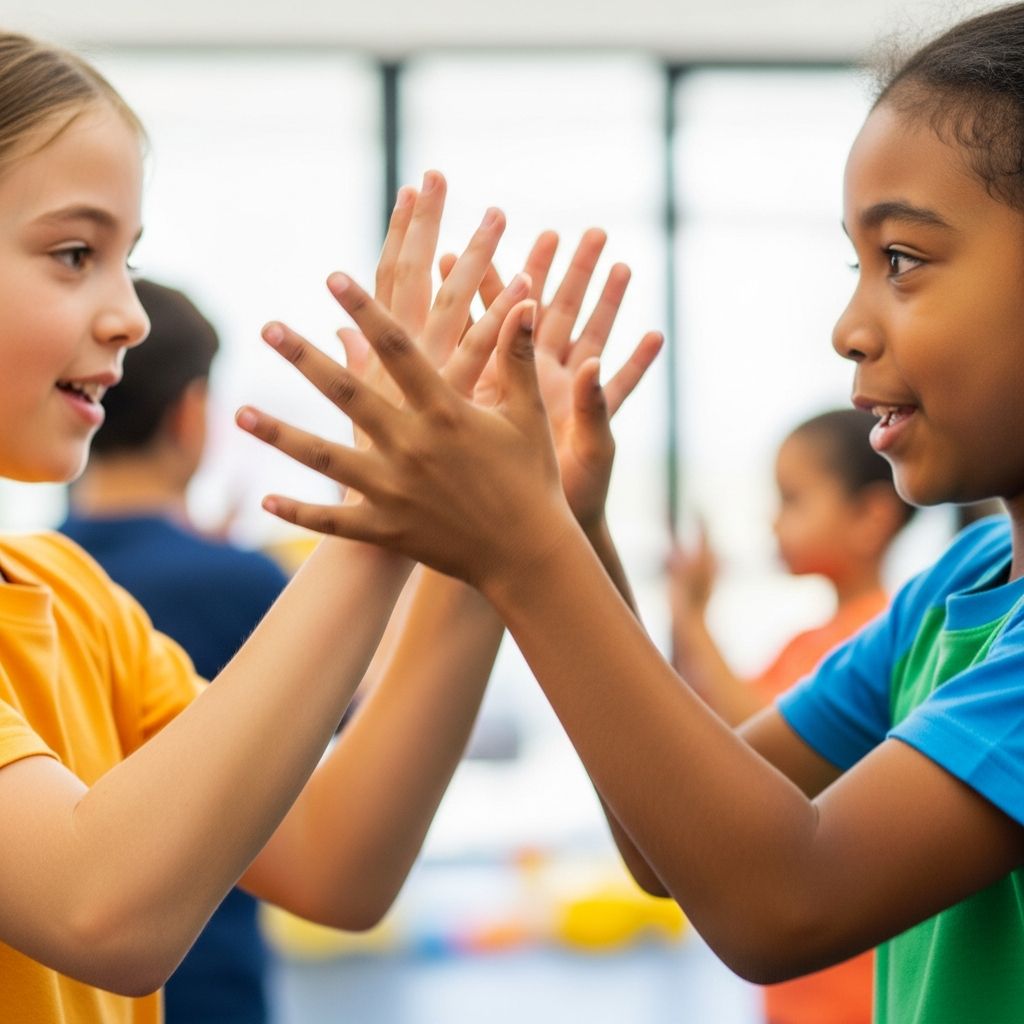
Hand clapping games inherently require two or more players to achieve success. This cooperative structure necessitates communication, timing coordination, and mutual effort. Players must work together to maintain rhythm and perfect their sequences, naturally developing communication skills and learning to consider the needs and abilities of their partners. Through repeated practice with partners of varying skill levels, children learn patience, empathy, and the value of working toward shared goals.
Self-Regulation and Impulse Control
The structured nature of clapping games requires children to control their impulses, follow specific patterns, and adapt their behavior to match their partner’s pace. This practice in self-regulation strengthens executive functioning skills that extend to classroom behavior, emotional management, and interpersonal relationships. Children learn to anticipate when to clap, when to pause, and how to adjust their speed—all requiring conscious control over natural impulses.
Building Confidence and Resilience
Successfully mastering a new clapping game provides a tangible sense of accomplishment. This achievement builds confidence and motivates children to tackle increasingly challenging variations. When mistakes occur—as they inevitably do—children experience manageable frustration in a supportive context. This repeated experience of overcoming difficulty fosters resilience and teaches children that persistence leads to improvement. The non-competitive nature of the games means that all children can succeed, regardless of initial ability level.
Eye Contact and Emotional Connection
Playing these games encourages natural eye contact between partners in a fun, non-threatening context. This practice strengthens children’s comfort with social interaction and builds the neural pathways associated with emotional recognition and social bonding. The physical contact, synchronized movements, and shared laughter create deep emotional connections and a sense of belonging between players.
Sensory Integration and Regulation
Hand clapping games engage multiple sensory systems simultaneously, creating a comprehensive sensory experience that supports nervous system regulation and sensory processing development. The rhythmic, repetitive nature of clapping delivers consistent sensory input that helps children process and organize sensory information more effectively.
Multi-Sensory Engagement
Clapping simultaneously stimulates touch receptors in the hands, auditory processing through sound, and kinesthetic awareness through movement. This cross-sensory interaction enhances cognitive organization and helps children integrate different types of sensory input. For children with sensory processing differences or sensitivities, the predictable and structured nature of clapping games provides a safe environment to practice sensory regulation.
Rhythmic Stability and Emotional Calm
The steady, predictable rhythms of hand clapping games have a calming effect on the nervous system. This rhythmic stability creates a sense of safety and predictability, reducing anxiety and promoting relaxation. The structured cadence delivers consistent sensory input that helps children regulate their responses to touch, sound, and movement, making these games particularly beneficial for children experiencing sensory overwhelm or emotional dysregulation.
Practical Advantages and Real-World Applications
Beyond developmental benefits, hand clapping games offer practical advantages that make them valuable tools for parents, educators, and caregivers in everyday situations.
Accessible Entertainment Requiring No Equipment
Hand clapping games require nothing more than two players and basic knowledge of a rhyme or pattern. No special equipment, expensive toys, or technology is necessary, making these games accessible anywhere, anytime. This accessibility means children can entertain themselves during waiting periods at medical offices, airports, restaurants, or while traveling—transforming potentially frustrating situations into engaging activities.
Quick Brain Breaks During Learning
Educators can use hand clapping games as brief mental breaks between academic lessons. A five-minute clapping game provides cognitive rest while simultaneously engaging different neural pathways than academic instruction, allowing the brain to reset and prepare for continued learning. This dual benefit makes clapping games an efficient classroom tool.
Unstructured Play Encouragement
In an era dominated by screen-based entertainment, hand clapping games exemplify healthy, device-free play. Teaching children these games equips them with entertainment tools they can utilize independently, reducing reliance on digital media and promoting active engagement with peers.
Developmental Comparison Table
| Development Area | Specific Skills Enhanced | Long-Term Benefits |
|---|---|---|
| Physical | Hand-eye coordination, bilateral coordination, motor planning, sequencing | Improved athletic performance, handwriting development, fine motor control |
| Cognitive | Memory, pattern recognition, working memory, attention, problem-solving | Enhanced academic performance, improved focus, better learning capacity |
| Language | Phonemic awareness, vocabulary expansion, rhythm and rhyme recognition | Stronger reading skills, improved literacy, enhanced communication abilities |
| Social-Emotional | Cooperation, communication, empathy, self-regulation, confidence building | Better peer relationships, improved classroom behavior, emotional resilience |
| Sensory | Multi-sensory integration, sensory regulation, processing coordination | Improved sensory processing, reduced anxiety, better emotional regulation |
Common Questions About Hand Clapping Games
At what age can children start participating in hand clapping games?
Children can begin with simple two-hand clapping patterns around age 4-5 years old. Younger children may enjoy clapping along with caregivers. More complex partner games with rhymes are typically mastered by ages 6-7, though children of any age can participate at their own level.
How can parents teach hand clapping games to children who seem uncoordinated?
Start with slow-tempo games and basic patterns. Allow children to practice the movements without the rhyme first, then add verbal components gradually. Patience is essential—coordinating multiple movements takes time to develop. Celebrate small improvements and avoid creating pressure to perform perfectly.
Are hand clapping games beneficial for children with learning disabilities or developmental delays?
Yes, these games can be particularly beneficial for children with developmental challenges. The multi-sensory engagement, predictable structure, and success-oriented nature make clapping games accessible and engaging for children with various learning profiles. Adapt the complexity to match the child’s current abilities.
How often should children engage in hand clapping games?
Frequent, informal participation is ideal. Even 5-10 minute sessions several times weekly provide developmental benefits. The informal, spontaneous nature of these games means they can be integrated throughout the day without requiring scheduled practice time.
Can adults benefit from hand clapping games?
Research indicates that cognitive benefits extend into adulthood. Adults who participate in hand clapping games show improvements in focus, reaction time, and coordination. These games can serve as enjoyable social activities while simultaneously providing cognitive benefits.
Integrating Hand Clapping Games Into Daily Life
The beauty of hand clapping games lies in their simplicity and versatility. Parents can introduce these activities during family time, educators can incorporate them into classroom routines, and children can enjoy them independently with peers. The low barrier to entry—requiring only two people and basic knowledge—makes widespread adoption practical and beneficial.
By understanding the comprehensive developmental benefits these games provide, caregivers can recognize hand clapping games not as mere entertainment, but as valuable tools supporting physical, cognitive, social, and emotional development. In an increasingly complex world where children face mounting academic pressures and screen time exposure, hand clapping games offer a time-tested, device-free avenue for healthy development that simultaneously builds connection, competence, and joy.
References
- 20 Reasons I Teach Hand Clapping Games In Our Homeschool — Triumphant Learning. Accessed 2025. https://www.triumphantlearning.com/hand-clap-games/
- Hand Games for Kids: How Keiki Enhances Classic Play with Digital Integration — Keiki App Blog. Accessed 2025. https://keiki.app/blog/hand-games-for-kids-ideas
- 10 Benefits of Clapping Games – Early Childhood — Abridge Club. 2016. https://www.abridgeclub.com/post/2016/10/08/benefits-of-clapping-games
- Clapping Games for Learning and Connection — CDA Stars. Accessed 2025. https://www.cdastars.com/clapping-games.html
- Hand Clapping Archives – The OT Toolbox — The OT Toolbox. Accessed 2025. https://www.theottoolbox.com/tag/hand-clapping/
- Clapping Games — National Council for Special Education (NCSE). 2020. https://ncse.ie/wp-content/uploads/2020/05/Clapping-Games.pdf