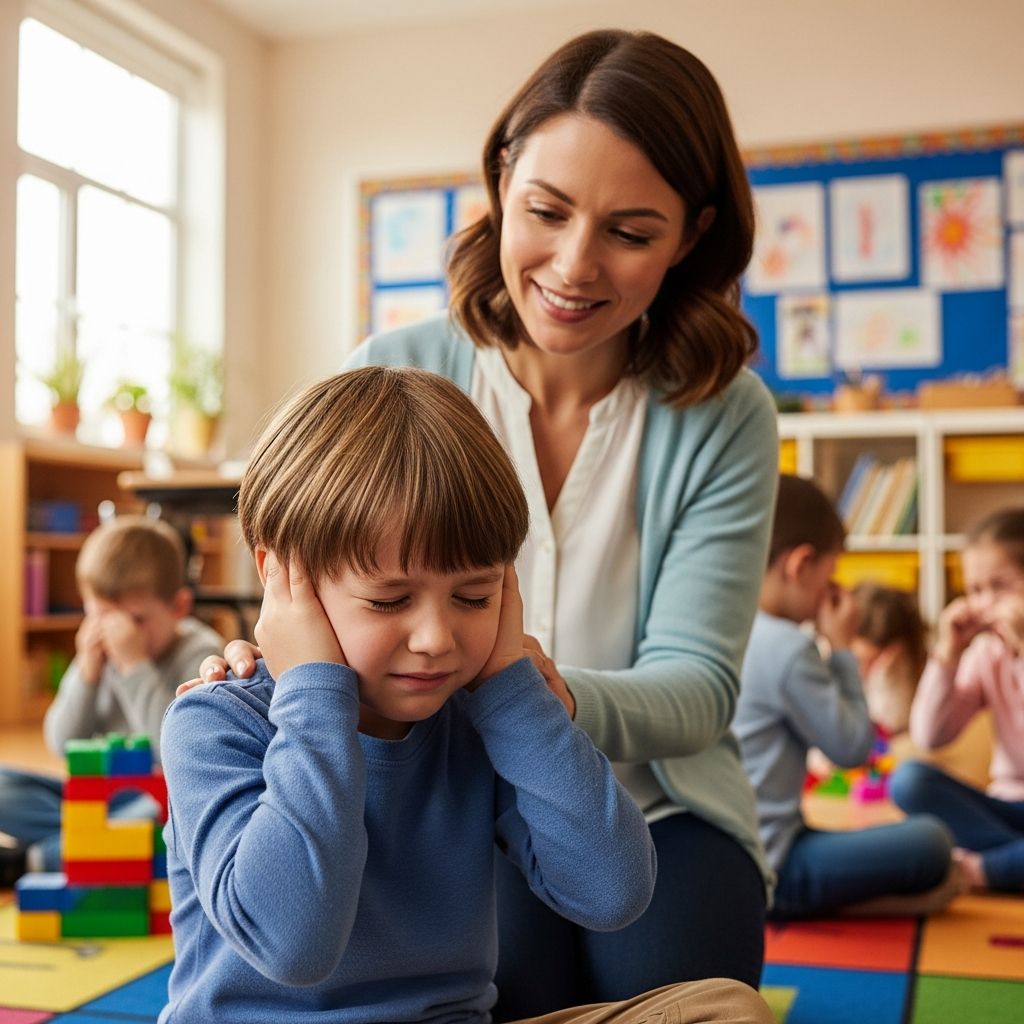
Some children are so sensitive that another child’s tears at school can feel almost unbearable. They may cling at drop-off, refuse to enter the classroom, or cry whenever they see or hear a classmate upset. For parents, this can be confusing and worrying, especially when the child is otherwise happy and well-adjusted.
This article explains why some children are deeply affected by other kids’ distress, what is normal versus concerning, and how parents and teachers can work together to help a sensitive child feel safe, confident, and capable at school.
Understanding Why Your Child Is So Affected
Before jumping to solutions, it helps to understand what might be happening inside your child. Young children are still learning to distinguish their own feelings from those of the people around them. When a classmate cries, a sensitive child may feel as if the upset is happening to them too.
Emotional Contagion and Empathy
Emotional contagion is the process by which feelings spread from one person to another, almost like a yawn that moves around the room. Young children are especially prone to this because their brains are wired to mirror the emotional states that surround them.
- They may experience a wave of fear, sadness, or panic when another child cries, even if nothing is wrong in their own situation.
- Empathetic children often feel responsible for the other child’s distress and may believe they should fix it or prevent it.
- Without mature coping skills, empathy can quickly spill over into overwhelm and anxiety.
Separation Anxiety and School Transitions
If crying happens around drop-off, your child may already be managing their own worries about saying goodbye. Hearing another child scream, cling, or protest can confirm their fear that school might not be safe or that separations are dangerous.
- Normal separation anxiety peaks in the early years and tends to decline as children gain experience with predictable goodbyes and reunions.
- However, a highly sensitive temperament or recent stress (such as a move, family change, or illness) can intensify reactions to other children’s distress.
- Children who are anxious by nature may scan the environment for signs of danger, and a crying child can feel like proof that something is wrong.
Temperament: The Sensitive Child
Not all children react to their classmates’ emotions in the same way. Some are naturally more observant and reactive to sights, sounds, and feelings. These children are not weak; they are wired to notice and care deeply.
- They may be more cautious in new situations, more tuned into adults’ moods, and more easily startled by noise or chaos.
- With support, sensitive kids often grow into thoughtful, empathetic, and conscientious adults.
- The goal is not to toughen them up, but to help them develop tools to manage the intensity of what they feel.
Signs Your Child Is Struggling
All children experience some upset when others cry now and then. The question is whether this distress is mild and temporary or frequent and disruptive. Paying attention to specific behaviors helps you decide what kind of support is needed.
Common Behaviors to Watch For
- Refusal to enter the classroom or stay if another child is crying.
- Clinging, pleading, or bargaining at drop-off whenever they notice any upset.
- Appearing hyper-vigilant, constantly scanning for crying or noises that hint at distress.
- Meltdowns or tantrums that begin only after they hear another child cry.
- Worrying at home about whether a specific classmate will cry again tomorrow.
Physical and Emotional Clues
Anxiety often shows up in the body long before a child has the words to explain what is wrong. Watch for patterns, especially on school days or when talking about a particular child.
- Complaints of stomachaches or headaches right before school, which ease if they stay home.
- Trouble sleeping the night before school or nightmares about separation or crying kids.
- Change in appetite, increased irritability, or sudden clinginess that seems linked to school or classmates.
When to Consider Professional Support
Occasional upset is expected, but some situations may call for additional assessment or help from a pediatrician, school counselor, or child therapist.
- Your child’s distress is intense and persistent, lasting several weeks or more without improvement.
- They begin to refuse school entirely or have daily meltdowns that do not ease after separation.
- You notice other signs of anxiety, such as constant reassurance-seeking, excessive worry about bad things happening, or frequent physical complaints tied to separation.
Creating a Sense of Safety and Security
The most powerful tool for helping a sensitive child is a calm, predictable relationship with a caring adult. Children borrow a parent’s nervous system: when the adult is regulated, the child feels safer trying new skills.
Your Presence at Drop-Off
The way you say goodbye can either soothe or amplify your child’s fear. Aim for a balance of warmth and confidence, even if you are worried inside.
- Use a simple, consistent goodbye routine: a hug, a short phrase, and then a clear hand-off to the teacher.
- Avoid long, drawn-out departures where you hover to see whether another child will cry.
- Communicate with the teacher so they are ready to welcome your child and redirect attention to a familiar activity.
Talking About School Calmly at Home
Home is the safest place to explore worries. Instead of convincing your child that there is nothing to be afraid of, invite them to share their inner world and then guide them through it.
- Ask open-ended questions: “What part of the day feels hardest?” or “What do you think when you hear someone crying?”
- Reflect feelings: “It sounds like your heart beats fast and you feel scared when you hear your friend cry.”
- Follow up with problem-solving once they feel understood: “Let’s decide together what you can do if that happens again.”
Teaching Concrete Coping Skills
Children cope better when they know exactly what to do in a difficult moment. Abstract reassurances (“You’re fine,” “There’s nothing to worry about”) rarely help. Specific tools give them a sense of agency.
Breathing and Grounding Techniques
Slow, steady breathing helps calm the nervous system. Turning attention to the present moment (grounding) keeps anxiety from spiraling into worst-case scenarios.
- “Smell the flower, blow the candle”: Pretend to sniff a flower in through the nose, then gently blow out a candle through the mouth.
- “5 things you can see”: Ask your child to quietly notice and name five things they see, four things they can feel, three things they can hear, two things they can smell, and one thing they can taste.
- Practice these skills at calm times so they are familiar when needed.
Planning a Response to Another Child’s Crying
When children know ahead of time what to do, they feel less helpless. Work together to create a clear, simple plan.
| Situation | What Your Child Can Think | What Your Child Can Do |
|---|---|---|
| Hears a classmate crying at drop-off | “That’s their feelings. I am safe with my teacher.” | Hold a comfort object in the cubby area, then walk to a chosen activity. |
| Sees a friend crying near them in class | “I can care without fixing. The teacher is helping.” | Look at the teacher, take three slow breaths, and focus on their own work or a book. |
| Feels overwhelmed by noise and tears | “Big feelings can come and go like waves.” | Ask quietly to sit at a calm corner or reading area, or squeeze a stress ball. |
Using Stories and Play
Children process big feelings best through play, stories, and pretend scenarios. These approaches can gently desensitize them to triggers like other kids crying.
- Role-play drop-off at home with stuffed animals, including a toy that cries and another that uses coping skills.
- Read picture books about school, friendships, and emotions, pausing to ask, “What is this character feeling? What could they do?”
- Make up your own simple stories where a sensitive child learns ways to feel safe even when others are upset.
Working with the Teacher and School
Children do best when parents and teachers share information and collaborate. The goal is not to prevent any child from ever crying, but to ensure that your child has support and that the classroom environment feels predictable and safe.
Sharing Helpful Information
Schedule a brief conversation with the teacher, either in person or by message, to explain the pattern you are seeing.
- Describe specifically when your child becomes distressed and what seems to trigger it.
- Share what helps at home (routines, phrases, comfort items) so the teacher can mirror some of those strategies.
- Ask how the teacher typically responds when children cry and whether there is a way to cue your child to use their coping plan.
Establishing Classroom Supports
Small adjustments in the classroom can make a big difference for a sensitive child, without disrupting the flow of the day.
- Agree on a special job at drop-off, like helping lay out crayons or choosing the first book, to redirect attention.
- Designate a quiet spot or table where your child can briefly go if they feel overwhelmed, with adult awareness.
- Teach a simple signal your child can use (such as touching their heart or raising a certain number of fingers) to show they are feeling flooded and need help using their tools.
What to Say (and What to Avoid)
Words matter. They shape how a child interprets their own reactions and the feelings of those around them. Validating emotions while also affirming their ability to cope is key.
Helpful Phrases
- “It makes sense that hearing crying feels big and scary to you. You care a lot.”
- “Your job is to stay safe and use your calm tools. The teacher’s job is to help your friend.”
- “Big feelings are like waves. They can get big, and then they shrink again. You won’t feel this way forever.”
- “You can feel worried and still do hard things like going into the classroom.”
Phrases That Often Backfire
- “Don’t be silly; there’s nothing to be upset about.” (This dismisses real feelings and can increase shame.)
- “If you keep crying, I’ll leave.” (This teaches that emotions drive adults away rather than bringing support.)
- “See, they’re just being dramatic.” (This undermines empathy and confuses your child about caring for others.)
Supporting Yourself as a Parent
Watching your child struggle is emotionally exhausting. Parents who feel pressured, guilty, or judged often react more anxiously, which children then pick up on. Caring for your own nervous system is part of caring for your child.
Managing Your Own Reactions
- Notice your internal narrative at drop-off: are you telling yourself that your child is failing or that you are being watched? Challenge harsh thoughts with more balanced ones.
- Take a few slow breaths before entering the school to steady your own body and voice.
- Remember that progress is rarely linear; expect small steps forward with occasional harder days.
When to Seek Extra Help for Yourself
If school situations trigger your own past experiences of anxiety, separation, or criticism, speaking with a counselor or trusted professional can be very helpful. Addressing your history does not mean you have failed; it means you are actively reducing the emotional load your child has to carry.
- Consider connecting with other parents who have sensitive children to share strategies and normalize the experience.
- If you find yourself dreading every drop-off, losing sleep, or arguing frequently with your partner about school, outside support may reduce tension at home.
Frequently Asked Questions
Is it normal for my child to cry when other kids cry?
Yes, especially in the early school years. Many children are deeply sensitive to others’ distress and may cry in response. What matters most is whether your child is gradually learning to recover and participate in the day, with support and practice.
Should I stay until all the other kids have stopped crying?
Lingering too long usually makes separation harder, not easier. A short, predictable goodbye that your child can count on, followed by a confident hand-off to a trusted adult, helps the nervous system adapt over time. Coordinate with the teacher so your child is quickly engaged in an activity after you leave.
Would changing classrooms or schools solve the problem?
Sometimes a mismatch between child and environment contributes to distress, but crying classmates can be found in any group setting. Before considering major changes, it is usually more helpful to build skills and supports that your child can carry anywhere. If there are additional issues such as bullying or an unsafe environment, those need separate attention with school staff.
How long should I wait before seeking professional help?
If the difficulty has persisted for several weeks without any improvement, or if your child begins to avoid school, loses interest in previously enjoyed activities, or seems generally anxious in many settings, consult your pediatrician or a child mental health professional. Early support can prevent worries from becoming more entrenched.
What if my child is upset about a specific classmate who always cries?
This is common in younger classrooms. You can acknowledge that this particular child’s tears feel especially upsetting, while reinforcing that every child has adults there to help them. Working with the teacher to plan seating, routines, and coping strategies can help your child remain compassionate without feeling overwhelmed or responsible.
Helping Your Child Grow Through Sensitivity
Children who are strongly affected by others’ tears are often the same children who grow into deeply caring friends, thoughtful leaders, and emotionally aware adults. The goal is not to extinguish their sensitivity, but to pair it with resilience, boundaries, and self-trust.
- Validate that their empathy is a strength, not a flaw.
- Equip them with specific tools to handle overwhelming moments at school.
- Collaborate with teachers and, when needed, professionals so your child does not have to face these challenges alone.
With patience, consistency, and compassionate guidance, most children can learn that they are safe at school even when others are not calm, and that they can care deeply without becoming swept away by every tear they see.