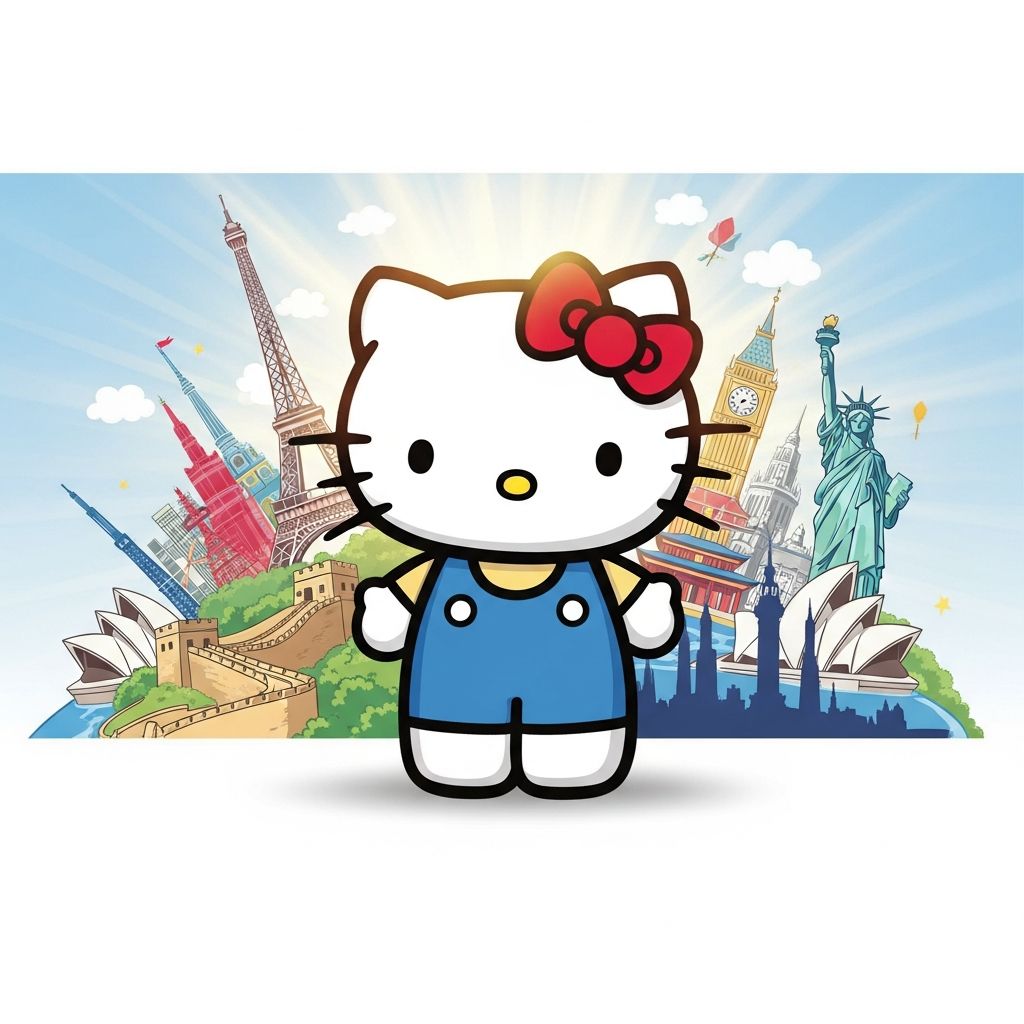
Hello Kitty, the mouthless icon from Sanrio, has captivated hearts worldwide for over five decades, evolving from a simple coin purse design into a multibillion-dollar phenomenon that bridges generations and cultures.
The Origins of a Timeless Icon
Created in 1974 by designer Yuko Shimizu, Hello Kitty debuted on a vinyl coin purse in 1975, marking the start of Sanrio’s explosive growth in character merchandising. Surprisingly, this beloved figure is not a cat but an anthropomorphic girl from London, standing as tall as five apples and weighing three, with a passion for baking and her mother’s apple pie. Her British origins blended Japanese creativity with Western familiarity, helping her resonate beyond Japan.
Sanrio, founded in the post-World War II economic boom, tapped into Japan’s rising consumer culture. The 1970s saw a surge in kawaii—a concept meaning ‘cute’ that encompasses whimsy, innocence, and playful aesthetics—propelling Hello Kitty’s early success. This era positioned young girls as key consumers, fueling demand for adorable, accessible characters.
Design Secrets Behind Universal Charm
Hello Kitty’s minimalist aesthetic sets her apart: no mouth, large eyes, and a neutral expression allow fans to project their own emotions onto her. Branding experts note this stoic design makes her versatile, symbolizing anything from joy to melancholy. Psychologists link her baby-like features—big head, wide eyes—to an innate human nurturing response, evoking care for the vulnerable.
Her signature red bow and simple lines embody kawaii’s essence, making her instantly recognizable yet endlessly adaptable for collaborations. This blank-canvas quality contrasts with expressive characters like Mickey Mouse, fostering deeper personal connections.
| Design Element | Impact on Appeal |
|---|---|
| No mouth | Allows emotional projection |
| Large eyes & bow | Triggers cuteness response |
| Minimalist style | Timeless versatility |
From Japan to Worldwide Domination
Initial success in Japan led to rapid U.S. expansion with Sanrio, Inc. established in California in 1976. By the 1980s, Hello Kitty mania swept Europe, Asia, and North America through diverse products: clothing, accessories, appliances, and even airlines like Eva Air. In 2013, she drove 99% of Sanrio’s North American revenue; today, it’s 60% there and 30% globally, showcasing sustained power.
- Product Proliferation: Stickers, socks, electronics—nearly everything imaginable bears her image.
- Global Milestones: Theme parks, cafes, video games, and crossovers with luxury brands.
- Economic Impact: Estimated $7 billion annual value.
Celebrity Endorsements and Royal Recognition
Pop culture royalty embraced her: Mariah Carey, Lady Gaga, and Katy Perry (with a tattoo) flaunted Hello Kitty flair. In a Buckingham Palace state banquet, King Charles and Queen Camilla sent birthday wishes to the character in front of Japan’s Emperor and Empress. These high-profile nods amplified her status as a cultural bridge between East and West, especially for Asian-American communities seeking identity.
Revival Among Gen Z and Modern Trends
At 50 in 2024, Hello Kitty thrives anew with Gen Z. A Fasme survey of 166 Japanese women aged 18-24 ranked her top among cultural icons, outpacing new anime stars. Her retro-core vibe aligns with limited-edition drops, Swarovski Crocs, and cosmetics, blending nostalgia with edge.
Sanrio’s ecosystem boosts this: Kuromi (gothic-cute rebel, #2 in the survey) and Pochacco offer niche personalities for diverse tastes. Social media niches amplify this, with users claiming characters that match their styles. Hello Kitty’s authenticity counters curated online personas, making her a lifestyle emblem.
\”Gen Z’s enthusiasm for limited-edition drops and playful collectibles has launched Hello Kitty into a fresh cultural spotlight.\”
Kawaii Culture’s Role in Lasting Relevance
Kawaii evolved from literal cuteness to a subversive force, playing with sweetness ironically. Hello Kitty embodies this, surviving where others faded by avoiding overexposure in media like shows or movies—instead thriving on merch. Adult fans revisit her for childhood nostalgia, while kids discover fresh appeal.
Sanrio’s strategy: diverse characters with unique traits ensure broad inclusivity, from sweet to sassy. This universality fuels online cults and global fandoms.
Economic Powerhouse and Future Prospects
Hello Kitty’s merchandising mastery generated billions, with Sanrio diversifying into entertainment without diluting her core charm. Her 50th anniversary sparked events and merch waves, proving adaptability. As Gen Z claims her, expect continued dominance in fashion, beauty, and beyond.
Frequently Asked Questions
What is Hello Kitty’s true identity?
She’s an anthropomorphic British girl, not a cat, from London, as per Sanrio’s official lore.
Why does Hello Kitty have no mouth?
The mouthless design enables fans to project their emotions, enhancing relatability.
How has Hello Kitty stayed popular with Gen Z?
Through retro fashion, limited merch, and social media trends aligning with kawaii aesthetics.
What is kawaii culture?
A Japanese phenomenon emphasizing cuteness, whimsy, and innocence, central to Hello Kitty’s appeal.
Is Hello Kitty still profitable for Sanrio?
Yes, driving 60% of North American and 30% of global business.
References
- The Secret to Hello Kitty’s Half-Century of Success — Time Magazine. 2024-06-20. https://time.com/6993173/hello-kitty-anniversary-50-years-sanrio-tsuji/
- At 50 Years Old, Hello Kitty Is Bigger Than Ever According to New Poll — ScreenRant. 2024-06-20. https://screenrant.com/hello-kitty-popularity-global-growth-sanrio-gen-z/
- Why is Hello Kitty Popular Again? | Style Theory — YouTube (Matpat). 2024. https://www.youtube.com/watch?v=Evs0Qt3acXI
- Sanrio, the home of Hello Kitty: why the brand is appealing — The Aggie. 2023-05-05. https://theaggie.org/2023/05/05/sanrio-the-home-of-hello-kitty-why-the-brand-is-appealing-in-a-boring-adult-world/
- Hello Kitty turns 40: how did she become so popular? — The Week. 2014. https://theweek.com/business/61149/hello-kitty-turns-40-how-did-she-become-so-popular
- How Hello Kitty Took Over the World — The Science Survey. 2022-03-07. https://thesciencesurvey.com/arts-entertainment/2022/03/07/how-hello-kitty-took-over-the-world/
- Hello Kitty Turns 50: How Old Is She? History & Legacy — Japan House LA. 2024. https://www.japanhousela.com/articles/sanrio-hello-kitty-turns-50-happy-birthday-to-a-global-pop-icon/