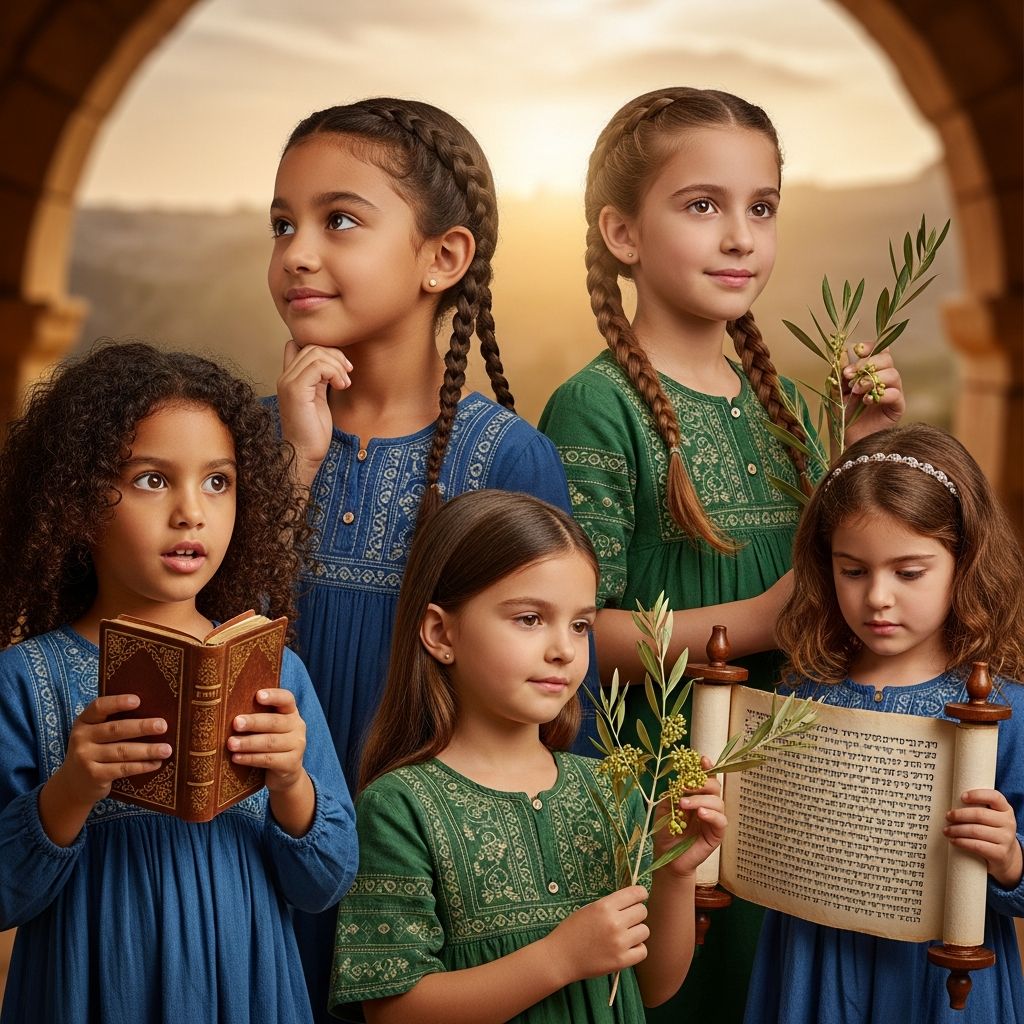
Choosing a name for a baby girl is one of the first big decisions new parents make, and Hebrew girl names offer a rare combination of spiritual depth, historical roots, and modern style. Whether you are honoring Jewish heritage, drawn to Scripture, or simply love meaningful names, Hebrew offers a rich pool of beautiful options for your daughter.
This guide explores the symbolism, sound, and stories behind Hebrew girl names, along with practical tips for choosing a name that feels timeless, unique, and personal.
Why Hebrew Girl Names Stand Out
Hebrew is one of the oldest living languages in the world and is closely tied to faith, tradition, and story. Many Hebrew girl names are taken directly from the Bible, while others developed later in Jewish communities around the world.
- Most Hebrew girl names have a clear meaning, such as “peace,” “light,” “song,” or “grace,” giving your child a name with a built-in blessing.
- Many names connect to powerful female figures from Scripture and Jewish history, offering role models of courage, kindness, and wisdom.
- Modern Israeli usage has refreshed many ancient names and created new favorites that feel stylish and international.
Key Themes in Hebrew Girl Names
When browsing Hebrew girl names, you may notice recurring themes that reflect core values in Jewish tradition and the Hebrew language. Understanding these themes can help you narrow down what you want your daughter’s name to express.
- Faith and connection to God: Names that include elements like “El” or “Yah” often refer to God and express trust, hope, or praise.
- Nature and beauty: Flowers, trees, light, stars, and water are common images in Hebrew names.
- Character and virtue: Many names convey traits such as joy, comfort, grace, strength, and wisdom.
Classic Biblical Hebrew Girl Names
Some Hebrew girl names are instantly recognizable because they appear in important biblical stories. These names often feel traditional yet remain widely used today across Jewish and non-Jewish families alike.
| Name | Approximate Meaning | Association or Story | Style Notes |
|---|---|---|---|
| Sarah | Princess or noblewoman | Matriarch known as the wife of Abraham and mother of Isaac, often linked with faith and laughter. | Simple, classic, and recognizable worldwide; also spelled Sara. |
| Rivka | To bind or to connect | Known in English as Rebecca, she is a strong and decisive matriarch in the book of Genesis. | Rivka feels more distinctly Hebrew than Rebecca and gives a traditional yet warm sound. |
| Leah | Often linked to weariness, but also to delicate or gentle eyes | One of the four matriarchs, honored as the mother of several tribes of Israel. | Short, soft, and familiar; can be pronounced “Lay-uh” or in Hebrew style closer to “Le-ah.” |
| Miriam | Commonly associated with strength or the sea | Big sister of Moses, who leads the women in song and dance after the crossing of the sea. | Traditional but adaptable, with nicknames like Miri, Mimi, and Mira. |
| Esther | Linked to “star” and to the concept of being hidden | Heroine of the Purim story, known for bravery, wisdom, and inner strength. | Elegant, vintage charm; often shortened to Esti or Essie. |
Modern and Trendy Hebrew Names for Girls
Alongside the classics, many parents today look for Hebrew names that feel fresh, modern, and globally wearable. Contemporary Israeli culture has popularized names that are short, lyrical, and sometimes gender-neutral.
- Noa: A brief, gentle name that conveys movement and energy; widely used for girls in Israel.
- Talia / Talya: Often explained as “dew from above” or “God’s dew,” suggesting freshness and blessing.
- Lior / Liora: Names built on “light,” evoking radiance, clarity, and joy.
- Shai: Meaning “gift” or “present,” a simple name with a powerful message of gratitude.
These names often have short spellings, easy pronunciation, and a stylish feel that works in many languages, making them ideal choices for families who live in multicultural or international settings.
Nature-Inspired Hebrew Girl Names
Hebrew girl names often draw on the natural world, especially plants, animals, and celestial images. These names can feel both poetic and grounded, perfect for parents who love nature or want a gentle, earthy vibe.
- Ayala: Often translated as “doe” or “deer,” symbolizing grace and swiftness.
- Tamar: Means “date palm,” a tree that represents resilience, sweetness, and abundance.
- Shoshana: Usually understood as “lily” or “rose,” connected with beauty and devotion.
- Yonah: Means “dove,” a universal symbol of peace and gentleness.
Many of these nature-based names appear in biblical poetry and prayers, giving them not only a lovely meaning but also a lyrical, timeless feel.
Names That Celebrate Light, Joy, and Hope
Light is a powerful image in Hebrew texts, often symbolizing guidance, wisdom, and holiness. Several Hebrew girl names carry the idea of light or joy right in their meaning, making them perfect for babies born around holidays or during meaningful moments in a family’s life.
- Ora: Directly means “light,” simple and radiant.
- Liora: Often understood as “I have light” or “my light,” expressing gratitude and hope.
- Meira: Literally “one who gives light,” an active, generous concept of illumination.
- Simcha: Meaning “joy” or “happiness,” used in some communities as a girl’s name.
Choosing a name built around light or joy can feel like giving your child a constant reminder of optimism, warmth, and inner strength.
Hebrew Girl Names with Spiritual and Emotional Depth
Some Hebrew names focus more on the inward life: faith, trust, comfort, and inner courage. These names appeal to parents who want their daughter’s name to reflect values and character more than imagery.
- Emunah: Means “faith” or “trust,” associated with steadfast belief and loyalty.
- Nechama: Means “comfort” or “consolation,” often chosen to honor healing after hardship or loss.
- Batya: Literally “daughter of God,” carrying a sense of spiritual closeness and dignity.
- Nava: Often explained as “beautiful” or “pleasant,” used to describe inner and outer grace.
These names can serve as a quiet statement of what parents hope their daughter will embody: resilience, kindness, and deep inner peace.
Balancing Tradition and Uniqueness
Many families love the idea of a Hebrew name but want to avoid names that feel overused in their local community. Fortunately, there are many names that are historically rooted yet less common, giving you a balance of heritage and individuality.
- Look beyond the most famous biblical figures to discover names from lesser-known stories and poetry.
- Consider variations or related names that share a root with a classic favorite but sound more distinctive.
- Explore modern Israeli usage for short, stylish, and rare options that still feel authentically Hebrew.
This approach allows you to honor tradition while still giving your daughter a name that stands out in a gentle, thoughtful way.
How to Choose the Right Hebrew Name for Your Daughter
Choosing a name is not just about meaning; it is also about how the name feels in your family’s life. A good way to begin is by thinking through your priorities, then testing names out loud in everyday sentences.
- Clarify your main goal: Is heritage, originality, easy pronunciation, or spiritual meaning most important to you?
- Say it with your surname: Practice introducing your child with the full name to see how naturally it flows.
- Consider nicknames: Decide whether you like the natural nicknames or shortened forms that may emerge.
- Check cross-cultural fit: If your family spans more than one language, make sure the name is easy to say and has no unwanted associations.
Taking time to reflect rather than rushing the decision almost always leads to a name choice you will feel connected to for years to come.
Sample Hebrew Girl Name Ideas by Style
The list below groups example Hebrew girl names according to style and vibe rather than giving an exhaustive catalog. This can help you notice what types of names you are most drawn to.
| Style | Example Names | Why They Fit |
|---|---|---|
| Traditional & timeless | Sarah, Rachel, Miriam, Esther | Recognizable across cultures, rooted in foundational biblical stories. |
| Modern Israeli | Noa, Yael, Lior, Shai | Short, contemporary sound; widely used in modern Hebrew-speaking communities. |
| Nature-inspired | Tamar, Shoshana, Ayala, Yonah | Draw imagery from trees, flowers, and animals; gentle yet evocative. |
| Spiritual & emotional | Emunah, Nechama, Batya, Simcha | Focus on faith, comfort, joy, and relationship with the divine. |
| Soft & lyrical | Talya, Liora, Aviva, Dina | Flowing sounds, easy on the ear, often ending with “a” or soft vowels. |
Combining Hebrew and English (or Other Languages)
Many families today choose to give a Hebrew name alongside an English or local name. Sometimes these names match closely in sound, while other times they are completely different but share a related meaning.
- Some parents select a Hebrew name for religious use and a separate everyday name for school and social settings.
- Others pick an English form of a Hebrew name (for example, Rebecca for Rivka or Hannah for Chana) to bridge both worlds.
- Still others combine a Hebrew first name with a middle name from another cultural tradition to honor both sides of the family.
This flexible approach allows your daughter to carry her identity comfortably in multiple spaces, while keeping a strong connection to her roots.
Practical Considerations: Spelling, Pronunciation, and Variations
Because Hebrew uses a different alphabet, spelling Hebrew names in English (or another language) always involves some choices. There is often no single “correct” spelling, only more or less common versions.
- Decide whether ease of pronunciation for others is more important than a particular transliteration style.
- Search for the name in common baby-name databases and community forums to see how people usually spell it.
- Keep in mind that extra letters like “h” at the end (for example, “Leah” vs. “Lea”) can change how others say the name.
Being intentional about spelling at the beginning can save your child from endless corrections later on, while still honoring the name’s original Hebrew sound and meaning.
Frequently Asked Questions About Hebrew Girl Names
Do Hebrew girl names always have religious meanings?
Not every Hebrew girl name is explicitly religious, but most have roots in biblical language, poetry, or Jewish history. Some names simply reference natural elements, emotions, or everyday concepts, while others directly mention God or express spiritual ideas like faith, hope, or blessing.
Can non-Jewish families use Hebrew girl names?
Many non-Jewish parents are drawn to Hebrew names because of their beauty and strong meanings. If you love a Hebrew girl name, it is usually acceptable to use it, especially if you respect its origins and understand the story or symbolism behind it. In some cases, it may be wise to consult with Jewish friends or leaders if the name is closely tied to a specific religious ritual or context.
How do I find the exact meaning of a Hebrew name?
Because Hebrew is an ancient language, some names have multiple layered interpretations. The best approach is to check more than one reliable source, such as reputable baby name references, Jewish educational sites, or community rabbis. You can also learn which Hebrew word or root the name comes from, which often clarifies its core meaning.
Is it important to match a Hebrew name to a baby’s birth date or holiday?
Some families enjoy connecting a name to the time of year their baby is born, such as choosing a name related to light for a baby born near a winter festival or a name linked to spring for a baby born during that season. This is a beautiful custom, but it is not an absolute requirement; the most important factor is that the name feels meaningful and fitting to your family.
What if our relatives pronounce the name differently?
It is normal for names to sound slightly different across accents and languages. Before settling on a name, try saying it with grandparents, siblings, and friends to hear how it sounds in various mouths. If the differences are mild and charming, that can add richness; if they bother you, you may prefer a simpler, more universal name or a spelling that guides pronunciation more clearly.
Making the Final Choice
Ultimately, the right Hebrew girl name is the one that resonates with your family’s story, values, and hopes for your daughter. You may be drawn to a strong biblical heroine, a gentle nature name, or a modern, minimalist choice that still carries deep roots.
Give yourself time to explore, say the names out loud, imagine them on school forms and wedding invitations, and notice which name keeps returning to your heart. That enduring pull is often the clearest sign that you have found the perfect Hebrew name for your little girl.