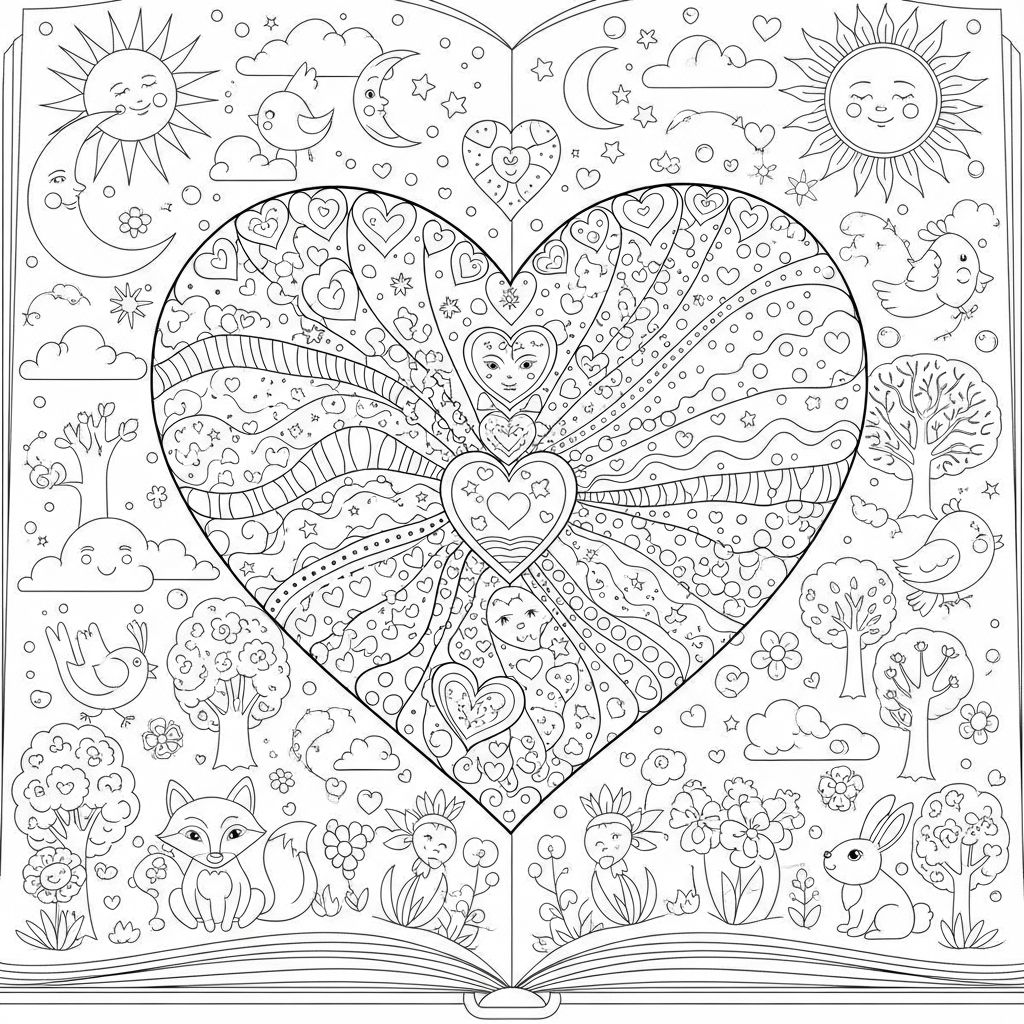
Heart coloring pages may look simple at first glance, but they can open the door to creativity, learning, and connection for kids of all ages. With a bit of imagination, a single printable heart can become a story prompt, a math tool, a kindness project, or a beautiful keepsake.
Why Heart Coloring Pages Are So Versatile
Unlike character-based pages, heart designs stay timeless and can fit almost any theme or celebration. They work well for Valentine’s Day, Mother’s Day, friendship units at school, emotional learning activities, or just a rainy afternoon at home. Hearts are also easy for young children to recognize and color, while more detailed heart patterns keep older kids engaged.
- Hearts are simple enough for toddlers but can be combined into complex patterns for big kids.
- They instantly communicate warmth, love, and care, which makes them perfect for cards and gifts.
- They pair naturally with lessons about emotions, kindness, and relationships.
Benefits of Coloring for Kids
Coloring is more than a way to fill time; it supports several areas of child development. When children color heart pages, they practice focusing on a small task, coordinating their hand movements, and making independent choices about colors and designs.
For many kids, coloring is also calming. The repetitive motion of filling spaces with color can help them slow down, breathe more evenly, and shift their attention away from worries or screens. This makes heart coloring pages a gentle tool for emotional regulation and quiet time transitions.
| Area | How Coloring Helps | Practical Example |
|---|---|---|
| Fine motor skills | Strengthens small muscles in fingers and hands. | Coloring inside a small heart border or tracing the edges. |
| Focus & attention | Encourages kids to complete a multi-step task. | Finishing all the hearts on a page using different colors. |
| Creativity | Invites experimentation with patterns and color choices. | Turning each heart into a different “theme” such as galaxy, rainbow, or nature. |
| Emotional expression | Provides a nonverbal outlet for feelings. | Letting a child choose colors that match their mood in each heart. |
| Connection | Creates opportunities for shared activities. | Parent–child or teacher–student coloring sessions with shared stories. |
Heart Coloring Ideas by Age
Different age groups enjoy different levels of complexity. Adjust the size of the hearts, the number of details, and the structure of the activity to match your child or students.
Toddlers and Preschoolers
- Big bold hearts: Use large, simple outlines with thick borders that are easy to see and color.
- Limited color choices: Offer only 3–4 crayons or markers so children do not feel overwhelmed.
- Short sessions: Keep coloring time brief and positive, ending before kids lose interest.
Early Elementary Kids
- Pattern play: Give pages with several medium-sized hearts and invite kids to fill each one with stripes, dots, or zigzags.
- Theme challenges: Ask them to decorate hearts based on themes like “ocean,” “space,” or “jungle.”
- Partner projects: Have two children share a page and take turns coloring alternate hearts.
Older Kids and Tweens
- Detailed designs: Offer intricate heart mandalas or overlapping hearts with small spaces.
- Blending and shading: Encourage colored pencils or gel pens so they can experiment with gradients.
- Mixed-media projects: Combine coloring with collage, hand-lettering, or simple embroidery on heavy paper.
Creative Projects Using Heart Coloring Pages
Instead of stopping once the page is colored, turn finished hearts into crafts, decorations, and keepsakes. This adds purpose to the activity and makes kids proud of their work.
1. Heart Garland for Room or Classroom Decor
A heart garland is simple to make and can stay up long after a holiday. It works well for parties, reading corners, or family celebrations.
- Print several hearts on sturdy paper and let children color them freely.
- Cut out each heart and punch a small hole at the top.
- String the hearts onto ribbon, yarn, or twine, spacing them evenly.
- Hang the garland on a wall, across a window, or over a doorway.
2. Personalized Heart Cards and Notes
Heart coloring pages make instant greeting cards that feel more personal than store-bought versions. This is perfect for Valentine’s Day, thank-you notes, or birthday messages.
- Fold a sheet of cardstock in half and glue a colored heart onto the front.
- Add a short handwritten message inside from the child.
- For very young kids, allow them to “sign” with a scribble or handprint beside the heart.
3. Heart Collage Poster
A large heart collage works well for classrooms, families, or groups. Everyone decorates one heart to contribute to a shared display.
- Give each participant a similar-sized heart to color in their own style.
- Cut out the hearts and arrange them on a poster board in a large heart shape or other design.
- Glue them down and display the poster with a title like “Our Caring Community” or “All Our Hearts Together.”
4. DIY Heart Puzzles
Turn colored hearts into simple puzzles to build problem-solving and visual skills. This is especially fun in small-group settings or for quiet-time bins.
- Color and cut out a heart on cardstock.
- Draw puzzle lines on the back, such as 4–8 large pieces for younger kids or more pieces for older ones.
- Cut along the lines and store the pieces in a labeled envelope or resealable bag.
- Challenge kids to reassemble their own hearts or trade puzzles with friends.
5. Keepsake Heart Frames
Photo frames made from heart coloring pages are meaningful gifts for relatives or friends. Children can frame a small photo or drawing inside their colored heart.
- Have kids color a large heart with a thick border.
- Fold the heart lightly and cut out a smaller heart shape in the center, leaving a frame.
- Attach a photo or small drawing behind the opening with tape or glue.
- Mount the finished frame onto a backing sheet or hang it directly with a clip.
Learning with Heart Coloring Pages
Heart pages can easily support academic and social-emotional learning. By pairing coloring with simple prompts or games, parents and teachers can deepen the activity without making it feel like a worksheet.
Color-Based Math Practice
- Counting hearts: Ask kids to count how many hearts are on the page and record the number.
- Color code math facts: Assign colors to answers (for example, hearts that equal 10 are blue, hearts that equal 5 are red).
- Simple fractions: For older kids, use instructions like “Color one-half of the hearts green and one-quarter purple.”
Literacy and Storytelling Prompts
- Character hearts: Ask kids to design a heart for each character in a story, using colors that reflect their personality.
- Heart journal: Glue a colored heart into a notebook and have the child write a sentence or short paragraph about someone they care about.
- Word practice: Inside each heart, children can write vocabulary words, sight words, or affirmations and then color around them.
Social-Emotional Learning Activities
- Feelings hearts: Invite kids to choose colors to represent emotions (blue for calm, red for excited, yellow for happy, etc.) and color hearts to show how they feel.
- Kindness challenge: In each heart, kids write or draw one kind action they can take and color it as a reminder.
- Gratitude garland: Make small hearts, each labeled with something the child is thankful for, and string them into a garland.
Tips for Parents and Teachers
A little planning goes a long way toward making heart coloring time peaceful and enjoyable. Use the tips below to reduce frustration and increase engagement.
- Prepare materials in advance: Pre-print pages, sharpen pencils, and set out a limited selection of tools to avoid delays.
- Offer choices but not too many: A small range of designs and colors helps kids feel in control without being overwhelmed.
- Focus on process, not perfection: Celebrate effort, creativity, and persistence instead of staying inside every line.
- Use positive language: Comment on color choices and creative ideas rather than judging neatness.
- Model relaxation: When adults join in coloring, children see that quiet creativity is valuable.
Simple Setup Ideas for Home
A designated “heart art station” at home can make spontaneous creative time easy. This does not need to be an entire room; a small bin or tray works well.
- Keep a folder of printed heart pages in different sizes and complexity levels.
- Include a small container of crayons, colored pencils, or markers.
- Add child-safe scissors, glue sticks, and tape for turning pages into crafts.
- Store everything together so kids can access it during quiet time or when screens are off-limits.
Ideas for Classrooms and Groups
In group settings, heart coloring activities can reinforce community, empathy, and cooperation. They can be adapted for short transition times, early finishers, or special events.
- Community heart wall: Dedicate a bulletin board to students’ decorated hearts with positive messages.
- Center activity: Make a small station with heart pages, coloring tools, and a simple prompt such as “Draw something kind inside each heart.”
- Buddy projects: Pair older and younger students to color side by side and share stories about who they love.
- Holiday rotations: Use heart coloring as one of several themed stations on Valentine’s Day or Friendship Day.
Frequently Asked Questions
How can I keep heart coloring pages interesting for older kids?
Offer more detailed designs and invite older kids to experiment with shading, color gradients, and mixed media such as gel pens or metallic markers. You can also challenge them with design briefs like creating a heart-themed poster, lettering a meaningful quote inside a heart, or turning multiple hearts into a repeating pattern.
What if my child gets frustrated when coloring?
Reduce the complexity of the design and the number of available colors. Encourage them to switch to larger hearts with simple outlines and remind them that they do not need to finish the whole page in one sitting.
Can heart coloring pages support emotional learning?
Yes. Hearts pair naturally with discussions about emotions and relationships. Children can use different colors to show how they feel, write kind messages inside the hearts, or create a gratitude heart for each thing they appreciate.
How often should I offer coloring activities?
There is no strict rule. Many families and teachers find that a few short coloring sessions each week provide a calming break from screens and busy schedules. Watch your child’s interest and adjust the frequency as needed.
What materials work best for heart coloring pages?
Standard printer paper and crayons are enough for most activities, but thicker cardstock is helpful if you plan to cut out hearts for garlands, puzzles, or frames. Colored pencils allow for more detailed work, while washable markers offer bright, vibrant colors that younger kids love.
Bringing More Heart into Everyday Creativity
Heart coloring pages offer a simple, flexible foundation for crafts, learning, and meaningful conversations with kids. With a few basic supplies and the ideas in this guide, families and educators can turn plain printed hearts into colorful reminders of love, kindness, and creativity.