Snacking plays a vital role in a child’s daily nutrition, bridging gaps between meals to sustain energy, support development, and foster good habits. With small stomachs limiting meal intake, 2-3 planned snacks daily provide essential vitamins, minerals, and fuel without excess calories.
Why Snacks Matter for Young Bodies and Minds
Children’s rapid growth demands consistent nourishment. Nutrient-rich snacks deliver protein for muscle building, fats for brain health, fiber for digestion, and carbs for quick energy. Research shows kids who snack healthily consume more protein, less fat, and fewer empty calories, aiding body composition and reducing obesity risks.
Regular snacking stabilizes blood sugar, improves focus during play or learning, and curbs overeating at meals. Unlike treats loaded with sugar, healthy snacks from MyPlate groups—fruits, veggies, grains, proteins, dairy—build lifelong preferences for wholesome foods.
Building a Solid Snacking Foundation
Establish routines early: Aim for snacks 1-2 hours before meals to preserve appetite. Consistency prevents grazing, promotes mindful eating away from screens, and teaches hunger cues.
- Lead by example: Parents modeling balanced choices shape kids’ preferences.
- Stock smartly: Keep prepped fruits, veggies, yogurt, and whole grains at eye level for easy grabs.
- Involve children: Shopping and prepping together boosts willingness to try new items.
- Limit junk: Minimize processed, sugary items; opt for whole foods.
Nutritional Building Blocks of Great Snacks
Balanced snacks combine at least two food groups for satiety and nutrition. Protein and fats sustain energy; fiber and carbs add volume without spikes.
| Nutrient | Role | Examples |
|---|---|---|
| Protein | Fullness, muscle repair | Nuts, yogurt, cheese, eggs |
| Healthy Fats | Brain health, sustained energy | Avocado, nut butter, seeds |
| Fiber | Digestion, satiety | Fruits, veggies, whole grains |
| Carbs | Quick energy | Whole-grain crackers, fruits |
For ages 2-8, target 3-6 grain servings (½ oz each), 2-3 fruits (½ cup), 3-4 veggies daily via snacks and meals. Choose low-sugar, minimal-ingredient options; check labels for hidden sodium or additives.
Age-Tailored Snacking Strategies
Infants 6-12 Months
Focus on meltable, no-added-sugar/salt textures to avoid choking. Pair with water, not juice, prioritizing fiber-rich solids.
Toddlers 1-3 Years
Small portions prevent overwhelm. Cut foods small; avoid whole grapes, nuts, popcorn.* Emphasize iron, protein, fiber.
Preschoolers 3-5 Years
Encourage variety; portion into kid-sized containers. Fun presentations spark interest in veggies and grains.
School-Age 6+ Years
They need sustained energy for school. Portable combos like yogurt parfaits or veggie sticks with dip work well.
*Choking risks for under 4: Raw carrots, celery, whole grapes, nuts.
50+ Delicious, Easy Snack Ideas
These combine nutrients, require minimal prep, and appeal to picky eaters. Make ahead for busy days.
Fruit Forward
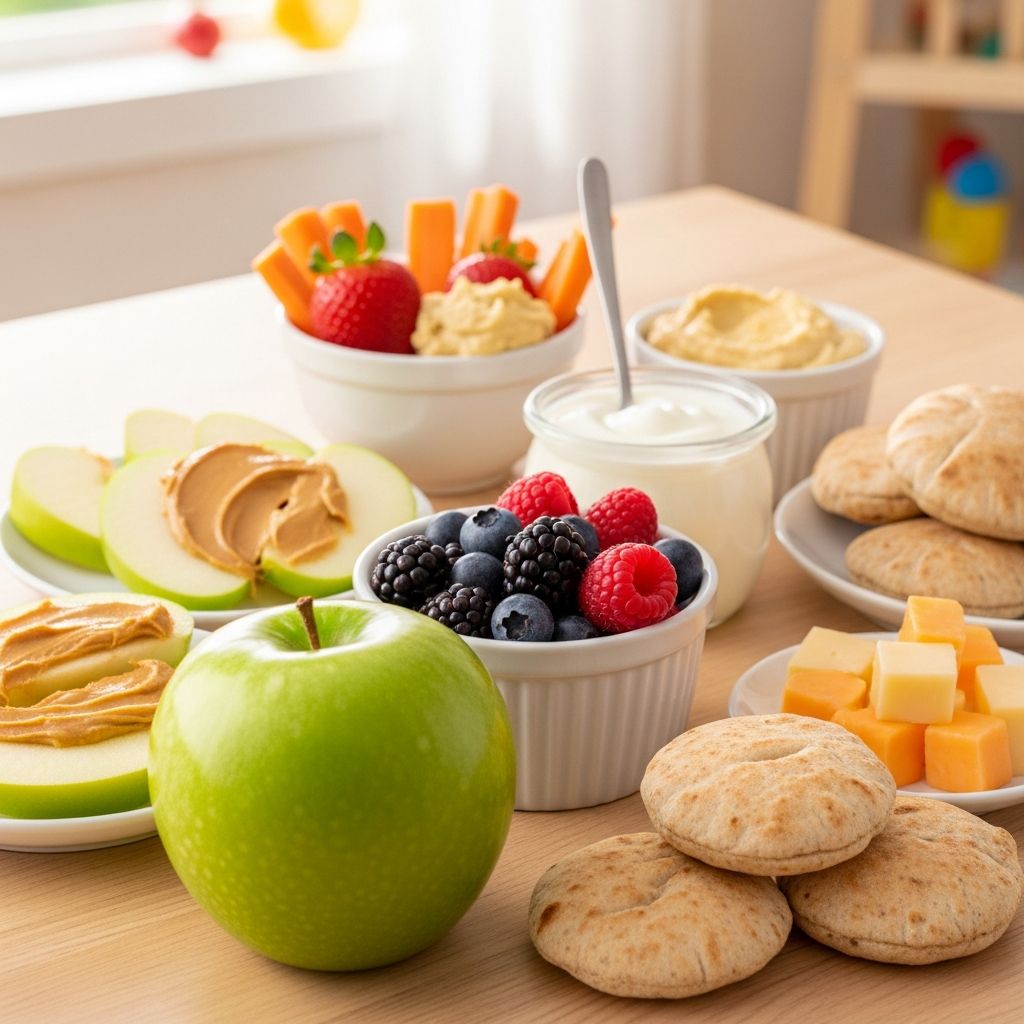
- Apple slices with peanut butter.
- Greek yogurt parfait with berries and granola.
- Frozen banana bites dipped in yogurt.
- Strawberry or peach kebabs.
Veggie Power
- Carrot sticks with hummus.
- Cucumber slices with cottage cheese.
- Bell pepper strips with guacamole.
- Spinach smoothie with banana.
Protein Packs
- Hard-boiled egg with whole-grain toast.
- Cheese cubes with whole-grain crackers.
- Turkey pinwheels in tortilla with veggies.
- Handful of nuts and dried fruit (for 4+).
Grain Goodness
- Whole-grain pita with low-fat ranch and veggies.
- Air-popped popcorn with nutritional yeast (4+).
- Oat energy balls: oats, peanut butter, raisins.
Dairy Delights
- Low-fat milk with fruit leather (homemade).
- Yogurt-dipped frozen grapes (halved for young kids).
- Cheese stick with pear slices.
Drinks: Water, low-fat milk, 100% veggie juice, or herbal tea. Limit juice to 4-6 oz daily.
Fun Ways to Make Snacking Exciting
Engage senses to build positive associations.
- Shapes and colors: Cut fruits into stars; rainbow veggie plates.
- DIY stations: Let kids assemble parfaits or trail mix.
- Themed days: ‘Berry Blast’ or ‘Crunchy Veggie’ hours.
- Smoothie fun: Blend frozen fruit, yogurt, spinach.
Prep-ahead: Wash/slice produce weekly; store in clear containers.
Overcoming Common Snacking Hurdles
Picky Eaters: Offer choices within healthy options; pair new with favorites. Patience yields results.
Constant Hunger: Check timing; ensure balanced meals. Mindful eating helps.
On-the-Go: Pre-portion trail mix, cheese sticks, fruit cups.
Sweet Cravings: Use fruit, yogurt ‘pops’ for satisfaction without sugar overload.
Frequently Asked Questions
How many snacks should my child have daily?
2-3 snacks, timed 1-2 hours before meals, suffice for most kids.
What if my child refuses veggies in snacks?
Hide in smoothies or dips; involve in prep; keep offering without pressure.
Are packaged snacks okay?
Choose minimal-ingredient, low-sugar ones; prioritize whole foods.
Can snacks help with weight management?
Yes, healthy snacks prevent overeating and support healthy growth patterns.
What drinks pair best with snacks?
Water or low-fat milk; limit juice to avoid filling up on liquids.
Long-Term Wins from Smart Snacking
Early habits reduce obesity risks, enhance cognitive function, and promote emotional well-being. Families snacking together strengthen bonds and model wellness. Track progress: More energy, better moods, sustained growth.
Consult pediatricians for personalized advice, especially allergies or conditions.
References
- Healthy Snacking Tips for Kids — TriState Health. 2023. https://www.tsh.org/healthy-snacking-tips-for-kids/
- 8 Strategies for Establishing Healthy Eating Habits in Kids — Beach Kids Pediatrics. 2024. https://beachkidspediatrics.com/healthy-eating-habits/
- Healthy Eating and Snacking for Kids — Children’s Hospital Colorado. 2025-01-10. https://www.childrenscolorado.org/just-ask-childrens/articles/healthy-eating-for-kids/
- A Comprehensive Guide to Healthy Snacking for Kids — Little Bellies. 2023. https://littlebellies.com/ca/learn-play/a-comprehensive-guide-to-healthy-snacking-for-kids-2/
- Healthy Snacks for Children — California Childcare Health Program, UCSF. 2024. https://cchp.ucsf.edu/resources/fact-sheets-families/healthy-snacks-children
- Ages 2-8 Feeding Recommendations — Healthy Eating Research. 2024. https://healthyeatingresearch.org/tips-for-families/ages-2-8-feeding-recommendations/
- It’s Time to Snack Smart (FS947) — Rutgers NJAES. 2023-06-15. https://njaes.rutgers.edu/fs947/