Preschoolers aged 3 to 5 have boundless energy and growing bodies that demand consistent fuel. Snacks bridge the gap between meals, providing essential nutrients without spoiling appetite for main courses. Choosing the right options supports cognitive development, physical activity, and immune function while establishing positive eating patterns.
Why Snacks Matter in a Preschooler’s Day
Young children expend calories rapidly through play and learning. According to pediatric guidelines, snacks should supply 100-200 calories per serving, focusing on nutrient density rather than empty sugars. Regular snacking stabilizes blood sugar, enhances focus during circle time or crafts, and prevents hanger-induced meltdowns. Prioritizing whole foods over processed items reduces obesity risk and builds preferences for fruits, veggies, and grains.
Timing is crucial: offer snacks midway between meals, about every 2-3 hours. Pairing carbohydrate-rich foods with proteins or fats promotes satiety. Hydration complements snacks—water or milk over sugary drinks keeps energy steady.
Building Balanced Snacks from Key Food Groups
A well-rounded snack combines at least two food groups for complete nutrition. Here’s how to incorporate them effectively.
Fruits and Vegetables: Nature’s Candy
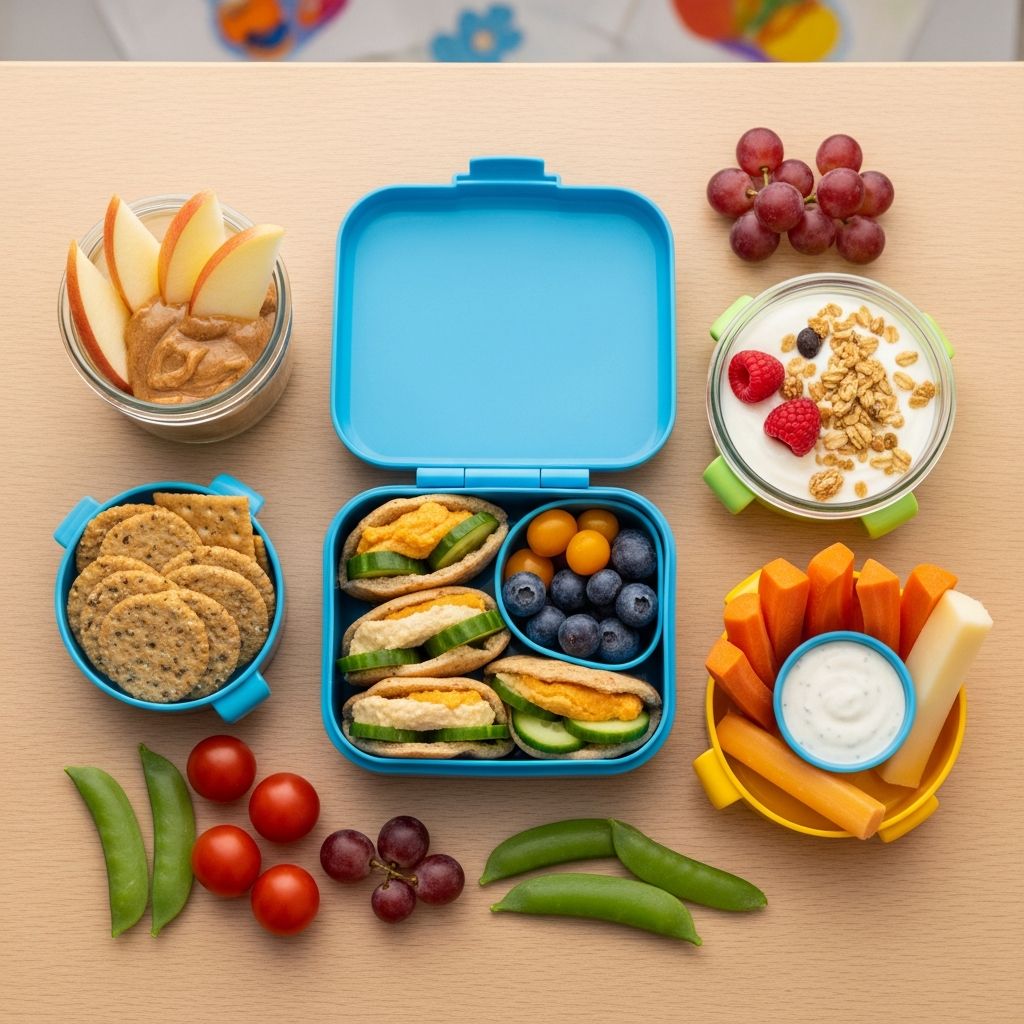
Fresh produce delivers vitamins, fiber, and antioxidants vital for immunity and digestion. Aim for half the plate as fruits or veggies daily. Versatile options include sliced apples, berries, carrot sticks, cucumber rounds, and bell pepper strips. For variety, roast sweet potato wedges or steam green beans.
- Pro Tip: Involve kids in washing and slicing to boost acceptance.
- Pair with dips like yogurt or hummus to mask bitterness for picky eaters.
Proteins: Power for Growth
Lean proteins repair tissues and sustain energy. Sources like cheese cubes, hard-boiled eggs, bean dips, nut butters (if no allergies), and turkey slices provide amino acids. Preschoolers need about 13-19 grams daily from snacks.
- Edamame pods or chickpeas offer plant-based punch.
- Fish like canned tuna adds omega-3s for brain health.
Whole Grains: Steady Energy Release
Opt for minimally processed grains like oatmeal bites, whole wheat crackers, or quinoa puffs. They supply B-vitamins and fiber, curbing hunger longer than refined carbs.
- Check labels: seek >3g fiber per serving.
- Mini pita pockets stuffed with veggies exemplify portability.
Dairy and Alternatives: Bone Builders
Low-fat yogurt, cheese sticks, or fortified plant milks deliver calcium and vitamin D. Greek yogurt doubles protein content for muscle support.
Table: Quick Food Group Pairings
| Food Group Combo | Snack Example | Benefits |
|---|---|---|
| Fruit + Protein | Banana with peanut butter | Potassium, sustained energy |
| Veggie + Grain | Celery with whole grain crackers | Fiber boost, crunch appeal |
| Dairy + Fruit | Yogurt with berries | Probiotics, antioxidants |
| Protein + Grain | Cheese on mini bagel | Calcium, complex carbs |
Fun and Easy Snack Recipes to Try
Hands-on prep turns snack time into a learning adventure. These no-fuss ideas use pantry staples and take under 15 minutes.
Berry Yogurt Parfaits
Layer plain Greek yogurt, fresh strawberries, blueberries, and a sprinkle of low-sugar granola in clear cups. Kids assemble their own towers, exploring colors and textures. Packs 10g protein and probiotics for gut health.
Crunchy Veggie Boats
Hollow cucumber or zucchini halves, fill with hummus, top with shredded carrots or peas. Sail these \”boats\” across plates for imaginative play. Rich in hydration and vitamins A/C.
Energy Bite Balls
Mix rolled oats, mashed banana, peanut butter, and mini chocolate chips. Roll into bites; chill. Nut-free version swaps seeds. Freezer-friendly for grab-and-go.
Mini Fruit Quesadillas
Spread whole grain tortilla with cream cheese, add thin apple slices or kiwi; fold and toast lightly. Sweet-savory twist satisfies cravings healthily.
Custom Trail Mix Stations
Set out popcorn, dried apricots, cheerios, sunflower seeds, and raisins. Let children mix portions—promotes portion control and variety exposure.
Green Smoothie Pops
Blend spinach, banana, yogurt, and pineapple; freeze in molds. Sneaks greens without detection, perfect for hot days.
These recipes adapt for allergies: use sunflower butter, dairy-free yogurt, gluten-free grains.
Navigating Allergies and Picky Eaters
Common allergens like nuts, dairy, eggs affect 8% of kids. Read labels, communicate with schools. Nut-free swaps: seeds, roasted chickpeas. For fussiness, offer choices (apple or pear?), neutral dips, and repeated exposure—takes 10-15 tries for acceptance.
Portion preschool-sized: 1/4 adult serving prevents overwhelm. Use divided plates for visual appeal.
Snack Time at Preschool and Home
Many preschools require parent-provided snacks; check policies on nuts/peanuts. Pack in insulated bags with ice packs for safety. Home routines model balance: set snack zones away from TV to encourage mindful eating.
Involve in grocery shopping; discuss \”rainbow plates\” for color diversity, fostering autonomy.
Common Pitfalls to Avoid
- Grazing: Unstructured access leads to overeating; stick to scheduled times.
- Juice Overload: Limit to 4oz daily; dilute or replace with water.
- Hidden Sugars: Skip flavored yogurts, fruit snacks—choose plain + natural sweetener.
- Inconsistency: Rotate options to prevent boredom.
Frequently Asked Questions
How often should preschoolers snack?
Twice daily, mid-morning and afternoon, totaling 200-400 calories from snacks.
Are pouches healthy?
Select 100% fruit with no added sugar; limit to occasional due to less chewing practice.
What if my child refuses veggies?
Hide in smoothies/muffins initially, then gradually reveal; pair with favorites.
Can snacks be meal-prepped?
Yes—muffins, energy balls freeze well; portion trail mix weekly.
Best drinks with snacks?
Water primary; low-fat milk or 100% juice sparingly.
References
- Pediatric Nutrition Guidelines — American Academy of Pediatrics. 2023-10-15. https://publications.aap.org/pediatrics/article/152/5/e2023062791/193711/Nutritional-Needs-of-Young-Children
- Dietary Guidelines for Americans — U.S. Department of Agriculture. 2020-12-01. https://www.dietaryguidelines.gov/sites/default/files/2020-12/Dietary_Guidelines_for_Americans_2020-2025.pdf
- Snacks for Toddlers and Young Children — SR Nutrition (Registered Dietitians). 2024-08-01. https://www.srnutrition.co.uk/2024/08/snacks-for-toddlers-and-young-children/
- Healthy Snacks for Kids — The Real Food Dietitians. 2023-05-20. https://therealfooddietitians.com/healthy-snacks-for-kids-back-to-school-snacks/
- Nutrition and Young Children — Centers for Disease Control and Prevention. 2024-02-14. https://www.cdc.gov/nutrition/infantandtoddlernutrition/foods-and-drinks/index.html