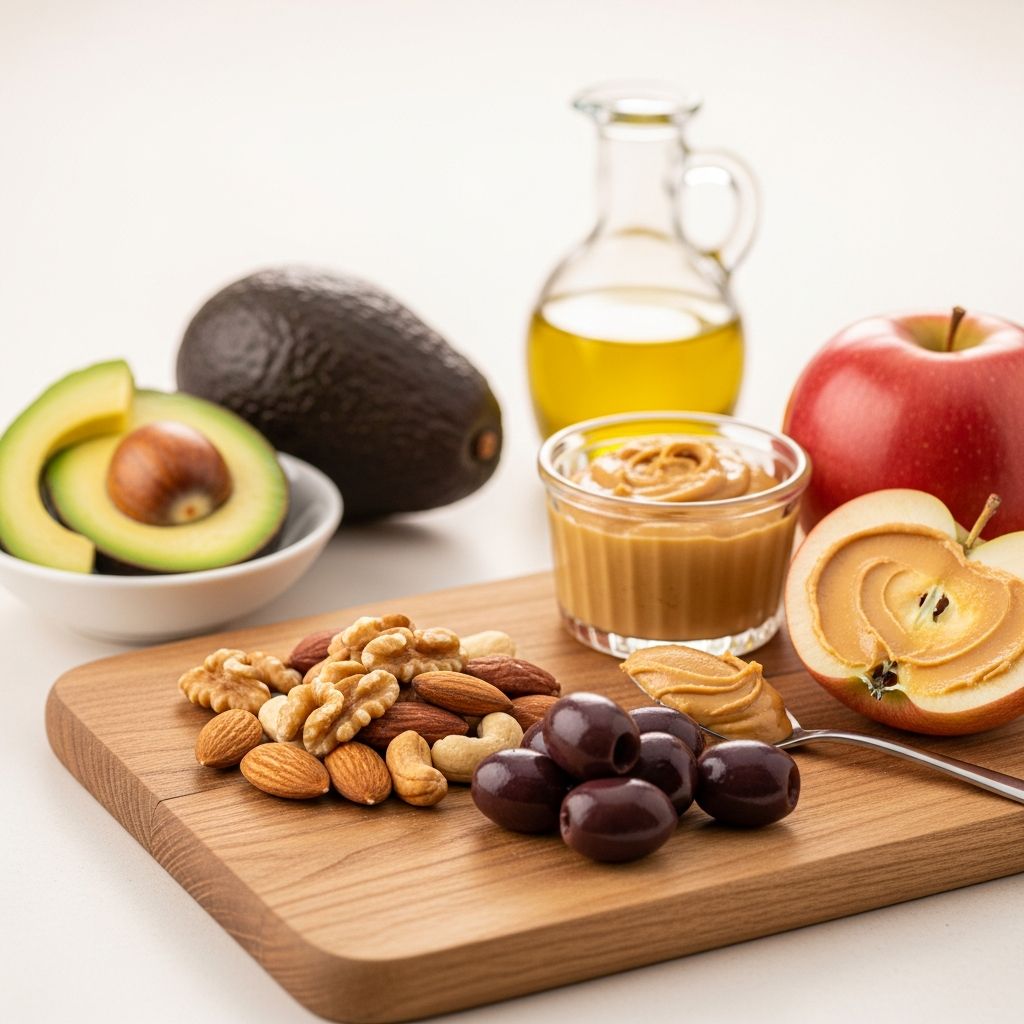
Dietary fats play a crucial role in children’s growth, brain development, and energy needs. Understanding which fats to prioritize helps parents foster lifelong healthy eating habits.
Why Fats Matter in a Child’s Diet
Fats provide concentrated energy essential for active kids, support cell growth, and aid absorption of fat-soluble vitamins like A, D, E, and K. For young children, fats contribute up to 30-40% of daily calories during early years, tapering as they grow. They are building blocks for brain tissue, particularly omega-3s vital for cognitive function.
However, not all fats benefit equally. Choosing the right types prevents issues like high cholesterol or obesity while promoting heart health.
Categories of Dietary Fats
Fats fall into four main groups: unsaturated (monounsaturated and polyunsaturated), saturated, and trans fats. Each impacts health differently.
Beneficial Unsaturated Fats
Unsaturated fats, liquid at room temperature, support heart health by lowering bad LDL cholesterol and reducing inflammation. They come in two forms.
Monounsaturated Fats (MUFAs): These have one double bond and help maintain good HDL cholesterol. Found in olive oil (72% MUFAs), canola oil (58%), avocados, almonds, peanuts, and hazelnuts.
Polyunsaturated Fats (PUFAs): Featuring multiple double bonds, PUFAs are essential since the body cannot produce them. Key subtypes include omega-3s (anti-inflammatory, brain-boosting) from fish, flaxseeds, walnuts, and soybean oil; and omega-6s from sunflower, corn, and safflower oils.
Saturated Fats: Use in Moderation
Saturated fats solidify at room temperature and raise LDL cholesterol if overconsumed. Common in animal products like butter (60% saturated), red meat, full-fat dairy, cheese, and tropical oils such as coconut (87%) and palm (50%). Recent debates note not all saturated fats are equally harmful, but limits are advised for kids.
Harmful Trans Fats: Avoid Completely
Trans fats, often artificial from hydrogenated oils, elevate LDL and lower HDL, increasing risks for heart disease and diabetes. Found in fried foods, baked goods, margarine sticks, and processed snacks. Health experts recommend less than 1% of calories from trans fats; many regions ban them.
Comparing Fat Profiles in Common Foods
Use this table to compare fat types in oils and fats, helping select healthier options for family meals.
| Oil/Fat | Saturated (%) | Monounsaturated (%) | Polyunsaturated (%) | Trans (%) |
|---|---|---|---|---|
| Canola | 7 | 58 | 29 | 0 |
| Olive | 13 | 72 | 8 | 0 |
| Sunflower | 10 | 20 | 66 | 0 |
| Corn | 13 | 24 | 60 | 0 |
| Soybean | 16 | 44 | 37 | 0 |
| Peanut | 17 | 49 | 32 | 0 |
| Butter | 60 | 26 | 5 | 5 |
| Coconut | 87 | 6 | 2 | 0 |
Data shows plant oils like canola and olive excel in healthy fats, while butter and coconut are saturated-heavy.
Age-Appropriate Fat Recommendations
Needs vary by age. Infants under 2 get ample fats from breast milk or formula (about 50% calories). Toddlers 1-3: 30-40% from healthy sources. Kids 4-18: 25-35% total calories, emphasizing unsaturated fats. Limit saturated to under 10% and trans to minimal.
- Infants (0-12 months): Prioritize full-fat dairy, avoid low-fat options.
- Toddlers (1-3 years): Introduce nuts, seeds, avocados; whole milk okay.
- School-age (4-8 years): 1,200-2,000 calories; fats 25-35%.
- Teens (9-18 years): Up to 3,000 calories; focus on fish twice weekly for omega-3s.
Top Food Sources for Healthy Fats
Incorporate these kid-friendly options:
- Omega-3 Rich: Salmon, mackerel, flaxseeds, chia seeds, walnuts.
- MUFAs: Avocados (smashed on toast), olive oil dressings, peanut butter (natural).
- PUFAs: Sunflower seeds, soybean oil for stir-fries.
- Limit: Fatty meats, fried items, full-fat cheeses occasionally.
Practical Tips for Parents
Make swaps easy:
- Use olive or canola oil for cooking instead of butter.
- Choose tub margarine over stick varieties (lower trans).
- Add avocado or nuts to smoothies, yogurt parfaits.
- Bake with applesauce to cut saturated fats in treats.
- Read labels: Aim for <5g saturated fat per serving.
- Serve fatty fish like tuna salads or baked salmon nuggets weekly.
Model balance: Pair fats with veggies, fruits, whole grains for complete nutrition.
Potential Risks of Imbalance
Excess saturated/trans fats link to childhood obesity, high cholesterol by teens. Too few healthy fats impair growth, vitamin uptake, brain development. Monitor via pediatric check-ups; blood tests if family history of heart issues.
Common Myths Debunked
- Myth: All fats make kids fat. Healthy fats satiate, preventing overeating.
- Myth: Low-fat is always best for kids. Young ones need fats for myelin (nerve coating).
- Myth: Coconut oil is heart-healthy. High saturated content advises moderation.
Frequently Asked Questions
Should I give my toddler low-fat milk?
No, whole milk until age 2 supports brain growth; switch to low-fat after.
How much fat does a school-age child need daily?
About 25-35% of calories, e.g., 55-78g on 2,200-calorie diet, mostly unsaturated.
Are nuts safe for young kids?
Introduce finely chopped from age 1+ to avoid choking; great healthy fat source.
What’s a good omega-3 goal for kids?
Children 4-8: 90mg EPA/DHA daily; teens 160-320mg from fish or fortified foods.
Can fats help picky eaters?
Yes, calorie-dense healthy fats like avocado boost intake without bulk.
References
- Types of Fat – The Nutrition Source — Harvard T.H. Chan School of Public Health. 2023. https://nutritionsource.hsph.harvard.edu/what-should-you-eat/fats-and-cholesterol/types-of-fat/
- Types of Dietary Fat — Abiomed. 2024. https://www.abiomed.com/en-us/patients-and-caregivers/blog/types-of-dietary-fat
- Types of Fat in Food: Understanding the Different Dietary Fats — WebMD. 2025-01-10. https://www.webmd.com/diet/types-fat-in-foods
- Fats explained: saturated, unsaturated and trans fats — British Heart Foundation. 2024. https://www.bhf.org.uk/informationsupport/heart-matters-magazine/nutrition/sugar-salt-and-fat/fats-explained
- What Is Fat? Types & Why You Need Fats — Cleveland Clinic. 2024-06-12. https://my.clevelandclinic.org/health/articles/fats
- Dietary fats explained — MedlinePlus (U.S. National Library of Medicine). 2024. https://medlineplus.gov/ency/patientinstructions/000104.htm
- Dietary Fats — American Heart Association. 2024. https://www.heart.org/en/healthy-living/healthy-eating/eat-smart/fats/dietary-fats