Breakfast is the first fuel your body gets after a night of sleep, and it helps your muscles move, your brain think, and your mood stay steady all morning long.
What Happens While You Sleep?
When you sleep, your body is busy repairing muscles, growing, and organizing memories from the day before, all of which use up stored energy from yesterday’s meals.
By the time morning comes, your blood sugar is lower, and without a new source of energy from food, you may feel slow, cranky, or unfocused in class or during morning activities.
- Your brain uses a steady stream of glucose (a kind of sugar) to think clearly and solve problems.
- Your muscles rely on carbohydrates for quick movement and protein for strength and repair.
- Your mood is closely tied to your energy level, which is why skipping breakfast can make you feel extra grumpy or tired.
Why Breakfast Matters for Growing Bodies
Kids are still growing, which means they need regular fuel more often than many adults, and breakfast provides a big portion of the vitamins, minerals, protein, and healthy fats needed each day.
Eating a balanced morning meal can support strong bones, healthy muscles, and an active immune system that helps fight off germs at school and during activities.
- Steady energy makes it easier to pay attention, listen, and remember what you learn.
- A good breakfast supports better performance in reading, math, and problem-solving tasks.
- Kids who eat breakfast regularly often find it easier to stay active and participate in sports or play.
Building a Balanced Breakfast Plate
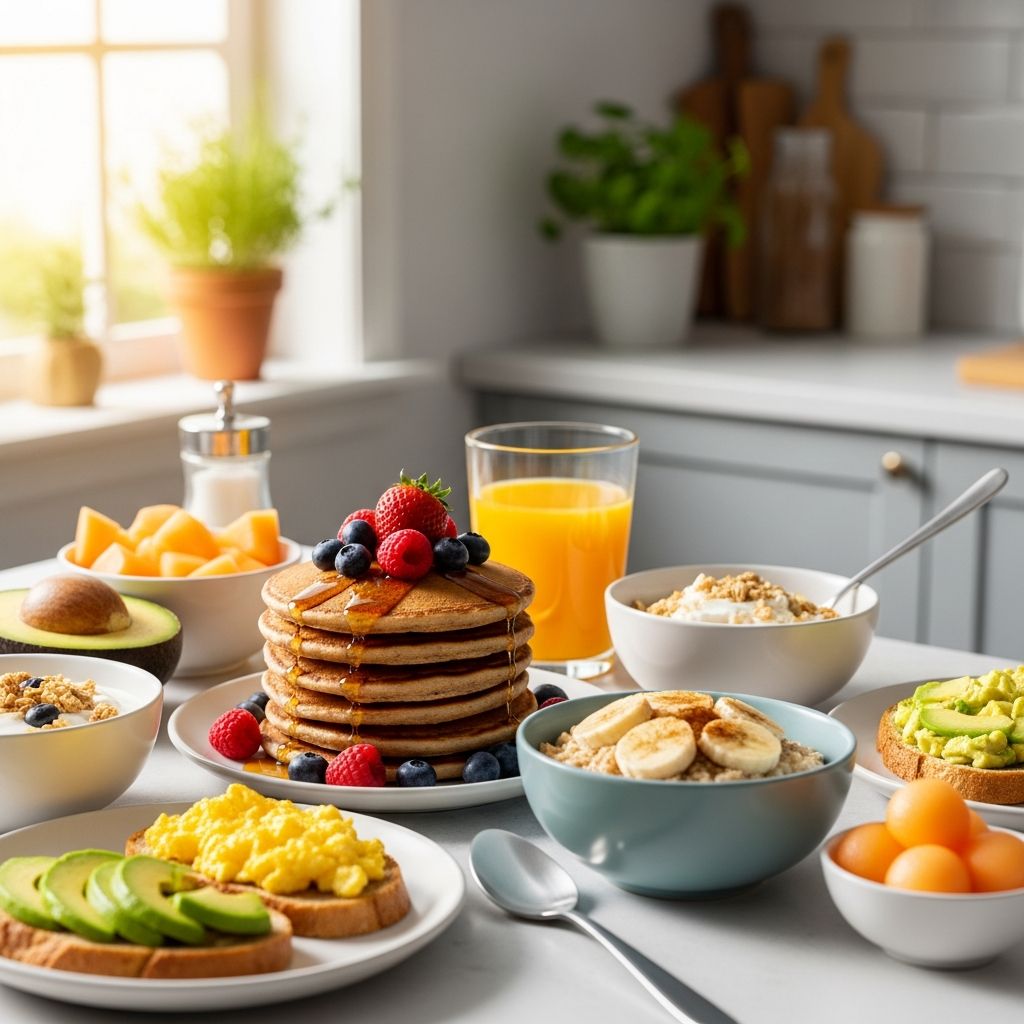
A smart breakfast includes a mix of different types of foods so your body gets quick energy, long-lasting fullness, and the building blocks it needs to grow strong.
You do not need fancy recipes; you just need to combine the right kinds of foods in simple ways that taste good to you.
The Four Breakfast Building Blocks
- Whole grains: Foods like oatmeal, whole-wheat bread, whole-grain tortillas, or low-sugar whole-grain cereal give your body carbohydrates and fiber for steady energy.
- Protein: Options such as eggs, yogurt, milk, cheese, nut or seed butters, beans, or tofu help keep you full and support muscle growth and repair.
- Fruits and veggies: Fresh, frozen, or canned (in water or juice) produce adds vitamins, minerals, fiber, and helpful plant compounds that support your eyes, skin, and immune system.
- Healthy fats: Foods like avocado, nuts, seeds, and some plant oils help your brain function well and make breakfast more satisfying.
To build a strong plate, try to combine at least three of the four building blocks at each breakfast, changing the foods from day to day so mornings stay interesting.
Simple Breakfast Formulas Kids Can Remember
A helpful way to think about breakfast is to use easy formulas that you can mix and match with foods you like and what is available in your kitchen.
These formulas make it easier to build a balanced meal even on busy school mornings.
Easy Breakfast Mix-and-Match Ideas
- Grain + Protein + Fruit: Whole-grain toast with peanut butter and sliced banana; oatmeal with milk and berries; whole-grain cereal with yogurt and a side of apple slices.
- Egg + Grain + Veggie: Scrambled egg in a whole-grain tortilla with spinach; veggie omelet with a slice of whole-wheat bread; boiled egg with carrot sticks and toast fingers.
- Yogurt + Fruit + Crunch: Plain or lightly sweetened yogurt topped with sliced fruit and a sprinkle of nuts, seeds, or low-sugar granola.
- Smoothie + Side: Fruit and milk smoothie blended with a spoonful of nut butter, paired with a slice of toast or a whole-grain muffin.
Kid-Friendly Breakfast Ideas for Busy Mornings
Mornings can feel rushed, but breakfast does not have to be complicated; with a little planning, it can be quick, portable, and still nourishing.
Here are some kid-friendly ideas that work well on school days or weekends when you want something easy.
Ready-in-Minutes Plate Ideas
- Whole-grain toast with almond or peanut butter and a side of orange slices.
- Cheese stick, whole-grain crackers, and a handful of grapes.
- Microwaved scrambled egg in a mug with a piece of fruit and half an English muffin.
- Plain yogurt swirled with a spoonful of jam or fresh fruit and topped with seeds.
- Leftover brown rice warmed with milk, cinnamon, and raisins for a quick breakfast bowl.
Grab-and-Go Breakfast Snacks
- Homemade or store-bought whole-grain muffins with fruit and nuts.
- Banana spread with nut butter and rolled in crushed cereal.
- Mini whole-wheat tortilla rolled with turkey slices and cheese.
- Trail mix made from whole-grain cereal, nuts or seeds (if safe), and dried fruit.
- Single-serve yogurt with a small bag of granola to add just before eating.
Healthy vs. Not-So-Healthy Morning Choices
Not all breakfast foods give your body the same kind of energy; some cause a fast sugar rush followed by a crash, while others keep you full and focused for much longer.
Understanding the difference helps you pick foods that make your body feel strong instead of sleepy by mid-morning.
| Breakfast Choice | What It Offers | Better Tweaks |
|---|---|---|
| Sugary cereal with flavored milk | Quick energy but often not much fiber or protein, which can lead to feeling hungry soon. | Choose a low-sugar, whole-grain cereal and pair it with plain milk and fruit. |
| Pastries or frosted doughnuts | Lots of sugar and refined flour, with little protein or fiber for lasting fullness. | Have them only once in a while and pair a small portion with yogurt or boiled eggs. |
| White toast with butter only | Some carbohydrates and fat, but not much fiber or protein. | Switch to whole-grain bread and add nut butter, egg, or sliced cheese. |
| Fruit juice alone | Vitamins and natural sugar but no protein, fat, or fiber to keep you full. | Eat whole fruit instead and add yogurt, nuts, or eggs. |
| Balanced plate (grain + protein + fruit) | Slow, steady energy, better focus, and longer-lasting fullness. | Change up the foods to keep things fun while staying balanced. |
Handling Picky Eating at Breakfast
Picky eating can make mornings stressful, but small changes and gentle choices can help most kids accept breakfast more easily over time.
The goal is to offer good options regularly and let kids practice trying new foods without pressure or bribes.
Kid-Approved Strategies
- Offer two to three choices that all work for you, such as, “Would you like yogurt with fruit or eggs with toast?”
- Include at least one familiar food on the plate along with something new in a tiny portion.
- Use fun shapes, colorful plates, or small cups to make foods more inviting without turning breakfast into a game every day.
- Involve kids in planning and preparing breakfast, such as stirring eggs, washing berries, or sprinkling toppings.
- Stay calm if a new food is refused; repeated low-pressure exposure over many days often leads to more acceptance.
Make-Ahead Breakfasts for Stress-Free Mornings
Preparing part of breakfast the night before can make school days smoother and give you more time to eat without rushing.
Many kid-friendly foods keep well in the fridge or freezer and can be reheated quickly in the morning.
Smart Prep Tips
- Bake a batch of whole-grain muffins or breakfast bars on the weekend and freeze extras.
- Portion overnight oats or yogurt parfaits into jars so kids can grab their own breakfast.
- Cook extra pancakes or waffles, freeze them in a single layer, and reheat in a toaster or oven.
- Cut fruit like melon or pineapple in advance and store in containers for quick sides.
- Boil several eggs at once and keep them in the fridge for quick protein all week.
Breakfast Habits That Support a Healthy Routine
Breakfast is not just about the food; it is also about the habits you build around morning time, such as getting up early enough to eat without feeling rushed.
A calm routine can make it easier for kids to tune in to their hunger and fullness signals and start the day feeling organized and steady.
Helpful Morning Habits
- Set a regular wake-up time that leaves at least 10–15 minutes for eating.
- Pack backpacks and lay out clothes the night before so mornings are less hectic.
- Eat at a table instead of in front of a screen when possible to focus on your food.
- Encourage kids to notice how they feel on days they eat breakfast versus days they skip it.
- Make breakfast a simple family check-in time, even if only one adult can sit with the kids.
Frequently Asked Questions About Kids and Breakfast
Is it really bad to skip breakfast sometimes?
Skipping breakfast once in a while usually is not harmful, but regularly starting the day without fuel can lead to low energy, poor concentration, and extra hunger later in the day that might trigger overeating or constant snacking.
What if I am not hungry when I wake up?
Some kids do not feel hungry right away; in that case, try a small snack like a banana, yogurt, or a slice of toast before school and pack a more substantial mid-morning option if allowed.
Are breakfast bars or cereal bars okay?
Breakfast bars can be helpful on busy days if they contain whole grains, some protein, and not too much added sugar, and they work best when paired with fruit and milk or yogurt instead of eaten alone.
How much sugar is too much at breakfast?
Foods with lots of added sugar, like frosted cereals, pastries, and sweetened drinks, can cause a quick energy spike and crash, so it is better to choose items with less added sugar and get sweetness mainly from fruit.
Can leftovers count as breakfast?
Yes, leftovers such as grilled chicken, rice, roasted vegetables, or even soup can be part of a balanced breakfast as long as they provide some carbohydrates, protein, and colorful vegetables or fruit.
When kids treat breakfast as their first chance to fuel up for the day, they give their bodies and brains a powerful advantage for learning, playing, and growing strong.