What Are Head Lice and How Do Children Get Them?
Head lice are small parasitic insects that inhabit the scalp and feed on human blood. Unlike common misconceptions, head lice infestations (medically known as pediculosis) are not indicative of poor hygiene and can affect children from any background or socioeconomic status. These tiny creatures measure approximately 2-3 millimeters in length and are visible to the naked eye, though they move quickly and avoid light.
The primary transmission method for head lice is direct head-to-head contact with an infested person. Children at higher risk include those who share sleeping areas, participate in contact sports, or engage in close physical activities during play. It is important to note that lice cannot jump or fly; they must crawl from one head to another during prolonged contact.
Secondary transmission can occur through contaminated personal items, though this is less common. Items such as combs, brushes, hair accessories, hats, pillows, and towels may harbor lice and nits if used by an infested individual shortly before contact with another person. Understanding these transmission routes is essential for both treatment and prevention strategies.
Recognizing the Signs and Symptoms of Infestation
Identifying head lice early is crucial for prompt treatment and preventing spread throughout a school or household. Parents and caregivers should be aware of the telltale indicators that suggest a child may have lice.
Observable Indicators
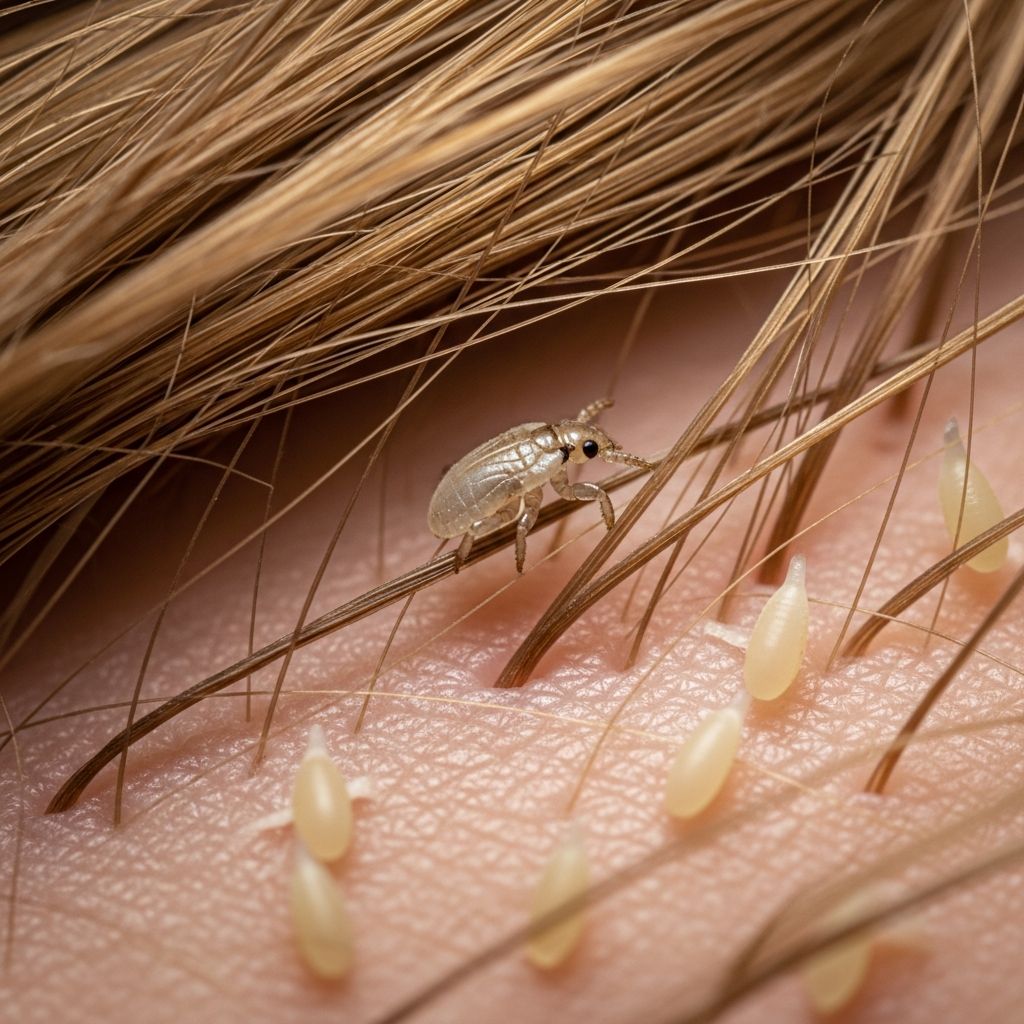
The most concrete evidence of lice presence is the discovery of nits or adult lice. Nits are the eggs of lice and appear as small, oval-shaped structures firmly attached to individual hair shafts, typically within one-quarter inch of the scalp. Unlike dandruff, which brushes away easily, nits remain firmly cemented to hair. Live lice are faster and more difficult to spot than nits, as they avoid light and move rapidly across the scalp.
Lice and their eggs are frequently concentrated in specific areas of the head. The regions behind the ears and around the nape of the neck are particularly common locations due to warmth and humidity. Examining these areas thoroughly during inspection increases the likelihood of detection.
Physical Symptoms
Itching is the most common symptom associated with head lice, though the intensity varies among individuals. The itching results from an allergic reaction to the louse’s saliva and may not appear immediately upon infestation. Some children may experience itching within days, while others may not develop symptoms for several weeks. This delay in symptom onset makes regular screening important, especially when a child has been exposed to someone with lice.
Secondary skin irritation may develop from scratching, potentially leading to small red bumps or sores on the scalp, neck, and shoulders. Some children experience swollen lymph nodes in the neck region as a response to the infestation.
Understanding the Lice Life Cycle
Knowledge of the lice life cycle is important for understanding why certain treatment protocols and follow-up schedules are necessary. The louse life cycle consists of three stages: nit, nymph, and adult.
Female lice lay eggs (nits) that adhere to hair shafts near the scalp. These eggs hatch within 7-10 days into nymphs, which are immature lice. Nymphs reach maturity within 9-12 days and can then reproduce. Adult lice live for approximately 30 days, during which a single female can lay hundreds of eggs. This rapid reproduction cycle explains why infestations escalate quickly without intervention.
The nits themselves do not move and cannot travel between hosts. Even after successful treatment that eliminates all living lice, nits may remain attached to hair shafts for several months. This persistence of nits is why visual inspection with a fine-tooth comb remains an essential component of lice management even after pharmacological treatment.
Effective Treatment Approaches for Head Lice
Over-the-Counter Medications
The primary pharmacological treatments available without prescription are pyrethrin-based products and permethrin formulations. Pyrethrin products, derived from chrysanthemum flowers, have a long history of safe use in lice treatment. Permethrin, a synthetic insecticide, is also widely available and effective. Both types of medications are approved by the FDA for treating head lice.
When using over-the-counter treatments, strict adherence to package instructions is essential. Most formulations require application to dry hair, with the product left on the scalp for a specified duration (typically around 10 minutes) before rinsing. The rinse should occur over a sink rather than in a shower or bathtub to minimize contact of the medication with other body areas.
A critical aspect of treatment involves repeating the application approximately one week after the initial treatment. This second application targets any nymphs that hatched from eggs that survived the first treatment, significantly reducing the risk of treatment failure and re-infestation. Importantly, only one type of medication should be used per treatment cycle to avoid potential adverse effects.
Mechanical Removal Methods
Complementing chemical treatments with mechanical removal enhances treatment efficacy. Fine-tooth combs, often included in lice treatment kits, have closely spaced teeth specifically designed to remove both living lice and nits from hair. Combing should be performed on wet hair, as moisture makes hair easier to separate and lice slower to move.
Daily combing through the hair for at least three weeks following initial treatment helps ensure complete removal of any remaining lice and nits. This mechanical approach, while labor-intensive, provides confirmation that treatment has been successful and reduces reliance solely on chemical agents.
Prescription Options
When over-the-counter treatments prove ineffective, healthcare providers may prescribe alternative medications. Prescription shampoos and topical solutions offer different active ingredients that may be effective against lice populations that have developed resistance to standard over-the-counter options. A pediatrician should be consulted if home treatment attempts do not resolve the infestation within the expected timeframe.
Home and Environmental Management
While head lice cannot survive long away from the human scalp, addressing the home environment is still a prudent component of comprehensive treatment. Items that contacted the infested child’s head should receive appropriate attention.
Clothing, bed linens, pillowcases, blankets, and towels should be washed in hot water (at least 130°F) and dried on a high heat setting. This temperature eliminates both lice and nits that may have transferred to fabrics. Non-washable items such as stuffed animals or decorative pillows can be sealed in plastic bags for several weeks, after which any lice present will have died from lack of access to a human host.
Combs and brushes used by the infested individual should be soaked in hot water (130°F or hotter) for at least 10 minutes to eliminate any lice or nits. Vacuuming carpets and upholstered furniture is recommended as a general hygiene measure, though the critical treatment focus should remain on the infested person’s scalp and direct mechanical removal efforts.
Pesticide sprays designed for killing lice should not be used in the home, as the potential health risks from chemical exposure outweigh any benefit from environmental treatment.
Prevention Strategies for Families and Schools
Behavioral Modifications
The most effective prevention strategy involves teaching children to minimize head-to-head contact. During school activities, sports, playground interactions, and social gatherings, children should understand the importance of maintaining appropriate personal space. While this may seem restrictive, it is the single most effective prevention measure.
Personal Item Management
Children should be instructed not to share items that contact the head. Combs, brushes, hair clips, headbands, scarves, hats, helmets, and pillows should remain personal belongings. Earbuds and headphones should also be reserved for individual use. At school, children’s coats, hats, and bags should be stored separately from other students’ belongings when possible.
While sharing helmets for safety reasons should not be discouraged due to lice concerns, shared helmets can be cleaned between uses if practical, or at minimum, children should be encouraged to wear hats underneath helmets to create a barrier.
Surveillance and Early Detection
Regular inspection of a child’s hair and scalp, particularly if exposure to someone with lice has occurred, enables early detection before widespread infestation develops. Examining the scalp every few days during potential exposure periods allows parents to identify lice or nits while populations are still manageable. Early detection and treatment prevent transmission to other family members and classmates.
Educational Approaches
Educating children, teachers, and caregivers about lice transmission, prevention, and the reality that lice are common childhood parasites (not indicators of poor hygiene) reduces stigma and fear. This education also encourages prompt reporting and treatment rather than concealment, which often leads to broader transmission.
Complementary and Alternative Treatments
Numerous alternative products claim effectiveness against head lice, including olive oil, mayonnaise, petroleum jelly, and various essential oils. While some of these substances may slow lice movement and facilitate combing, scientific evidence does not support their effectiveness as standalone treatments. If applied in large quantities and left on the scalp for extended periods (typically over 12 hours), oils may suffocate some lice, but this approach is less reliable than conventional medications.
Essential oils have gained popularity in lice treatment products, yet robust clinical evidence for their safety and efficacy remains limited. Parents considering these alternatives should understand that combining them with proven pediculicides is more effective than relying on alternative treatments alone.
When to Consult a Healthcare Provider
Parents should contact their child’s pediatrician if they have questions regarding diagnosis, treatment, or prevention strategies. A healthcare consultation is particularly important before treating young children, as some medications have age restrictions. Additionally, if over-the-counter treatments fail to eliminate the infestation after appropriate application and follow-up, a pediatrician can assess whether prescription options are warranted or whether the diagnosis should be reconsidered.
Healthcare providers can also provide reassurance to anxious parents and children, as the psychological impact of lice discovery can be significant. Normalizing the experience and emphasizing that lice infestations are manageable common childhood conditions helps reduce unnecessary anxiety and shame.
Managing the Psychological Impact
Parents should be aware that discovering their child has head lice can generate considerable anxiety and worry. It is important that children not internalize shame or feel responsible for the infestation, as this can lead to emotional distress. Framing lice as a common, treatable condition rather than a reflection of cleanliness helps maintain the child’s self-esteem and reduces psychological harm.
Creating a matter-of-fact approach to treatment and prevention demonstrates to children that while lice require attention, they are not a catastrophe. This perspective supports the child’s emotional wellbeing throughout the treatment process.
Addressing Common Myths and Misconceptions
Several persistent myths about head lice can lead to ineffective or unnecessary interventions. Understanding accurate information helps parents make evidence-based decisions.
| Common Myth | Accurate Information |
|---|---|
| Head lice indicate poor hygiene | Lice infestations occur regardless of cleanliness; they result from contact exposure, not poor hygiene practices |
| Lice can jump or fly to new hosts | Lice crawl; they cannot jump, fly, or survive long away from the scalp |
| Lice are primarily spread through sharing pillows or hats | Direct head-to-head contact is the primary transmission route; object sharing is a minor transmission pathway |
| All itching indicates active lice infestation | Itching results from allergic reaction and may not appear for several weeks; only living lice indicate active infestation |
| Chemical sprays are necessary for home treatment | Sprays pose health risks without substantial benefit; focus on treating the infested person’s scalp is most effective |
Frequently Asked Questions About Head Lice
How quickly do lice multiply once a child is infested?
Female lice lay eggs that hatch within 7-10 days, with nymphs maturing within 9-12 days. Infestations escalate rapidly without treatment, as each female can lay hundreds of eggs during her 30-day lifespan.
Can nits spread lice to other people?
Nits are immobile and do not directly spread infestation. However, unhatched nits can hatch into nymphs that may crawl to another person during close contact, so removing nits is an important treatment component.
Should I treat family members who don’t have visible lice?
No. Treat only those with confirmed lice or nits. However, check all family members regularly (daily for 10-15 days) for signs of infestation, as close household contact increases transmission risk.
How long after treatment should I wait before shampooing with regular shampoo?
Wait at least 2 days after treatment application before using regular shampoo, as this allows the medication to continue working effectively.
Are prescription treatments necessary if over-the-counter options don’t work?
If over-the-counter treatments applied correctly do not resolve infestation, consult a pediatrician. Prescription alternatives with different active ingredients may be more effective for resistant lice populations.
Can lice be caught from swimming pools or shared sporting equipment?
Lice cannot survive in water and do not spread through pools. Shared equipment like helmets poses minimal transmission risk if head-to-head contact doesn’t occur; always prioritize safety and helmet use over lice concerns.
References
- Treatment of Head Lice — Centers for Disease Control and Prevention. 2024. https://www.cdc.gov/lice/treatment/index.html
- Prevention and treatment of head lice in children — Burgess, I.F. PubMed/National Center for Biotechnology Information. 2000. https://pubmed.ncbi.nlm.nih.gov/10937452/
- Head Lice: Common Childhood Condition — Seattle Children’s Hospital. 2025. https://www.seattlechildrens.org/conditions/head-lice/
- Keep Calm and Comb On: How To Identify and Treat Head Lice — Children’s Wisconsin. 2025. https://childrenswi.org/at-every-turn/stories/2025/08/how-to-identify-and-treat-head-lice-in-children
- Head Lice — California Department of Public Health. 2024. https://www.cdph.ca.gov/Programs/CID/DCDC/pages/headlice.aspx