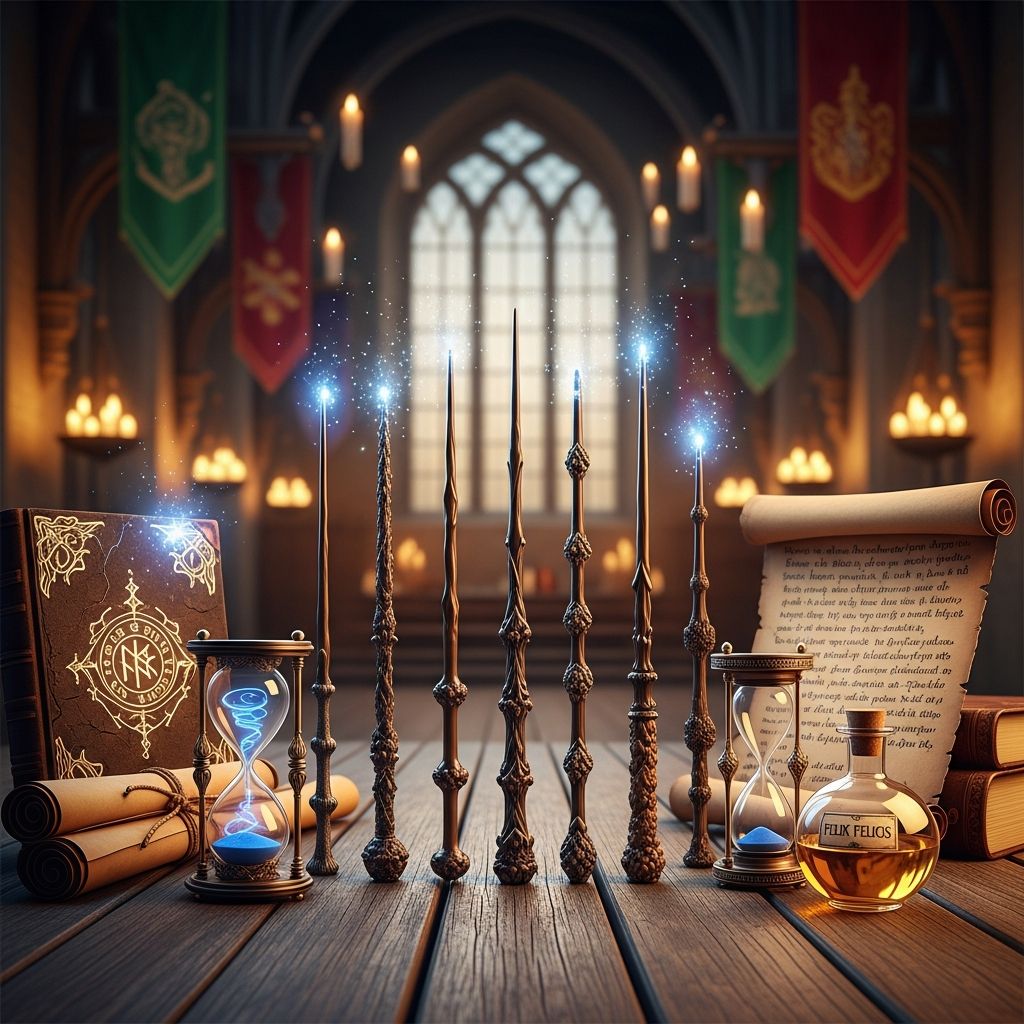
The Harry Potter stories are packed with magical words that fans can quote by heart. From Expelliarmus to Expecto Patronum, these spells are more than fun Latin-sounding phrases—they shape character choices, turn the tide of battles, and even carry deep emotional meaning.
This guide walks through some of the most important and beloved spells in the wizarding world, explains what they do, where they show up, and what they reveal about the witches and wizards who cast them.
Understanding Magic in the Wizarding World
In Harry Potter, spellcasting usually combines three elements:
- Incantation – the spoken word or phrase, often inspired by Latin.
- Wand movement – a specific gesture, like the famous “swish and flick.”
- Intent and focus – the caster’s will, emotions, and concentration.
Official guides to the series emphasize that spells are not just mechanical tricks; strong emotion and moral intent often make the difference between weak magic and powerful results.
Core Utility Spells for Everyday Magic
Some spells are so practical that they appear again and again as students grow up at Hogwarts. These are the charms that make wizard life easier, safer, and sometimes just more fun.
1. Lumos and Nox – Controlling Light
Lumos produces light from the wand tip, like a magical flashlight, while Nox extinguishes that light.
- Primary use: Seeing in the dark, exploring corridors, reading at night.
- Symbolism: Light against darkness, knowledge against ignorance.
- Memorable detail: Many fans learn these as their first “real” Harry Potter spells.
2. Alohomora – Opening Locked Doors
Alohomora unlocks doors and unseals basic magical locks.
- Primary use: Sneaking through locked areas or escaping danger.
- Limitations: Stronger protections and advanced enchantments are not easily bypassed.
- Fan appeal: It captures the thrill of exploration that runs through the entire series.
3. Accio – The Summoning Charm
Accio summons an object to the caster, sometimes across great distances.
- Primary use: Retrieving items quickly—wands, brooms, books, and more.
- Skill level: It requires focus; summoning the wrong item or too many items can be chaotic.
- Narrative role: Often used at turning points when a single object can change everything.
4. Wingardium Leviosa – Making Objects Fly
Wingardium Leviosa is the classic levitation charm, used to make objects float and move through the air.
- Primary use: Lifting, moving, or dropping objects with precision.
- Famous lesson: Younger students learn how important wand movement and pronunciation are.
- Humor: Mispronouncing this spell has become a long-running joke among fans.
Iconic Defensive Spells and Dueling Magic
Wizards and witches in Harry Potter face duels, ambushes, and full-scale battles. Defensive spells are at the heart of these confrontations and often reveal a character’s values, especially when they choose non-lethal magic in life-or-death situations.
5. Expelliarmus – The Disarming Charm
Expelliarmus forces an opponent’s wand or weapon to fly from their grasp.
- Primary use: Ending a duel by removing an opponent’s ability to cast.
- Harry’s signature: This simple, non-lethal spell becomes closely associated with Harry’s approach to conflict, where disarming is preferred over harming.
- Story impact: It decides the outcome of several major confrontations.
6. Protego – The Shield Charm
Protego creates a magical barrier that deflects most hexes and jinxes back toward their source.
- Primary use: Protection in duels and during surprise attacks.
- Variants: Advanced forms can guard larger areas or block physical objects.
- Training: It is a core part of defensive magic lessons and later appears in rebel training groups.
7. Stupefy – The Stunning Spell
Stupefy knocks a target unconscious or freezes it temporarily.
- Primary use: Quickly disabling opponents without killing them.
- Battle scenes: Red jets of light from this charm are a visual hallmark of wizarding battles in the films.
- Ethical angle: Like Expelliarmus, it reflects the series’ frequent choice of non-lethal force.
8. Petrificus Totalus – Total Body Bind
Petrificus Totalus locks a person’s body rigid, leaving only their eyes able to move.
- Primary use: Subduing someone quickly when stealth or speed matters.
- Risks: A bound person can still be in danger from falls or other threats.
- Tone: Often used for both comedic and suspenseful moments.
Patronus and Protection Against Dark Creatures
Some spells are specifically designed to defend against dark beings and emotional corruption. The most famous of these is both a technical challenge and a deeply personal milestone for any witch or wizard.
9. Expecto Patronum – The Patronus Charm
Expecto Patronum conjures a Patronus, a glowing guardian shaped like an animal, which repels Dementors and similar creatures.
- Primary use: Driving away Dementors, which feed on hope and happiness.
- Emotional requirement: The caster must focus on a powerful, genuinely happy memory; negative or weak memories do not work.
- Symbolism: A Patronus reflects a person’s inner nature—Harry’s stag, for example, links him to his father and to themes of protection and sacrifice.
| Spell | Type of Magic | Main Target | Key Requirement |
|---|---|---|---|
| Expecto Patronum | Advanced defensive charm | Dementors and dark creatures | Strong, joyful memory and intense focus |
| Protego | General shield charm | Spells, hexes, some physical attacks | Speed and accurate wand movement |
| Stupefy | Offensive stunning spell | Human or creature opponents | Clear line of sight and aim |
Spells That Manipulate Space, Movement, and Time
Magic is not limited to attacks and shields. Some of the most memorable spells bend space and motion to the caster’s will, turning gravity, speed, and distance into playthings.
10. Arresto Momentum – Slowing Motion
Arresto Momentum slows an object or person that is falling or moving dangerously fast.
- Primary use: Preventing injuries from falls or runaway motion.
- Teaching context: Listed as a charm that students may learn in later years.
- Theme: Shows how magic can turn a potentially deadly accident into a controlled landing.
11. Impedimenta – Hindering Movement
Impedimenta, often called the Impediment Jinx, slows or temporarily halts a target’s movement.
- Primary use: Buying time during a chase or battle.
- Subtlety: It does not always knock someone down; sometimes a brief delay is all that is needed.
- Strategic value: Useful for crowd control or disrupting coordinated attacks.
Emotion, Ethics, and the Darker Side of Magic
The Harry Potter series makes it clear that not all magic is neutral. Some spells are playful, some are practical, and others cross ethical lines. The distinction between ordinary curses and forbidden spells is central to the wizarding legal system described in the books and companion materials.
12. Obscuro, Rictusempra, and Other Mischief Spells
Beyond strict offense and defense, there are charms and jinxes used for pranks, escapes, or creative problem-solving.
- Obscuro: Conjures a blindfold over the target, obscuring their vision and enabling quick getaways.
- Rictusempra: The Tickling Charm, which causes uncontrollable laughter and weakens opponents through sheer hilarity.
- Silencio: Silences the target, preventing them from speaking or casting most verbal spells, though it can be difficult to master.
These spells highlight the playful and inventive side of magic, where cleverness can win out over brute power.
13. Memory and Mind: Obliviate
Obliviate modifies or erases specific memories, making it one of the more ethically complex spells.
- Primary use: Concealing wizarding activity from non-magical people or covering up traumatic events.
- Risk: Poorly cast Memory Charms can cause permanent damage or wipe large portions of a person’s past.
- Moral weight: It raises questions about consent and identity—who has the right to rewrite someone else’s memories?
14. A Note on Unforgivable Curses
While this guide focuses on more broadly useful and fan-favorite spells, the wizarding world includes three Unforgivable Curses that are banned by magical law. Official companion materials and interviews have emphasized that their use is punishable by a life sentence in Azkaban because they cause torment, mind-control, or death.
The existence of such spells underlines a recurring idea in the series: the tool is less important than the choices of the witch or wizard wielding it.
Why These Spells Matter to Fans
Spells in Harry Potter work on multiple levels:
- World-building devices: They make the magical universe feel detailed and consistent.
- Character markers: Individual wizards develop signature spells—Harry with Expelliarmus, for example—that match their personality and values.
- Story engines: Entire plot twists hinge on the precise choice of spell, especially when characters refuse to use more violent options.
- Cultural icons: Incantations like “Lumos” and “Expecto Patronum” have migrated into real-world fan communities, charity projects, and educational campaigns as symbols of hope, knowledge, and resilience.
Frequently Asked Questions (FAQs)
Q: Which Harry Potter spell is the most iconic?
A: Many fans consider Expelliarmus and Expecto Patronum the most iconic spells because they define Harry’s style of defense and appear in several pivotal scenes in the series.
Q: Are all curses illegal in the wizarding world?
A: No. Only the three Unforgivable Curses are absolutely banned by law; other jinxes and hexes can be frowned upon or regulated, but they are not automatically criminal.
Q: Do all spells require a wand?
A: Most witches and wizards rely on wands because they focus the magic and make it more precise, but advanced spellcasters in the canon are shown using limited wandless or nonverbal magic, suggesting that wands are tools rather than the source of power.
Q: Why do some witches and wizards specialize in certain spells?
A: Specialization reflects personality, training, and moral choices. Characters often favor spells that align with their values—for instance, non-lethal disarming spells for those who avoid killing, or memory spells for characters deeply involved in secrecy and secrecy enforcement.
Q: Are the Latin-sounding spell names real Latin?
A: Many incantations are inspired by Latin or pseudo-Latin roots—lumos recalls “lumen” (light), and protego mirrors Latin for “I protect”—but the words are often adapted or invented for effect rather than strict linguistic accuracy.
References
- List of spells — Harry Potter Wiki (Fandom). 2023-05-12. https://harrypotter.fandom.com/wiki/List_of_spells
- Your guide to the best spells in Harry Potter — Wizarding World (HarryPotter.com). 2021-10-31. https://www.harrypotter.com/features/your-guide-to-the-best-spells-in-harry-potter
- 35 Best ‘Harry Potter’ Spells, Ranked — Collider. 2022-02-14. https://collider.com/best-harry-potter-spells-ranked/
- 80 Harry Potter Spells: A List and What They Do — Parade. 2022-06-14. https://parade.com/1353958/stephanieosmanski/harry-potter-spells/
- Harry Potter and the Prisoner of Azkaban — J.K. Rowling, Bloomsbury. 1999-07-08. https://doi.org/10.1093/ww/9780199540884.013.U236786
- 200+ Harry Potter Spells: A Full Guide — Fictionary. 2020-11-20. https://fictionary.co/journal/harry-potter-spells/