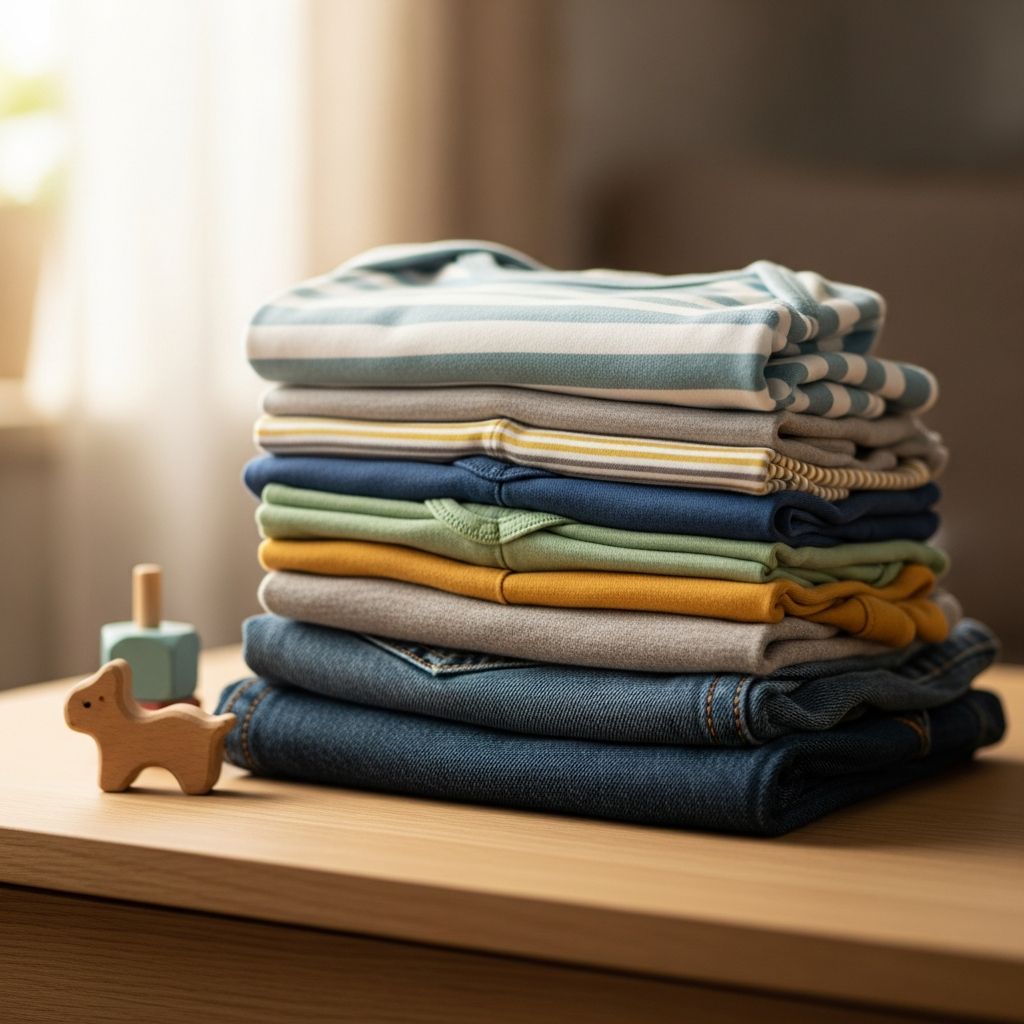
Hand-me-down children’s clothing can be a financial lifesaver, a planet-friendly habit, and a sweet expression of community—unless expectations, communication, and boundaries get tangled. This guide walks you through how to give, receive, and circulate kids’ clothes in ways that feel good for everyone involved.
Why Hand-Me-Downs Matter More Than Ever
Children outgrow clothes at an astonishing pace, and new items can feel shockingly expensive for something that may only be worn for a single season. Passing garments from one child to another eases the financial load and reduces textile waste. It also creates a sense of connection between families, cousins, and friends, as beloved outfits are woven into multiple childhood stories.
But feelings can get complicated when different parents rely on the same stash of clothing, when ownership becomes fuzzy, or when one person sees hand-me-downs as a casual favor while another quietly counts on them as a necessity. Etiquette is less about rigid rules and more about keeping those relationships warm and honest.
Core Principles of Hand-Me-Down Etiquette
Think of hand-me-downs as a kindness, not a contract. When everyone remembers that the goal is to help—not to control, tally, or score—most situations become less stressful.
- Generosity over entitlement: Shared clothing is a bonus, not a guarantee. No one is required to supply anyone else’s wardrobe.
- Clarity over assumption: Clear, simple conversations beat silent resentment every time.
- Flexibility over perfection: Sizes, seasons, and kids’ personalities rarely line up perfectly; consider hand-me-downs a supplement, not a perfect system.
- Respect over scorekeeping: Acknowledge effort, time, and emotional attachment to favorite pieces.
Before You Give: Questions to Ask Yourself
Before handing over a bag of clothes, pause and quickly evaluate your motives, expectations, and the condition of what you’re sharing. This brief check-in can prevent awkwardness later.
- Am I offering a gift, a loan, or something in between?
- Is everything clean, intact, and reasonably current in style and safety standards?
- Do I care if the items are passed along, donated, or sold later?
- Do I expect anything specific in return (such as a few special pieces back for a future child)?
If you can’t answer these honestly to yourself, you may not be ready to pass those items on—or you may need to label a handful of truly sentimental or expensive pieces as “loan only” and keep the rest as open-ended gifts.
Preparing Clothing You Plan to Share
Presenting hand-me-downs thoughtfully shows respect for the recipient and for your own time. It also makes it easier for families to find what they need and actually use what you’re offering.
What to Include
- Gently worn everyday clothes: tees, leggings, jeans, pajamas, and play dresses.
- Outerwear: coats, snow pants, rain boots, sun hats, and swimsuits (if elastic is still in good shape).
- Occasion wear: holiday outfits, dress shoes, and costumes, if they remain in good condition.
- Multi-season basics: neutral layers that work across weather changes.
What to Skip
- Stained, torn, or heavily pilled items that you wouldn’t feel good about your own child wearing.
- Items with missing buttons, broken zippers, or worn-out elastic that you don’t plan to fix yourself.
- Clothing with outdated or unsafe features (such as very long drawstrings around hoods).
- Anything with strong odors (smoke, mildew, heavy perfume) that might be hard to remove.
How to Offer Hand-Me-Downs Politely
Not everyone wants or needs used clothing, and some parents feel strongly about choosing new items for their children. The key is to offer, not assume.
- Ask first: A quick, low-pressure message such as, “I have a bag of size 3T boy clothes—would you like to look through them?” gives an easy way to accept or decline.
- Give room to say no: Include phrases like, “No worries if not,” or offer alternatives like, “I can donate them instead.”
- Offer choice, not obligation: If possible, invite the recipient to sift through the clothes and choose what they actually want.
When you lead with respect and flexibility, most people feel grateful for the chance to choose rather than pressured to “take the whole bag or else.”
Accepting Hand-Me-Downs with Grace
Saying “yes” to secondhand clothes doesn’t mean you are obligated to keep every piece or share the same taste. You can be appreciative while also setting quiet limits on what stays in your home.
- Express gratitude clearly: A simple “Thank you, this really helps” goes a long way.
- Be selective: It is perfectly acceptable to keep only what fits your child’s needs, style, and your storage space.
- Manage excess: Donate or pass along items you won’t use, without guilt, unless you’ve explicitly agreed to return them.
If you know your family has specific preferences (for example, no character prints, or only certain fabrics), mentioning this early can avoid frustration on both sides.
Gift, Loan, or Shared Stash? Clarifying Ownership
Many misunderstandings happen because nobody clearly defined what was happening with the clothes in the first place. It helps to put each exchange into one of three categories.
| Type | What It Means | Best Practices |
|---|---|---|
| Gift | Clothing is fully yours to use, donate, or pass on. No expectation of return. | Say thank you, use what you like, pass items along when your child outgrows them. |
| Loan | Items are expected back after use, often for another future child. | Label or photograph special pieces, return them promptly, and communicate about damage or loss. |
| Shared stash | Clothes circulate informally among several families or cousins. | Keep expectations loose, avoid claiming ownership of every sock, and let go of perfection. |
If the giver doesn’t specify, the default assumption for most people is that hand-me-downs are gifts. If someone wants certain items returned, it is reasonable to expect them to say so clearly up front.
Setting Boundaries with Family and Friends
Family hand-me-down networks can be fantastic—and complicated. When multiple kids, cousins, and siblings are involved, feelings about fairness and expectations surface quickly.
When Two Kids Need the Same Size
If cousins or siblings’ children are close in age, the same size clothing may be in demand at the same time. In that case, fairness looks different from situation to situation.
- Consider splitting: Divide items so each family gets a mix of basics and “fun” pieces.
- Rotate seasons: One family uses winter pieces first; the other gets first pick for summer.
- Prioritize the current wearer: The child actually wearing the clothes usually takes precedence over someone planning ahead.
When You Need to Say No
There may be times when you simply cannot take more clothing—due to space, style differences, or emotional bandwidth. You can decline without creating a rift.
- Be appreciative: “Thank you for thinking of us; we’re all set for that size right now.”
- Offer alternatives: Suggest another family or a local charity that could use the items.
- Stay consistent: If you repeatedly say yes when you mean no, resentment can build quietly.
Handling Sentimental or High-Value Items
Some clothes feel emotionally heavier: the first-birthday outfit, the hand-knitted sweater from a grandparent, the pricey winter coat that still looks new. These deserve special handling.
- Label clearly: For loaned sentimental pieces, attach a small tag or send a photo with a note such as, “We’d love this back after your child is done.”
- Be realistic: Kids stain, snag, and outgrow clothes. Decide in advance if you are prepared for the item not to return in perfect condition—or at all.
- Limit the precious few: Instead of loaning every special item, choose one or two truly meaningful pieces to share.
If you know you would be heartbroken to lose a particular outfit, it may be kinder to keep it in a memory box rather than sending it into daily playground rotation.
When Things Go Wrong (and How to Repair Trust)
Even with the best intentions, misunderstandings happen: clothes get lost, someone asks for items back earlier than expected, or a parent feels unfairly pressured to provide for another’s child. How you respond can strengthen or strain the relationship.
- Address issues early: If something is bothering you, bring it up calmly before resentment builds.
- Use “I” statements: Focus on your feelings and needs rather than accusations.
- Offer practical solutions: Suggest a one-time return of some items, splitting future batches, or shifting to a gift-only model.
If someone is keeping a detailed mental inventory of every shirt that has cycled through three cousins, remember you do not have to participate indefinitely. You are allowed to opt out of systems that feel stressful or controlling.
Simple Systems to Keep Shared Wardrobes Sane
Organization doesn’t need to be elaborate to make hand-me-downs work smoothly. A few low-tech systems can prevent confusion and reduce clutter.
Labeling and Sorting Tips
- Sort by size and season into clearly marked bags or bins (for example, “2T winter” or “4–5 summer”).
- Use painter’s tape or reusable tags to label which items are gifts and which are loans.
- Keep a small note in the bin listing any high-value or sentimental items and who they belong to.
Rotation and Decluttering
- At each size change, pull out everything, choose what to keep, and immediately bag up extras for donation or passing on.
- Set a limit on how many items you store per size to avoid overflowing closets.
- Schedule a seasonal “swap day” with friends or family to exchange and organize clothing in one go.
Teaching Kids About Sharing and Sustainability
Hand-me-downs are not just practical; they can also be part of your child’s education about gratitude, generosity, and environmental responsibility. Involving kids lightly in the process gives them context rather than making them feel like they are “only getting leftovers.”
- Explain the story: Share where clothes came from (“This jacket used to be your cousin’s; now it gets another adventure with you!”).
- Let them help choose: Invite your child to pick favorite pieces from a fresh batch of clothes.
- Encourage giving: When they outgrow items, have them help decide which pieces to pass along.
Framing shared clothing as something special—rather than second best—can help kids feel proud of participating in a cycle of care rather than deprived of newness.
Special Situations: Playdates, Emergencies, and Mixed Networks
Not all clothing exchanges are formal or long-term. Some happen casually in the moment—after a messy playdate or an unexpected growth spurt.
One-Off Borrowing
- For a borrowed sweatshirt after an accident or spill, default to treating it as a loan: wash and return it promptly.
- If the item is damaged beyond repair, a brief message acknowledging what happened and offering to replace it is considerate, even if the other parent declines.
Blended Friend and Family Circles
Sometimes the same clothes cycle between relatives and unrelated friends, making ownership even fuzzier. In that case, try to keep expectations broad and kind.
- Assume goodwill unless proven otherwise.
- Avoid tracking specific garments through multiple homes.
- If someone clearly needs a particular type of clothing more (for example, a family with multiple younger children), prioritize their access where you can.
Hand-Me-Down FAQ
Do I have to return hand-me-down clothes? Unless the giver clearly says they are loans or asks for specific items back, it is usually safe to treat hand-me-downs as gifts. If you are unsure, ask a simple clarifying question such as, “Should I plan to pass these on or return anything to you later?” Is it rude to donate items I was given? Most people offering hand-me-downs simply want the clothes to be used rather than stored. As long as there was no request to return particular items, donating what doesn’t work for your family is a reasonable and respectful choice. What if someone asks for clothes back while my child still wears them? This can feel awkward, but honesty helps. You can say that your child is still actively using those items and offer to share only what is no longer needed, or suggest a compromise such as splitting the batch or prioritizing a few specific pieces they truly need. How do I handle hand-me-downs I don’t actually like? You are never required to dress your child in clothes that feel uncomfortable, impractical, or out of alignment with your values. Keep a handful of items that are useful and quietly pass the rest along or donate them; your gratitude for the gesture does not depend on using every single piece. Should I feel guilty if I can’t reciprocate? Not at all. Some families have older kids, more storage, or more disposable income and are naturally more able to give. Your appreciation, kindness, and willingness to help in other ways (babysitting, meals, or simply friendship) are valuable forms of reciprocity too.
Creating a Culture of Easy, Kind Sharing
The most peaceful hand-me-down arrangements are those where everyone remembers that people matter more than pants. When parents focus on supporting each other instead of tracking every garment, kids benefit not only from the clothes on their backs but also from the model of generosity and cooperation they see in action.
By staying clear about expectations, communicating kindly, and allowing flexibility for real-world messiness, you can participate in a clothing-sharing network that feels like a blessing rather than a burden—for your budget, your family, your friendships, and the planet.