Interactive toys like those from Habbi Habbi are transforming how young children approach language learning. These tools combine technology with play to introduce toddlers and preschoolers to new languages in an engaging, low-pressure way. By tapping a wand on books or flashcards, kids hear native pronunciations, fostering natural acquisition without requiring fluent parents.
Why Early Language Exposure Matters for Children
Exposing children to multiple languages during their early years yields profound cognitive and cultural benefits. Research shows bilingualism enhances executive functioning, such as problem-solving and attention control, while building empathy through cultural awareness. Toddlers absorb languages effortlessly due to their brain’s plasticity, making this period ideal for bilingual foundations.
Unlike formal classes, play-based tools ensure learning feels like fun. Consistent, short sessions—mere minutes daily—can lead to vocabulary retention and pronunciation accuracy, setting kids up for academic success later.
Introducing the Habbi Habbi Reading Wand
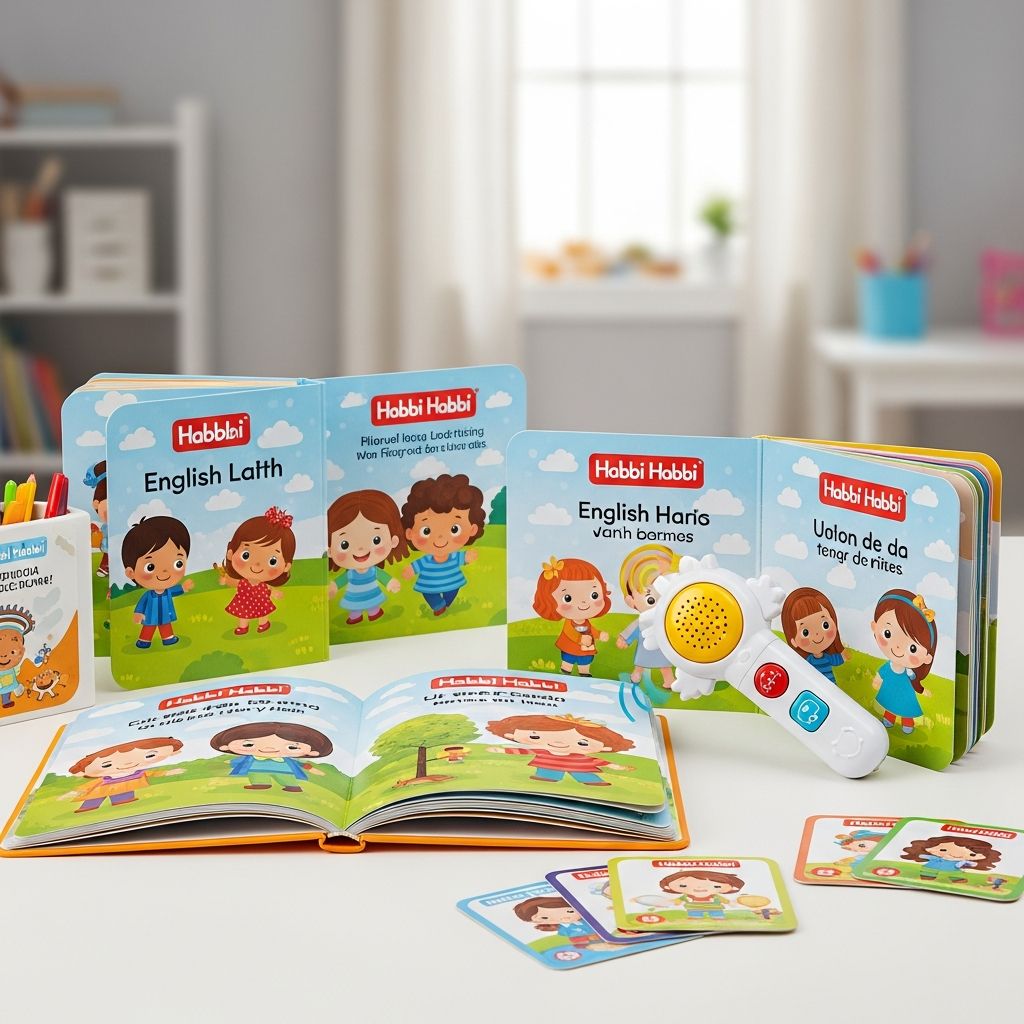
At the heart of Habbi Habbi is the innovative reading wand, a handheld device that brings pages to life. Tap any word, phrase, or illustration, and it plays audio in the target language alongside English, complete with sound effects for immersion. This bilingual mode eliminates pronunciation barriers for parents, as native speakers provide perfect models.
The wand pairs seamlessly with books, puzzles, and flashcards across languages like Spanish, French, Mandarin Chinese, and Korean. USB updates keep it compatible with new content, ensuring long-term use without hardware upgrades.
- Key Features: Bilingual audio (English + target language), tappable everywhere on the page, pinyin for Chinese books, simplified characters.
- Age Suitability: Ideal for 1-5 years, with grasp-friendly design for little hands.
- Versatility: Works indoors, in cars, or during routines like meals.
Core Products: Books, Flashcards, and Puzzles
Habbi Habbi’s library focuses on thematic, relatable content. Books cover colors, animals, vehicles, and daily routines, printed dually in English and the target language. Flashcards reinforce vocabulary through standalone tapping, while puzzles add a hands-on element for word recognition.
| Product Type | Languages Supported | Learning Focus |
|---|---|---|
| Interactive Books | Spanish-English, Mandarin-English, French-English, Korean-English | Vocabulary, stories, emotions |
| Flashcards | Same as books | Word identification, repetition |
| Puzzles | Selected languages | Early reading, matching |
These items emphasize input over output—kids listen repeatedly, absorbing patterns naturally. Parents control exposure frequency, measuring progress by familiarity rather than speech.
Setting Achievable Language Goals with Habbi Habbi
Success starts with SMART goals: Specific, Measurable, Achievable, Relevant, Time-bound. Instead of vague aims like “learn Spanish,” target “recognize 5 food words daily for a week.” Focus on input—repeat words 10 times each session—for steady gains.
For toddlers, achievable wins include linking leche (milk) to a sippy cup. Preschoolers can graduate to games, tracking repetitions during playtime. Daily 5-10 minute sessions build habits without overwhelm.
Fun Integration Strategies for Daily Play
Play is the secret to sustained engagement. Weave Habbi Habbi into existing routines for joyful associations.
- Imaginative Play: During toy car sessions, tap vehicle vocab from Things that Go.
- Hunts and Games: ‘I Spy’ with flashcards or books—”Find something red!”
- Adapted Classics: ‘Simon Says’ in the target language: “Simon says, tap la manzana (apple).”
- Custom Challenges: Use pause for translation races or minority-language listening.
Model use by tapping solo; kids join when ready. Car rides become prime time, turning commutes into learning pods.
Parental Involvement: No Fluency Required
Non-native parents thrive with Habbi Habbi—the wand handles pronunciation. Actively participate to model enthusiasm: read along, discuss illustrations, celebrate recognitions. Your energy inspires theirs.
Speech experts recommend avoiding task-like pressure. Frame sessions as delightful rituals with rewards, fostering lifelong curiosity.
Real Benefits Backed by Expert Insights
Teachers praise the wand for word identification and bilingual exposure. Montessori advocates highlight its role in cultural bridging and executive function boosts. Parents report kids picking up phrases effortlessly, gaining confidence in diverse settings.
Long-term, early exposure primes fluency and cognitive edges, per developmental studies.
Practical Tips for Maximum Engagement
- Start small: 5 minutes daily consistency trumps marathon sessions.
- Incorporate routines: Meals (food vocab), bedtime (emotions/stories).
- Track progress: Note new words understood weekly.
- Mix modes: Bilingual for context, single-language for immersion.
- Expand: Pair with free printables from Habbi Habbi site.
Frequently Asked Questions (FAQs)
What ages is Habbi Habbi best for?
Perfect for 1-5-year-olds; toddlers benefit from listening, preschoolers from interaction.
Do I need to speak the target language?
No—the wand provides native audio, empowering any parent.
How often should we use it?
5-10 minutes daily; consistency via short, fun bursts is key.
Which languages are available?
Spanish, French, Mandarin Chinese, Korean (paired with English).
Can it help with English too?
Yes, supports English literacy alongside second languages.
Building a Bilingual Home Environment
Combine Habbi Habbi with music, videos, or relatives for holistic immersion. Label household items in the target language, narrate playtime. Over time, weave it into family culture, normalizing multilingualism.
Challenges like short attention spans? Keep sessions dynamic with games. Sibling rivalry? Turn it into competitions. Adapt to your family’s rhythm for authentic growth.
Ultimately, Habbi Habbi democratizes language access, proving early bilingualism is achievable for all families through playful, tech-smart tools.
References
- Target Language Goals with Habbi Habbi — Habbi Habbi. 2023. https://www.habbihabbi.com/blogs/bilingual-resources/target-language-goals-habbi-habbi
- Teach Your Kids Chinese with Habbi Habbi — Mochi Magazine. 2023. https://www.mochimag.com/arts-culture/habbi-habbi/
- Alphabet Toys: Learn to Read — Habbi Habbi. 2023. https://www.habbihabbi.com/blogs/bilingual-resources/alphabet-toys-learn-to-read
- Exposing Toddlers to a Second Language — Montessori in Real Life. 2023. https://www.montessoriinreallife.com/home/tag/habbi+habbi
- How to Make the Most of Your Habbi Habbi Set — Habbi Habbi. 2023. https://www.habbihabbi.com/blogs/bilingual-resources/make-most-of-habbi-habbi