Postpartum depression affects countless new mothers, disrupting joy in one of life’s most profound transitions. Emerging evidence highlights group singing as a potent, accessible intervention that accelerates symptom relief, fosters emotional resilience, and deepens parent-child connections.
Understanding Postpartum Depression’s Toll
Postpartum depression (PPD), also known as postnatal depression (PND), manifests as persistent sadness, anxiety, fatigue, and detachment following childbirth. It impacts approximately 10-15% of new mothers worldwide, with moderate to severe cases hindering daily functioning and bonding. Traditional treatments like therapy and medication help, but access barriers and stigma persist. Community-based alternatives, such as structured singing groups, offer promising adjuncts by engaging both mind and body in recovery.
Symptoms often peak within weeks of birth but can linger months if untreated. Hormonal shifts, sleep deprivation, and identity changes exacerbate vulnerability. Early intervention is crucial, as untreated PPD risks long-term effects on maternal health and child development.
The Science Linking Music and Mood Recovery
Group singing triggers neurochemical cascades that combat depressive symptoms. It elevates endorphins, oxytocin, and dopamine while lowering cortisol—the stress hormone. Studies show synchronized breathing and vocalization during singing mimic meditative states, promoting relaxation and emotional regulation.
A landmark randomized controlled trial (RCT) by researchers at the Royal College of Music and Imperial College London divided 134 mothers with moderate-severe PPD into three groups: singing sessions, creative play, or standard care. Singing participants saw a 35% symptom drop by week six, versus minimal change in controls. By program’s end, 73% no longer met clinical thresholds.
| Intervention | Week 6 Symptom Reduction | End-of-Program Recovery Rate |
|---|---|---|
| Group Singing | 35% | 73% |
| Creative Play | ~10% | ~40% |
| Standard Care | <5% | <20% |
This table summarizes key outcomes, underscoring singing’s superiority. Mechanisms include reduced cortisol synchronization between mother and baby, improved mentalization (reading infant cues), and heightened maternal sensitivity.
How Singing Sessions Are Structured
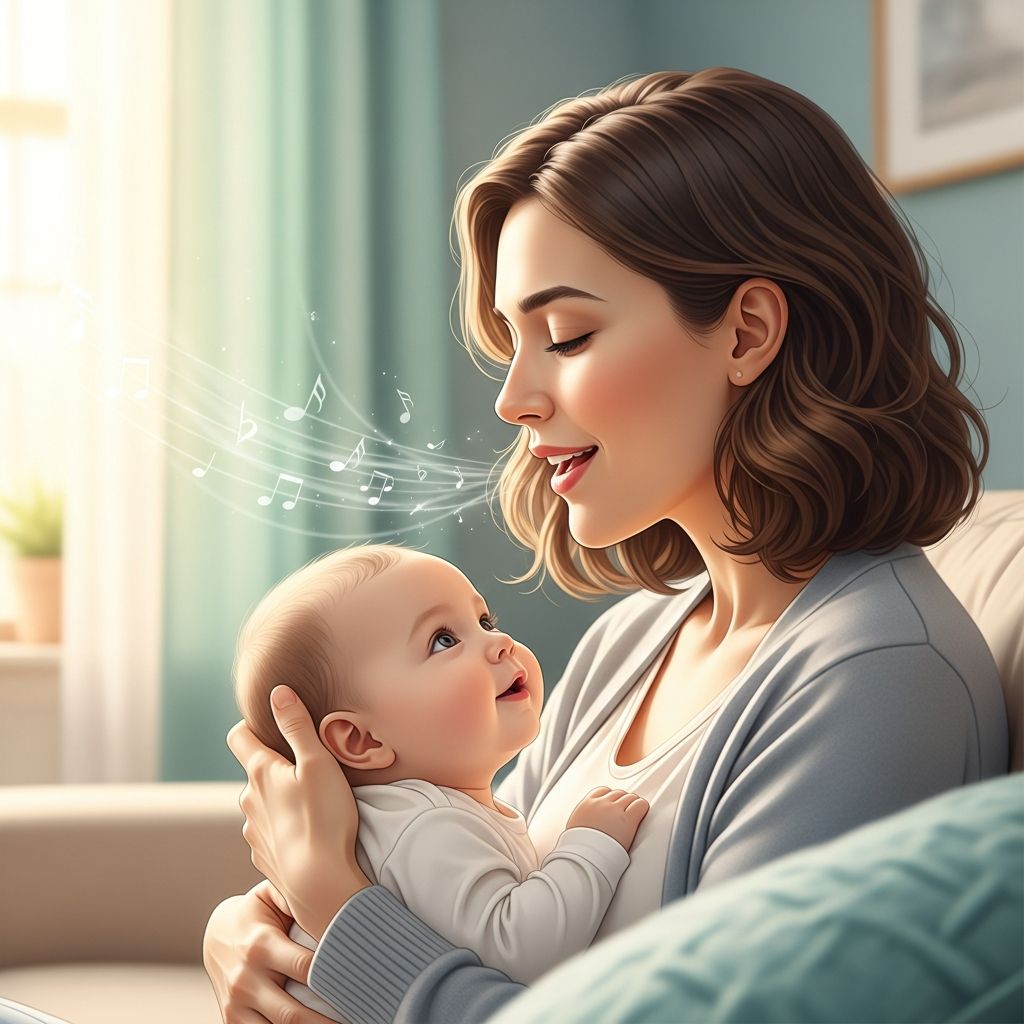
Innovative programs like Breathe Melodies for Mums deliver 10-week courses tailored for PPD-affected mothers. Weekly 90-minute sessions blend simple songs, breathing exercises, and baby-soothing lullabies in supportive, multicultural groups. No prior experience needed—facilitators guide participants gently.
- Warm-up vocalizations: Build confidence through humming and gentle scales.
- Baby-inclusive songs: Promote interaction via rhythmic chants and multicultural melodies.
- Reflection circles: Share experiences, reinforcing community.
- Home practices: Daily singing homework to sustain benefits.
Attendance averages higher in singing versus play groups, signaling engagement. Online adaptations emerged during pandemics, maintaining efficacy remotely.
Core Benefits for Mothers and Babies
Emotional Lift and ‘Me Time’
Singing carves out immersive ‘me time’ amid motherhood’s demands. Mothers describe it as a respite, reigniting identity beyond caregiving. Unlike passive listening, active singing instills achievement, countering helplessness. Positive emotions—uplift, joy—align with motherhood’s functional needs.
Stress Reduction and Physiological Gains
Vocalization deepens diaphragmatic breathing, boosting oxygen and calming the nervous system. Cortisol drops mirror baby’s, fostering harmony. Mothers report using songs post-session to soothe fussy infants, empowering self-efficacy.
Bonding and Developmental Boosts
Joint singing enhances synchronicity, assessed via CARE-Index videos measuring sensitivity and cooperation. Babies show better emotional attunement, aiding secure attachment. Cross-cultural universality of lullabies underscores evolutionary roots.
Real Stories from Singing Circles
Mothers echo research: ‘Singing gave me purpose when I felt lost,’ shares one. Another notes, ‘My baby’s cries softened; our bond grew tangible.’ These anecdotes align with qualitative data—singing uniquely provides multicultural authenticity, baby-calming, achievement, and immersion. Programs report sustained gains, with daily singing linked to enduring wellbeing.
Integrating Singing into Broader Care
Singing complements antidepressants and therapy, not replaces. Clinicians advocate referrals to community groups for holistic plans. Scalability shines: low-cost, inclusive, no equipment needed. Global adaptations, like ‘Music and Motherhood’ in the UK, affirm versatility.
Challenges include recruitment hesitancy due to stigma or mobility issues. Virtual formats mitigate this. Future trials explore partners and diverse populations.
Practical Tips to Start Singing Today
- Begin with 5-minute daily lullabies; choose familiar tunes.
- Join local choirs or apps like Smule for virtual groups.
- Pair with baby-wearing for mutual soothing.
- Track mood pre/post-session in a journal.
- Consult providers for program referrals.
Evidence affirms even solo singing aids, but groups amplify social support.
Frequently Asked Questions
Can singing really treat postpartum depression?
Yes, RCTs show group singing reduces moderate-severe symptoms faster than alternatives, via emotional, physiological, and relational mechanisms.
How soon do benefits appear?
Significant reductions often by week 6; full recovery by 10 weeks for many.
Do I need singing talent?
No—programs welcome all levels; focus is therapeutic, not performance.
Does it help babies too?
Absolutely: improves interaction, calms distress, synchronizes stress responses.
Where to find programs?
Search ‘Breathe Melodies for Mums’ or similar; many NHS/community centers offer.
Why Singing Deserves a Spotlight in Maternal Health
As research proliferates, singing interventions promise to reshape PPD care—affordable, joyful, evidence-based. Mothers reclaim agency through voice, harmonizing recovery with life’s sweetest melody.
References
- The science of singing for recovery from postnatal depression — Breathe Arts Health Research / YouTube. 2023. https://www.youtube.com/watch?v=CU7YnLJAzvs
- How group singing facilitates recovery from the symptoms of postnatal depression — PMC / Fancourt D, Perkins R. 2018-07-31. https://pmc.ncbi.nlm.nih.gov/articles/PMC6098577/
- The Healing Power of Song: How Breathe Melodies for Mums is changing postnatal depression care — Maternity and Midwifery. 2024. https://maternityandmidwifery.co.uk/the-healing-power-of-song-how-breathe-melodies-for-mums-is-changing-postnatal-depression-care/
- Motherhood. Relieving postpartum depression with song — IBSA Foundation. 2023. https://www.ibsafoundation.org/en/blog/motherhood.-relieving-postpartum-depression-with-song
- Implementing a group singing intervention for postpartum depression — Frontiers in Medicine. 2024-10-15. https://www.frontiersin.org/journals/medicine/articles/10.3389/fmed.2024.1461965/full
- Online singing interventions for postnatal depression in times of social isolation — PMC. 2022. https://pmc.ncbi.nlm.nih.gov/articles/PMC9289358/
- Breathe Melodies for Mums — Breathe Arts Health Research. 2024. https://breatheahr.org/research/melodies-for-mums/