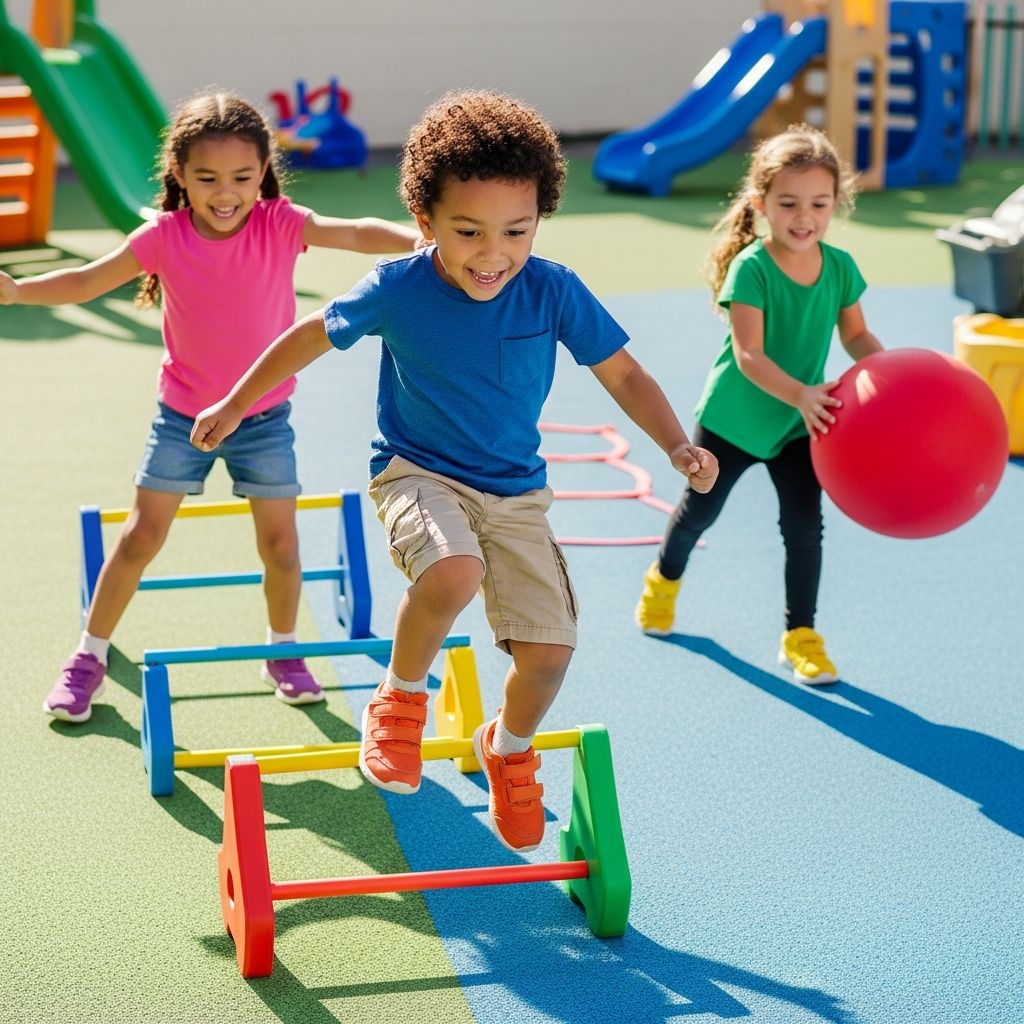
Gross motor skills form the foundation of a child’s physical abilities, enabling them to navigate their world through large muscle movements like running, jumping, and climbing. For preschoolers aged 3 to 5, mastering these skills supports overall development, including balance, coordination, and strength.
Understanding Gross Motor Development in Young Children
Gross motor skills involve the larger muscles in the arms, legs, and torso, facilitating activities such as walking, throwing, and hopping. These abilities evolve rapidly during the preschool years, laying groundwork for more complex movements and even fine motor precision later on. Unlike fine motor skills, which focus on small hand and finger actions, gross motor development emphasizes whole-body coordination and environmental interaction.
From birth, children progress through predictable milestones, but preschoolers experience a surge in agility and control. This stage is critical because play-driven practice helps solidify neural pathways for movement, boosting confidence and reducing injury risk as they explore independently.
Key Milestones by Age Group
Tracking developmental milestones ensures children are on pace. Here’s a breakdown tailored to preschoolers, drawing from established pediatric guidelines.
Ages 3-4 Years: Building Momentum
- Pedal and steer a tricycle with growing confidence.
- Balance on one foot briefly and hop short distances.
- Climb stairs using alternating feet, often without full rail support.
- Throw and catch larger balls with improving accuracy.
- Jump forward several inches and kick a stationary ball.
Ages 4-5 Years: Refining Control
- Skip rhythmically, combining hop and step.
- Stand on one foot for up to 5 seconds.
- Perform heel-to-toe walks and basic somersaults.
- Run smoothly, change directions agilely, and climb playground equipment independently.
- Hop on one foot proficiently and catch bounced balls reliably.
These milestones vary slightly by child, influenced by practice opportunities and genetics. Consistent activity exposure accelerates progress.
Benefits Beyond Physical Fitness
Developing gross motor skills offers multifaceted advantages. Physically, it enhances cardiovascular health, muscle tone, and posture. Cognitively, coordinating movements sharpens focus, problem-solving, and spatial awareness—skills vital for academic readiness.
Socially, group activities foster teamwork and communication, while emotional gains include greater self-esteem from mastering challenges. Research shows active preschoolers exhibit better sleep patterns and reduced obesity risks.
| Benefit Category | Description | Long-Term Impact |
|---|---|---|
| Physical | Improved strength and endurance | Lower injury risk, healthier adulthood |
| Cognitive | Enhanced body awareness | Better learning retention |
| Social/Emotional | Boosted confidence | Stronger peer relationships |
Indoor Activities for Rainy Days
When weather limits outdoor time, indoor setups keep energy flowing. These low-space ideas promote safe, supervised fun.
- Obstacle Courses: Arrange cushions, tunnels from boxes, and tape lines on floors for crawling, stepping, and balancing. Time challenges add excitement.
- Ball Games: Roll, toss, or bounce soft balls between targets marked by chairs. Progress to catching with partners.
- Dance Parties: Play music encouraging freezes, hops, and spins to build rhythm and listening skills.
- Yoga Poses: Simple animal-themed sequences like downward dog or tree pose teach balance and breathing.
- Animal Walks: Crab walk, bear crawl, or frog jumps across rooms mimic creatures for giggles and muscle work.
Rotate activities weekly to maintain interest, using household items to minimize costs.
Outdoor Adventures for Maximum Engagement
Fresh air amplifies gross motor practice. Parks and backyards provide natural terrain for varied challenges.
- Playground Challenges: Race up slides backward, swing high, or monkey-bar across for upper-body strength.
- Scavenger Hunts: Hunt items requiring jumps over roots, climbs on logs, or runs to markers.
- Bike and Scooter Rides: Navigate paths, practicing turns and stops on tricycles or beginner bikes.
- Water Play: Splash in sprinklers, kick water balloons, or chase floating toys in shallow pools for dynamic movement.
- Team Sports Intro: Gentle soccer kicks or tag games introduce cooperation and speed.
Supervise closely near hazards, and layer clothing for comfort during active sessions.
Creative Games to Spark Joy
Incorporate imagination to sustain motivation. Themed play disguises exercise as adventure.
- Superhero Training: Fly like capes (arms out), leap buildings (jump cushions), or laser blasts (throw balls).
- Treasure Island: Balance on “planks” (lines), dig sand pits, or sail boats (push toys).
- Freeze Dance Tag: Run freely, then freeze in silly poses on music stops.
- Hopscotch Kingdoms: Draw grids with chalk; hop patterns build patterning skills alongside agility.
- Parachute Play: Group lift and wave a sheet with balls atop for lifting and quick dodges.
These foster creativity while targeting specific skills like endurance or precision.
Adapting for Diverse Needs
Every child progresses uniquely. For those lagging, simplify: use larger balls or shorter distances. Consult pediatricians if delays persist beyond norms, as early intervention aids catch-up.
Overachievers benefit from advanced twists, like adding spins to jumps. Ensure inclusivity in groups by pairing strengths.
Daily Routines for Lasting Habits
Integrate movement into schedules: 15-minute morning wiggles, post-nap romps, or bedtime wind-downs with stretches. Aim for 60 daily active minutes, per health guidelines.
Model enthusiasm—join in to demonstrate and bond. Track progress via photos or journals for motivation.
Frequently Asked Questions
How much daily activity do preschoolers need?
At least 60 minutes of structured physical activity plus unstructured play, focusing on gross motor enhancement.
What if my child skips milestones?
Variations are normal; monitor and encourage play. Seek professional advice if concerned after age 5.
Are screens harmful to motor development?
Excessive screen time limits movement practice; balance with active alternatives.
Can indoor activities match outdoor benefits?
Yes, with creative setups mimicking terrain and challenges.
How to motivate reluctant movers?
Use themes, rewards, and short bursts; pair with friends for fun.
References
- Fine and Gross Motor Skills of Preschoolers — TESSA International School. Accessed 2026. https://tessais.org/fine-and-gross-motor-skills-of-preschoolers/
- Children’s Developmental Milestones: Gross and Fine Motor Skills — Brown Health. Accessed 2026. https://www.brownhealth.org/be-well/childrens-developmental-milestones-gross-and-fine-motor-skills
- Preschooler development — MedlinePlus, U.S. National Library of Medicine. Updated 2023-10-09. https://medlineplus.gov/ency/article/002013.htm
- Gross motor skills: birth to 5 years — Children’s Hospital of Richmond. Accessed 2026. https://www.chrichmond.org/services/therapy-services/developmental-milestones/gross-motor-skills-birth-to-5-years/
- Gross Motor Skills (walking, running, jumping, climbing, balance, strength) — CTFRC. Accessed 2026. https://www.ctfrc.com/gross-motor-preschool-milestones.htm
- Building gross motor skills and why it matters — Michigan State University Extension. Accessed 2026. https://www.canr.msu.edu/news/building_gross_motor_skills_and_why_it_matters
- Gross Motor Skills — Cleveland Clinic. Accessed 2026. https://my.clevelandclinic.org/health/articles/gross-motor-skills