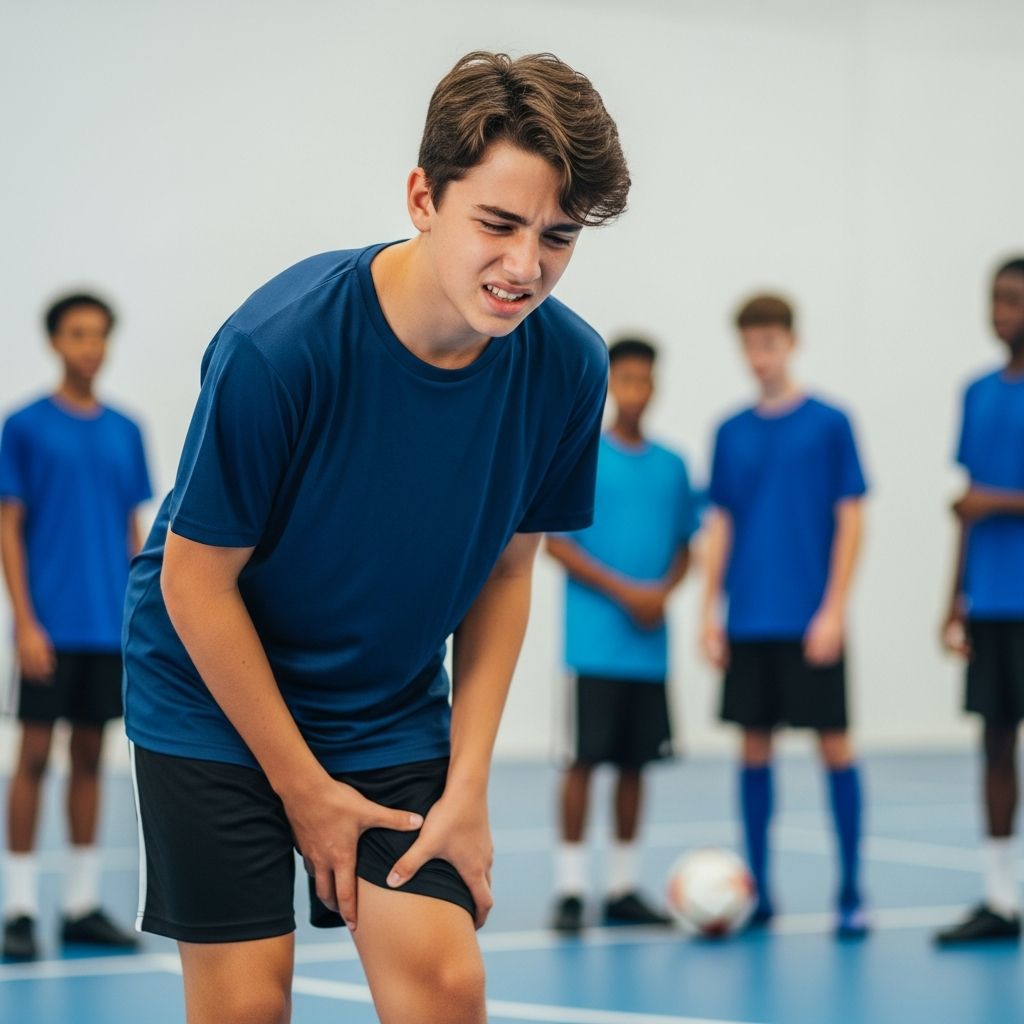
Groin strains are a common sports injury for teens who run, kick, jump, or change direction quickly. A groin strain happens when muscles on the inner thigh are stretched or torn, causing pain and soreness between the belly and the upper thigh.
This guide explains what a groin strain is, why it happens, how to tell if you have one, and what you can do to heal safely. It is written in simple language so you can understand your body, make smart choices, and return to your favorite activities with confidence.
What Is the Groin Area and What Is a Groin Strain?
The groin is the area where your lower belly meets the top of your thighs, on the inside of your legs. Several muscles in this region help you pull your legs together, change direction, and stay balanced when you walk, jog, or play sports.
A groin strain is an injury to one or more of these inner thigh muscles. The muscle fibers are stretched beyond what they can handle, which may cause tiny tears (mild strain) or larger tears (more serious strain). This usually leads to pain, tenderness, and trouble using the leg normally.
Who Is Most Likely to Get a Groin Strain?
Anyone can strain a groin muscle, but teens who play certain sports are at higher risk. Quick stops, sharp turns, and powerful kicks or jumps challenge the inner thigh muscles and can overload them.
- Sports with lots of cutting and direction changes, such as soccer, basketball, hockey, and football.
- Activities that require strong kicking, like martial arts or dance routines.
- Track, sprinting, and other running events with sudden bursts of speed.
- Teens returning to sports after a break, especially without good conditioning or warm-up.
Common Causes: How Groin Strains Happen
Groin strains usually do not happen out of nowhere. In many cases, one strong movement or an awkward step pushes the muscle past its limit. Sometimes there is an obvious moment of injury, and other times the pain builds up over time.
Typical ways groin strains occur
- Sudden side-to-side movements, such as cutting or shuffling in sports.
- Powerful kicks, especially if your muscles are tired or not warmed up.
- Slipping or losing balance and struggling to stay upright.
- Explosive sprints from a standing start.
- Overuse from repeating the same motion day after day without enough rest.
Signs and Symptoms You Should Notice
Recognizing a groin strain early helps you avoid making the injury worse. Pay attention to pain, changes in movement, and how the inner thigh feels when you walk or move.
Typical symptoms of a groin strain
- Pain on the inner thigh or in the crease where the leg meets the body.
- Discomfort when you bring your legs together or lift your knee.
- Soreness or tenderness when pressing on the inner thigh muscles.
- Swelling or mild bruising in the groin or upper inner thigh.
- Muscle tightness, cramping, or spasms in the area.
- Limping or feeling like your leg is weaker than usual.
Some teens feel a sudden “pull” or sharp pain during the moment of injury, while others only notice stiffness and soreness that gets worse with activity.
How Doctors Describe the Severity of a Groin Strain
Health professionals often use a three-level scale, called grades, to describe how serious a muscle strain is. This can help set expectations for how long recovery might take.
| Grade | What Is Happening in the Muscle | Typical Symptoms | General Recovery Outlook* |
|---|---|---|---|
| Grade 1 (Mild) | Small stretch or tiny tears in a few muscle fibers. | Mild pain, little or no swelling, movement slightly uncomfortable. | Often able to walk; sports rest usually needed for at least a couple of weeks. |
| Grade 2 (Moderate) | More muscle fibers involved with a partial tear. | Noticeable pain, possible bruising, weakness, and difficulty running or changing direction. | Walking may be uncomfortable; several weeks of careful rehab are often needed. |
| Grade 3 (Severe) | Large tear or complete tear of the muscle. | Severe pain, marked weakness, and major difficulty putting weight on the leg. | Longer recovery; may require more intense rehab and, rarely, surgical care. |
*Exact healing time varies depending on the person, the sport, and how well the treatment plan is followed.
When You Should See a Doctor
Mild groin pain sometimes improves with rest, but it is important to know when to get medical help. Seeing a doctor or sports medicine professional can confirm the diagnosis and rule out other issues, like hip injuries or hernias.
Contact a doctor or nurse if:
- You cannot walk normally or put weight on the leg because of pain.
- The pain is severe or gets worse over a few days instead of better.
- You notice a big bruise, a lump, or a gap in the muscle.
- There is numbness, tingling, or unusual weakness in the leg.
- You have pain in the groin along with fever, chills, or feeling very sick.
During the visit, the provider may ask how the injury happened, examine your hip and leg, and gently test your strength and flexibility. Sometimes imaging tests are used to make sure there is no other damage.
First Steps at Home: Early Care for a Fresh Groin Strain
The first couple of days after a groin injury are focused on calming the area down. The goal is to reduce pain and swelling and protect the muscle so the healing process can begin.
Helpful early-care tips
- Rest from sports and hard activity: Stop any movement that causes pain, especially running, jumping, kicking, or quick turns.
- Use cold carefully: Place a cold pack or a bag of wrapped frozen peas on the sore area for about 15–20 minutes at a time, a few times per day.
- Raise the area: Lying on your back with pillows under your hips or thighs can help reduce swelling.
- Follow safe medicine advice: An adult or healthcare provider may recommend over-the-counter pain relievers; always use them as directed on the label or as told by a professional.
- Avoid stretching too early: Deep stretches right after the injury can make the strain worse rather than better.
Ongoing Treatment: Healing and Rehabilitation
After the first couple of days, treatment slowly shifts from pure rest to gentle motion and strengthening. The timing depends on how severe the strain is and what your doctor or physical therapist recommends.
Common parts of a rehab plan
- Light movements that keep the hip and leg from getting too stiff.
- Stretching exercises that are added slowly as pain allows.
- Strength training for the inner thigh, hip, and core muscles.
- Balance and control drills to improve stability.
- Gradual return to running, cutting, and sport-specific skills.
A physical therapist or athletic trainer can build a plan that matches your sport, your fitness level, and the severity of your strain. Doing the exercises consistently is one of the best ways to prevent the same injury from returning.
Safe Movement: Gentle Exercises After Pain Starts to Improve
Before starting any exercise, it is important that basic walking is comfortable and that your healthcare provider has said it is okay to begin gentle activity. The goal is to move without causing a big spike in pain.
Examples of early, gentle movements
- Heel slides: Lying on your back, slowly slide one heel toward your buttocks and then back out straight, staying in a pain-free range.
- Low-intensity hip bends: From standing, lightly lift your knee up a short distance and lower it again, holding onto a chair for balance if needed.
- Side-to-side weight shifts: With feet shoulder-width apart, gently shift your weight from one leg to the other without forcing the motion.
If an exercise makes the pain sharply worse, stop and tell a parent, coach, or health professional. Some mild discomfort can be normal, but intense pain is a sign that the muscle is not ready for that level of activity.
Returning to Sports: How to Know You Are Ready
Many teens are eager to jump back into full practices and games as soon as possible, but going back too early is one of the main reasons groin strains keep coming back. A smart return is gradual and meets certain checkpoints.
Helpful readiness checks
- You can walk normally without limping or pain.
- You can move your hip and leg in all directions without sharp pain.
- Light jogging, then faster running, feel comfortable.
- Side shuffles, gentle cuts, and easy jumps do not cause pain during or after activity.
- Your doctor, physical therapist, or athletic trainer has cleared you to return.
A common approach is to slowly increase activity over several days or weeks. You might begin with brisk walking, add short jogging intervals, then progress to running and sport drills before full scrimmages or competitions.
Prevention Tips: How to Lower Your Risk of Groin Strain
While not every injury can be prevented, good habits make groin strains much less likely. Building strength and flexibility around the hips and core is especially important for teens playing high-intensity sports.
Simple prevention strategies
- Warm up before every practice and game: Include light jogging, dynamic stretches, and gentle side steps to increase blood flow to the muscles.
- Strengthen the hips and core: Exercises for the inner and outer thighs, glutes, and abs help your body handle quick moves safely.
- Increase training gradually: Avoid jumping from very little activity to long, intense sessions.
- Take rest days seriously: Muscles need time to recover and adapt.
- Listen to early warning signs: Do not ignore nagging tightness or mild pain in the groin area.
Living With a Groin Strain: School, Daily Life, and Mood
A groin strain can be frustrating, especially if sports or dance are a big part of your life. You may need to change how you move during school, around the house, or when hanging out with friends.
- Ask if you can carry a lighter backpack or use stairs more slowly while healing.
- Choose sitting positions that do not stretch or pinch the inner thigh.
- Stay involved with your team by attending practices, helping with drills, or cheering from the sidelines while you recover.
- Talk to someone you trust if you feel left out, worried, or down about being injured.
SEO-Friendly Frequently Asked Questions About Groin Strains
How long does a groin strain take to heal?
Healing time depends on how serious the strain is and how closely you follow the treatment plan. Mild strains may start to feel much better within a couple of weeks, while more moderate or severe strains can take several weeks or longer before you are ready for full-intensity sports again.
Can I walk with a groin strain?
Many teens with mild strains can still walk, though it might feel sore or stiff. If walking causes a lot of pain or makes you limp heavily, it is a signal to rest more and contact a healthcare professional for guidance.
What should I avoid doing with a groin strain?
Try not to run, jump, sprint, kick hard, or do quick side-to-side moves while the area is painful. Also avoid heavy stretching or any exercises that cause sharp pain in the inner thigh or hip.
Is a groin strain the same thing as a pulled muscle?
Yes. A groin strain is a type of pulled muscle that happens specifically in the inner thigh or groin region. The words “pull,” “strain,” and “muscle tear” are often used to describe different levels of the same kind of injury.
Do I always need physical therapy for a groin strain?
Not every mild strain requires formal physical therapy, but many teens benefit from professional guidance, especially if they play competitive sports. A therapist can design safe exercises, watch your form, and help you return to activity with less risk of reinjury.
Can groin strains be prevented completely?
No method can guarantee you will never get hurt, but warming up, strengthening your hips and core, and pacing your training make groin strains less likely. Paying attention to early tightness or soreness and resting when needed are powerful tools for prevention.
Key Takeaways for Teens and Parents
- A groin strain is a stretch or tear of inner thigh muscles that help move and stabilize the legs.
- Sports that involve sprinting, kicking, and quick changes of direction raise the risk of this injury.
- Early rest, cold packs, careful movement, and guided rehab are the foundation of treatment.
- Gradual return to sports, not rushing back, is crucial to avoid hurting the same area again.
- Strong, flexible hips and a good warm-up routine are some of the best long-term protections against groin strains.