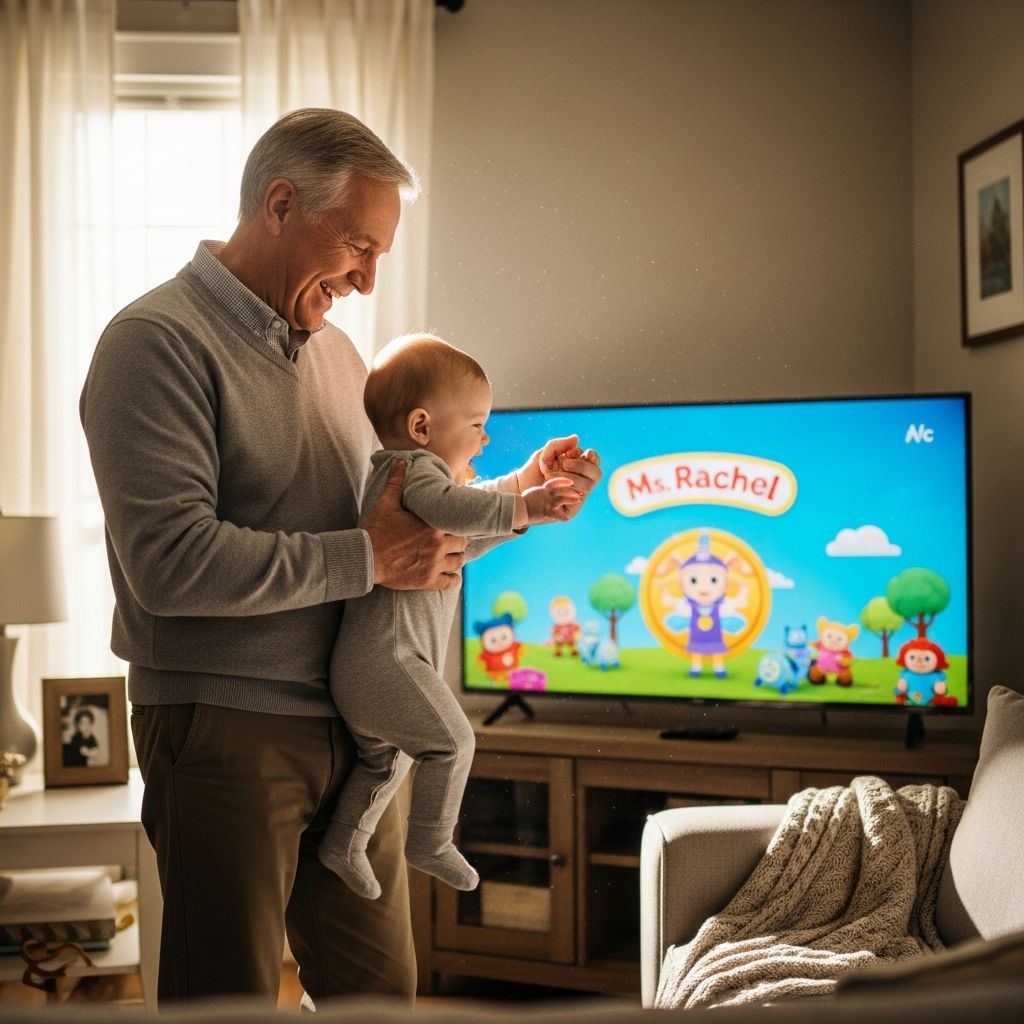
A short home video of a grandpa dancing with his granddaughter to a Ms. Rachel song has captured the internet’s heart, turning an everyday family moment into a celebration of love, learning, and intergenerational connection.
How a Simple Dance Became a Viral Moment
In the original clip, a grandfather stands in the living room with his baby granddaughter in his arms, swaying and bouncing in time to a Ms. Rachel song playing on the TV. The baby’s eyes are fixed on the screen while the grandpa happily matches the rhythm, clearly more focused on the child’s delight than anything else around him. Viewers are treated to a real-time look at how music, movement, and loving attention can transform a regular day at home into a cherished memory.
People who saw the video were struck by several details: the grandpa’s complete lack of self-consciousness, the way he mirrors the baby’s excitement, and the gentle humor of an older adult gamely joining in with a modern kids’ show. The combination made the video instantly shareable and deeply relatable for parents and grandparents alike.
- Grandpa holds the baby securely while dancing in place.
- The TV plays a recognizable Ms. Rachel segment in the background.
- The baby alternates between watching the screen and reacting to grandpa’s movements.
Who Is Ms. Rachel and Why Do Babies Love Her?
Ms. Rachel is an early childhood educator and content creator known for her slow-paced, language-rich videos for babies and toddlers. Her shows often feature simple songs, repetition, gestures, and clear speech designed to support early language development and social-emotional skills. Parents turn to her content because it feels more like a one-on-one lesson with a teacher than a high-speed cartoon.
Babies tend to be drawn to Ms. Rachel for several reasons: she speaks directly to the camera, uses exaggerated facial expressions, and incorporates sign language and gestures that are easy to imitate. Her songs often encourage clapping, dancing, pointing, and other age-appropriate movements, making it natural for caregivers—like the grandpa in the video—to join in alongside their little ones.
The Magic of Grandparents Dancing With Babies
One of the most striking elements of the video is the role of the grandparent. Many families recognize how special it is when older relatives participate in the same digital culture that shapes a child’s everyday life. Instead of sitting on the sidelines, this grandpa dives straight into the fun, treating the Ms. Rachel song as an invitation to play rather than background noise.
Moments like these give babies the chance to experience warmth, safety, and joy from multiple generations. The baby is learning that not only do parents respond with affection and enthusiasm, but grandparents do too. That emotional security forms a foundation for confidence, curiosity, and positive family identity as the child grows.
- Grandparents often bring patience and playfulness to everyday routines.
- Dancing together encourages physical closeness and eye contact.
- Shared songs and shows become family traditions across generations.
Why This Clip Resonated With Parents Online
When the video of the grandpa dancing with his granddaughter began circulating on social platforms, countless parents commented that it reminded them of their own parents or in-laws. Many noted that their children also adore Ms. Rachel, and they loved seeing someone from an older generation embrace the trend with such enthusiasm. The clip quickly became a symbol of how digital content, when used thoughtfully, can actually bring families together instead of pulling them apart.
Viewers highlighted several emotional themes: the joy of watching a loved one be “all in” for a child, the tenderness of seeing a strong older figure moving gently with a tiny baby, and the nostalgia of remembering their own childhood songs being passed down in a new form. Rather than focusing on screen time debates, the conversation centered on connection and presence.
- Many parents said they wished they had similar videos of their own grandparents.
- Others shared that Ms. Rachel’s content is a rare show they feel good about watching with their kids.
- Some viewers even tagged their relatives, urging them to “be like this grandpa” during their next visit.
Early Learning Benefits Hiding in the Fun
What looks like a cute dance actually contains several building blocks of early development. When a baby hears music, watches a familiar face, and feels their body move in rhythm, their brain is working hard to process patterns, sound, motion, and emotional cues all at once. Adding Ms. Rachel’s simple language prompts and repetitive songs gives an extra boost to speech and listening skills.
Grandparents and other caregivers can turn these moments into powerful learning opportunities without doing anything complicated. By singing along, naming body parts while dancing, or pausing to point out objects on the screen and in the room, they help the baby link words with actions and real-world experiences. The viral video perfectly illustrates how joint attention—the baby, the grandpa, and the show all focused on a shared activity—supports language growth and social bonding.
- Music supports rhythm, memory, and pattern recognition.
- Movement helps babies understand their bodies and develop balance.
- Shared focus between adult, child, and video builds communication skills.
Family Bonding in the Age of Kids’ YouTube
The grandpa-and-baby video also reflects a broader shift: many families are trying to figure out how to balance technology with meaningful, offline connection. Rather than ban screens entirely, some caregivers are choosing to co-watch and co-play with their children. In this case, the grandpa doesn’t treat Ms. Rachel as an electronic babysitter. Instead, he lets the show set the soundtrack while he provides the real-life engagement.
This approach helps children understand that screens are part of a larger social experience, not a replacement for it. When adults sing, dance, and talk along with the content, kids get the best of both worlds: the structured, educational design of the video plus the irreplaceable warmth of live human interaction. The viral clip has become an example many parents now point to when discussing “good” screen time.
Memes, Comments, and Emotional Reactions
As the video spread, it inspired a wave of playful comments and emotional reflections. Some users joked about how Ms. Rachel has “the whole family in a chokehold,” noting that grandparents, aunts, uncles, and older siblings can now sing every song by heart. Others shared that watching the grandpa made them miss their own late grandparents, turning the clip into a bittersweet reminder of how quickly time passes.
At the same time, many viewers simply expressed gratitude for seeing positive, gentle masculinity on display. A grandfather who has no qualms about dancing around the living room for a baby’s amusement challenges old stereotypes and offers a new model for involved, nurturing grandfathers. For families trying to foster that kind of engagement, the clip serves as both encouragement and inspiration.
- Comments ranged from funny one-liners to heartfelt personal stories.
- Many people said they saved or shared the video to brighten a tough day.
- Some families reported their own grandpas now dancing to Ms. Rachel in imitation.
Everyday Moments That Become Core Memories
Perhaps the most touching aspect of the grandpa and baby video is how ordinary it really is. There are no special outfits, no elaborate props, and no staged reactions. It’s just a caregiver, a baby, and a TV show that happens to be a household favorite. Yet decades from now, this might be the clip that the grown child replays over and over to feel close to their grandparent.
Parents and grandparents sometimes assume that only big events like birthdays, vacations, or holidays will matter in the long run. In reality, it is often the small, repeated gestures of love—rocking, singing, dancing in the living room—that become the most powerful memories. Videos like this remind adults to lean into those simple opportunities whenever they can.
Tips for Recreating the Magic at Home
Families who see themselves in this video can easily create similar moments with their own children or grandchildren. No special equipment is needed beyond a device to play music or videos and a willingness to be a little silly. The goal is not to go viral but to build a bank of positive experiences that your child will carry with them as they grow.
- Choose a favorite song: Pick a Ms. Rachel tune or any simple kids’ song your baby recognizes.
- Hold baby securely: Support the baby’s head and body, especially with younger infants, while you sway or bounce gently.
- Follow the prompts: Clap, wave, or point when the song suggests it so your baby can watch and learn.
- Make eye contact: Look at your baby often, not just the screen, to reinforce your connection.
- Keep it short: Even a 2- to 5-minute dance can feel special and prevent overstimulation.
Grandparents, Ms. Rachel, and Modern Childhood
The popularity of the grandpa dancing clip underscores how children’s media has evolved and how older generations are adapting alongside it. Where past grandparents might have sung traditional lullabies or nursery rhymes, today’s grandparents are just as likely to belt out a Ms. Rachel song or mimic her hand motions. Instead of seeing this as a loss of tradition, many families view it as an expansion of shared culture.
By meeting children where they are—even if that means learning the words to a viral kids’ song—grandparents send a powerful message: “What you love matters to me.” Just as importantly, they show that it is never too late to try something new, move a little out of your comfort zone, and make a child laugh.
Key Themes at a Glance
The following table summarizes the main ideas illustrated by the video and why they resonated with so many viewers.
| Theme | What Happens in the Video | Why It Matters for Families |
|---|---|---|
| Intergenerational bonding | Grandpa dances closely with his granddaughter while a kids’ show plays. | Shows love, presence, and attunement across generations. |
| Positive use of screen time | The TV provides music and prompts, but the real focus is on the interaction. | Demonstrates how co-watching can turn media into a shared activity. |
| Early learning through play | The baby experiences rhythm, movement, and simple language from the song. | Supports speech, motor skills, and social-emotional development. |
| Emotional impact on viewers | People laugh, cry, and share memories in the comments. | Highlights how everyday family moments can move and inspire others. |
Frequently Asked Questions
Who is Ms. Rachel?
Ms. Rachel is an educator and children’s content creator known for videos that focus on speech, language, and social-emotional development for babies and toddlers. Her shows often feature simple songs, repetition, and interactive prompts that encourage kids to clap, point, and sing along.
Why do so many babies love Ms. Rachel videos?
Babies are drawn to Ms. Rachel because she speaks slowly and directly to the camera, uses expressive facial cues, and incorporates gestures and sign language. The pacing and repetition make it easier for young children to follow along and participate.
Is it okay for grandparents to use kids’ videos during visits?
Many families find that using short, age-appropriate videos as a shared activity can enhance bonding when adults watch and participate alongside the child. The key is to keep screen time limited, interactive, and secondary to the real-world connection between grandparent and grandchild.
How can I encourage my own parents to engage like the grandpa in the video?
You can share clips like this one, invite them to join your child for a favorite song, and reassure them that they don’t need to be perfect dancers or singers. Emphasize that enthusiasm and presence matter far more than performance.
What makes simple home videos like this so powerful?
Home videos capture authentic, unscripted interactions that reflect everyday love and care. When shared online, they remind others of their own relationships and encourage more people to savor and record their ordinary, joyful moments.