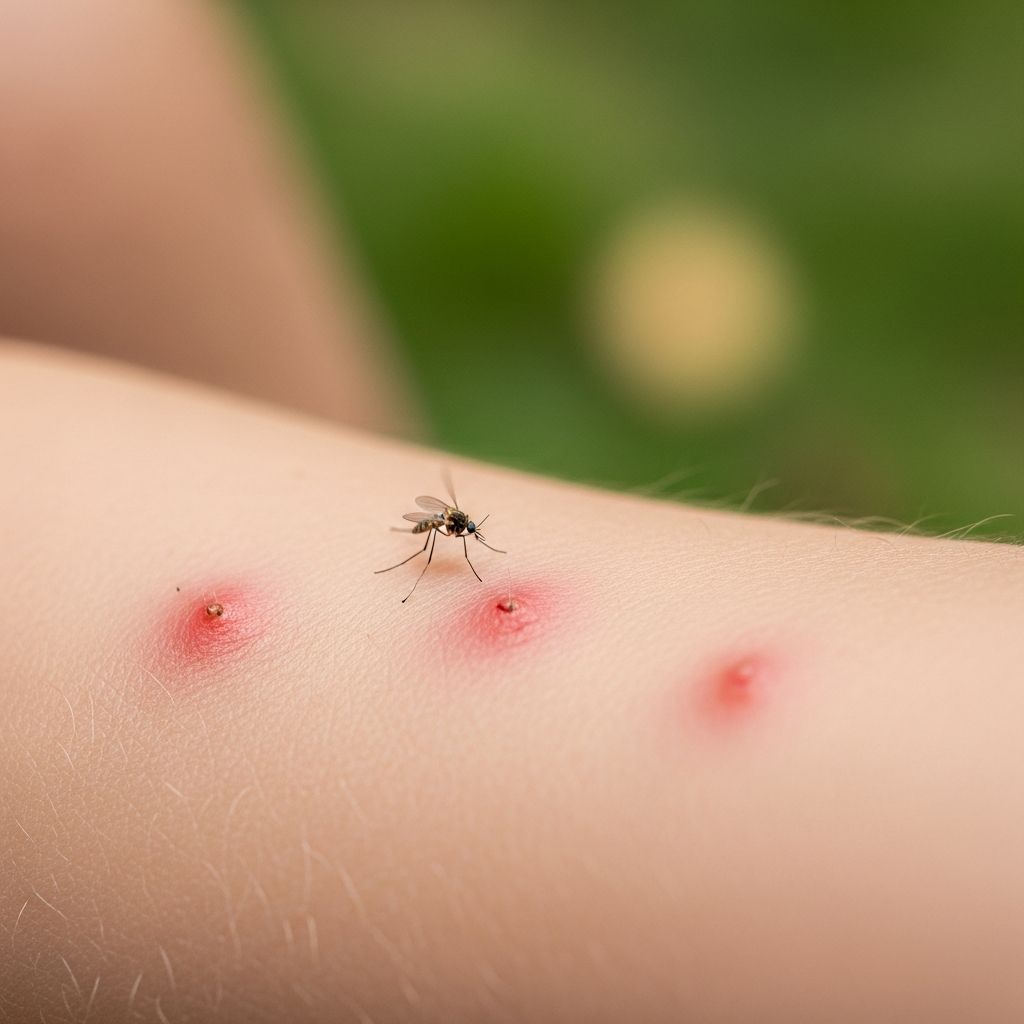
Gnats are tiny flying insects that can leave surprisingly big, itchy bumps on a child’s skin. Even though their bites are usually mild, knowing how to handle them helps kids stay safe and comfortable outdoors.
This guide explains what gnat bites look and feel like, how to care for them at home, when to see a doctor, and simple ways to prevent bites during playtime.
What Are Gnats?
Gnats are very small flies that often gather in groups, especially near water, plants, and damp areas. Some types only bother plants, while others can bite people and animals.
Because gnats are so tiny, a child may not notice when one lands and bites. The first sign is usually an itchy bump that shows up a little later.
Where Kids Usually Meet Gnats
- Near rivers, streams, and lakes.
- In shady, damp areas like wooded trails or marshy fields.
- Around tall grass, bushes, and gardens.
- At playgrounds or sports fields close to standing water.
What a Gnat Bite Looks and Feels Like
A gnat bite often starts out small but can swell quickly. The reaction can vary from child to child, depending on skin sensitivity and how much the child scratches.
Typical Appearance
- A small red or pink bump on exposed skin, like the face, neck, hands, or legs.
- Mild to moderate swelling around the bite.
- Sometimes a tiny dot or speck of dried blood in the center.
- Clusters of several bites if multiple gnats landed in the same area.
Common Sensations
- Intense itchiness that may feel worse at night or when the skin is warm.
- A mild burning or stinging feeling right after the bite.
- Soreness if the area is scratched or rubbed a lot.
How Gnat Bites Differ from Other Bug Bites
Parents often wonder whether a bump is from a gnat, mosquito, or another insect. While they can look similar, there are a few helpful clues.
| Insect | Typical Appearance | Usual Location | Notable Features |
|---|---|---|---|
| Gnat | Small, raised, often very itchy bump; may show a tiny spot of blood. | Exposed skin like face, ears, neck, ankles, and wrists. | Some types cut the skin rather than poke; several bites can appear in a small area. |
| Mosquito | Smooth, puffy bump that may grow over several hours. | Any exposed area, often arms and legs. | Usually one bump per mosquito; itch may come and go. |
| Flea | Small red dots, often in clusters or lines. | Lower legs, ankles, or areas under tight clothing. | Often associated with pets or carpeted areas. |
| Bee or Wasp | Large, painful swelling with a central puncture. | Anywhere on the body, including through loose clothing. | More pain than itch; may see a stinger with some bees. |
First Steps Right After a Gnat Bite
Quick, simple care can reduce itching and the risk of infection. It also reassures children and helps them feel more in control.
Immediate Care Routine
- Wash the area gently. Use mild soap and cool or lukewarm water to clean the bite and surrounding skin.
- Pat dry with a soft towel. Avoid rubbing, which can irritate the skin further.
- Cool the bite. Apply a clean, cool washcloth or wrapped ice pack for 10–15 minutes at a time to reduce swelling and itch.
- Discourage scratching. Remind the child to tap or press gently instead of scratching, and trim their fingernails short.
Safe Home Treatments for Itchy Gnat Bites
Most gnat bites can be managed at home using over-the-counter products and common-sense skin care. Always follow the instructions on medicine labels and ask a health professional if unsure.
Topical Options
- Anti-itch creams or gels: Products made for insect bites can help calm itching.
- Hydrocortisone creams: Low-strength steroid creams may reduce redness and swelling when used as directed.
- Calamine lotion: A classic option that can soothe itchy skin and dry out oozing areas if the child has scratched.
- Cool compresses: Repeated cool cloths during the day often work well for children who are sensitive to medicines.
Oral Medicines
For children who are very uncomfortable, a doctor or pharmacist may suggest an oral anti-itch or allergy medicine. These can help calm the whole-body response that makes bites so itchy.
- Use only age-appropriate products and correct dosing tools.
- Check with a pediatrician if your child takes other medications or has long-term health conditions.
Helping Kids Avoid Scratching
Scratching may feel good for a moment, but it can break the skin and invite germs into the bite. Teaching children gentle ways to handle the itch protects their skin.
Kid-Friendly Strategies
- Show them how to press or tap the itchy area instead of scratching.
- Use distraction: read a story, play a game, or start a craft project.
- Cover very tempting spots with a loose bandage so small hands cannot reach them easily.
- Keep fingernails short and clean to limit damage if they do scratch.
When a Gnat Bite Needs Medical Attention
Most gnat bites are minor, but sometimes a child’s skin can become infected or react more strongly than usual. Knowing the warning signs helps families decide when to call a doctor.
Signs of Infection
- Redness that keeps spreading instead of fading.
- Warmth, tenderness, or increasing pain around the bite.
- Yellowish crust, pus, or fluid oozing from the area.
- Fever or the child acting unusually tired or ill.
Possible Allergy Warning Signs
Severe allergic reactions to gnat bites are uncommon, but they can happen. Seek emergency care right away if a child shows any of these symptoms after a bite:
- Sudden trouble breathing or noisy breathing.
- Swelling of the lips, tongue, eyelids, or face.
- Hives or many itchy, raised patches all over the body.
- Dizziness, confusion, or trouble staying awake.
How Doctors May Treat Gnat Bites
If home care is not enough, a health professional can offer stronger treatments and check for complications. This is especially important if the bite is very swollen, infected, or linked to a larger allergic response.
Common Medical Treatments
- Prescription creams: Stronger anti-inflammatory creams to control redness and swelling.
- Antibiotics: Medicines taken by mouth or applied to the skin if an infection has developed.
- Allergy medicines: Oral or injected medicines to calm serious allergic reactions.
Parents should describe when the bite happened, how it has changed, and any home treatments already tried. Photos taken over a day or two can also help show how the swelling or redness has progressed.
Preventing Gnat Bites Before They Happen
A few simple steps can greatly reduce the chances that gnats will bother children while they play outside. Prevention works best when clothing, insect repellent, and environment are all considered together.
Smart Clothing Choices
- Choose long sleeves, long pants, and socks when kids will be near water or in buggy areas.
- Pick light-colored, loose-fitting clothes, which are less attractive and harder for tiny insects to bite through.
- Tuck pant legs into socks and shirts into pants when hiking in tall grass or brush.
- Use hats with brims to offer extra protection to the face and neck.
Using Insect Repellent Safely
Insect repellents can be very helpful when used correctly and chosen with children in mind. Always read labels carefully and follow age and usage guidelines.
- Ask a pediatrician which ingredients and strengths are best for your child’s age.
- Apply repellent to your own hands first, then gently spread it onto the child’s skin.
- Avoid eyes, mouth, and hands, especially for young children who may rub their faces.
- After coming indoors, wash treated skin with soap and water and change into clean clothes.
Creating a Gnat-Unfriendly Environment
Gnats thrive in moist, shaded areas. Reducing the spots where they like to gather can make yards and play spaces more comfortable.
Outdoor Tips for Families
- Dump standing water from buckets, toys, and plant saucers regularly.
- Repair leaky hoses or outdoor faucets that create puddles.
- Keep grass trimmed and remove thick, damp piles of leaves or lawn clippings.
- Use screens on windows and doors and repair any tears that let insects inside.
Teaching Kids to Stay Calm Around Gnats
Children often feel scared or annoyed by swarms of tiny flying insects. Simple explanations and coping strategies can make outdoor time feel safer and more fun.
Helpful Messages for Kids
- Most gnats are just annoying and not dangerous.
- Staying calm and slowly walking away from a swarm works better than waving arms wildly.
- Telling an adult right away when they feel a bite means quicker comfort and care.
- Wearing special “bug clothes” and using repellent is a smart, brave choice, not something to fear.
Frequently Asked Questions About Gnat Bites
Do all gnats bite?
No. Some types of gnats never bite people at all and spend their time feeding on plants or other materials. Only certain species have mouthparts designed to cut or pierce the skin.
Can gnats bite through clothing?
Thin or tight fabrics may not offer much protection, but gnats usually go after exposed areas first. Some may crawl under loose clothing or into hair to find open skin, which is why long sleeves, long pants, and good elastic at ankles and wrists help.
How long does a gnat bite last?
For most kids, the redness and swelling begin to settle within a day or two, and the itch usually fades within several days. If a child continues to scratch or develops an infection, the bite can take longer to heal and may leave a dark mark for a short time.
Are gnat bites dangerous?
Gnat bites are usually more annoying than dangerous. The main risks are skin infection from scratching and, rarely, stronger allergic reactions. Paying attention to warnings like spreading redness, fever, or trouble breathing helps families catch serious problems early.
Can gnat bites leave scars?
Mild bites usually heal without leaving scars. Deep scratching, picking at scabs, or infections increase the chance of marks that last longer. Keeping the area clean, covered if needed, and as scratch-free as possible helps protect the skin’s surface.
Is there a way to know if a bite is from a gnat or something more serious?
It can be hard to identify the exact insect, but most simple bug bites stay small and fade over several days. If a bite grows very large, becomes extremely painful, or is joined by other symptoms like fever or widespread rash, contacting a doctor is the safest choice.
Key Takeaways for Parents and Kids
- Gnats are tiny flies that may leave itchy, swollen bumps on exposed skin.
- Gentle washing, cool compresses, and kid-safe anti-itch treatments usually handle most bites.
- Discouraging scratching and watching for signs of infection or allergy keeps kids safer.
- Protective clothing, wise use of insect repellent, and reducing standing water help prevent bites.
With a little preparation and clear guidance, children can enjoy the outdoors while staying comfortable and confident, even in gnat season.