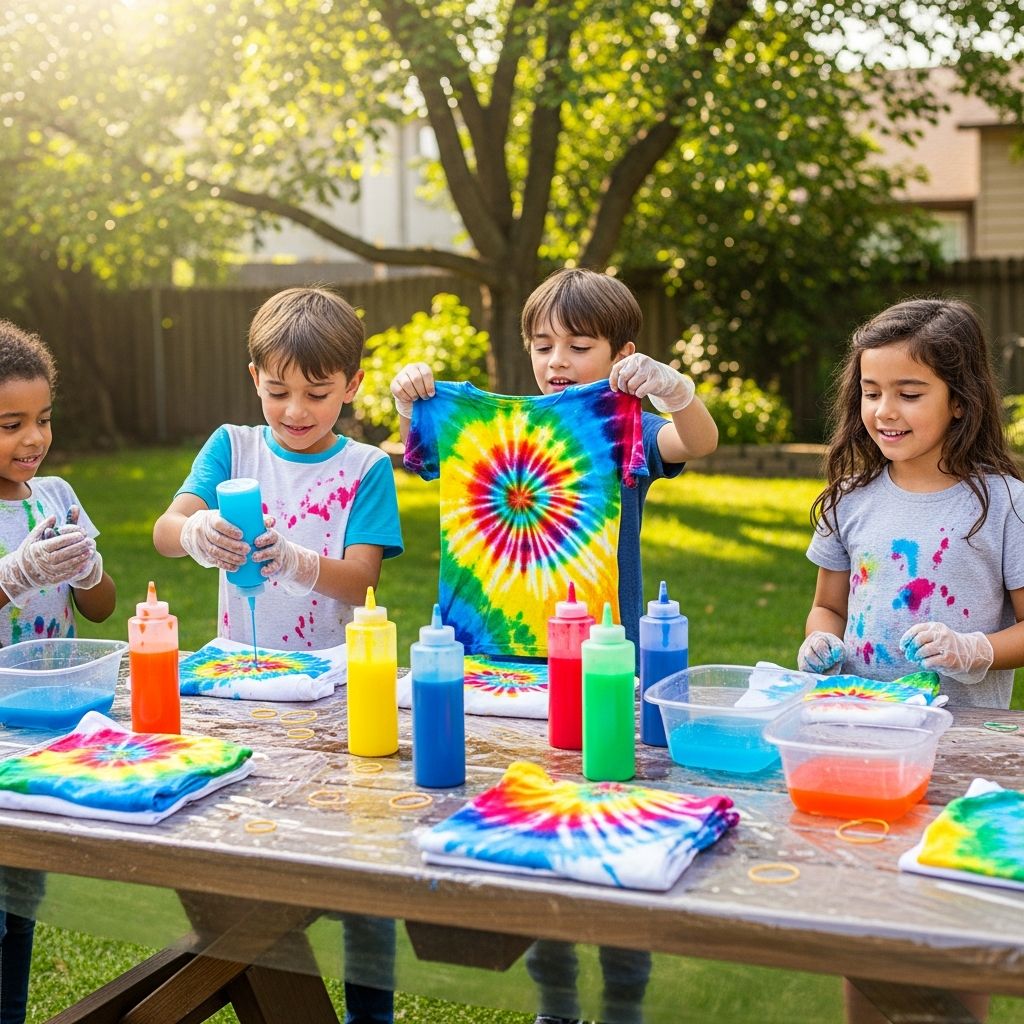
Tie-dyeing offers a vibrant, hands-on way to unleash artistic expression in children while fostering family togetherness. This timeless craft transforms plain fabrics into colorful masterpieces using simple folding, binding, and dyeing methods.
Gathering Your Tie-Dye Toolkit
Starting a tie-dye session requires basic, accessible materials that prioritize safety and ease, especially with young participants. Opt for a complete tie-dye kit, which typically includes pre-measured dye powders, squeeze bottles, rubber bands, and gloves—ideal for beginners and families.
- Fabric choices: Select 100% cotton items like T-shirts, socks, or pillowcases for optimal dye absorption. Pre-washed garments prevent excess fabric treatments from interfering with color uptake.
- Dyes and activators: Fiber-reactive dyes work best on natural fibers; kits often include soda ash to help colors bond permanently.
- Binding tools: Rubber bands, string, or zip ties secure folds without complexity.
- Safety gear: Disposable gloves, aprons, and surface covers protect skin and spaces from stains.
- Workspace essentials: Plastic bins, wire racks for drying, and trash bags for mess control.
Invest in white or light-colored blanks to showcase bold hues. Kits from reputable craft suppliers simplify mixing—no boiling required.
Prepping Fabrics for Success
Preparation ensures dyes adhere evenly and colors pop. Begin by washing fabrics in hot water without detergent to remove sizing or residues that could block dye penetration.
- Soak items in a soda ash solution (provided in kits) for 20-30 minutes. This activates the fabric’s fibers for better color fixation.
- Rinse lightly and wring out excess moisture—damp fabric accepts dye more uniformly.
- Lay out on a protected surface, ready for patterning.
This step, often overlooked, prevents muddy results and faded whites.
Mastering Beginner Tie-Dye Patterns
Simple techniques yield stunning effects, perfect for kids’ varying skill levels. Encourage experimentation while guiding with these fundamentals.
Classic Spiral Design
The spiral is a crowd-pleaser, creating swirling galaxies of color. Pinch the fabric center, twist into a flat spiral using fingers or a fork for precision, then secure with three rubber bands.
Apply dyes to each section: bright primaries for rainbow effects or complementary shades for harmony. Saturate thoroughly, flipping to dye both sides.
Bullseye or Sunburst
For radial bursts, pinch a point (center or offset) and fan fabric outward, binding concentric circles. Alternate colors in rings for layered depth—green centers fading to blues mimic nature.
Scrunch and Crumple
The easiest for little hands: randomly bunch fabric into a wad, bind loosely, and dot with multiple dyes. This organic pattern blends hues fluidly, revealing surprises post-rinse.
Striped Variations
Fold or accordion-pleat fabric parallel for horizontal/vertical stripes. Bind tightly and dye sections sequentially for sharp contrasts.
Pro tip: Use tools like forks for tighter spirals or stencils for shapes, adapting to age groups.
Applying Dyes Like Pros
Mix dyes per kit instructions: add warm water to powders in squeeze bottles, shaking vigorously. Kids love this step—supervise to avoid spills.
- Saturate folds completely, ensuring dye reaches crevices for even coverage.
- Layer colors strategically; they bleed together during setting.
- Place in zip bags or wrap to batch-process multiple pieces.
Let set 6-24 hours in a warm spot for fixation. Longer sets intensify shades.
Post-Dye Processing
Rinsing reveals the magic but requires patience. Unwrap outdoors or over a tub, then rinse in cold water until runoff clears—twist and squeeze repeatedly.
| Step | Action | Purpose |
|---|---|---|
| Initial Rinse | Cold water until clear | Removes excess dye |
| Wash Cycle | Machine with mild soap | Sets colors, prevents fading |
| Air Dry | Hang flat | Preserves patterns |
Separate darks/lights initially. Full cure takes 24-48 hours.
Safety First in Family Crafting
Tie-dye is kid-safe with precautions. Gloves prevent skin staining; eye protection guards against splashes. Work in ventilated areas, avoiding ingestion.
- Supervise dye mixing/shaking.
- Use washable surfaces; vinegar neutralizes spills.
- Allergies? Test dyes on scraps first.
For toddlers, pre-tie and let them squeeze.
Age-Tailored Tie-Dye Experiences
Customize by age: Preschoolers scrunch freely; school-age kids try spirals; teens experiment with chevrons or ice-dyeing (sprinkle dye over melting ice for diffusion).
Group activities build skills progressively, turning craft time into learning moments about color theory and patience.
Creative Twists and Themes
Elevate basics: Dip-dye edges for ombré, bleach-resist spirals for contrast, or string-bind for delicate webs.
- Themed ideas: Rainbow unicorns, galaxy tees, animal prints via stencils.
- Beyond shirts: Tote bags, bandanas, curtains.
Host parties with stations for patterns, dyeing, rinsing—memorable fun.
Cleaning Up Without the Blues
Post-project cleanup is straightforward. Hose off gloves/tools outdoors; soak stained items in oxygen bleach. Designate a ‘dye zone’ with drop cloths.
Reuse kits for multiple sessions; store dyes airtight.
Frequently Asked Questions
What fabrics work best for tie-dye?
Natural fibers like cotton, rayon, or linen absorb dyes superiorly to synthetics.
How long does tie-dye need to set?
6-24 hours yields vibrant results; warmer spots speed fixation.
Can I tie-dye without a kit?
Yes, procure procion dyes, soda ash, and urethane thickener, but kits simplify for families.
What if colors bleed together too much?
Pre-soak properly and use less water in dye mixes for sharper lines.
Is tie-dye safe for young children?
With gloves and supervision, yes—avoid direct mouth contact.
Why Tie-Dye Builds Lasting Memories
This craft nurtures fine motor skills, color recognition, and confidence through self-directed creation. Families report stronger bonds from shared laughter over unpredictable reveals.
Expand to seasonal events or school projects, sustaining the joy year-round.
References
- How to tie dye 3 easy patterns — The Craft Train. Accessed 2026. https://thecrafttrain.com/how-to-tie-dye-3-easy-patterns/
- How to Tie Dye Shirts with Kids — The Artful Parent. Accessed 2026. https://artfulparent.com/how-to-tie-dye-shirts/
- How to Tie Dye – Easy Techniques for Beginners — Camp Southern Ground. Accessed 2026. https://campsouthernground.org/tie-dye/
- Easy & Trendy Tie-Dye Techniques For All Skill Levels — Tie Dye Your Summer. Accessed 2026. https://www.tiedyeyoursummer.com/techniques
- EASY Tie Dye Patterns & Folding Techniques — YouTube (Transcript). Accessed 2026. https://www.youtube.com/watch?v=Bxn55P_8kyc
- Tie-Dye With The Kids — Instructables. Accessed 2026. https://www.instructables.com/Tie-Dye-With-The-Kids/