Glucose is a simple sugar that powers every cell in your child’s body, especially the brain. Because growing children use a lot of energy, understanding how glucose works and what healthy blood sugar levels look like can help parents support their child’s health and spot problems early.
What Is Glucose?
Glucose is a type of carbohydrate and the body’s main source of quick energy. After your child eats foods containing carbohydrates, the digestive system breaks them down into glucose, which then enters the bloodstream.
Doctors often use the terms glucose and blood sugar to mean the same thing: the amount of glucose circulating in the blood at any given time.
Where Does Glucose Come From?
- Foods rich in carbohydrates, such as bread, rice, pasta, cereal, fruit, milk, yogurt, and many snacks.
- Natural sugar production in the liver, which can make glucose from stored carbohydrates or from other nutrients when a child has not eaten for a while.
- Stored glucose (glycogen) in the liver and muscles, which can be broken down and released into the blood between meals.
Why the Body Needs Glucose
Glucose is especially important for children because:
- The brain relies heavily on glucose for thinking, learning, memory, and attention.
- Growing muscles and organs need steady fuel for development.
- Active kids burn glucose quickly during play, sports, and school activities.
The Role of Insulin: Glucose’s “Key”
Glucose cannot enter most cells by itself. It needs help from a hormone called insulin, which is made by the pancreas.
- When blood glucose rises after a meal, the pancreas releases insulin.
- Insulin acts like a key, allowing glucose to move from the blood into body cells, where it can be used for energy.
- Any extra glucose is stored in the liver and muscles as glycogen for later use.
When insulin is not made in the right amounts or does not work well, blood sugar can become too high or too low. This is the basic problem in diabetes and some other metabolic conditions.
What Is a Blood Glucose Level?
A blood glucose level is simply a measurement of how much glucose is in a small sample of blood at one moment. It can be checked through:
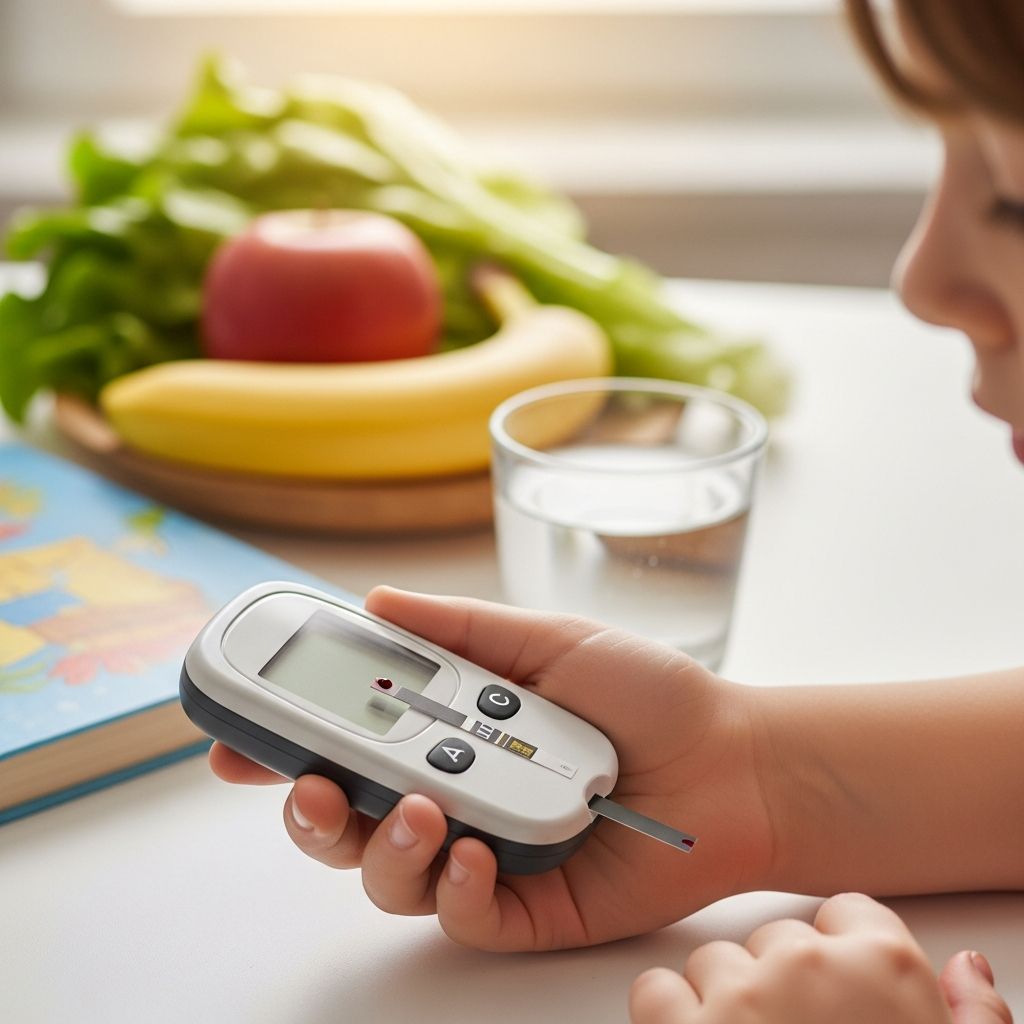
- A fingerstick test using a home blood glucose meter.
- A laboratory blood test, such as a fasting blood glucose test.
- A continuous glucose monitor (CGM), which uses a tiny sensor under the skin to track levels throughout the day and night.
How Blood Sugar Is Measured
Blood glucose can be reported in two different units:
- mg/dL (milligrams per deciliter) – used in the United States.
- mmol/L (millimoles per liter) – used in many other countries.
Healthcare professionals sometimes use a simple formula to convert between the two units: dividing mg/dL by 18 gives mmol/L, and multiplying mmol/L by 18 gives mg/dL.
Normal Blood Glucose in Children
Normal values can vary slightly from one lab or guideline to another, and each child’s doctor may set individual targets. In general, for a healthy child without diabetes:
- Fasting (no food for at least 8 hours): about 70–99 mg/dL (3.9–5.5 mmol/L).
- Random (any time of day): usually below 140 mg/dL (7.8 mmol/L).
Children with diabetes often have personalized target ranges that may be a bit higher than those of children without diabetes to help prevent low blood sugar.
| Age group | Common target range (mg/dL) | Example context |
|---|---|---|
| Under 6 years | About 90–180 mg/dL | Before meals and at bedtime, to reduce risk of lows. |
| 6–12 years | Roughly 80–180 mg/dL | Daytime and before meals. |
| Teens | About 70–150 mg/dL | Similar to adult targets for many adolescents. |
*These examples summarize ranges from pediatric diabetes education resources and are not a substitute for your child’s individualized plan.
How Doctors Check Long-Term Glucose Control
In addition to day-to-day fingerstick or sensor readings, doctors use a blood test called hemoglobin A1c (often written as A1c) to see a child’s average blood glucose over the past 2–3 months.
- An A1c level of 6.5% or higher on two separate tests is one of the criteria used to diagnose diabetes.
- For many children with diabetes, healthcare teams aim for an A1c around 7%, although the exact goal may differ based on age and safety.
What Happens When Blood Sugar Is Too Low?
Low blood sugar is called hypoglycemia. It usually means a blood glucose level below the lower limit of the target range set by the child’s healthcare team, and often below about 70 mg/dL (3.9 mmol/L).
Common Causes of Low Blood Sugar in Kids
- Taking more insulin or diabetes medicine than needed.
- Skipping or delaying meals or snacks.
- Doing more physical activity than usual without extra food.
- Occasionally, illness or poor appetite in a child who is still getting insulin.
Possible Signs of Hypoglycemia
Children may show one or more of the following:
- Shakiness, sweating, or feeling very hungry.
- Headache, weakness, or pale skin.
- Irritability, mood changes, or trouble paying attention.
- In more serious cases, confusion, seizures, or loss of consciousness.
How Hypoglycemia Is Usually Treated
Healthcare professionals often recommend using a fast-acting source of sugar and then checking blood glucose again:
- Give a measured amount of rapid-acting carbohydrate (such as glucose tablets or juice) as advised by the child’s care plan.
- Recheck blood sugar in about 15 minutes. If it is still below target, repeat treatment.
- Once blood sugar has returned to the safe range, offer a snack or meal to help keep it stable.
Emergency medicines like glucagon may be prescribed for children at risk of severe hypoglycemia; parents and caregivers should be trained on how and when to use them.
What Happens When Blood Sugar Is Too High?
High blood sugar is called hyperglycemia. It may develop gradually over hours or days and is more common in children with diabetes.
Possible Causes of High Blood Sugar
- Not enough insulin or missed doses.
- Eating more carbohydrates than the body or insulin can handle.
- Illness, infection, or fever, which can raise stress hormones and make insulin less effective.
- Stress, including emotional stress, which can also increase blood sugar.
- Natural hormonal changes during growth and puberty.
Symptoms to Watch For
- Increased thirst and needing to urinate more often.
- Tiredness or low energy.
- Blurry vision or headaches.
- In some cases, weight loss, stomach pain, or vomiting, especially if high blood sugar is persistent.
Diabetic Ketoacidosis (DKA)
If the body does not have enough insulin for a long period, it starts breaking down fat for energy, producing acids called ketones. When ketones build up in the blood, a serious condition called diabetic ketoacidosis (DKA) can develop.
- DKA is more likely when blood sugar stays very high, often above about 240 mg/dL (13.3 mmol/L).
- Signs may include deep or fast breathing, fruity-smelling breath, stomach pain, vomiting, and confusion.
- DKA is a medical emergency and requires urgent treatment.
Factors That Affect a Child’s Blood Glucose
Even with careful planning, a child’s blood sugar will change throughout the day. Important influences include:
- Food: The amount and type of carbohydrate (for example, juice vs. whole grain bread).
- Physical activity: Playing, sports, or even a long walk can lower blood sugar.
- Hormones: Growth and puberty can temporarily raise blood sugar and insulin needs.
- Illness and stress: Fever, infections, and emotional stress typically raise blood sugar.
- Medicines: Insulin and some other diabetes drugs lower blood sugar; certain other medications may raise it.
How Blood Glucose Is Monitored in Children
For children with diabetes, frequent monitoring is key to safe management and prevention of complications.
Fingerstick Blood Glucose Checks
- Using a blood glucose meter, a small drop of blood from the fingertip is tested.
- Many children are advised to check before meals and at bedtime, and sometimes during the night or before exercise.
- More checks may be needed during illness, after very active days, or when symptoms of high or low blood sugar appear.
Continuous Glucose Monitoring (CGM)
- A CGM uses a tiny sensor inserted under the skin to measure glucose in the fluid between cells.
- Readings are sent to a receiver, smartphone, or pump and can show trends and alerts for highs and lows.
- Fingerstick tests may still be needed to confirm readings or to calibrate the device.
Supporting Healthy Blood Sugar in Everyday Life
Parents, caregivers, and children can work together with the healthcare team to keep blood sugar in a safe range most of the time. Helpful strategies include:
Balanced Eating
- Include a mix of carbohydrates, protein, and healthy fats at meals.
- Choose high-fiber carbohydrates such as whole grains, beans, fruits, and vegetables when possible.
- Follow the meal and snack timing recommended by the child’s doctor or dietitian.
Regular Physical Activity
- Encourage daily movement, such as playing outside, biking, or team sports.
- Work with the healthcare team on adjusting snacks or insulin for planned exercise to prevent low blood sugar.
Routine Checkups
- Attend regular diabetes or well-child visits to review growth, blood sugar records, and A1c results.
- Discuss any frequent highs or lows, nighttime issues, or difficulties at school or daycare.
When Should Parents Talk to a Doctor?
Contact your child’s healthcare professional if you notice:
- Frequent thirst, urination, or weight loss without explanation.
- Repeated episodes of low blood sugar or severe lows requiring help.
- Persistent high readings above the target range set by the care team.
- Any signs of DKA, such as vomiting, deep breathing, or fruity-smelling breath.
Early evaluation and treatment can prevent complications and help children feel better quickly.
Frequently Asked Questions About Glucose and Kids
Is glucose always bad because it is called “sugar”?
No. Glucose itself is essential for life and is the body’s main fuel. Problems usually occur only when blood glucose levels stay too high or too low, especially over long periods. The goal is not to avoid glucose completely, but to keep blood sugar within a healthy range.
Can a child have blood sugar problems without having diabetes?
Yes. Illness, certain medications, hormone changes, or rare metabolic conditions can cause abnormal blood sugar even in children without diabetes. However, long-lasting or repeated high readings often lead doctors to check for diabetes with blood tests such as fasting glucose and A1c.
How often should my child’s blood sugar be checked if they have diabetes?
Many children with type 1 diabetes check blood sugar at least four times a day—before meals and at bedtime—and sometimes more often, such as overnight or before sports. Specific recommendations vary by age, treatment plan, and whether the child uses a CGM.
Do all high readings mean my child’s treatment is failing?
Not necessarily. Children’s blood sugar levels naturally change with food, activity, growth, and illness. Occasional readings above target are common. Patterns of frequent highs or lows, however, are a reason to review the care plan with the healthcare team.
Will my child be able to live a normal life if they need insulin?
With modern insulin therapy, monitoring tools, and support from family and healthcare professionals, most children on insulin can participate fully in school, sports, and social activities. The main difference is the need for extra planning and regular monitoring of blood glucose.
References
- Understanding blood glucose (blood sugar) — Diabetes at School (Canadian Paediatric Society, Canadian Pediatric Endocrine Group). 2022-05-01. https://diabetesatschool.ca/understanding/blood-sugar
- Checking Blood Glucose in Kids — Children’s Healthcare of Atlanta. 2023-04-10. https://www.choa.org/parent-resources/diabetes/checking-blood-glucose-in-kids
- Type 1 diabetes in children: Diagnosis and treatment — Mayo Clinic. 2024-01-05. https://www.mayoclinic.org/diseases-conditions/type-1-diabetes-in-children/diagnosis-treatment/drc-20355312
- Monitoring Blood Glucose and Ketones — Dartmouth Health Children’s. 2022-03-15. https://childrens.dartmouth-health.org/diabetes-education/monitoring-blood-glucose-and-ketones
- Blood sugar testing and goals (Pediatric Diabetes) — UC Davis Health. 2023-02-20. https://health.ucdavis.edu/children/patient-education/pediatric-diabetes/blood-sugar-testing
- Blood Glucose (Sugar) Test — Cleveland Clinic. 2023-09-14. https://my.clevelandclinic.org/health/diagnostics/12363-blood-glucose-test
- Blood sugar test — UCSF Benioff Children’s Hospitals. 2022-08-30. https://www.ucsfbenioffchildrens.org/medical-tests/blood-sugar-test