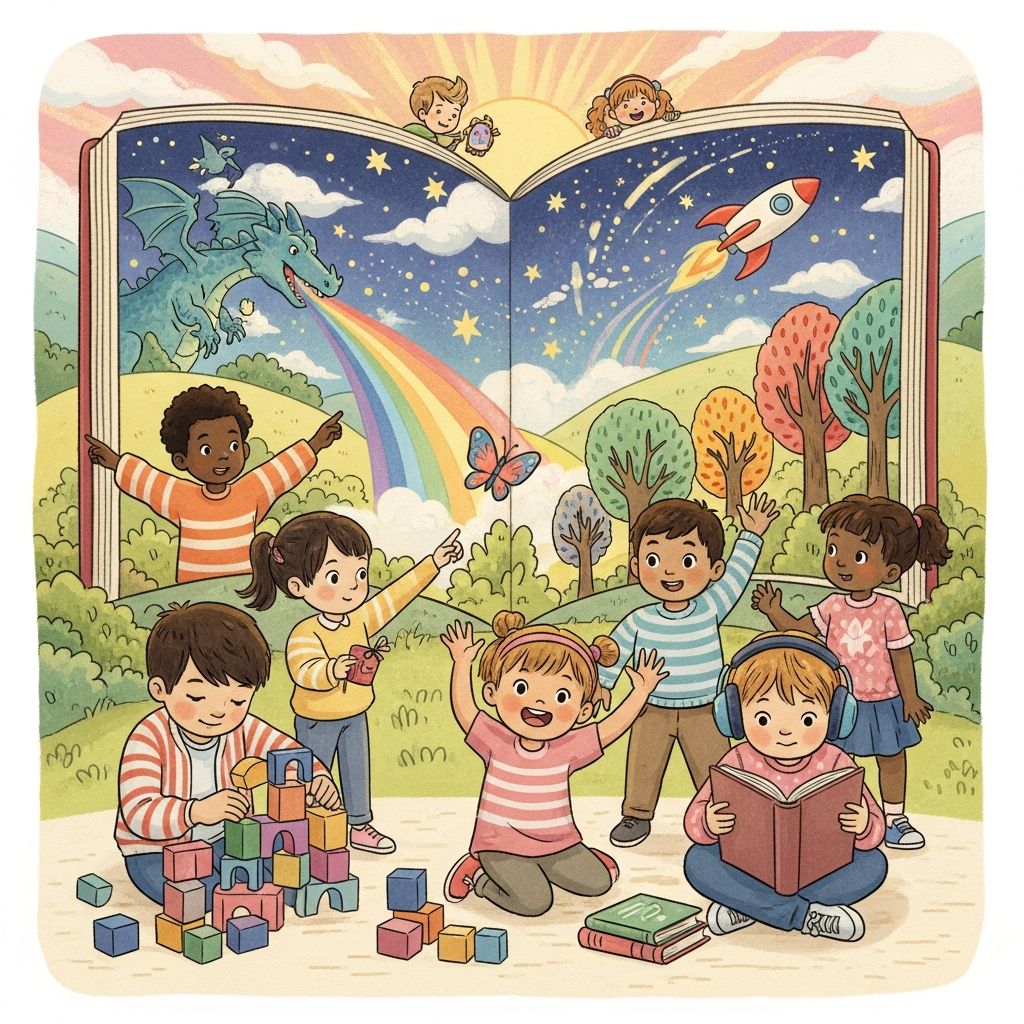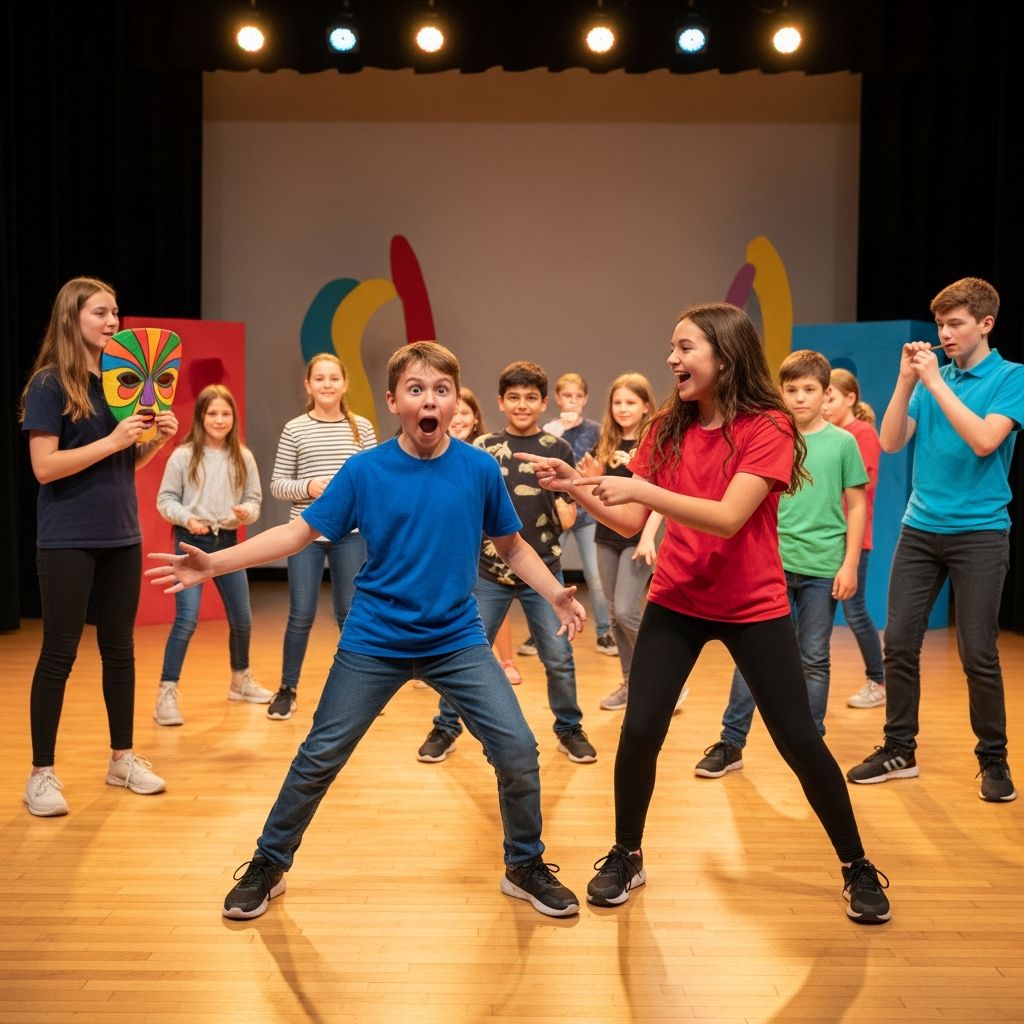
Drama activities give kids and teens a playful way to explore imagination, build confidence, and learn how to express ideas through voice, movement, and storytelling. They are ideal for classrooms, youth groups, drama clubs, and even family game nights.
This guide shares a wide range of drama games and exercises, including warm-ups, icebreakers, mime, improvisation, character work, and simple performance projects. You can adapt most activities for different ages, group sizes, and experience levels.
Why Drama Activities Matter
Well-chosen drama activities help students develop communication, collaboration, listening, and problem-solving skills while having fun. They also offer a safe environment for young people to experiment, take risks, and make mistakes without judgment.
For teachers and group leaders, drama exercises are powerful tools for building community, energizing a tired group, and reinforcing curriculum topics through role-play and storytelling.
Getting Started: Tips for Leaders
Before diving into specific games, it is helpful to set a clear tone and framework. Explain that drama is about exploration, not perfection, and that every participant brings something unique to the group.
- Emphasize respect: No making fun of others, only supportive feedback.
- Model participation: Join in the games to show that risk-taking is welcome.
- Keep instructions short: Demonstrate rather than over-explain.
- Adapt difficulty: Start with simple activities, then layer in complexity.
Warm-Up and Icebreaker Drama Games
Warm-ups and icebreakers wake up bodies and voices, break tension, and help students feel comfortable performing in front of peers. Use them at the start of a session or whenever energy drops.
1. Name and Gesture Circle
This game helps students learn each other’s names and begin using their bodies expressively.
- Students stand in a circle.
- One at a time, each student says their name and adds a simple full-body gesture.
- The group repeats the name and gesture together.
- Continue around the circle until everyone has shared.
Variation: Ask students to create a gesture that reflects a hobby, favorite animal, or emotion.
2. Zip Zap Energy Pass
Use an imaginary ball of energy to sharpen focus and listening.
- Students form a circle.
- One player sends energy to another by making eye contact, saying a chosen sound (for example, “zip”), and gesturing as if throwing a ball.
- The receiver quickly passes the energy to someone else with the same sound and gesture.
- Gradually introduce new sounds, directions, or movement rules to increase difficulty.
3. Walk the Space
This simple activity builds awareness of space, pace, and other people.
- Students walk around the room, filling all available space.
- Leader calls out instructions: “faster,” “slower,” “freeze,” or different emotions.
- Add variations such as walking as if the floor is ice, sand, or hot lava.
Concentration and Listening Games
Drama relies on keen listening and concentration. Games that challenge memory and focus help students stay present on stage and respond truthfully to partners.
4. Change Three Things
This partner game strengthens observation skills and attention to detail.
- Partners face each other and study one another for a few seconds.
- They turn around or close their eyes and secretly change three small things (for example, rolling up a sleeve, changing hairstyle, or removing a bracelet).
- They face each other again and try to identify all three changes.
5. Count to Twenty
This group game builds collective focus and non-verbal communication.
- Students sit or stand in a circle.
- They must count aloud from one to twenty, but only one person may speak at a time.
- If two people speak at once, the group starts again from one.
- Encourage silence, eye contact, and patience rather than rushing.
6. Mirror Movement
Mirroring helps students pay attention to subtle movement, rhythm, and tempo.
- Students pair up and stand facing each other.
- One becomes the leader, the other the mirror.
- The leader moves very slowly while the mirror copies exactly, as if reflection in a mirror.
- After a minute, they switch roles or try moving with no designated leader, sharing control.
Improv Games for Creativity
Improvisation games encourage spontaneous thinking, collaboration, and storytelling. Remind students that there are no “wrong” ideas, only offers to build on.
7. Yes, And…
This classic improv principle encourages acceptance and building on offers.
- Two players start an imaginary scene based on a simple prompt (for example, “at the zoo” or “on a spaceship”).
- Each time one player speaks, the other must respond beginning with “Yes, and…” and add new information.
- After a short time, invite two new players to take over or change the setting.
8. One-Word Story
In this group game, students create a story together one word at a time.
- Students sit or stand in a circle.
- Going around the circle, each person adds one word to build a story.
- Encourage clear beginnings, complications, and endings.
- Remind them to listen closely to maintain logic and continuity.
9. Props from Nothing
This activity develops imagination and pantomime skills.
- One student pretends to pick up an invisible object and use it in a clear way.
- Another student steps in, takes the same imaginary object, and transforms its use into something completely different.
- Continue around the circle, turning the object into as many things as possible.
Mime and Movement Activities
Mime games help students communicate without words, focusing on body language, facial expression, and spatial relationships. These activities are especially good for quieter or shy participants.
10. Trapped in a Box
In this solo or group exercise, students mime being inside an invisible shrinking or expanding box.
- Ask each student to imagine standing inside a box with invisible walls.
- They explore and test the walls using hands, shoulders, and back.
- Gradually, the box “shrinks,” forcing them to adapt posture and movement.
- Invite them to escape creatively or transform the box into something else.
11. Human Machines
This collaborative activity uses repetitive movement and sound to create an imaginary machine.
- One student steps into the space and begins a repeated movement with a simple sound.
- Another student joins, adding a new movement and sound that fits.
- One by one, the rest join until the room is filled with a complex “machine.”
- Experiment with speeding up, slowing down, freezing, or reversing the machine.
12. Emotional Statues
This game links physical expression to emotions and storytelling.
- Call out an emotion (joy, fear, anger, excitement, boredom).
- On a count of three, all students freeze in a statue that shows that emotion.
- Walk around and tap a few statues; when tapped, the student briefly says one line as that character.
Character and Role-Play Activities
Character activities push students to think from another person’s perspective. They promote empathy and help young actors make specific choices about voice, posture, and objectives.
13. Hot Seat Interview
This game explores characters from stories, history, or students’ imaginations.
- One student sits in the “hot seat” as a chosen character.
- The rest of the group acts as reporters and asks questions.
- The student in the hot seat answers in character, improvising details.
- Rotate characters, using figures from literature, current lessons, or made-up worlds.
14. Park Bench Encounters
Short, two-person scenes on an imaginary park bench help students practice objectives and relationships.
- Set up two chairs as a bench.
- Give each player a secret objective (for example, “get the other person to leave” or “get them to share a secret”).
- Students play the scene for one or two minutes, then swap in new pairs.
15. Costume and Prop Character
Simple costume pieces and props can inspire bold character choices.
- Provide a box of safe items: hats, scarves, glasses frames, small objects.
- Each student chooses one item and quickly invents a character who might own it.
- Students introduce themselves to the group as their new characters.
Short Scenes and Performance Projects
Once a group feels comfortable with games, you can guide them into creating short scenes and simple performances. Keep projects short, clear, and fun.
16. Tableaux Storytelling
Tableaux are frozen pictures made with bodies. They are powerful for summarizing stories or events.
- Divide students into small groups and give each a story, theme, or event.
- Groups create three frozen pictures: beginning, middle, and end.
- Present each sequence to the class, with the audience guessing what is happening.
17. Scripted Mini-Scenes
Use very short scripts or student-written dialogues to move from games to more structured acting.
- Provide simple, age-appropriate scripts or have pairs write short dialogues.
- Students rehearse, adding blocking (movement), gestures, and vocal choices.
- Share scenes informally with the group; emphasize effort and clarity.
18. Devising Original Scenes
Devised theatre allows students to create original scenes from prompts or themes.
- Offer a theme or question (for example, “friendship,” “facing a challenge,” or “a mystery at school”).
- Small groups brainstorm situations, characters, and conflicts.
- They improvise and refine short scenes, then share them with peers.
Sample Drama Session Structure
The table below shows a simple structure you can adapt for a 45–60 minute drama session with kids or teens.
| Segment | Time | Suggested Activities |
|---|---|---|
| Welcome & Check-In | 5 minutes | Brief chat, review expectations, light stretching |
| Warm-Up | 10 minutes | Name and Gesture Circle, Walk the Space |
| Skill Focus | 15 minutes | Mirror Movement, Change Three Things, Emotional Statues |
| Improv or Scene Work | 15–20 minutes | Yes, And…, One-Word Story, Park Bench, or Devised Scenes |
| Reflection & Cool-Down | 5–10 minutes | Group discussion, gentle movement, positive feedback |
Managing Mixed Age and Ability Groups
Drama groups often include a mix of ages, personalities, and experience levels. Plan activities with options that allow both shy beginners and confident performers to participate comfortably.
- Offer roles with different visibility: narrators, sound effects, background characters.
- Let students choose whether to perform or assist with directing and ideas.
- Celebrate small risks, such as speaking a line louder or trying a new gesture.
Safety, Inclusion, and Classroom Management
Drama games require clear boundaries to keep everyone safe and included. Establish rules about physical contact, personal space, and kind language before playing.
- Use non-contact versions of games whenever possible.
- Immediately pause any game if energy becomes unsafe or unkind.
- Invite feedback after activities to check how students felt and what they learned.
FAQs About Drama Activities for Kids and Teens
How often should I run drama activities?
Short drama sessions once or twice a week can make a noticeable difference in confidence and collaboration. In classrooms, even a 10-minute warm-up linked to a lesson can be valuable.
Do students need acting experience?
No prior experience is necessary. Start with simple, non-threatening games that emphasize group fun, then gradually introduce improvisation and character work as the group becomes more comfortable.
What if some students are very shy?
Offer low-pressure roles and group activities where no one is alone on stage. Encourage shy students to start with observing, sound effects, or background roles before moving into more visible parts.
How can I link drama activities to school subjects?
Use role-play and tableaux to explore history events, literature scenes, or real-world scenarios like debates and interviews. Drama can reinforce comprehension and make abstract ideas concrete and memorable.
What resources do I need?
Most activities require only an open space and a willing group. Simple props and costume pieces can be added later to inspire character work and storytelling, but they are not essential for successful drama games.
Final Thoughts
Drama activities for kids and teens blend play with powerful learning. With a few simple games and an encouraging atmosphere, any teacher, parent, or group leader can help young people gain confidence, creativity, and communication skills that extend far beyond the stage.