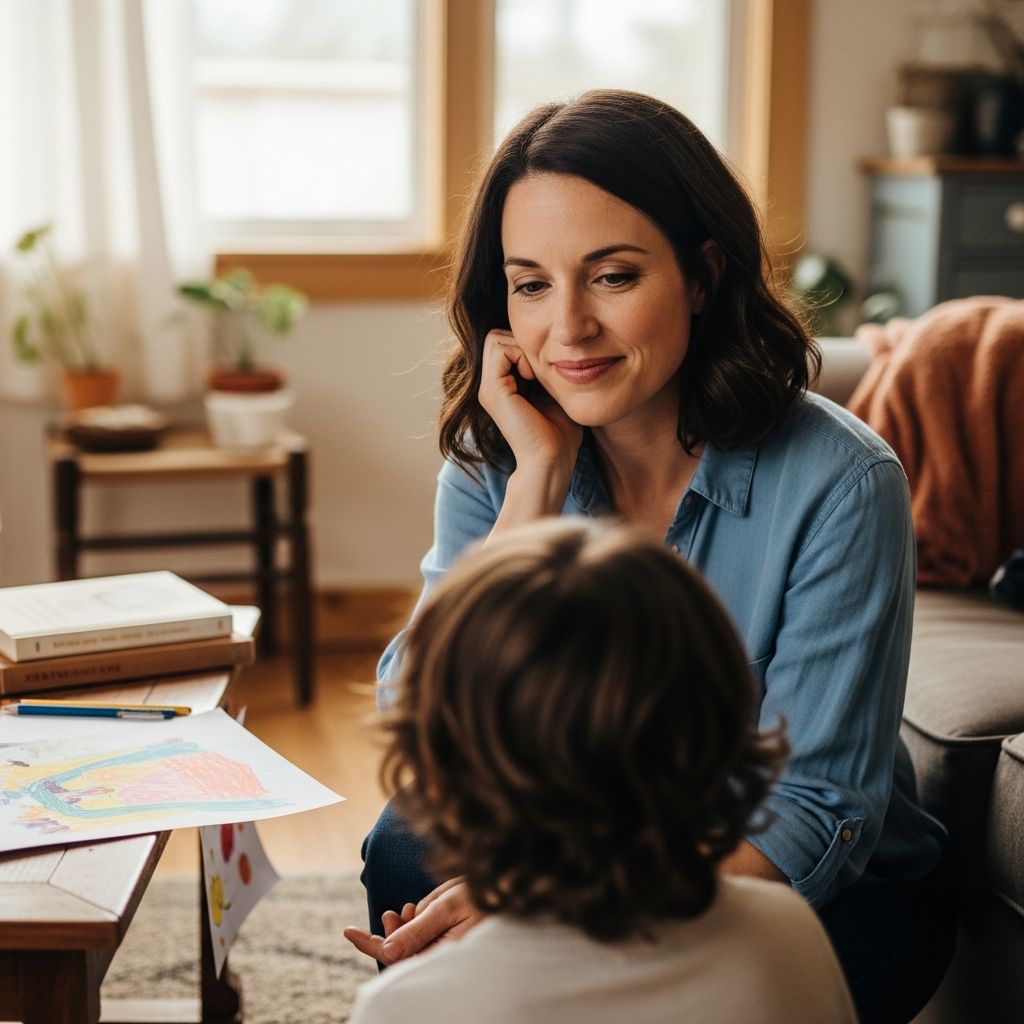
Glennon Doyle, a celebrated author and speaker, offers a refreshing take on the trials and triumphs of raising children. Through her bestselling works and candid social media reflections, she dismantles outdated notions of parenting perfection and champions a path of raw honesty, self-acceptance, and emotional freedom. Her words resonate deeply with parents navigating the chaos of family life, urging them to live fully rather than fade into the background.
Rejecting the Martyrdom Myth in Parenting
One of Doyle’s most powerful critiques targets the cultural expectation that mothers must sacrifice their identities for their children. She argues that this self-erasure doesn’t equate to superior love; instead, it burdens kids with guilt and perpetuates a cycle of diminished lives, especially for daughters who witness their mothers’ disappearance.
In her book Untamed, Doyle writes about how generations of women have equated vanishing with devotion, teaching children that love demands the end of personal vitality. This mindset, she contends, creates a heavy load: children internalize that their existence caused their parent’s unlived potential. Drawing from psychologist Carl Jung, she emphasizes that nothing weighs more on a child than a parent’s unfulfilled dreams.
- Traditional view: Sacrifice everything to prove love.
- Doyle’s shift: Live vibrantly to model healthy boundaries.
- Impact on kids: Freedom to pursue their own paths without inherited guilt.
By refusing to martyr themselves, parents demonstrate that love coexists with self-preservation. This approach fosters children who value their own wholeness, breaking free from inherited patterns of diminishment.
Modeling Humanity Through Imperfect Parenting
Doyle believes the core of parenting is teaching children to navigate human flaws gracefully. Rather than hiding mistakes, she advocates showing vulnerability—losing temper, erring, then apologizing—to illustrate resilience and forgiveness.
“My most important parenting job is to teach my children how to deal with being human. There is really only one way to deal gracefully with being human, and that is: forgive yourself.”
— Carry On, Warrior: Thoughts on Life Unarmed
This philosophy extends to ‘pendulum parenting,’ where overcorrections from one’s own upbringing lead to new imbalances. For instance, emphasizing emotional expression without boundaries can overwhelm family dynamics. Doyle humorously suggests balancing openness with tools like journals, allowing feelings to flow privately when needed.
| Parenting Pendulum | Potential Pitfall | Doyle’s Balance |
|---|---|---|
| Suppress emotions | Emotional repression | Encourage expression + private outlets |
| Over-share everything | Boundary overload | Model healthy limits |
| Hide mistakes | Perfection illusion | Apologize publicly |
Embracing imperfection humanizes parents, making forgiveness a lived lesson rather than a lecture.
Allowing Children to Feel Everything
Doyle challenges the pressure to engineer constant happiness in kids. Instead, she promotes permitting the full emotional spectrum, affirming that humanity isn’t defined by joy alone but by experiencing all feelings authentically.
From her social media insights: Parents shouldn’t ‘make’ children happy but let them be—angry, sad, ecstatic—teaching that every emotion is valid and temporary. This ‘trying easier’ mindset reduces exhaustion and builds emotional intelligence.
- Shift from: Happiness as goal.
- To: Emotional wholeness as norm.
- Benefit: Resilient kids who self-regulate.
By modeling this, parents equip children to handle life’s complexities without fear of feelings.
Prioritizing Self-Rescue and Inner Strength
A recurring theme in Doyle’s work is that children don’t need parental saviors; they need witnesses to their parents’ self-liberation. “My children do not need me to save them. My children need to watch me save myself,” she states in Untamed.
This self-focused energy redefines motherhood not as a static role but as a dynamic force anyone can harness. Parents who cultivate self-love—being gentle, forgiving, and appreciative amid chaos—pass on that capacity to their kids.
Self-compassion becomes contagious: When mothers view themselves as ‘awesome’ despite imperfections, children learn to do the same, fostering generations of confident individuals.
Redefining Motherhood as an Energy, Not an Identity
Doyle moves beyond binary definitions, seeing motherhood as an unleashable inner power rather than a label. This inclusive view extends nurturing qualities to all, regardless of biology or circumstance.
It liberates parents from rigid expectations, encouraging them to tap into compassion, resilience, and intuition wherever needed—in family, community, or self-care.
Embracing ‘Bad Parenting’ Moments for Growth
Counterintuitively, Doyle celebrates occasional ‘bad parenting’ as essential. These lapses—snapping over a lost jersey or wishing for silent suffering—humanize adults, allowing kids to anticipate their own future parental shortcomings with grace.
“It’s so important to be a bad parent often. This way if our kids become parents, they will be able to forgive themselves for being human—Because they’ve seen us do it.”
— @glennondoyle
This permission to falter reinforces relentless self-forgiveness as the graceful human path.
Self-Love as the Foundation for Loving Others
Doyle insists that parental self-love isn’t optional; it’s prerequisite. Loving oneself more deeply than children isn’t neglect—it’s modeling the self-respect kids deserve to emulate.
In Carry On, Warrior, she urges gentleness amid ‘freaking circumstances,’ transforming ordinary struggles into opportunities for awe at one’s endurance.
Practical Applications of Doyle’s Philosophy
To integrate these ideas:
- Daily reflection: Journal personal wins and forgivings.
- Family meetings: Share a weekly ‘human moment’ and apology.
- Boundary practice: Say no without guilt, explaining self-care’s value.
- Emotional check-ins: Validate all feelings without fixing.
These habits build households rooted in authenticity.
Frequently Asked Questions About Glennon Doyle’s Motherhood Insights
Why does Doyle oppose parental martyrdom?
She views it as a toxic legacy that burdens children with guilt over their parent’s unlived life, perpetuating self-sacrifice across generations.
How can parents model healthy emotions?
By expressing, apologizing for, and forgiving their own full range of feelings, while providing kids tools like diaries for private processing.
What does ‘trying easier’ mean in parenting?
It’s releasing the quest for constant happiness, instead allowing natural emotional ebbs and flows to build true resilience.
Is imperfection key to good parenting?
Yes—showing ‘bad parent’ moments teaches kids self-forgiveness, essential for their future as humans and potential parents.
How does self-love benefit children?
It provides a template for their own self-compassion, proving love thrives alongside personal fulfillment.
Doyle’s voice cuts through parenting noise, reminding us that the greatest gift is a fully alive parent. Her wisdom invites a motherhood of depth over performance, rippling outward to freer families and societies.
References
- Untamed — Glennon Doyle. 2020-03-10. https://www.goodreads.com/work/quotes/73600042-untamed
- Carry On, Warrior: Thoughts on Life Unarmed — Glennon Doyle. 2013-09-10. https://www.goodreads.com/quotes/10189049-mothers-have-martyred-themselves-in-their-children-s-names-since-the
- Glennon Doyle Quotes on Motherhood — Motherly. 2023-05-15. https://www.mother.ly/life/glennon-doyle-quotes-about-motherhood/
- We Can Do Hard Things Quotes — Scary Mommy. 2021-05-20. https://www.scarymommy.com/lifestyle/glennon-doyle-quotes
- The Memo for New Parents — TED Ideas. 2020-04-15. https://ideas.ted.com/the-memo-that-all-new-moms-and-dads-should-receive/