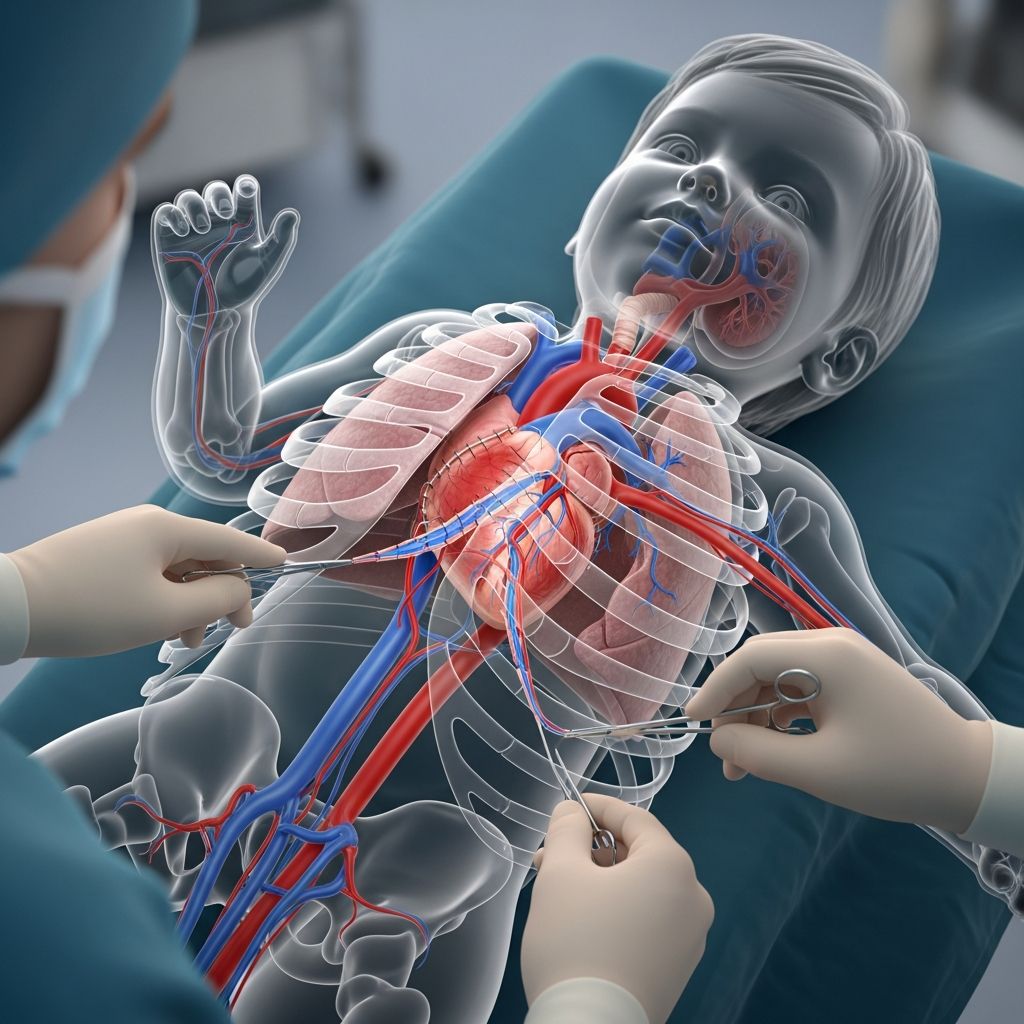
The Glenn procedure is a major heart surgery used to help babies born with serious congenital heart defects that leave them with only one effective pumping chamber (single ventricle). It is usually the second stage in a planned series of operations designed to improve blood flow and oxygen levels so a child can grow and develop as safely as possible.
Why Some Babies Need the Glenn Procedure
In a typical heart, there are two lower chambers (ventricles) that pump blood: one to the lungs and one to the rest of the body. In some congenital heart defects, one of these ventricles is too small, missing, or unable to pump well. This is called a single-ventricle defect.
Common conditions that may lead to a Glenn procedure include:
- Hypoplastic left heart syndrome (HLHS) – the left side of the heart, including the left ventricle, aortic valve, and aorta, is severely underdeveloped.
- Tricuspid atresia – the tricuspid valve between the right atrium and right ventricle does not form properly, leaving the right ventricle small or nonfunctional.
- Other single-ventricle malformations, where one ventricle or its valves are too small or abnormal to support normal circulation.
Without surgery, these defects prevent normal blood flow through the heart and lungs and can cause dangerously low oxygen levels. The Glenn procedure helps reroute blood so the single working ventricle does not have to do all the work on its own.
Where the Glenn Fits in the Staged Surgeries
For many single-ventricle conditions, surgeons use a three-stage surgical plan to help the heart work more efficiently over time.
| Stage | Typical Age | Main Goal |
|---|---|---|
| First operation (e.g., Norwood or similar) | First days or weeks after birth | Allow basic blood flow to body and lungs so the baby can survive the newborn period. |
| Second operation (Glenn or bidirectional Glenn) | About 3–6 months of age (not usually earlier than 2 months) | Send blue (deoxygenated) blood from the upper body directly to the lungs and reduce workload on the single ventricle. |
| Third operation (Fontan-type surgery) | Usually early childhood, when the child is bigger and more active | Route most or all venous blood to the lungs without passing through the ventricle. |
Basic Idea of the Glenn Circulation
The Glenn procedure creates a new pathway between a major vein and the lung arteries:
- The superior vena cava (SVC), a large vein that brings low-oxygen blood from the head, neck, and upper body back to the heart, is disconnected from the heart.
- The SVC is then attached directly to the pulmonary artery, which carries blood to the lungs.
- As a result, blood from the upper body flows passively into the lungs without passing through the ventricle, which lowers the amount of pumping the heart must do.
Surgeons often call this a bidirectional Glenn when the blood can flow into both the right and left pulmonary arteries. It is considered a key step toward the later Fontan circulation.
When the Glenn Procedure Is Usually Done
Timing can vary, but most children have this surgery when they are:
- Between 3 and 6 months old, often about 4–6 months.
- Stable enough after their first surgery, growing, and meeting weight or health goals set by the care team.
Your child’s cardiologist and surgeon will choose the timing based on:
- How well the first surgery is working
- Oxygen levels and symptoms (such as blueness or difficulty feeding)
- Heart ultrasound (echocardiogram) results
- Overall growth, weight gain, and any other medical conditions
Preparing Your Child and Family
In the weeks or days before the Glenn procedure, the medical team will perform tests to understand your child’s current heart function and general health. Common tests include:
- Physical exam and medical history
- Pulse oximetry to check oxygen saturation
- Chest X-ray to look at lung and heart size
- Echocardiogram (heart ultrasound) to assess heart chambers, valves, and blood flow
- Electrocardiogram (ECG) to check the heart rhythm
- Blood tests for anemia, clotting, and organ function
- Cardiac catheterization in some children, to directly measure pressures and oxygen levels inside the heart and vessels
Parents may be asked to:
- Follow specific feeding and medication instructions the night before surgery (often no food or drink for a set period of time).
- Report any signs of infection such as fever, cough, or runny nose, which could delay surgery.
- Discuss their child’s current medicines, including blood thinners or heart medications, with the cardiologist.
What Happens During the Glenn Operation
While each hospital may have its own routines, the Glenn procedure usually follows these main steps:
- Anesthesia
Your child receives general anesthesia and sleeps deeply throughout the operation. They will not feel or remember the surgery.
- Accessing the heart
The surgeon makes an incision in the chest, most often through the breastbone (sternotomy), to reach the heart and major blood vessels.
- Heart-lung support
Many children are placed on a cardiopulmonary bypass machine, which temporarily takes over the work of the heart and lungs so the surgeon can operate on a still, bloodless field. In some cases, surgeons may perform parts of the procedure without full bypass, depending on anatomy and technique.
- Creating the new connection
The surgeon disconnects the superior vena cava from the heart and connects it directly to the pulmonary artery. Any temporary shunt from the first surgery that is no longer needed may be closed or removed.
- Checking blood flow and closing
The team checks that blood flows smoothly through the new pathway and that oxygen levels are acceptable. The surgeon then closes the incision, and your child is moved to the cardiac intensive care unit (CICU) for close monitoring.
The operation typically takes several hours. Your team will update you during the procedure and as soon as your child is stable in the ICU.
Immediately After Surgery: ICU and Hospital Stay
After the Glenn procedure, children usually spend:
- Several days in a cardiac intensive care unit (CICU) for close observation
- Additional days in a regular hospital room before going home, depending on recovery speed
During this time, the care team will:
- Monitor vital signs, urine output, and oxygen levels
- Adjust ventilator support if your child needs help breathing, and then wean as tolerated
- Give pain medicine to keep your child comfortable
- Start feeding gradually, starting with IV fluids or tube feeds, then moving to bottle or breastfeeding when safe
- Watch for signs of complications, such as low oxygen, fluid buildup, or rhythm changes
Before discharge, parents are usually taught how to care for the incision, recognize warning signs, and give any prescribed medicines.
Benefits and Goals of the Glenn Procedure
The Glenn procedure does not create a normal heart, but it often provides important advantages for babies with single-ventricle defects:
- Reduces workload on the single ventricle by routing upper-body venous blood directly to the lungs.
- Improves oxygen saturation compared with pre-Glenn levels, often leading to less blueness (cyanosis) and better stamina.
- Can stabilize circulation so babies can grow and prepare for the later Fontan surgery.
- Provides time for close monitoring and adjustment of medicines or feeding plans.
Modern centers report very high survival rates for the Glenn procedure, often around 98–99% in otherwise suitable candidates. Outcomes depend on many factors, including the specific heart defect, other medical conditions, and overall care.
Possible Risks and Complications
Like all open-heart surgeries, the Glenn procedure carries risks. Many children do well, but parents should understand possible complications, which can include:
- Bleeding during or after surgery
- Infection of the incision or inside the chest
- Heart rhythm problems (arrhythmias)
- Fluid buildup around the lungs or heart
- Blood clots or narrowing in the new connection between the SVC and pulmonary artery
- Persistent low oxygen levels or reduced exercise tolerance
Most complications can be treated, especially when recognized early. Your child’s team will explain which signs should prompt an emergency call or visit.
Going Home: Everyday Care After a Glenn Procedure
Once your child is stable and feeding well, they can go home. Parents and caregivers will typically be asked to:
- Keep follow-up appointments with the cardiologist and pediatrician as scheduled.
- Watch the incision site for redness, swelling, warmth, or drainage.
- Give medicines exactly as prescribed, such as diuretics, blood thinners, or heart medications.
- Track growth and feeding, noting any problems like poor weight gain or increased sweating during feeds.
- Notice any changes in color (more blue or gray), breathing, or activity level.
Many children can gradually return to more typical activities for their age, though their endurance may be lower than that of peers. The cardiologist will guide what level of physical activity is safe.
Looking Ahead: Life Between Glenn and Fontan
For most children, the Glenn procedure is not the final step. Over time, as your child grows and becomes more active, the single ventricle may still struggle to handle all the blood returning from the lower body. This is why many children later have a Fontan procedure, which directs more of the body’s venous blood directly to the lungs without passing through the ventricle.
Between the Glenn and Fontan operations, your child will need:
- Regular cardiology follow-up with echocardiograms and other tests as needed
- Ongoing monitoring of oxygen levels and growth
- Vaccinations and general pediatric care to reduce infection risk
- Support for development, such as physical or occupational therapy if recommended
Practical Tips for Parents and Caregivers
Caring for a baby with a complex heart condition can feel overwhelming. These strategies may help families cope and stay organized:
- Keep a health notebook
Record medicines, doses, questions for the cardiologist, and notes from appointments. - Learn your child’s “normal”
Notice their typical skin color, breathing pattern, feeding time, and energy level so that changes are easier to spot. - Ask about emergency plans
Know when to call the cardiology team, when to go to the emergency department, and which symptoms are urgent. - Seek support
Social workers, psychologists, parent support groups, and patient organizations for congenital heart disease can offer emotional and practical help. - Care for yourself too
Parents’ well-being affects the whole family. Rest, nutrition, and emotional support matter for caregivers as well.
Frequently Asked Questions About the Glenn Procedure
Q1: Is the Glenn procedure a cure for my child’s heart defect?
No. The Glenn procedure is a staged repair, not a cure. It improves blood flow and reduces strain on the single ventricle but does not create a normal two-ventricle heart. Most children still need additional surgery (often a Fontan operation) and lifelong follow-up with a congenital heart specialist.
Q2: How long do children stay in the hospital after a Glenn surgery?
Hospital stays vary, but many children remain in the intensive care unit for several days, then move to a step-down or regular ward for several more days before going home. The length of stay depends on how quickly they come off the ventilator, start feeding, and recover from the operation.
Q3: What is the survival rate for the Glenn procedure?
In experienced centers, the survival rate is very high, often reported at around 98–99% for children who are good candidates for the procedure. Individual risk may differ based on the specific heart defect, other illnesses, and the child’s condition before surgery. Your cardiology team can discuss your child’s particular situation.
Q4: Will my child be able to play and go to school later in life?
Many children who have had a Glenn and later Fontan-type operation attend school, play with friends, and participate in many normal activities. Some may have limits on intense or competitive sports, tire more easily, or need regular medications and follow-up. The care team will give personalized activity recommendations as your child grows.
Q5: How often will my child need heart checkups after the Glenn?
Follow-up is frequent in the months after surgery, often every few weeks or months, then gradually becomes less frequent as your child stabilizes. However, children with single-ventricle circulation usually require lifelong cardiac follow-up with specialists in congenital heart disease.
References
- Glenn Procedure — Presbyterian Healthcare Services. 2023-04-12. https://www2.phs.org/heart/Services/Treatments-and-Services/Glenn-Procedure
- Glenn Procedure: Surgery and Outcomes — Cleveland Clinic. 2023-10-10. https://my.clevelandclinic.org/health/treatments/24290-glenn-procedure
- Bidirectional Glenn Procedure or Hemi-Fontan — StatPearls (NCBI Bookshelf). 2022-08-15. https://www.ncbi.nlm.nih.gov/books/NBK563299/
- HLHS Surgery — Children’s Hospital Colorado. 2022-06-01. https://www.childrenscolorado.org/conditions-and-advice/connection/hypoplastic-left-heart-syndrome-hlhs/hlhs-surgery/
- Hypoplastic Left Heart Syndrome — Cincinnati Children’s Hospital Medical Center. 2021-11-05. https://www.cincinnatichildrens.org/health/h/hlhs
- Staged Reconstruction Heart Surgery — Children’s Hospital of Philadelphia. 2020-09-30. https://www.chop.edu/treatments/staged-reconstruction-heart-surgery
- Glenn procedure for HLHS — Norton Children’s Heart Institute. 2022-03-18. https://nortonchildrens.com/services/cardiology/conditions/treatments/surgical/hlhs-glenn-procedure/