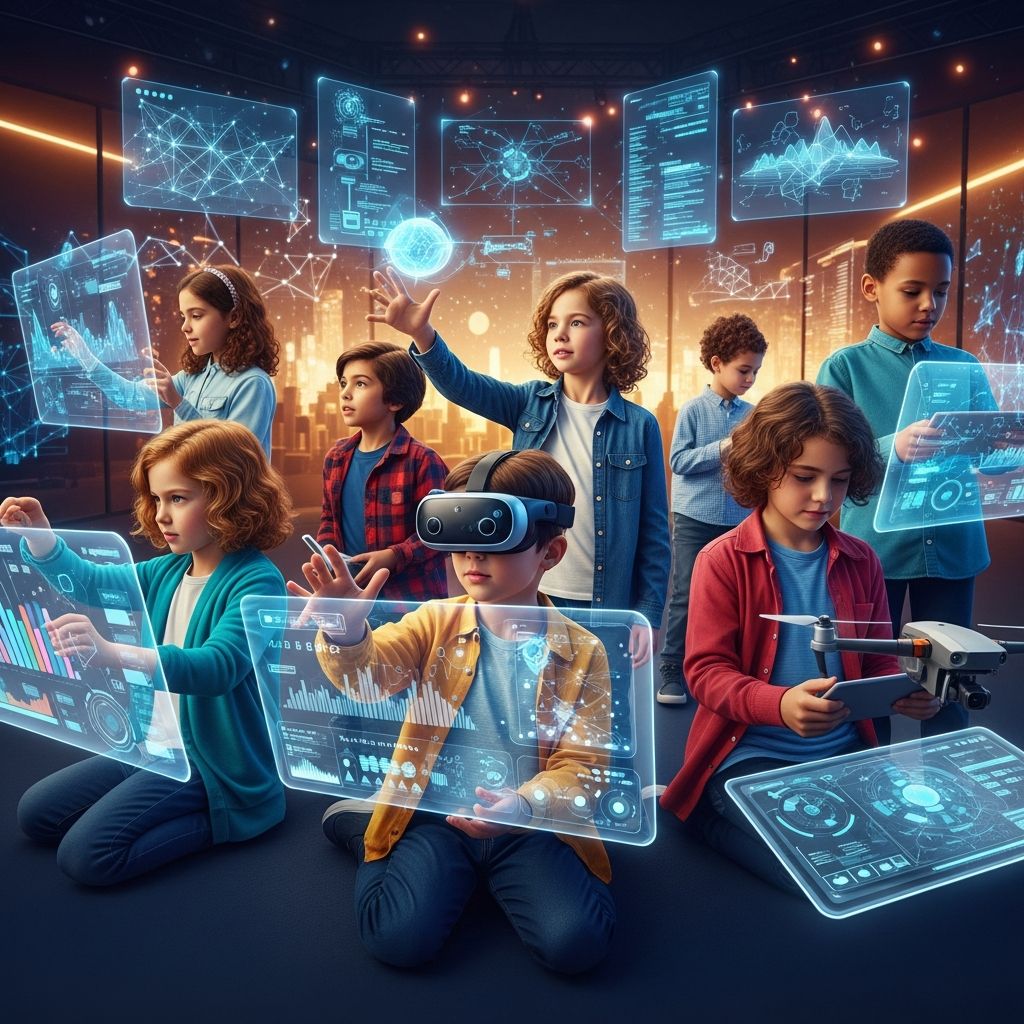
Generation Alpha represents the cohort born from 2010 to 2024, marking the first group entirely raised in the 21st century amid explosive technological growth. As children of primarily Millennials, they navigate a landscape where artificial intelligence, instant connectivity, and digital tools define daily life from infancy. This generation stands out for their seamless integration with technology, fostering traits like independence and global awareness that promise to influence society profoundly.
Defining the Timeline and Family Dynamics
The boundaries of **Generation Alpha** are generally set from 2010 onward, though some sources extend to 2025, succeeding Gen Z and preceding the emerging Gen Beta. This places them as the offspring of Millennials (born 1981-1996) and early Gen Z parents, who bring a blend of digital fluency and pragmatic values shaped by economic shifts and tech booms.
McCrindle Research, who coined the term in 2008, describes them as the most materially resourced generation, benefiting from parental investments in education and experiences over possessions. Parents often juggle remote work and hybrid learning environments, exposing Alphas to flexible routines early on. This dynamic cultivates resilience but also highlights challenges like balancing screen time with real-world interactions.
Tech Immersion: Born into an AI World
Unlike prior generations, **Gen Alpha** encounters AI as a household companion—think voice assistants like Siri or Alexa responding to toddler queries. They adapt effortlessly to diverse AI applications, from personalized learning apps to smart home devices, blurring human-machine boundaries.
Hyperconnectivity is their norm; they spend extensive time on screens, managing digital identities with surprising autonomy. Research notes their preference for instant access to information, entertainment, and solutions, reshaping expectations for patience and discovery. This digital-first mindset extends to social media, where they favor gaming platforms and immersive content over traditional networks used by older siblings.
| Tech Aspect | Gen Alpha Engagement | Impact on Daily Life |
|---|---|---|
| AI Assistants | Daily queries and tasks | Enhances independence |
| Social Media | Gaming and streams | Reduces traditional posting |
| Learning Tools | Gamified apps | Boosts multitasking skills |
Key Personality Traits and Mindsets
- Creative and Kind: Self-described as “incredibly creative” and “kind,” they thrive in collaborative settings, engaging in school activities and online campaigns.
- Independent: Adept at self-directed problem-solving online and offline, from choosing outfits to leading projects, fostering agency rare in young children.
- Globally Minded: Instant access to worldwide cultures via media cultivates empathy and advocacy for issues like social justice.
These traits emerge from diverse exposures, making Alphas inclusive by default—they form multicultural friendships and champion equality. Environmentally, they’re proactive, influenced by climate education and movements, pushing for sustainable habits at home and school.
Educational Shifts for a New Era
**Gen Alpha** demands education beyond rote learning; they excel in fluid, tech-integrated environments with hands-on problem-solving and peer collaboration. Classrooms incorporate gamified simulations and global online groups, aligning with their multitasking prowess.
Digital literacy is innate, but it raises concerns over attention spans and non-digital social skills. Forward-thinking systems emphasize skill-based pathways, preparing them for AI-augmented careers with critical thinking and teamwork. As Britannica notes, remote classrooms and portable devices are their baseline, accelerating adaptive learning.
Social and Cultural Influences
Raised amid global connectivity, Alphas exhibit a nuanced social landscape. They prioritize offline experiences amid digital saturation, valuing cinema and real-world adventures as “cool” escapes. Diversity shapes their worldview, promoting inclusivity and reducing tolerance for bias.
Influenced by Gen X and Millennial parents, they inherit a mix of independence and tech optimism, tempered by awareness of rapid changes like political instability and climate urgency. This fosters entrepreneurial spirits, with early exposure to coding and content creation hinting at future innovators.
Future Workforce and Leadership Expectations
Entering the job market around 2040, **Generation Alpha** will seek hyper-personalized careers, flexible arrangements, and purpose-driven roles prioritizing well-being and sustainability. Traditional hierarchies may dissolve in favor of mentorship models, with AI tools enhancing productivity.
HR strategies must evolve: skills-based hiring over degrees, remote collaboration, and inclusive cultures will attract them. Their digital fluency positions them as leaders in sustainable innovation, demanding workplaces that trust autonomy and value global perspectives.
Parenting Strategies for the Alpha Era
Millennial parents can nurture these traits by modeling balanced tech use, encouraging outdoor play, and discussing global issues. Promote independence through age-appropriate choices while teaching digital safety.
- Integrate tech mindfully: Use AI for education, not endless entertainment.
- Foster empathy: Expose to diverse stories and communities.
- Build resilience: Encourage problem-solving without instant answers.
- Prioritize sustainability: Involve in eco-projects at home.
Springtide Research highlights worries over screen time, urging intentional boundaries to support holistic growth.
Frequently Asked Questions
What years define Generation Alpha?
Typically 2010-2024, though variations exist up to 2025; the first fully 21st-century cohort.
Are Gen Alpha kids too screen-dependent?
They are digital natives, but balanced parenting can cultivate offline skills and attention.
How do Gen Alpha parents differ?
Mostly Millennials, emphasizing experiences, tech integration, and emotional intelligence.
What makes Gen Alpha unique from Gen Z?
Deeper AI immersion, greater independence, and innate global/diversity awareness.
Will Gen Alpha solve climate change?
Their environmental consciousness and tech savvy position them as strong advocates.
References
- 8 Generation Alpha Characteristics to Know for 2025 — UNIS Hanoi. 2025. https://articles.unishanoi.org/characteristics-of-generation-alpha/
- Generation Alpha will lead a 100% digital world — Iberdrola. n.d. https://www.iberdrola.com/talent/alpha-generation
- What is Generation Alpha? — TalentHR. n.d. https://www.talenthr.io/resources/hr-glossary/generation-alpha/
- Generation Alpha — Wikipedia. 2026-01-16. https://en.wikipedia.org/wiki/Generation_Alpha
- 7 Gen Alpha characteristics to know for 2025 — GWI. n.d. https://www.gwi.com/blog/gen-alpha-characteristics
- Generation Alpha | Years, Characteristics, & Facts — Britannica. n.d. https://www.britannica.com/topic/Generation-Alpha
- Understanding Generation Alpha — McCrindle Research. n.d. https://mccrindle.com.au/article/topic/generation-alpha/generation-alpha-defined/