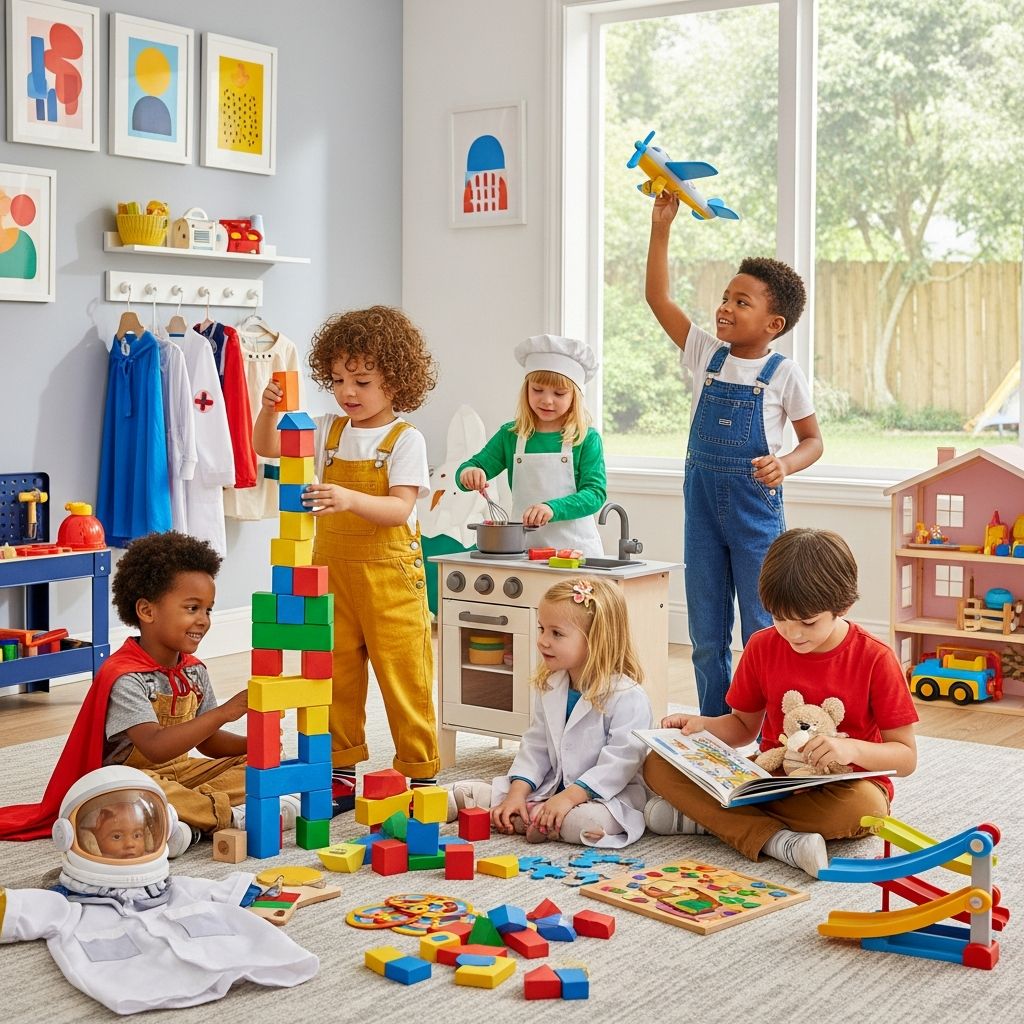
Many parents want to raise children who are free to explore the full range of their interests and personalities, yet they live in families or communities that still cling tightly to old ideas about what boys and girls “should” be like. Gender-neutral parenting is not about erasing gender; it is about refusing to let stereotypes limit your child’s potential.
What Gender-Neutral Parenting Really Means
Gender-neutral parenting is an approach that gives children access to toys, activities, clothes, and ways of expressing themselves without sorting everything into “for boys” and “for girls.” Instead of assuming what a child will like or how they should behave based on sex or gender, parents focus on curiosity, character, consent, and respect.
This does not require hiding your child’s gender or pretending gender does not exist. It means allowing gender to be one part of who they are, not the main script that dictates every choice, friendship, or dream.
- Children are encouraged to try a wide variety of interests, from sports to arts and from construction toys to dolls.
- Adults use language that leaves room for difference, such as asking “What do you like?” instead of “What do girls like?”
- Rules and expectations are based on values (kindness, safety, responsibility), not on gender (“boys don’t cry,” “girls must be polite”).
Why Parents Choose This Approach
Parents who choose gender-neutral or gender-inclusive parenting are often reacting to the narrow boxes they experienced growing up. Many remember being teased or punished for loving the “wrong” toys, clothes, or careers, and they do not want to pass that pain on to their children.
They also recognize that the world their kids are inheriting is more diverse and fluid than the one they grew up in. Teaching flexibility, empathy, and critical thinking about stereotypes prepares children to move through that world with more ease and confidence.
Key motivations
- Protecting children from harmful stereotypes that restrict emotions, interests, and ambitions.
- Supporting mental health by validating a broad range of feelings and identities.
- Encouraging empathy and respect for people whose gender or expression differs from the norm.
- Creating a home culture that values who a child is more than how they are perceived.
Common Myths and Clear Realities
Gender-neutral parenting is frequently misunderstood. Clearing up myths can make it easier to defend your choices to family members, schools, or even your own inner critic.
| Myth | Reality |
|---|---|
| Parents are trying to erase gender or confuse children. | The goal is not to erase gender but to reduce pressure and allow children to discover what feels right for them. |
| Kids raised this way will automatically be gender nonconforming. | Some children will align closely with traditional norms and some will not; the approach simply leaves room for both. |
| It is a phase or political stunt. | Most parents are motivated by long-term well-being, not trends. They want children to grow with fewer limits, not to make a statement. |
| It will make life harder for kids socially. | There may be challenges, but it also builds resilience, self-knowledge, and critical thinking, which are protective in the long run. |
| It means banning all princesses or superheroes. | It is about adding options, not subtracting them—princesses can coexist with dinosaurs, robots, and everything in between. |
Everyday Practices to Unstick Gender Stereotypes
Small habits repeated daily have more influence than grand statements once a year. The following practices help build a home environment where gender is not a cage.
Toys and play
- Offer a wide selection of toys: building sets, dolls, vehicles, art supplies, dress-up clothes, puzzles, pretend kitchen items, and science kits.
- Rotate toys regularly so that blocks, dolls, and costumes all take turns at center stage instead of one type dominating.
- Avoid labelling any toy as “for boys” or “for girls” when you talk to your child or to others.
Clothing and appearance
- Choose clothes based on comfort, function, and your child’s taste rather than strictly on color or aisle labels in the store.
- Let children experiment with hairstyles and accessories, within your family’s safety and budget boundaries.
- Use neutral language like “these shorts are great for climbing” instead of “these are boy shorts” or “that dress is too girly.”
Activities and skills
- Encourage both physical and creative outlets: sports, dance, music, coding, cooking, and nature activities.
- Teach all children practical life skills, such as cooking, cleaning, basic repairs, and budgeting, rather than splitting chores by gender.
- Invite your child to help with tasks they show curiosity about, even if relatives consider them “for the other gender.”
Talking About Gender With Young Children
Children notice patterns early: who does which chores, who wears what, and how adults talk about boys and girls. They will naturally ask questions, and these are openings for gentle, honest conversations.
Simple language that grows with them
- For toddlers, keep it concrete: “Some boys like dresses and some don’t. Everyone gets to choose what feels good for them.”
- For preschoolers, add nuance: “People have lots of ways of being a boy, a girl, both, or neither. What matters most is how they feel inside.”
- For older kids, introduce words like “stereotype,” “bias,” and “respect,” and brainstorm examples together.
Reframing everyday comments
Instead of shutting down a problematic remark from your child, try turning it into a learning moment. When you hear “girls can’t be firefighters,” you might respond with a question like “What makes you think that?” and then share counterexamples, stories, or books.
When your child expresses a gendered belief, assume they are testing ideas they have picked up from the world, not revealing their core values. Respond with curiosity, not shame, and keep the conversation going.
When Your Family Is More Traditional Than You
One of the hardest parts of gender-neutral parenting is not what happens inside your home but what happens when you step into a grandparent’s living room, a cousin’s birthday party, or a holiday dinner. Extended family often holds tightly to the beliefs they grew up with, and your choices can feel to them like a criticism of their own parenting.
Clarifying your own boundaries first
Before you talk with relatives, decide what is non-negotiable for you and what you are willing to let slide occasionally. Not every offhand comment requires a debate, but some patterns do need addressing.
- Non-negotiable examples: respecting your child’s name and pronouns; not shaming your child’s clothing or toy choices; avoiding harsh gendered insults.
- Flexible examples: a one-off “princess” gift if your child enjoys it; traditional outfits for a specific cultural ceremony, discussed in advance.
Sample scripts for tough conversations
You can adapt language like the following to your own style and culture:
- “We’re trying to give all the kids space to explore what they like without calling it boy stuff or girl stuff. It really helps if we can keep gifts and comments open-ended.”
- “Our child knows they can play with dolls, trucks, or anything else. When they hear that something is ‘not for boys/girls,’ it makes them doubt themselves. Could you help us by avoiding those phrases?”
- “You don’t have to agree with our approach, but we do need you to respect it when you’re with the kids.”
Holiday Gifts, Birthdays, and Big Events
Big occasions often bring the sharpest clash between your values and relatives’ habits. With a little planning, you can reduce conflict while keeping celebrations joyful.
Planning ahead
- Share a wish list that includes a mix of activities, experiences, and non-gendered toys or books.
- Explain to close relatives that your child’s interests change and that you prefer gifts tied to hobbies (building, drawing, reading, sports) rather than gender.
- If possible, coordinate with one or two supportive family members who can model the kind of gifts and comments you hope to see.
Handling an unwanted gift gracefully
If a child receives a gift that clashes with your values, the immediate focus can still be on gratitude for the gesture. Afterward, you can decide together whether the item will stay, be shared, or be donated, and talk about why.
For very upsetting gifts (for example, something mocking a gender identity), it is reasonable to remove the item and address the problem directly with the adult who chose it, out of the child’s earshot.
Navigating Schools, Sports, and Social Circles
Even if your home is a bubble of flexibility, most institutions are still organized along gender lines. You can’t control every environment, but you can advocate and prepare your child.
Working with teachers and coaches
- At the start of the year or season, briefly share that your family tries to avoid strict gender roles and ask how the adult handles teasing, dress-up days, and gendered expectations.
- Offer simple suggestions, such as calling teams by colors or animals instead of “boys vs. girls,” when appropriate.
- Check in periodically about how your child is doing socially and whether any patterns of exclusion or bullying have appeared.
Equipping your child socially
- Practice short responses they can use if peers comment on their clothes, toys, or interests, like “Everybody likes different things” or “It’s just what I like.”
- Help them identify trusted adults at school they can talk to if teasing escalates.
- Seek out playgroups, clubs, or activities where diversity in gender expression is more visible and accepted.
Taking Care of Yourself as a Parent
Swimming against the cultural current can be exhausting, especially if you are also unlearning messages you internalized as a child. Your capacity to model calm, flexible leadership depends on your own support and rest.
Emotional self-care
- Notice when criticism from family hits an old wound and consider talking it through with a therapist, support group, or trusted friend.
- Give yourself permission not to win every argument. Protecting your relationship with your child matters more than convincing every relative.
- Celebrate small wins: the day your child confidently chooses an outfit they love, the relative who quietly stops using a hurtful phrase, the teacher who shifts language in the classroom.
Practical boundaries
- Limit time in particularly hostile environments, especially if you notice your child becoming withdrawn or anxious afterward.
- Arrange decompression rituals after big family gatherings, such as a walk, a silly game, or a cuddle and chat about what felt good and what felt strange.
- Remember that your parenting choices are allowed to evolve. Adjust strategies as your child grows and as you learn what works for your family.
Frequently Asked Questions About Gender-Neutral Parenting
Does gender-neutral parenting mean I can’t call my child a boy or a girl?
No. You can still use the words your child currently identifies with, whether those are “boy,” “girl,” or something else. The difference is that you do not treat that label as a script for what they are allowed to enjoy or who they must become.
What if my family refuses to respect our approach?
There will be relatives who never fully agree with you. Focus on clear, calm boundaries rather than complete agreement. Over time, some family members soften when they see that your child is happy, healthy, and loved; others may stay resistant, and you may choose to limit how much influence they have in your child’s daily life.
Could I be making life harder for my child?
Your child may stand out at times, particularly if they choose interests or clothing that peers consider unusual. However, learning that difference is not a defect—and that home is a safe place to be fully themselves—can become a powerful source of resilience, confidence, and self-respect.
How do I handle it if my child actually loves very stereotypical things?
Gender-neutral parenting is about offering possibilities, not steering away from anything stereotypical on principle. If your child truly loves princess dresses, toy trucks, or anything else typically linked to one gender, the goal is to support that joy while keeping other doors open.
Is it ever too late to start?
It is never too late to shift how you talk about and respond to gender. Even with older children, you can introduce new language, question stereotypes together, and expand the range of examples they see in media, family stories, and real life.
Moving Forward With Courage and Flexibility
Raising a child beyond strict pink-and-blue categories is an ongoing practice, not a one-time decision. There will be awkward conversations, mistakes, and moments of doubt, but there will also be flashes of clarity when you see your child relax into who they are without fear.
Every time you choose curiosity over judgment, respect over ridicule, and values over stereotypes, you help build a world in which more children—yours and others—can grow into their fullest selves.