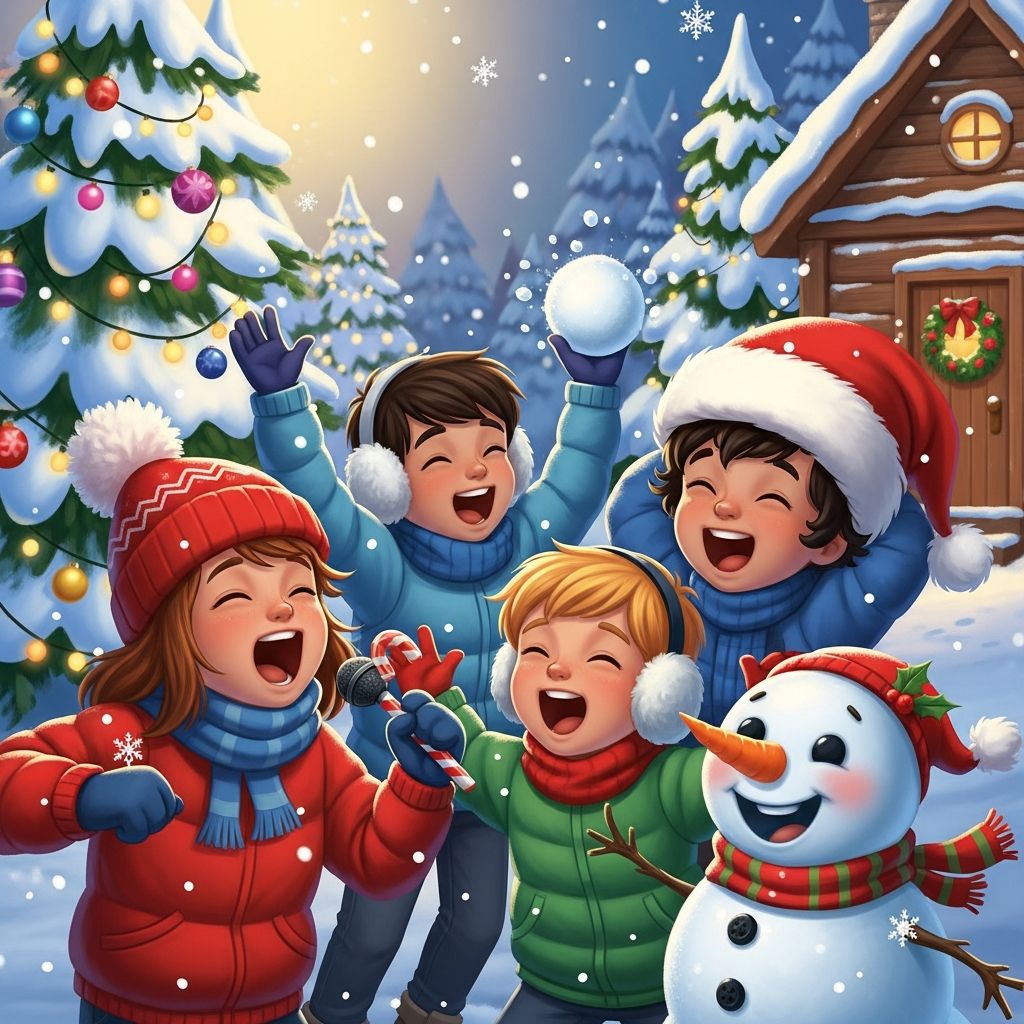
Holiday music does not have to be solemn carols and quiet choirs. For kids, the most memorable December moments often come from goofy, giggly Christmas songs that make everyone burst out laughing in between cookie crumbs and wrapping paper.
This guide is designed for parents, caregivers, and teachers who want to fill their homes or classrooms with kid-safe, funny Christmas songs and use that music to spark play, connection, and learning.
Why Kids Gravitate to Silly Christmas Songs
Children are naturally drawn to humor, especially when it comes in the form of exaggerated voices, surprising lyrics, and playful sounds. Research on child development shows that music supports language skills, memory, and emotional bonding between adults and children, particularly when songs include repetition and movement.
Funny Christmas songs work so well for kids because they typically include:
- Simple, repetitive lyrics that are easy to memorize and shout out.
- Clear story lines about Santa, elves, animals, and kids getting into harmless mischief.
- Sound effects like jingling bells, animal noises, and exaggerated laughter.
- Built-in actions such as clapping, stomping, or pretending to be reindeer.
These elements make silly holiday songs an ideal tool for keeping children engaged during long family gatherings or classroom celebrations, especially when their energy is high and patience is low.
Types of Funny Christmas Songs Kids Enjoy
Not all humorous holiday songs are the same. Understanding the different styles can help you choose the right tracks for your child’s age and personality.
| Song Style | What Makes It Funny | Best For |
|---|---|---|
| Character songs | Features Santa, elves, reindeer, or talking animals in silly situations. | Preschoolers and early elementary kids who love stories. |
| Mistaken-identity songs | Kids misinterpret what they see, like mixing up Santa and a parent. | Kids who enjoy jokes and little plot twists. |
| Parody versions | Take a classic carol and change the words to something ridiculous. | Older children who already know the original songs. |
| List and counting songs | Long lists of silly presents, reindeer, or mishaps build up the joke. | Kids practicing numbers, memory, and patterns. |
| Sound-effect songs | Animal noises, nonsense syllables, and exaggerated reactions. | Very young children who respond more to sound than lyrics. |
Building a Kid-Friendly Funny Christmas Playlist
A little planning turns holiday background noise into a thoughtful soundtrack. When choosing songs for kids, consider the following criteria before pressing play.
1. Check for truly family-friendly lyrics
Some classic novelty songs include darker jokes or references that might not align with what you want children to hear. Early childhood educators recommend choosing media that matches a child’s emotional maturity and avoids unnecessary fear or confusion. Before a song becomes a family staple:
- Listen all the way through at least once yourself.
- Avoid songs that make light of serious injury or cruelty.
- Skip tracks with grown-up themes kids will not understand.
2. Aim for a mix of energy levels
You can use funny songs to guide the day’s rhythm:
- Start parties with high-energy, jump-around songs that help kids burn off excitement.
- Sprinkle in mid-tempo, story-based tracks during crafts or snack time.
- Close with gentler silly songs that still amuse but don’t ramp everyone up again.
3. Alternate familiar tunes and new discoveries
Children like repetition, but adults can reach their limit quickly. Balance both by:
- Including a few well-known funny songs that kids can shout along to.
- Adding newer, kid-music-artist tracks from children’s music channels or kid-focused playlists.
- Rotating in fresh songs each year so older siblings get something new to enjoy.
Holiday Moments Perfect for Silly Songs
Knowing when to press play can make the difference between chaos and cheerful chaos. Here are practical ways to weave funny Christmas music into real-life family routines.
Morning “Elf Wake-Up” Playlist
Instead of struggling to get sleepy kids out of bed during winter break, try using a short, playful playlist:
- Start with one soft, humorous track played quietly.
- Follow with a louder, more energetic song encouraging clapping or marching.
- End with a sing-along that everyone joins in while getting dressed.
This kind of consistent routine can help signal the start of the day in a positive way, something sleep experts often recommend when building morning habits for kids.
Car-ride sing-alongs
Holiday traffic and shopping lines are easier when the back seat is busy laughing instead of complaining. Try:
- Giving kids a turn each to choose the next silly song.
- Playing a game where everyone acts out the song with hand motions only.
- Keeping a short “road trip playlist” downloaded for offline listening.
Cooking and baking soundtracks
Fun music makes it easier for children to help with simple kitchen tasks. Research suggests that combining music with hands-on activities can support attention and memory in young kids. While you bake:
- Assign each child a “song job,” such as stirring during the chorus.
- Pause after a funny lyric and ask kids to describe the scene.
- Use counting songs while measuring ingredients.
Pre-bed laughter cool-down
High-energy music right before bed is usually not ideal, but a single, gentle humorous song can be a nice transition:
- Pick a slower, soothing track with lighthearted lyrics.
- Keep the volume low and the room lights dim.
- Talk briefly about your favorite silly moment from the day after the song ends.
Games and Activities Inspired by Funny Songs
You can stretch a three-minute track into a 20-minute activity with a bit of creativity. Here are simple ideas that work well at home or at school.
1. “Freeze Like a Reindeer” Game
Turn any upbeat humorous song into a movement game:
- Play the song and let children dance in their silliest “holiday style.”
- Pause the music without warning.
- When the music stops, kids must freeze in a funny pose related to the song (reindeer, elf, snowman, etc.).
This kind of movement game supports gross motor skills and self-regulation, as children practice stopping and starting their bodies on cue.
2. Make-Your-Own Verse Challenge
Many comedic Christmas songs use a pattern that repeats each verse. Use that structure to help older kids create their own lyrics:
- Write down the basic pattern of one verse (for example: “On the first day of Christmas, my true love gave to me…”).
- Invite kids to swap in ridiculous but kind items Santa might deliver.
- Take turns singing new verses and vote on the funniest one.
3. Draw the Song
For children who love art, pair listening with drawing:
- Play a silly song once just for fun.
- Explain that during the second play, kids should draw one scene from the story.
- Afterward, ask them to explain which lyric they illustrated.
This helps kids practice listening for details and translating language into images, a useful early literacy skill.
4. Christmas Comedy Concert
Create a mini “variety show” at home:
- Let each child pick a funny Christmas song to perform.
- They can sing, lip-sync, or act out the story silently while the music plays.
- Adults and siblings can be the audience and give each act a friendly round of applause instead of scores.
Tips for Different Age Groups
What counts as hilarious for a preschooler may feel babyish to a 10-year-old. Tailoring your playlist to age makes the fun last longer.
Preschool (ages 3–5)
- Choose songs with clear, repetitive choruses.
- Look for animal characters, sound effects, and simple actions.
- Keep most tracks under three minutes to match shorter attention spans.
Early elementary (ages 6–8)
- Introduce story-based songs with simple jokes or misunderstandings.
- Mix in gently humorous parodies of familiar carols.
- Encourage kids to make up dance routines or add claps and stomps.
Older kids (ages 9–11)
- Let them help curate the playlist, with your approval of lyrics.
- Include more clever wordplay or parody songs.
- Invite them to write and record their own funny holiday track using simple audio apps.
Balancing Laughter with Tradition
Funny Christmas songs do not need to replace traditional carols; they can sit side by side. Many families find that alternating between tender songs and purely silly ones helps everyone feel both the depth and playfulness of the season.
Consider:
- Pairing a classic carol with a goofy response song in your playlist order.
- Ending big family gatherings with a well-loved silly song that becomes a yearly ritual.
- Letting kids pick one funny “theme song” that plays every time you decorate, bake, or drive to see lights.
Frequently Asked Questions (FAQs)
How long should a kids’ funny Christmas playlist be?A: For younger children, aim for 20–30 minutes of music per activity so they don’t get overwhelmed. You can always replay favorites or have several short playlists for different parts of the day.
Q: Are all novelty Christmas songs appropriate for kids?
No. Some classic novelty tracks include jokes or themes that may be confusing or too dark for young listeners. Always preview songs and focus on gentle, playful humor rather than shock value.
How many times is it okay for kids to replay the same silly song?
Repetition is normal in early childhood and can even support language learning and memory. If adults get tired of a song, consider headphones for short periods, or rotate a few favorites instead of just one.
Can funny Christmas songs be educational?
Yes. Counting songs, pattern-based lyrics, and action songs can support early math, listening skills, and motor development when paired with movement and conversation.
What if my child is sensitive to loud or chaotic music?
Turn the volume down, choose slower humorous songs, and keep sessions short. Some children enjoy the funny words but prefer quieter arrangements, especially those who are sensitive to sound.
References
- Music and Early Childhood Development — National Association for the Education of Young Children (NAEYC). 2023-04-10. https://www.naeyc.org/resources/pubs/tyc/feb2017/music-early-childhood
- The Power of Music — University of Central Florida, College of Community Innovation and Education. 2020-06-15. https://ccie.ucf.edu/teachered/the-power-of-music/
- Media and Young Minds — American Academy of Pediatrics. 2016-11-01. https://publications.aap.org/pediatrics/article/138/5/e20162591/60674/Media-and-Young-Minds
- Benefits of Music Education — National Association for Music Education (NAfME). 2022-09-12. https://nafme.org/advocacy/what-to-know/all-benefits-of-music-are-societal-benefits/
- Healthy Sleep Habits: How Many Hours Does Your Child Need? — Nemours KidsHealth. 2022-03-01. https://kidshealth.org/en/parents/sleep.html