Before Frozen 2 arrived in theaters, fans spent years speculating about what the sequel might reveal about Elsa, Anna, and the icy kingdom of Arendelle. The result was a swirl of creative theories that were sometimes wild, sometimes surprisingly thoughtful, and always a window into what audiences wanted from this story. This article looks at those kinds of theories as inspiration and builds an original, deeper exploration of the mysteries that surround Frozen 2.
Rather than simply predicting plot twists, these theories help explain why the world of Frozen resonates so strongly. They touch on identity, family secrets, responsibility, and the fear of losing the people we love. By unpacking those ideas, it becomes clear that the world of Frozen is about much more than magic snowflakes and catchy songs.
Why Fan Theories About Frozen 2 Mattered
Fan theories are not just idle guesses; they are a conversation between creators and audiences. When viewers build elaborate explanations for tiny details, it shows how invested they are in the characters and their world. In the case of Frozen 2, people were asking serious questions about Elsa’s powers, Anna’s role, and the mysterious fate of their parents long before the sequel answered anything on screen.
These theories also reveal what fans felt was missing or unresolved in the first film. Elsa’s magic, for example, begged for an origin story. Anna’s bravery made some viewers wonder if there was more to her than being “ordinary.” The cliffhanger surrounding their parents’ shipwreck seemed like an invitation to imagine secret histories, hidden kingdoms, and bigger forces at work beyond Arendelle’s fjords.
Elsa’s Power: Gift, Curse, or Cosmic Role?
One of the richest areas for speculation has always been Elsa’s magic. Audiences naturally wondered: is she simply a gifted human, or does she occupy a larger role in the natural order? Theories took many forms, but most circled around three big ideas about her powers and purpose.
- Elsa as a chosen bridge between humanity and nature.
- Elsa as a living embodiment of a single element, like winter or water.
- Elsa as part of a larger cosmic pattern, with other potential wielders of different forces.
These ideas matter because they shift how Elsa’s journey is understood. If her powers are just an accident, the story is about personal acceptance. If she is chosen for a specific role, then the story becomes about vocation, duty, and the burden of being necessary to the world itself. That change in perspective raises the stakes for every choice she makes.
Anna’s Possible Destiny Beyond “Normal”
Another recurring theme in fan speculation was the question of Anna’s place in this mythic world. Elsa’s abilities are obvious; Anna’s strength is quieter but no less important. Because many stories like to balance opposites—fire and ice, day and night—fans often imagined Anna carrying a contrasting power or responsibility.
Even without literal magic, Anna’s character invites deeper interpretation. She is the one who acts when situations feel impossible. Theories that gave her a grander destiny, such as being tied to a complementary force or symbol, echoed an underlying truth: Anna represents the power of ordinary courage. Fans elevating her role through speculation reflected their desire to see emotional bravery treated as just as “magical” as Elsa’s ice.
Table: Elsa and Anna’s Thematic Roles
| Character | Surface Traits | Deeper Symbolic Role | Common Fan Emphasis |
|---|---|---|---|
| Elsa | Reserved, powerful, self-sacrificing | Bridge between worlds; embodiment of change and uncertainty | Origins of magic, responsibility to the world, fear of losing control |
| Anna | Warm, impulsive, loyal | Anchor to humanity; embodiment of hope and persistence | Hidden destiny, resilience in the face of loss, emotional heroism |
Frozen Sleep, Sacrifice, and Fear of Losing Anna
Few ideas captured fans’ imaginations as strongly as stories that put Anna’s life in danger. The first film already featured her slow freezing as a direct consequence of love and sacrifice. In a sequel, people imagined that Elsa’s powers might again place Anna on the edge of life and death, perhaps in a more intentional or controlled way.
One compelling line of thought is that Elsa might one day have to suspend Anna’s life to save her from a greater threat—such as an incurable curse or a catastrophe sweeping through Arendelle. This kind of speculation taps into a universal fear: the possibility of having to harm or distance someone in order to protect them. It also would force Elsa to confront the core question of her story: can she trust her power to preserve rather than destroy?
The Moral Weight of Using Magic to Save a Loved One
Imagined scenarios in which Elsa intervenes directly in Anna’s fate raise important moral questions. Is it right to interfere with the natural course of life and death, even out of love? Would Anna want to be preserved at the expense of others, or at the cost of Elsa’s freedom? When fans played with these questions, they were really asking where the line lies between love and control.
Stories built around this dilemma would transform Elsa from a passive victim of power into an active decision-maker who chooses how to wield it. That shift adds layers to her character, moving her arc from simple acceptance of her abilities to a thoughtful examination of when and why to use them.
The Hidden Past of Arendelle’s Royal Family
Another major source of speculation was the mysterious voyage that claimed the lives of Anna and Elsa’s parents. Their shipwreck feels like an unfinished sentence. Fans naturally asked why two experienced adults would risk such a journey and what they were hoping to find. The unanswered questions turned a simple tragedy into the cornerstone of countless theories.
Some imagined the king and queen searching for a cure, a mentor, or a lost source of magic. Others pictured them as secret keepers, protecting knowledge about elemental powers, ancient spirits, or political conflicts that reach far beyond Arendelle. Each possibility reframed Elsa’s powers not as a random gift, but as part of a long story of choices, mistakes, and responsibilities that began with the previous generation.
Legacy, Guilt, and Intergenerational Secrets
When fans turned that shipwreck into a mystery, they were doing more than playing detective. They were exploring how children inherit the consequences of their parents’ decisions. If the royal couple made a desperate gamble involving magic or foreign lands, then the burden Elsa and Anna carry is not just personal—it is historical.
This lens helps explain why so many people gravitated toward theories that tied their parents to other regions, cultures, or supernatural forces. It creates a richer world in which past mistakes ripple outward, demanding that the next generation either repeat them or find a way to heal them. Frozen’s core theme of breaking harmful cycles fits naturally with this kind of re-imagined backstory.
Romance, Proposals, and the Shape of “Happily Ever After”
Speculation did not stop at magic and mystery; many theories zoomed in on romance. Fans often debated whether Kristoff would propose to Anna, how that would affect her independence, and what it would mean for her leadership role. These conversations reflected changing expectations about fairy-tale endings, especially in stories centered on women.
Rather than treating marriage as the final reward, modern audiences tend to focus on partnership, communication, and mutual support. Theories that explored awkward proposals, misunderstandings, or delayed engagements were less about comedy and more about testing whether the story would honor Anna’s growth as a decision-maker instead of simply rewarding her with a ring.
Arendelle’s Political Future and Leadership
Another thread of fan discussion revolved around who should lead Arendelle in the long term. If Elsa’s connection to magic pulls her away from court duties, does Anna belong on the throne? Should leadership fall to the person with power or the person with the strongest tie to everyday life? These questions pushed the film’s fairy-tale setting into more grounded political territory.
By imagining Anna as a ruler and Elsa as a guardian of something beyond the kingdom’s borders, fans constructed a model of shared responsibility. One sister would focus on people and policy, while the other would safeguard the balance of the natural or spiritual world. This structure mirrors real-world debates about how governments should partner with science, environment, and tradition.
Elemental Spirits, Enchanted Forests, and a Bigger Mythology
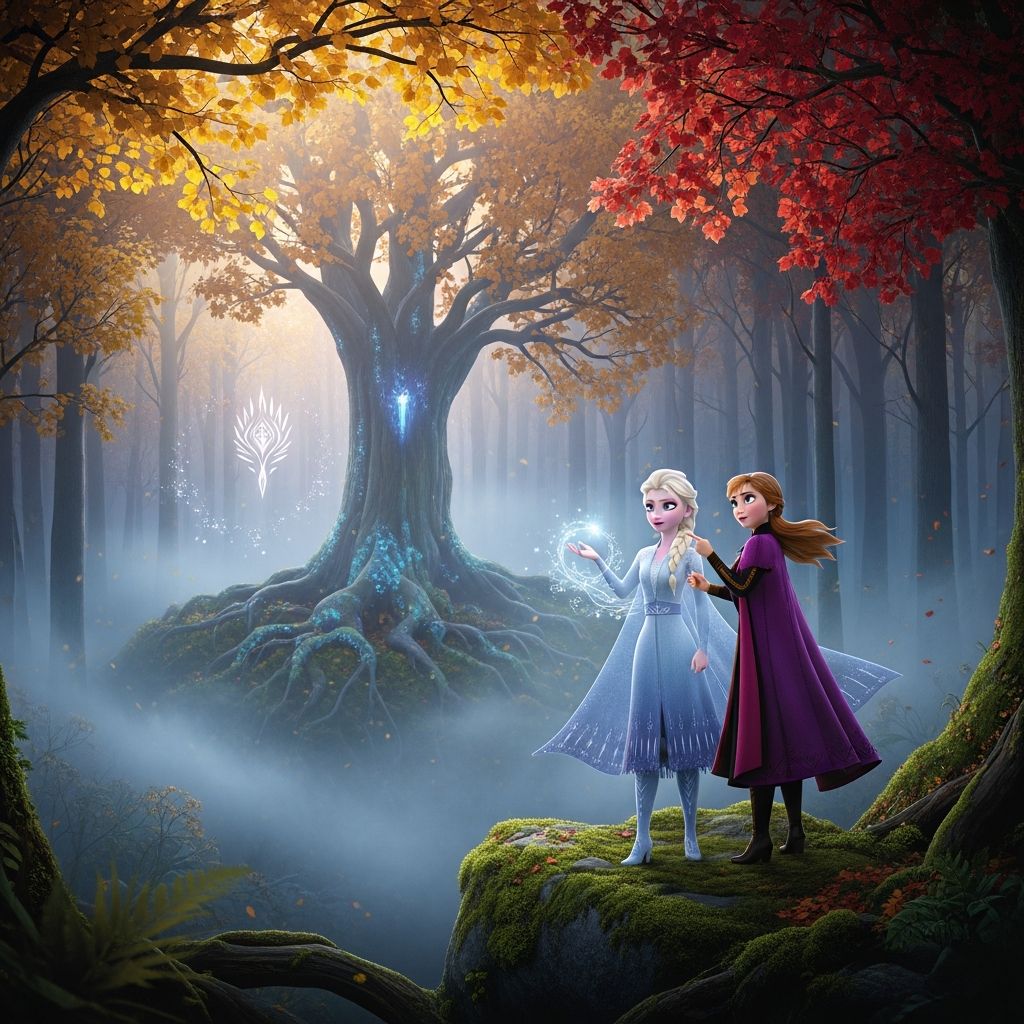
Many theories treated Frozen’s snow and ice not as isolated magic, but as one part of a much larger system of forces. The idea of an enchanted forest filled with spirits of wind, water, fire, and earth emerged as a natural extension of Elsa’s abilities. This kind of speculation helped expand the world beyond Arendelle’s castle walls and glowing ice palaces.
Once that door opens, countless possibilities appear. Perhaps there are guardians in distant lands tied to different climates. Maybe each region has its own story about how humans and spirits first clashed or found harmony. Fans weaving these kinds of narratives were building an entire mythology around Frozen—a universe with its own laws, history, and spiritual geography.
Why Some Theories Needed to Stay Unrealized
As entertaining as speculation can be, not every idea would have served the emotional heart of Frozen 2. Extremely dark scenarios, overly complicated crossovers, or twists that undermined the sisters’ relationship might have grabbed attention but weakened the core message of love, trust, and growth. There is a fine balance between adding complexity and losing focus.
When a story is aimed at families and children, the tone must be handled carefully. High stakes are important, but so is hope. Fan theories that respected this balance—raising emotional questions without erasing the warmth and humor that define Frozen—tended to feel the most satisfying and plausible, even if they never became canon.
Lessons from the Culture of Frozen Theories
The sheer volume of Frozen 2 theories says as much about the audience as it does about the films themselves. People used Elsa and Anna’s world as a lens through which to examine anxiety, grief, destiny, and community. Fans were not only trying to guess what might happen; they were working through their own questions about who they are and where they belong.
In that sense, the greatest achievement of Frozen is that it invited this depth of engagement. A story about two sisters, a kingdom, and a confusing gift inspired people to imagine generations of secrets, cosmic roles, and difficult choices. Even when the official story takes a different path, the theories remain valuable as a record of how deeply these characters have embedded themselves in modern imagination.
Frequently Asked Questions
Did any major fan theories about Frozen 2 come true?
Some broad ideas fans discussed—such as exploring Elsa’s origins, confronting the past of Arendelle’s royal family, and raising the emotional stakes for Anna and Elsa—aligned with directions the sequel ultimately took, even if specific predictions did not play out exactly as imagined.
Why do people create such detailed theories about animated films?
Viewers build theories when a story leaves meaningful gaps or hints that invite interpretation. In the case of Frozen, the combination of unanswered questions, symbolic imagery, and emotionally rich characters encouraged audiences of all ages to think beyond what was explicitly shown on screen.
Are darker theories, like those involving character death, appropriate for a family franchise?
Darker scenarios often emerge because fans want to test the limits of a story’s themes, especially when the subject is sacrifice or responsibility. The finished films, however, tend to soften or reshape these ideas to maintain a hopeful tone suitable for younger viewers.
Could future Frozen projects revisit any of these speculative ideas?
Even when specific theories do not become canon, they highlight what audiences are curious about. Future stories set in this world could draw on those concerns—such as the balance between magic and ordinary life—to shape new plots, characters, or settings that feel both fresh and emotionally familiar.
What do these theories reveal about Elsa and Anna as modern heroines?
The fact that fans imagine them as leaders, moral decision-makers, and complex individuals shows how expectations for animated heroines have changed. Viewers want to see them wrestle with choices, histories, and duties that go far beyond a simple quest for romance or a traditional fairy-tale ending.