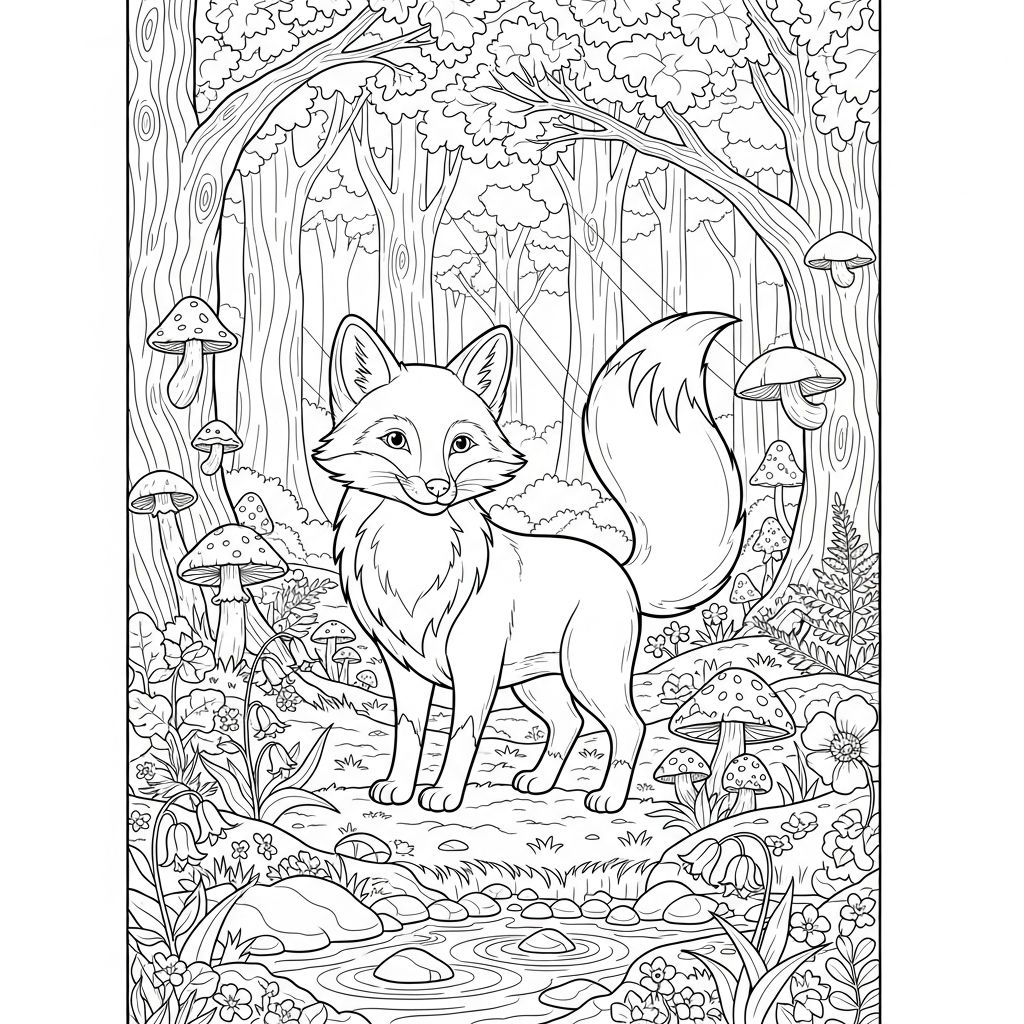
Fox coloring pages combine the charm of woodland animals with the simplicity of print-and-go activities. These sheets are easy to use at home, in classrooms, or on the go, while also supporting your child’s creativity, coordination, and early learning skills.
This guide walks you through how to use fox coloring printables in playful, educational ways, offers age-based ideas, and shares practical tips for getting the most out of every page.
Why Fox Coloring Pages Are Great for Kids
Coloring is more than just filling in shapes. When children color foxes, forests, and other nature scenes, they practice important developmental skills while having fun.
- Fine motor skills: Holding crayons or pencils and staying inside the lines helps strengthen the small muscles in the hands and fingers, which are important for handwriting and daily tasks.
- Hand–eye coordination: Matching hand movements to visual targets improves coordination and control.
- Focus and patience: Coloring encourages children to slow down, pay attention, and complete a task from start to finish.
- Color recognition and planning: Choosing colors for fur, leaves, and backgrounds helps kids practice naming and combining colors.
- Emotional regulation: Coloring has been shown to calm both children and adults, supporting relaxation and stress reduction.
Because foxes are so expressive and playful, they also inspire storytelling, pretend play, and conversation about wildlife.
Types of Fox Coloring Pages You Can Use
Fox printables come in many styles, from very simple outlines for toddlers to detailed woodland scenes for older kids and adults.
| Type of Page | Best For | Features |
|---|---|---|
| Simple fox outlines | Toddlers & preschoolers | Thick lines, large areas, minimal background |
| Cute cartoon foxes | Early elementary | Friendly faces, basic props like balloons or kites |
| Woodland scenes | School-age kids | Trees, leaves, mushrooms, other forest animals |
| Realistic fox drawings | Older kids & adults | Detailed fur, shading, natural backgrounds |
| Patterned fox designs | Tweens, teens & grown-ups | Mandalas, Zentangle-style patterns, small shapes |
Age-Based Ideas for Using Fox Coloring Pages
Adjust how you use fox coloring sheets based on your child’s age and stage so the activity stays fun and appropriately challenging.
For Toddlers (Ages 2–3)
- Offer extra-large, simple fox outlines with lots of open space.
- Use chunky crayons or washable markers that are easy to grip.
- Talk about basic colors: “This fox is orange. The sky is blue.”
- Allow scribbling; focus on exploration, not staying in the lines.
For Preschoolers (Ages 3–5)
- Introduce foxes in different poses: sleeping, running, or sitting in grass.
- Practice simple instructions like “Color the tail white” or “Color the nose black.”
- Point out shapes in the picture: circles, triangles, and ovals.
- Invite kids to add their own details, such as stars, flowers, or extra trees.
For Early Elementary (Ages 6–8)
- Use pages with basic backgrounds like hills, clouds, or a forest path.
- Discuss warm and cool colors, and encourage kids to mix shades.
- Ask questions to build language skills: “What is the fox looking at?” “What happens next in this scene?”
- Have them write a short sentence or caption under the finished coloring page.
For Older Kids, Tweens, and Teens
- Choose more detailed or realistic fox illustrations with complex patterns.
- Encourage shading and blending with colored pencils for fur texture.
- Use the pages as a starting point for learning about fox habitats, diet, and behavior.
- Turn finished art into wall decor, bookmarks, or homemade cards.
Learning About Real Foxes While Coloring
Fox coloring pages are a natural gateway to talking about real animals and their environments. Accurate, age-appropriate information helps children understand that these cute creatures are also important members of real ecosystems.
- What foxes are: Foxes are small to medium-sized members of the dog family (Canidae), known for their pointed noses and bushy tails.
- Where they live: Different fox species live in forests, grasslands, tundra, and even urban areas across the world.
- What they eat: Many foxes are omnivores; they may eat small animals, insects, fruit, and plants depending on what is available.
- Why they matter: As predators and scavengers, foxes help control rodent populations and keep ecosystems balanced.
As children color, you can share simple facts such as, “Some foxes have fur that changes color with the seasons,” or “Foxes use their fluffy tails to help them balance and stay warm.”
Creative Ways to Use Fox Coloring Pages Beyond Coloring
Printable fox sheets can easily become props for games, crafts, and storytelling with just a few extra supplies.
1. Storytelling Cards
- Have kids color several different fox pages.
- Cut around each fox (if the design allows) and glue them onto small pieces of cardstock.
- Lay the cards face up and ask children to arrange them in an order that tells a story.
- Encourage them to narrate: “First, the fox woke up in the forest. Then…”
2. Fox Habitat Collage
- Provide a large sheet of paper as the “forest.”
- Let children color and cut out foxes from several pages.
- Invite them to draw or glue on trees, rocks, rivers, and other animals around the fox.
- Discuss what a fox needs to survive: food, water, shelter, and space.
3. DIY Fox Puppets
- Print fox pages at a smaller scale (for example, two per sheet).
- After coloring, cut the fox out and tape or glue it to a craft stick or straw.
- Make a “forest stage” from a cardboard box with a cut-out window.
- Put on a puppet show, letting kids act out conversations between foxes and other woodland animals.
4. Fox-Themed Math and Literacy Practice
- Write simple math problems in the sky or on rocks in the scene for older kids.
- For early readers, hide letters or sight words in leaves or on mushrooms.
- Ask children to color each answer or word in a specific color (for example, “Color all the words that start with F in green”).
Tips for Printing and Organizing Your Fox Pages
A little preparation makes fox coloring time smoother and less stressful.
- Use the right paper: Regular printer paper works for crayons and colored pencils. For markers or paint, choose slightly heavier paper to reduce bleed-through.
- Test print one sheet: Before printing multiple pages, check the size, margins, and orientation.
- Create a folder or binder: Store printed fox pages and finished artwork in a labeled folder so kids can revisit their favorites.
- Keep a mobile kit: Pack a small pouch with crayons, clipboards, and a few pages for waiting rooms or travel days.
Recommended Coloring Tools for Fox Pages
Different tools create different effects. Offer a mix so kids can experiment.
- Crayons: Great for younger children; durable, easy to hold, and available in many colors.
- Colored pencils: Ideal for detailed fox fur and small patterns, especially for older kids.
- Washable markers: Provide bold color for large areas, but supervise to avoid bleeding outside the lines.
- Gel pens: Fun for adding highlights and metallic touches to eyes, stars, or snow.
- Watercolor pencils: For teens and adults, these allow soft, blended backgrounds when a bit of water is applied.
Making Fox Coloring Time Educational and Inclusive
With a few thoughtful choices, fox coloring can support learning and be welcoming to a wide variety of children.
- Integrate vocabulary: Introduce words like nocturnal, camouflage, and habitat as you color.
- Offer multiple fox species: Show that not all foxes are orange. Arctic foxes, for example, can have white coats that help them blend into snowy environments.
- Respect different skill levels: Provide both simple and complex pages, and let children choose what feels right for them.
- Celebrate effort: Focus on creativity and persistence rather than staying perfectly inside lines.
Frequently Asked Questions About Fox Coloring Pages
What age are fox coloring pages best for?Fox coloring pages can be adapted for nearly any age. Simple outlines work well for toddlers, while more detailed designs are great for older children, teens, and even adults who enjoy relaxing art activities.
Q: How do fox coloring sheets support learning?
They help build fine motor control, attention, and visual–motor integration. When paired with conversations and simple facts about wildlife, they also support language development and basic science understanding.
What is the best way to store finished fox artwork?
You can slide pages into clear sleeves in a binder, hang favorites on a rotating art display, or photograph them to create a digital gallery while still recycling extra paper.
Can fox coloring pages be used in classrooms?
Yes. Teachers often use animal coloring pages during units on habitats, forest ecosystems, or storybook characters. They can be paired with writing prompts, group projects, or science lessons about animal behavior.
What if my child does not like traditional orange foxes?
Encourage creative color choices. Purple, rainbow, or patterned foxes are a fun way for children to express their imagination, and can lead to discussions about how artists interpret nature in different ways.
References
- Fox Coloring Pages for Kids (FREE Printables) — ABCmouse. 2023-07-10. https://www.abcmouse.com/learn/printables-and-worksheets/fox-coloring-pages/36782
- Fox Coloring Pages | Free, Printable Fox Coloring Sheets — One Little Project. 2023-08-15. https://onelittleproject.com/fox-coloring-pages/
- 41 Fox Coloring Pages (Free PDF Printables) — Monday Mandala. 2023-06-01. https://mondaymandala.com/fox-coloring-pages/
- Enjoy Creative Fun with Unique Fox Coloring Sheets for Kids — National Archives Catalog (NARA dashboard). 2022-11-05. https://nacdashboard.nara.gov/fox-coloring-sheets
- Fox Coloring Page For Children — Monkey Pen. 2021-04-20. https://monkeypen.com/products/fox-coloring-page-1