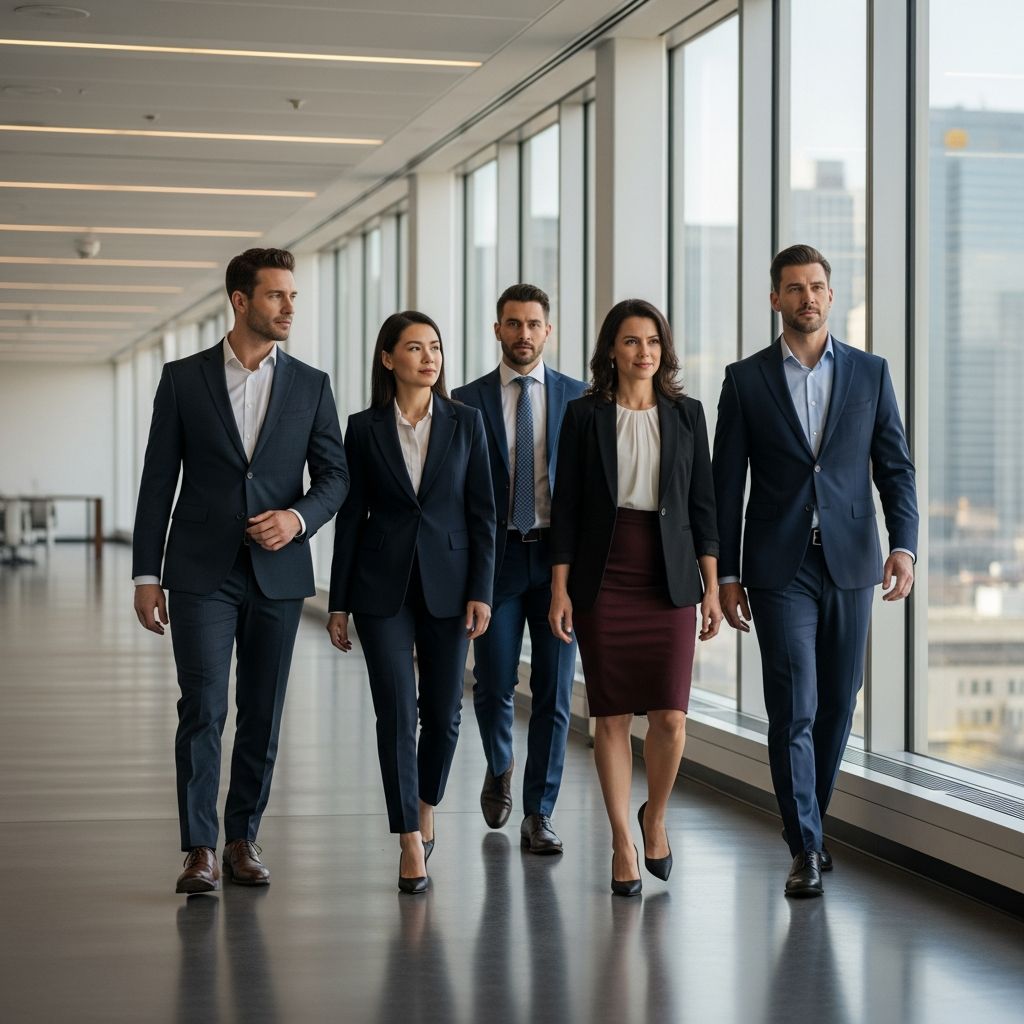
High-stakes professional events call for more than just a nice outfit; they demand a thoughtful strategy that blends polish, authority, and respect for the setting. Whether you are speaking on a panel, meeting senior leadership, visiting a government office, or attending a corporate ceremony, formal business attire sends a clear message about how seriously you take the occasion.
This guide walks through everything needed to create a strong, appropriate look: how to choose a suit or dress, what colors and fabrics work best, how to accessorize without distraction, and how to adapt your style to different environments while still feeling like yourself.
Understanding Formal Business Dress Codes
“Formal business” sits at the most polished, conservative end of professional dress codes. It usually means a structured jacket, coordinated bottoms, closed-toe shoes, and understated accessories designed to signal reliability and competence. While every organization and culture has its nuances, the underlying goal is the same: to appear respectful, serious, and prepared.
Unlike business casual, where individual style can be more visible, formal business clothing narrows the range of acceptable choices. The details—fit, fabric, color, and grooming—become especially important, because small missteps are more noticeable when the dress code itself is strict.
Key Principles of High-Stakes Professional Dressing
Before building individual outfits, it helps to understand the broader principles that make formal attire feel appropriate and confident rather than stiff or costume-like. These are the concepts that guide all the detailed choices that follow.
- Respect the setting: Government offices, boardrooms, academic institutions, and corporate ceremonies may all share a formal dress code, but some lean more traditional than others.
- Signal authority without aggression: Clean lines, structured tailoring, and neat grooming project competence, while softer colors and textures can keep the look approachable.
- Eliminate distractions: Anything that constantly needs adjusting, clanks, rides up, or reveals more skin than intended will compete with your message.
- Prioritize comfort within formality: You stand longer, move more, and interact more when the stakes are high; clothing and shoes must support that.
Building the Foundation: Suits, Dresses, and Separates
A solid formal wardrobe starts with a few carefully chosen pieces that can mix and match. Investing in quality, well-tailored garments pays off in both comfort and visual polish.
The Modern Power Suit
A suit is the clearest visual signal of business formality. A well-cut jacket paired with matching trousers or a skirt creates an instant frame of authority, especially at official meetings or ceremonial events.
- Jacket length: Hitting around mid-hip flatters most body types and works with both pants and skirts.
- Lapels: Classic notched lapels are the safest choice; they look timeless in photographs and do not distract from your face.
- Closure: A single or two-button closure creates clean lines and reduces pulling when buttoned.
- Shoulders: Light structure helps the jacket hold its shape and visually broadens the upper body, which often reads as more authoritative.
Sheath and Shift Dresses
For those who prefer fewer layers, a tailored dress can be just as formal as a suit when cut and styled correctly. Adding a blazer on top often makes the look appropriate for even the most traditional settings.
- Choose a hemline that reaches around the knee, especially when you will be sitting on stage or across from senior officials.
- Necklines should stay secure and stationary when you lean forward, gesture, or pin on a microphone.
- Look for fabrics with some structure so the dress keeps its shape instead of clinging.
Coordinated Separates
In slightly less rigid environments, a non-matching blazer with tailored pants or a skirt can still read as formal if the colors are subdued and the fabrics look refined. This approach offers more flexibility for personal style while staying within professional boundaries.
- Keep at least one piece in a dark neutral (navy, charcoal, deep brown, or black).
- Limit the outfit to two main colors plus a subtle accent to avoid visual clutter.
- Ensure the blazer is as structured and polished as a suit jacket, even if the fabric differs from the bottoms.
Choosing Colors and Fabrics That Work Anywhere
When you may be photographed, appearing on video, or meeting high-level leaders, color and fabric selection can matter as much as the cut. Neutrals keep the focus on your face and words rather than your outfit.
Reliable Color Palettes
Dark, cool neutrals tend to feel most formal, but softer tones can also project confidence when styled thoughtfully. Consider keeping a small range of colors for your most serious events so that everything coordinates.
| Color Family | Best Uses | Notes |
|---|---|---|
| Navy | Interviews, presentations, government or executive meetings | Versatile, photographs well, less severe than black. |
| Charcoal or deep gray | Boardrooms, formal ceremonies, conservative industries | Communicates seriousness without looking harsh. |
| Black | Evening functions, memorial events, very formal settings | Sharp but can feel severe; soften with a lighter top. |
| Muted tones (deep green, burgundy, midnight blue) | Panels, conferences, speaking roles where approachability matters | Adds personality while remaining polished and understated. |
| Light neutrals (stone, taupe, soft camel) | Daytime events, warm climates, less traditional cultures | Work best when the tailoring is very sharp and accessories are refined. |
Fabric Considerations
Formal environments are often air-conditioned, involve long sessions of sitting or standing, and may include both indoor and outdoor portions. Fabrics that resist wrinkling and skim rather than cling keep you looking composed throughout.
- Wool and wool blends: Ideal for suits; they drape beautifully and recover well from sitting.
- High-quality synthetics or blends: Can be more breathable and travel-friendly while still appearing structured.
- Cotton sateen or twill: Suitable for warmer climates when the garment is fully lined and tailored.
- Avoid: Very shiny fabrics, extreme stretch, or anything sheer; these tend to read as evening or casual wear rather than business.
Fit, Tailoring, and Body Language
Even the most expensive suit looks unprofessional if it does not fit correctly. Well-tailored clothing supports good posture, stays in place, and allows natural movement, all of which affect how others perceive your confidence.
Signs of a Good Fit
Focus on how garments behave while you are moving, not just when you are standing still in front of a mirror. Practice sitting, walking, reaching forward, and shaking hands when trying on formal pieces.
- Jacket buttons should close smoothly without pulling or gaping.
- Shoulder seams should line up with your natural shoulder, without dents or bulges.
- Pant hems should cover most of the shoe heel without dragging on the ground.
- Skirts should allow you to walk up stairs and sit comfortably without riding too far above the knee.
Tailoring Priorities
Altering a garment can transform how it looks and feels. When budget is limited, adjust a few key areas instead of chasing perfection everywhere.
- Shorten or lengthen sleeves so that cuffs hit just around the wrist bone.
- Take in the waist slightly to create clean vertical lines and prevent the jacket from looking boxy.
- Adjust pant or skirt hems to match your typical heel height.
Tops, Layers, and Modesty in Motion
What you wear under a blazer matters as much as the suit itself. Tops should maintain coverage no matter how you move, and they should not create visible lines or bulk under a jacket.
Shirts and Blouses
Opt for smooth fabrics that glide under a blazer and stay opaque under bright lights or camera flashes. Subtle texture can add interest without stealing focus from your face.
- Button-front shirts with secure closures prevent gaping when you sit or raise your arms.
- Shell tops or knit blouses with a high-enough neckline stay put during presentations.
- Stick with solid colors or very subtle patterns to avoid moiré effects on camera.
Cardigans and Additional Layers
In settings where a full suit is not mandatory, a fine-gauge cardigan can soften a blazer or act as a mid-layer. However, in the most formal settings, the blazer is usually the key visible layer.
- Keep cardigans slim and hip-length so they do not bunch under a jacket.
- Avoid oversized or waterfall styles that introduce extra fabric and movement.
Footwear: Balancing Elegance and Practicality
Shoes can quietly elevate a formal look or undermine it. When walking across large venues, standing in reception lines, or climbing stairs to a podium, comfort becomes a performance issue, not just a style preference.
- Closed-toe pumps: The classic choice; a medium heel adds polish while remaining stable.
- Block heels or wedges: Offer more balance than stilettos on uneven pavement or carpeting.
- Refined flats: A practical option for long days, especially when the rest of the outfit is very structured.
- Avoid: Platforms, very high stilettos, casual sandals, and loud embellishments that draw attention downward.
Whichever style you choose, test the shoes beforehand in conditions similar to the event—long hallways, stairs, or outdoor walkways—so there are no surprises on the day.
Accessories, Bags, and Subtle Personality
Accessories are where personal style can quietly shine without overwhelming a formal outfit. Think of them as punctuation marks rather than competing headlines.
Jewelry and Watches
Choose pieces that stay in place and do not distract visually or audibly. A few well-chosen items read as intentional and elegant.
- Small earrings, a simple pendant, or a classic watch are usually sufficient.
- Avoid bracelets that clank against a desk or microphone.
- Statement pieces should be limited to one area at a time—either earrings or necklace, not both.
Bags and Portfolios
Your bag often appears in photos or sits beside you in high-visibility settings. Structured shapes complement formal outfits and keep documents organized.
- Choose a medium-sized structured tote, satchel, or brief-style bag that can hold essentials without bulging.
- Stick to neutral colors that coordinate with most of your suiting.
- For very formal ceremonies, consider carrying only a small clutch or portfolio and leaving a larger bag elsewhere.
Grooming, Makeup, and Overall Presentation
Grooming completes the impression created by your clothes. Clean lines in hairstyles, calm color choices in makeup, and neat nails all reinforce the sense that you prepared thoughtfully for the occasion.
- Hair: Aim for a style that stays neat through wind, humidity, and long sessions—pulled back, half-up, or smoothly shaped.
- Makeup: Even skin tone, defined eyes, and a stable lip color usually look best on camera and in person.
- Nails: Short to medium length in neutral or classic shades helps avoid distractions when gesturing.
Planning Outfits for Specific Scenarios
The same wardrobe pieces can look quite different depending on how they are combined. Thinking through the event format and your role helps you choose an outfit that supports your goals for the day.
Scenario: Policy Briefing or Executive Meeting
When seated around a table with senior leaders or officials, the audience sees mostly your upper body. Focus on clean lines from the waist up and make sure your jacket, top, and grooming together project calm authority.
- Navy or charcoal suit with a light, non-sheer blouse.
- Subtle jewelry and a classic watch.
- Low to mid-height closed-toe heels or polished flats.
Scenario: Panel Discussion or Public Speaking
On stage, body language is magnified and clothing interacts with microphones, chairs, and lighting. You need pieces that stay smooth and opaque when you lean forward or cross your legs.
- Knee-length sheath dress with a tailored blazer, or a pant suit with some stretch for comfortable movement.
- Solid or gently textured fabrics to avoid visual noise under bright lights.
- Shoes you can confidently walk in across a stage without watching your feet.
Scenario: Formal Reception or Networking Event
Receptions often involve standing, circulating, and talking at close range. Comfort and breathability become more important, but the setting may still demand full formality.
- Tailored dress in a deep neutral or muted color, with or without a coordinating blazer.
- Block heel pumps for stability on carpet and tile.
- One distinctive but tasteful accessory—a brooch, silk scarf, or understated earrings—to make the outfit memorable.
Packing and Travel Tips for Formal Events
Many high-stakes occasions involve travel, which introduces wrinkles, luggage constraints, and the risk of lost items. Planning ahead keeps you prepared even when things do not go perfectly.
- Pack at least one complete backup outfit that is equally formal but uses different pieces.
- Use garment bags or packing cubes that minimize creasing, and hang items as soon as you arrive.
- Carry critical pieces—like one blazer, one pair of shoes, and essential toiletries—in your personal item or carry-on.
Frequently Asked Questions
Is a dress as formal as a suit?
A well-tailored dress can be just as formal as a suit when it has a modest neckline, a knee-length hem, structured fabric, and is paired with closed-toe shoes. Adding a blazer can make a dress appropriate for even the most traditional business settings.
Do I always have to wear heels?
No, heels are not mandatory. Refined flats or low block heels can look entirely professional when they are closed-toe, in good condition, and coordinated with a structured outfit.
How much color is too much?
In very formal environments, limit yourself to one main color plus one or two neutrals. If you choose a bold hue for a blouse or dress, keep everything else—suit, shoes, bag, and accessories—quiet and classic.
Can I express my personal style in a strict dress code?
Yes. Subtle patterns, interesting textures, signature jewelry pieces, or distinctive but understated glasses frames can all reflect your individuality while respecting formal expectations.
What if the dress code is unclear?
When in doubt, lean slightly more formal than you think necessary. A blazer can be removed if others are dressed more casually, but it is difficult to upgrade an outfit that starts off too relaxed.
Putting It All Together
Formal business attire does not have to feel like a costume. With a thoughtful selection of suits, dresses, and accessories that align with your role and environment, you can build a small wardrobe of dependable outfits that allow you to focus on the work instead of your clothes. Over time, your formal style becomes another tool for communicating credibility, respect, and confidence whenever you step into an important room.