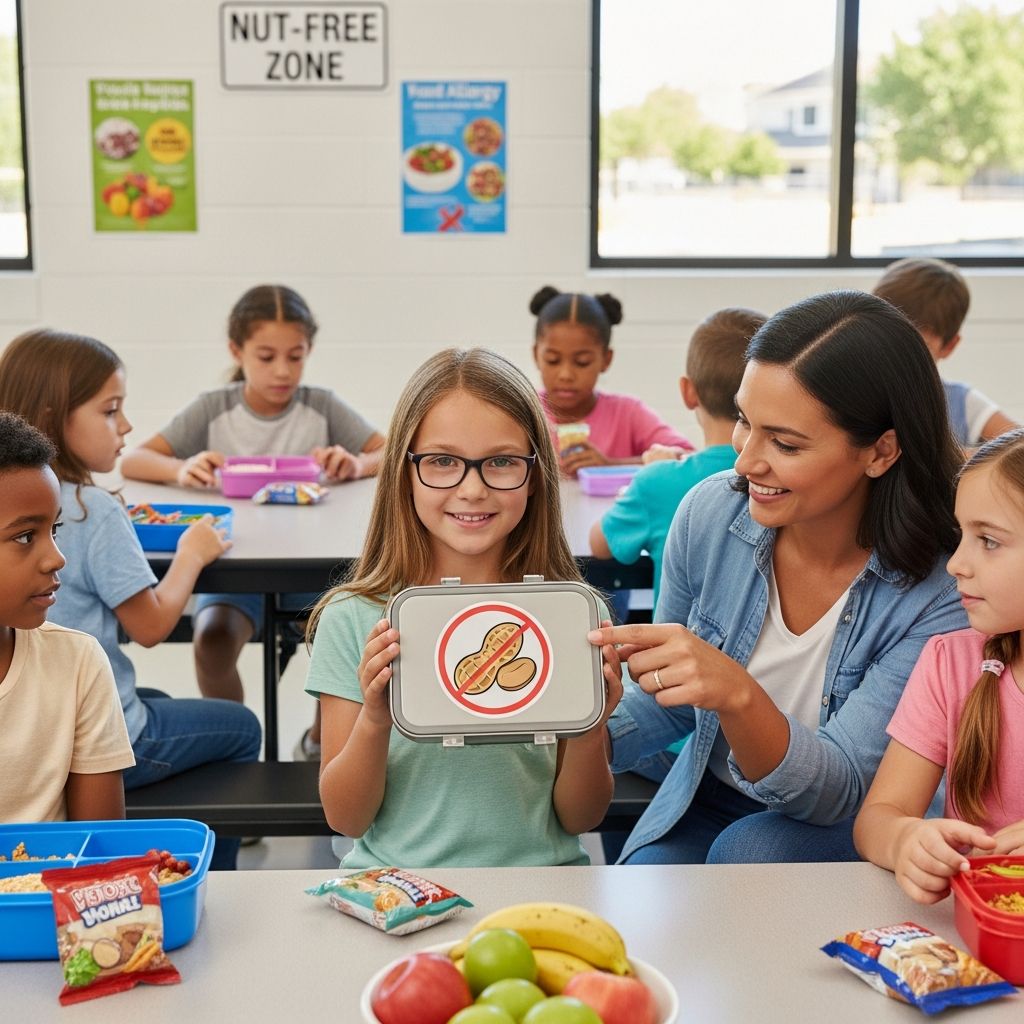
Food allergies affect millions of children, posing unique challenges in school environments where shared spaces and activities increase exposure risks. Parents play a crucial role in partnering with educators and administrators to implement robust safety measures. This guide outlines practical steps for creating allergy-aware schools, drawing from established national recommendations to minimize reactions and ensure rapid response.
Understanding the Scope of Food Allergies in Education
Approximately 8% of children have food allergies, with common triggers including peanuts, tree nuts, milk, eggs, and wheat. Schools must balance inclusion with safety, as reactions can occur from inadvertent ingestion, skin contact, or airborne particles in rare cases. Effective management hinges on proactive planning before the school year begins.
Key statistics highlight the urgency: most allergic reactions in schools happen in classrooms during snacks or celebrations, underscoring the need for comprehensive policies across all areas—classrooms, cafeterias, playgrounds, and field trips.
Developing an Individualized Allergy Action Plan
Central to school-based allergy management is the Allergy and Anaphylaxis Emergency Plan (AAP), a physician-signed document tailored to each child. This plan details the child’s allergens, symptoms of reactions, medication dosages (especially epinephrine auto-injectors), and emergency contacts.
- Allergen identification: List specific foods to avoid, confirmed by allergy testing.
- Symptom recognition: Describe mild (hives, itching) to severe (throat swelling, breathing difficulty) signs.
- Treatment protocol: Step-by-step instructions for administering epinephrine and follow-up care, including calling 911.
- Self-management assessment: Evaluate if the child can carry and use their own medication, based on maturity.
Parents should update the AAP annually or after any reaction, providing copies to the school nurse, teacher, and cafeteria staff. Written permission for the school to consult the child’s doctor enhances responsiveness.
Pre-School Year Preparations for Parents
Summer is ideal for gearing up. Schedule a pediatrician or allergist visit to refill epinephrine prescriptions and revise the AAP. Discuss accommodations like seating away from high-risk areas or safe snack alternatives.
| Preparation Step | Action Items | Timeline |
|---|---|---|
| Medical Update | Refill meds, update AAP | Early summer |
| School Communication | Meet nurse/admin, deliver forms | Before first day |
| Child Training | Practice self-advocacy, med use | Ongoing |
| Supply Stock | Provide extra epinephrine, safe snacks | Start of year |
These steps ensure seamless integration into the school routine, reducing anxiety for all involved.
School-Wide Policies and Prevention Strategies
Robust schools adopt district-level Food Allergy Management Prevention Plans aligned with CDC’s Voluntary Guidelines, covering five priority areas: daily individual management, emergency preparedness, staff training, education, and safe environments.
Creating Allergen-Reduced Zones
Classrooms should minimize food use in non-meal activities. Implement hand-washing protocols with soap before and after eating—proven to remove peanut residue effectively. Prohibit food sharing and require label reading for treats.
- No food rewards or crafts involving allergens.
- Cafeteria protocols: Separate lines, dedicated equipment cleaning to prevent cross-contact.
- Field trips: Pre-approved menus, extra epinephrine.
Nut-Free or Allergy-Aware Initiatives
While total elimination is impractical, “peanut-aware” zones with thorough cleaning work well. Evidence shows soap and water suffice for surface decontamination; scents alone do not trigger reactions.
Training School Staff for Emergencies
All staff supervising children must recognize anaphylaxis—rapid onset of symptoms like wheezing, vomiting, or hypotension—and act swiftly. Training includes AAP review, epinephrine administration, and post-use protocols (e.g., monitoring until EMS arrives).
Annual drills and certification ensure readiness. School nurses lead, but teachers and aides must know medication locations (unlocked, accessible).
Empowering Children with Self-Advocacy
Age-appropriate education teaches kids to verbalize needs: “I have a peanut allergy; that snack might not be safe for me.” Role-play scenarios and demonstrate epinephrine use to build confidence.
Older students can carry trainers (non-functional injectors) and know to alert adults immediately if exposed.
Legal Frameworks and Parental Rights
Federal laws like Section 504 and the Americans with Disabilities Act mandate reasonable accommodations for food allergies as disabilities. Schools must provide safe meals via USDA programs and cannot exclude allergic children.
Parents can request 504 plans formalizing protections, including nurse presence or aide support.
Common Challenges and Solutions
| Challenge | Solution |
|---|---|
| Multiple allergies in one class | Generic no-share policies, communal safe snacks |
| Staff turnover | Mandatory onboarding training |
| Special events | Pre-event allergen checks, alternatives |
| Teen compliance | Peer education programs |
Frequently Asked Questions (FAQs)
Q: How often should the allergy plan be reviewed?
A: Annually, or after any reaction or medication change. Consult the physician for updates.
Q: Can schools ban nuts entirely?
A: Optional but not required; focus on prevention strategies like cleaning and no-sharing rules.
Q: What if my child refuses medication?
A: Include refusal protocols in the AAP; train staff on gentle persuasion and immediate help.
Q: Are airborne allergies real in schools?
A: Rare; most reactions stem from ingestion. Ventilation and cleaning suffice.
Q: How to handle birthday celebrations?
A: Promote non-food treats like stickers; provide safe options in advance.
Building a Collaborative Partnership
Success relies on open dialogue between families, medical providers, and school teams. Regular check-ins track effectiveness, adjusting as the child grows. Resources like FARE’s FAMS and CDC toolkits offer templates and training aids.
By fostering awareness, schools become inclusive spaces where allergic children thrive academically and socially.
References
- Planning for School with Food Allergies — Allergy Asthma Network. 2023. https://allergyasthmanetwork.org/food-allergies/planning-for-school-with-food-allergies/
- For School Personnel — Food Allergy Awareness & Care. 2024. https://www.foodallergyawareness.org/education-in-schools/for-school-personnel/for-school-personnel/
- Food Allergy Management in Schools (FAMS): Expert Recommendations K–12 — Food Allergy Research & Education. 2023. https://www.foodallergy.org/resources/food-allergy-management-schools-fams-expert-recommendations-k-12
- Voluntary Guidelines for Managing Food Allergies In Schools and Early Care and Education Programs — Centers for Disease Control and Prevention. 2019-10-30. https://archive.cdc.gov/www_cdc_gov/healthyschools/foodallergies/pdf/20_316712-A_FA_guide_508tag.pdf
- Food Allergies in Schools — Centers for Disease Control and Prevention. 2024. https://www.cdc.gov/school-health-conditions/food-allergies/index.html
- Management of food allergy in the school setting — National Institutes of Health (PMC). 2024. https://pmc.ncbi.nlm.nih.gov/articles/PMC11250442/