The first trimester of pregnancy, spanning weeks 1 to 12, brings unique challenges like fatigue, nausea, and heightened miscarriage risk, yet travel remains feasible for many with proper planning. Authoritative sources confirm that while not inherently dangerous, precautions are vital to minimize complications such as dehydration and blood clots.
Understanding Risks in the First 12 Weeks
Early pregnancy involves rapid embryonic development, making it sensitive to factors like fever or miscarriage risks, which can rise slightly during travel stress. Morning sickness affects up to 80% of pregnancies, potentially leading to dehydration if fluids aren’t maintained. Deep vein thrombosis (DVT) risk increases fivefold in pregnancy due to hormonal changes and reduced mobility, though absolute risk stays low. Experts recommend medical consultation before trips, especially with symptoms like spotting or severe nausea.
Heat exposure poses additional threats; elevated core body temperature links to birth defects, so air-conditioned spaces and hydration are essential. Radiation from airport scanners is negligible and safe for the fetus.
Optimal Timing for Pregnancy Journeys
While first-trimester travel is common, the second trimester (weeks 14-28) is ideal: nausea subsides, energy returns, and physical discomfort is minimal. First-trimester trips suit unavoidable commitments, but postpone if miscarriage risk exists. Airlines often restrict flights after 36 weeks, but early pregnancy faces no such bans unless complications arise.
Air Travel Guidelines for Expectant Mothers
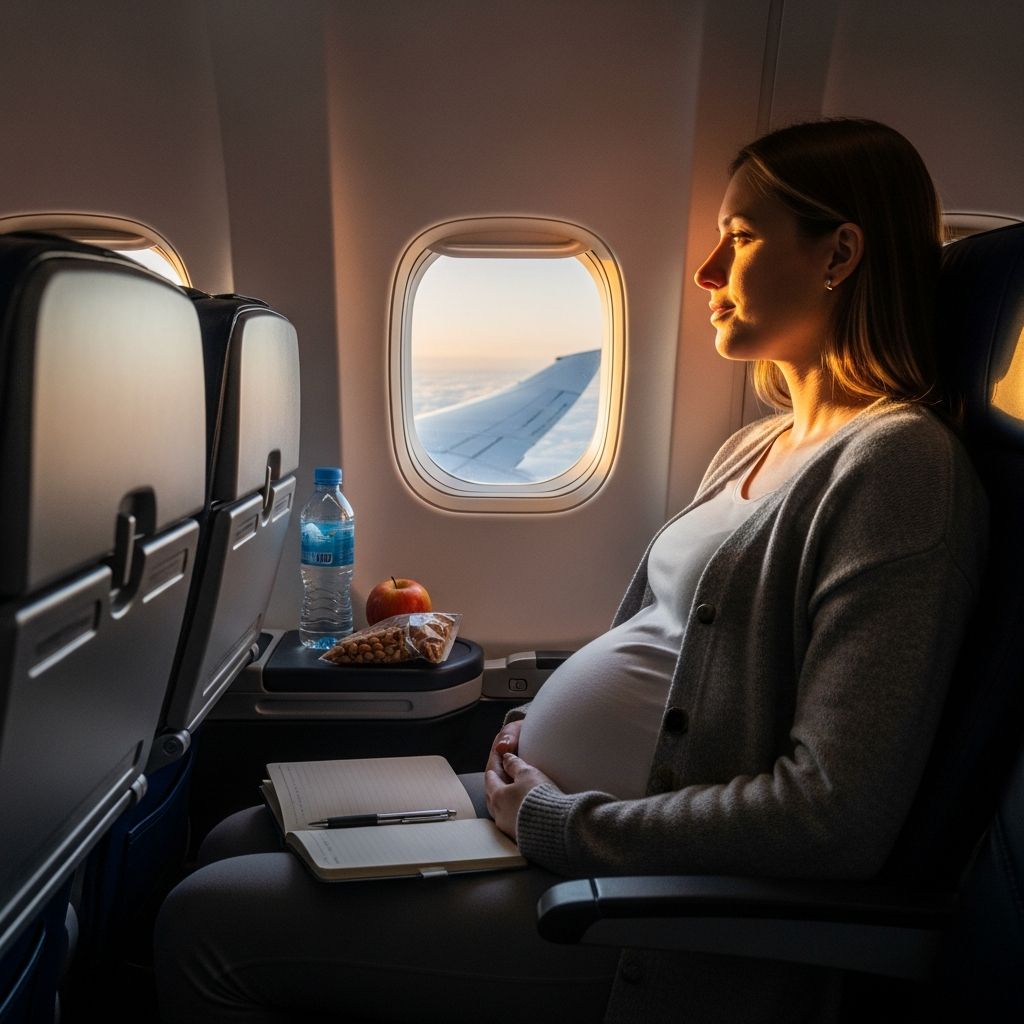
Flying is generally safe before 36 weeks absent complications. Cabin pressure equivalents pose no hypoxia risk to the fetus, but low humidity accelerates dehydration, thickening blood and elevating DVT odds.
- Select aisle seats for easy movement and restroom access.
- Walk hourly, perform ankle circles, and use isometric exercises.
- Drink 8-10 ounces of water hourly; skip caffeine and alcohol.
- Wear graduated compression stockings after doctor approval.
- Position seatbelt under the abdomen, low across hips.
- Avoid gas-inducing foods like broccoli or soda to prevent bloating from altitude expansion.
Carry medical records and insurance details; obtain a fit-to-fly note if over 28 weeks, though not typically needed early on.
Road Trips and Driving Precautions
Long drives risk swelling, back pain, and clots from immobility. Frequent stops every 1-2 hours for walking are crucial.
| Aspect | Best Practice | Why It Matters |
|---|---|---|
| Seatbelt Use | Lap belt under bump, shoulder between breasts | Protects uterus from jolt-induced separation |
| Breaks | Every 1-2 hours | Reduces DVT, swelling; allows hydration |
| Snacks/Hydration | Nuts, fruit, water | Stabilizes blood sugar, fights nausea |
| Posture Support | Lumbar pillow | Eases back strain from posture shifts |
Never drive alone on extended trips; share duties to combat fatigue.
Other Travel Modes: Trains, Buses, and Cruises
Trains and buses mirror car tips: prioritize seatbelts, movement, and hydration. Cruises may exacerbate nausea from motion; choose calmer routes and pack anti-nausea remedies. All modes demand following safety protocols.
Destination Choices and Health Safeguards
Opt for destinations with quality healthcare; avoid Zika or malaria zones per CDC advisories. Ensure vaccinations are pregnancy-safe and pack prenatal vitamins in carry-ons. Travel insurance must cover obstetric emergencies.
Combating Common Discomforts On the Go
Pregnancy amplifies fatigue; build in rest. Loose clothing, supportive shoes, and snacks prevent issues. For time zones, adjust gradually to minimize jet lag.
- Breathable fabrics for temperature regulation.
- Reclining options for swollen feet.
- Entertainment for distraction from nausea.
Red Flags: When to Cancel or Seek Care
Avoid travel with preeclampsia, preterm labor risk, placenta previa, multiples, or anemia. Halt plans for bleeding, contractions, or fluid leaks. Seek immediate help for dehydration signs or heat illness.
Frequently Asked Questions (FAQs)
Is flying safe in the first trimester?
Yes, for uncomplicated pregnancies; take DVT precautions like walking and hydration.
How can I prevent blood clots while traveling pregnant?
Hydrate, move frequently, wear compression stockings, and consult your doctor.
What’s the best seatbelt position during pregnancy?
Under the belly, across upper thighs; shoulder belt between breasts.
Can airport security harm my baby?
No, metal detectors and scanners are safe.
Should I buy special travel insurance?
Yes, ensuring maternity coverage for emergencies.
Expert Preparation Checklist
- Consult obstetrician for clearance.
- Pack meds, records, insurance.
- Hydration bottle and healthy snacks.
- Compression gear if recommended.
- Travel pillow and loose attire.
- Emergency contacts and clinic locations.
With these strategies, first-trimester travel can be safe and enjoyable. Prioritize health consultations for personalized advice.
References
- Pregnant Travelers | Yellow Book — CDC. 2024. https://www.cdc.gov/yellow-book/hcp/family-travel/pregnant-travelers.html
- Traveling While Pregnant: What’s Safe and What to Avoid — Las Vegas OBGYN Center. 2023-10-15. https://lasvegasobgyncenter.com/traveling-while-pregnant/
- Pregnancy and travel — Better Health Channel (Vic.gov.au). 2023. https://www.betterhealth.vic.gov.au/health/healthyliving/pregnancy-and-travel
- Can You Fly When Pregnant? Is it safe? — Medpark Hospital. 2024. https://www.medparkhospital.com/en-US/lifestyles/can-you-fly-when-pregnant-is-it-safe
- Travel During Pregnancy — ACOG. 2023-05-01. https://www.acog.org/womens-health/faqs/travel-during-pregnancy
- Air travel during pregnancy: Is it safe? — Mayo Clinic. 2024-07-12. https://www.mayoclinic.org/healthy-lifestyle/pregnancy-week-by-week/expert-answers/air-travel-during-pregnancy/faq-20058087