Early pregnancy brings subtle shifts in the body that many women prefer to keep private until they’re ready to share the news. These changes, often noticeable from weeks 4 to 12, include bloating, breast tenderness, and a slight abdominal protrusion as the uterus expands from pear-sized to about the size of a grapefruit by week 12. With thoughtful clothing selections, you can navigate social and professional settings comfortably while embracing these transformations.
Understanding Subtle First-Trimester Transformations
The first trimester ushers in hormonal surges that prompt physical adjustments. Breasts may swell and become sensitive, with visible blue veins and darker areolas preparing for lactation; colostrum production can start around week 16, though some notice it earlier. Fatigue, nausea, and a faster heartbeat contribute to a sense of puffiness, while the uterus’s growth causes minor abdominal rounding by week 12. Skin might show early darkening, like the linea nigra line from navel to pubic area. These are normal, temporary adaptations as your body supports embryonic development—brain, heart, and limbs forming by week 8.
Awareness of these shifts empowers strategic dressing. Bloating from hormonal fluid retention mimics a full meal’s effect, and posture changes from uterine weight alter your silhouette slightly. Prioritizing breathable fabrics and supportive pieces ensures comfort amid nausea or tiredness.
Building a Versatile Wardrobe Foundation
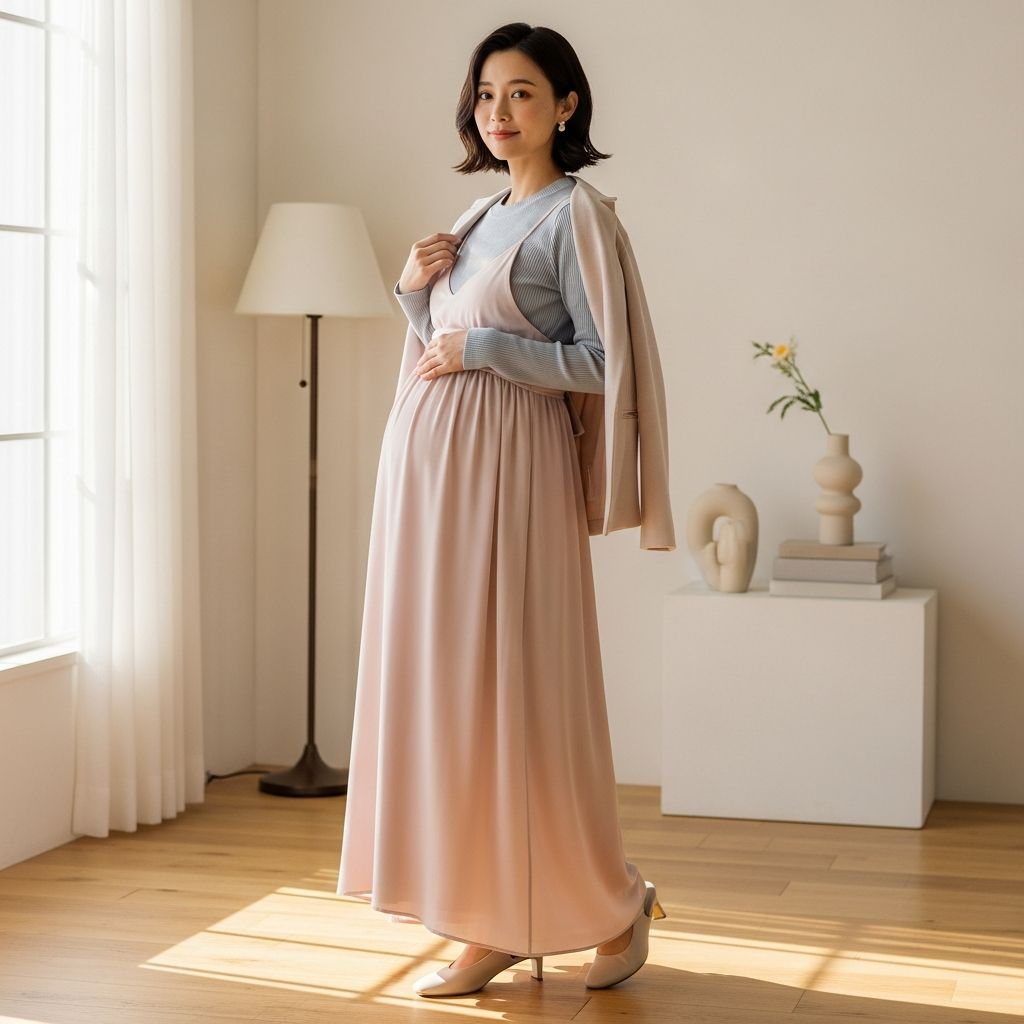
Invest in timeless staples that offer flexibility. Opt for high-waisted pants or skirts in stretchy ponte knit or ponte fabric, which smooths the midsection without constriction. Darker washes in jeans provide a slimming illusion, accommodating a 1-2 kg gain mostly in blood volume, breasts, and uterus.
- Choose A-line dresses in midi lengths for effortless flow over hips and belly.
- Flowy maxi skirts pair with fitted tops to balance proportions.
- Structured blazers or cardigans in neutral tones add polish and coverage.
Layering is key: lightweight tunics over leggings create a elongated line, hiding any pouch. Empire-waist tops, cinching under the bust, drape loosely below, ideal for breast sensitivity. Avoid clingy knits early on; instead, select ponte or scuba materials that hold shape gently.
Pattern Play and Color Choices
Strategic prints distract from curves. Bold florals, abstract geometrics, or vertical stripes draw eyes upward or outward, minimizing focus on the midsection. Pair a patterned blouse with solid bottoms for contrast.
Color theory aids concealment: black, navy, and charcoal absorb light, creating a streamlined profile. Earth tones like olive or burgundy offer variety without highlighting bloating. Reserve bright hues for accessories to maintain subtlety.
| Color Category | Best For | Examples |
|---|---|---|
| Dark Neutrals | Slimming effect | Black, navy, charcoal |
| Earth Tones | Versatile coverage | Olive, taupe, deep green |
| Patterns | Distraction | Floral, stripes, polka dots |
These choices align with first-trimester realities, where skin changes like melasma patches on cheeks or forehead might emerge due to hormones. Makeup can even out tone if needed, but clothing remains primary.
Layering Techniques for All-Day Coverage
Layering transforms outfits seamlessly. Start with a fitted tank or cami for support, add a longer tunic, then a open-front vest or kimono. This trio conceals without bulk, perfect for temperature fluctuations from hormonal shifts.
For cooler weather, oversized sweaters in chunky weaves skimming the body hide swelling ankles or hands. In warmth, breathable linen shirts untucked over slim pants provide airiness. Belts positioned above the natural waistline define without squeezing the growing uterus.
- Scarves or shawls draped loosely add texture and movement.
- Long necklaces elongate the torso visually.
- Cardigan twins—short over long—create dimension.
Footwear and Posture Support
As center of gravity shifts forward from uterine expansion, balance becomes tricky; one in four women experience falls due to loosened ligaments and swelling. Supportive flats or low block heels with arch cushioning maintain stability. Avoid high stilettos that exacerbate back curve.
Wedge sandals offer height without ankle strain, pairing well with wide-leg pants to camouflage leg puffiness from doubled blood volume. Orthotic inserts help if feet swell unexpectedly.
Professional Attire Adaptations
Office environments demand polish. Tailored trousers with adjustable waists fit through morning sickness bloating. Blouses in silk or chiffon billow softly, tucked into high-waisted options. Longline vests or dusters over sheath dresses project confidence.
For meetings, structured shoulder pads in jackets balance a softening midsection. Rotate neutral separates for variety, ensuring breathability against fatigue-induced heat.
Casual Day-to-Night Transitions
Weekend looks prioritize ease. Joggers in tapered fits with long tees and sneakers handle activity spikes. Transition by swapping for heels and a blazer. Athleisure sets in dark colors multitask, accommodating sucking reflex development or early movements by week 16.
Denim overalls over graphic tees offer fun coverage, adjustable straps easing breast tenderness.
Seasonal Styling Strategies
Summer Essentials
Lightweight kaftans or rompers in linen conceal while cooling. Hat and sunglasses add mystery.
Winter Warmth
Puffer vests over tunics layer without restriction. Boots with side zippers accommodate swelling.
Transitional Weather
Trench coats belted loosely flatter, rain boots for practicality.
Accessory Magic for Enhanced Discretion
Statement jewelry shifts focus: chunky necklaces, hoop earrings, or wide cuffs. Handbags clutched at midriff draw attention away. Hair styled voluminously frames the face, diverting from body.
These elements enhance outfits, supporting emotional well-being amid mood swings.
Health Considerations in Fashion Choices
Fabrics matter: cotton and bamboo wick moisture during heartburn or nosebleeds. Seamless bras with light padding soothe tender breasts. Monitor for preeclampsia signs like sudden swelling—consult providers promptly. Diastasis recti risk grows later, but early core support via posture aids prevention.
Frequently Asked Questions
When do early pregnancy body changes become visible?
Typically by week 12, the uterus causes slight protrusion; bloating mimics this earlier.
Are stretchy fabrics safe in early pregnancy?
Yes, ponte and spandex blends offer gentle support without constriction.
How to handle breast tenderness styling?
Opt for soft, wireless bras and loose tops; empire waists avoid pressure.
Can patterns really hide a bump?
Bold or vertical prints disrupt outlines effectively.
What if swelling affects feet early?
Choose wide-toe shoes; elevate when possible.
Embracing Confidence Through Style
These strategies empower privacy on your terms. As baby develops—fingers by week 8, activity by week 20—your style evolves too. Consult healthcare providers for personalized advice amid these miraculous changes.
References
- Stages of pregnancy — Office on Women’s Health. 2023. https://womenshealth.gov/pregnancy/youre-pregnant-now-what/stages-pregnancy
- Physical changes — Institut national de santé publique du Québec. 2024. https://www.inspq.qc.ca/en/tiny-tot/pregnancy/everyday-life-during-pregnancy/physical-changes
- First Trimester of Pregnancy: What To Expect — Cleveland Clinic. 2023-10-22. https://my.clevelandclinic.org/health/articles/9699-first-trimester
- Physical Changes During Pregnancy — Merck Manuals. 2024. https://www.merckmanuals.com/home/women-s-health-issues/normal-pregnancy/physical-changes-during-pregnancy
- 10 Strange (but Normal!) Body Changes to Expect during Pregnancy — UNM Health. 2021-01. https://unmhealth.org/stories/2021/01/pregnancy-body-changes.html
- Pregnancy stages and changes — Better Health Channel. 2023. https://www.betterhealth.vic.gov.au/health/healthyliving/pregnancy-stages-and-changes