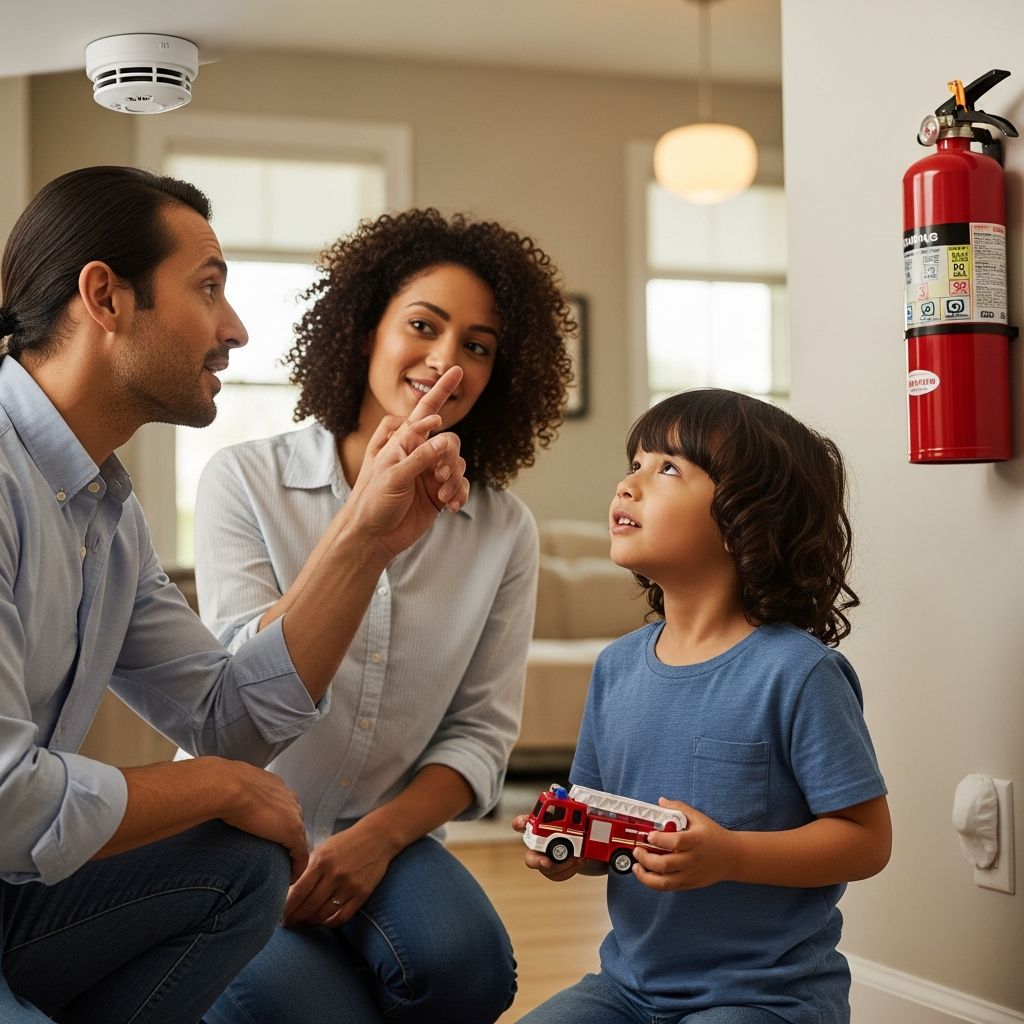
Understanding Fire Hazards in Your Home
Fire poses one of the most significant threats to household safety, particularly for young children who may not recognize danger or understand proper response procedures. The majority of residential fires originate from preventable sources, making awareness and education crucial components of family protection. Children depend entirely on adults to identify and eliminate fire hazards before dangerous situations develop.
Common ignition sources within homes include unattended cooking activities, improperly maintained electrical systems, heating appliances operated without supervision, and open flames from candles or fireplaces. Kitchen-related incidents represent a leading cause of residential fires, often occurring when cooking surfaces are left unwatched or combustible materials are stored too close to heat sources. Electrical hazards such as overloaded outlets, damaged cords, and malfunctioning appliances create ongoing risks that may not be immediately obvious to occupants.
Space heaters, fireplaces, and wood stoves demand special attention during cold months when usage increases significantly. These heating devices should be positioned at least three feet away from flammable materials including furniture, curtains, bedding, and papers. Uncontrolled access to fire-starting devices represents another critical vulnerability that requires immediate action.
Identifying High-Risk Items and Behaviors
Matches, lighters, and candles should never be accessible to children. These items should be stored in secure locations that young children cannot reach, preferably in locked cabinets or drawers positioned above eye level. Supervising children in kitchens becomes especially important when cooking occurs, as curious children may touch hot surfaces or pull cookware off counters.
Smoking materials pose significant fire risks when left unattended or improperly discarded. Lit cigarettes represent the leading cause of fire-related deaths in many regions. Establishing strict no-smoking zones within bedrooms and on upholstered furniture helps prevent accidental fires during sleep when response times are delayed.
Creating and Practicing a Home Escape Plan
A well-developed escape plan provides the framework families need to evacuate quickly and safely when fire threatens their home. This planning process involves identifying exit routes from each room, designating a meeting location outside the home, and practicing the plan repeatedly so responses become automatic rather than requiring conscious thought during emergencies.
Every room that serves as a sleeping area requires two potential exit routes. The primary escape route typically uses the bedroom door leading to hallways and main exits, while secondary routes might include windows with proper safety considerations. Windows should be accessible and unobstructed, with escape ladders installed in bedrooms above ground level to provide safe descent options.
Developing Your Specific Plan
Begin by drawing a simple floor plan of your home, marking all doors and windows that could serve as exits. Use arrows to indicate primary and secondary escape routes from each room. Include the location of smoke alarms and your outdoor meeting place on this diagram. A clearly visible meeting location outside your home—such as a specific tree, mailbox, or neighbor’s house—ensures everyone knows where to gather so you can quickly determine if all family members evacuated successfully.
For families with very young children or members with mobility challenges, discuss in advance which adult will be responsible for helping each person escape. This predetermined responsibility prevents confusion and ensures no one is left behind during the critical evacuation window. Consider creating multiple copies of your floor plan to display in visible locations throughout the home.
Practice Drills Build Muscle Memory
Plans exist only in theory until families practice them repeatedly. Regular fire drills transform escape procedures into automatic responses that don’t require thinking during stressful emergencies. Conduct drills at various times, including both daytime and nighttime scenarios, so children learn to respond regardless of when fire might occur.
During practice drills, simulate realistic conditions by explaining that certain hallways are filled with smoke or that primary exit routes are blocked. This teaches children to find alternate paths and reinforces the importance of staying low where breathable air remains available. Encourage crawling under imaginary smoke while keeping one hand on a wall to maintain orientation toward exits. Practice should also include what to do if exterior doors are locked or blocked, ensuring children know to go to windows and signal for help.
Installing and Maintaining Smoke Detection Systems
Smoke alarms provide critical early warning that allows families precious minutes to evacuate before fire becomes life-threatening. These devices detect smoke particles and sound an alarm loud enough to wake sleeping occupants, giving everyone in the home time to exit before conditions become lethal. Homes without functional smoke alarms face dramatically elevated fire death risks compared to properly equipped properties.
Smoke alarms should be installed on every level of your home, including the basement. Placement within bedrooms and sleeping areas proves especially important since people need to be awakened by alarm sounds. Install alarms in hallways outside bedrooms, ensuring the alarm sound reaches sleeping areas clearly. Stairwells and entry areas to cooking spaces also require smoke detector coverage.
Choosing and Maintaining Detection Equipment
Battery-powered and hardwired smoke alarms both provide adequate protection when properly installed and maintained. Hardwired units connected to home electrical systems offer the advantage of continuous operation without battery replacement concerns, though battery backups remain essential during power outages. Battery-powered alarms provide flexibility in placement without requiring electrical installation.
Test your smoke alarms monthly by pressing the test button until the alarm sounds. Replace batteries in battery-powered units twice yearly, using the seasonal time change as a helpful reminder. Smoke alarms lose effectiveness after 10 years and should be completely replaced on this schedule. Dust accumulation prevents alarms from detecting smoke effectively, so gently vacuum or wipe detector covers quarterly using the vacuum brush attachment.
Familiarize children with the smoke alarm sound so they recognize it as an emergency signal. Many fire departments provide recordings of alarm sounds or conduct demonstrations in homes and schools. This familiarity prevents confusion during actual emergencies and reinforces that the sound demands immediate action.
Teaching Children Appropriate Emergency Responses
Children must understand what to do the moment they become aware of fire. Panic and confusion during emergencies lead to poor decisions, such as hiding, attempting to retrieve belongings, or becoming disoriented. Clear instruction in advance provides the guidance children need to respond appropriately when real danger occurs.
Key Safety Behaviors to Emphasize
Exiting Immediately: Children should learn to leave their location as quickly as possible without attempting to gather toys, clothes, or other possessions. Taking even seconds to collect items can mean the difference between safe escape and becoming trapped. This instruction contradicts natural human tendencies, making repeated practice essential.
Staying Low in Smoke: Smoke rises to ceiling level while cooler, more breathable air remains near ground level. Children should crawl on hands and knees and keep their faces as close to the floor as possible when moving through smoky areas. Practicing this technique during drills helps children perform it instinctively during actual fires.
Closing Doors Behind Them: Closed doors slow fire and smoke spread, giving occupants additional escape time. Children should understand that closing doors behind them as they evacuate helps protect others still exiting the building, even though their own priority is leaving quickly.
Feeling Doors Before Opening: Before opening any door during evacuation, teach children to use the back of their hand to feel the door surface. If a door feels hot, it indicates fire on the other side, requiring selection of an alternate exit route. This simple technique prevents children from opening doors that lead directly into flames.
Never Hiding or Re-entering: Fear causes children to hide in closets, under beds, or in other enclosed spaces, making rescue impossible and trapping them with toxic smoke and heat. Explain that firefighters search homes systematically and look for people, so children must exit completely rather than attempting to hide. Similarly, children must understand that no possession—toy, pet, or otherwise—justifies re-entering a burning building under any circumstances.
Stop, Drop, and Roll Technique
If a child’s clothing catches fire, the stop, drop, and roll technique extinguishes flames by depriving them of oxygen. Teach children to immediately stop moving, drop to the ground, and roll repeatedly while covering their face with their hands. Practice this technique regularly so children can perform it automatically if needed, though prevention through proper supervision remains far more effective than relying on children to execute this technique correctly during panic.
Preparing for Emergency Communication
Children must know how to contact emergency services and provide critical information that helps responders locate the house and understand the situation. Many children panic when speaking to emergency dispatchers, making practice essential for clear communication during actual events.
Teaching Phone Skills for Emergencies
Children should practice dialing 911 and learn to provide their home address clearly. Provide your complete street address, including apartment or unit numbers if applicable. Emergency dispatchers ask specific questions to gather information, and children should understand that answering these questions accurately helps firefighters reach them faster.
Practice having children recite your home address repeatedly until they can say it clearly and without hesitation. Some families post emergency information near phones or program addresses into cell phones as a backup reference. When children practice calling 911 during training, never actually dial the number—instead, practice with a non-emergency line or simulate the conversation verbally.
Children should understand that they can call 911 without adult permission during emergencies and that emergency dispatchers are there to help. Explain that if they cannot speak clearly, the dispatcher can trace the call location, so even if a child panics and cannot provide information, help will still be sent to the address where the 911 call originated.
Role Modeling and Supervision Strategies
Adults serve as the most powerful teachers of fire safety through consistent modeling of appropriate behaviors. Children who observe adults handling fire-related situations responsibly develop safer habits themselves. Conversely, adults who smoke carelessly, leave cooking unattended, or block fire exits teach children that these behaviors are acceptable.
Kitchen supervision becomes non-negotiable, as cooking represents the leading cause of home fires. Never leave cooking unattended, even briefly, and ensure children understand that kitchens are high-danger zones requiring adult presence. Teach children not to touch stove surfaces, cookware, or handles extending from cooking appliances, establishing clear physical boundaries around heat sources.
Manage children’s natural curiosity about fire by providing supervised, age-appropriate experiences with controlled flames. Demonstrating how to safely use matches under close supervision, with appropriate safety equipment in place, satisfies curiosity while teaching proper handling techniques. This legitimate experience reduces the appeal of secretly experimenting with fire-starting devices.
Specific Safety Measures by Age Group
| Age Group | Key Safety Focus | Teaching Strategies |
|---|---|---|
| Toddlers (1-3 years) | Complete adult supervision; hazard removal | Install safety locks on lighters/matches; never leave child alone near heat sources; use outlet covers |
| Preschoolers (3-5 years) | Beginning fire awareness; basic escape concepts | Introduce smoke alarm sounds; practice simple escape routes; teach “stay out” concept around fireplaces |
| Early Elementary (6-8 years) | Escape planning; emergency communication | Create floor plan together; practice escape drills; teach address and phone skills; explain smoke dangers |
| Older Children (9+ years) | Leadership and responsibility roles | Assign helping younger siblings; teach fire prevention responsibility; practice leadership during drills |
Engaging Your Community’s Fire Services
Local fire departments possess specialized expertise and equipment that enhance family fire safety education. Many departments offer free presentations at schools and community centers, provide safety inspection services, and distribute educational materials designed for different age groups. These community resources supplement home instruction and provide professional expertise that strengthens overall preparation.
Contact your local fire department to request a home safety inspection. Firefighters identify hazards families may not recognize and provide specific recommendations for improvement. Some departments provide free smoke alarms to families unable to purchase them, ensuring comprehensive alarm coverage regardless of economic circumstances.
Participate in National Fire Prevention Week activities held annually in October. Schools, fire departments, and community organizations typically offer special programs, demonstrations, and materials during this awareness period. These activities reinforce fire safety messages and provide opportunities for children to interact with firefighters in positive, non-emergency contexts that reduce fear and build trust.
Common Questions About Fire Safety for Children
Q: At what age should children begin learning fire safety?
A: Fire safety education should begin as early as possible, even with toddlers through simple concepts like “stay away from hot things.” Preschool-age children can begin understanding smoke alarms and basic escape concepts, with more complex planning and responsibility increasing through elementary school years.
Q: How often should families practice fire drills?
A: Conduct fire drills at least twice yearly, including both daytime and nighttime scenarios. Families with very young children or those experiencing significant changes may benefit from more frequent practice. The goal is making evacuation procedures automatic rather than requiring conscious thought.
Q: What should children do if they discover a fire?
A: Children who discover fire should immediately leave the area, close the door behind them if safe to do so, and alert adults. They should never attempt to extinguish fires themselves or investigate the source. Once they are in a safe location, an adult should call 911.
Q: Are portable fire extinguishers appropriate for homes with children?
A: Fire extinguishers can be useful for adults trained in their proper use, particularly in kitchens where small fires might be caught early. However, extinguishers should be stored securely away from children’s access and should never become the primary fire safety strategy. Evacuation always takes priority over fighting fires.
Q: How can I help a child who is afraid of smoke alarms?
A: Expose children to the alarm sound during calm, non-emergency periods so it becomes familiar rather than startling. Explain what the sound means and practice responding to it during drills. This desensitization reduces fear and helps children recognize the sound as a signal for action rather than a source of terror.
Q: What should families do if a child hides during fire emergencies?
A: Reinforce repeatedly that hiding prevents firefighters from finding children, even though firefighters search homes thoroughly. Emphasize that everyone gets out of the house completely and that hiding puts children in greater danger. If a child has hiding tendencies, identify their preferred locations and specifically include them in escape plan discussions and drills.
References
- Fire Safety Education for Children — CWS (Central Fire Safety). Accessed 2026. https://www.cws.com/en/fire-safety/news/fire-safety-education-children
- Teaching Children About Fire Safety: Essential Tips for Parents and Educators — Old Bridge Fire District 3. Accessed 2026. https://www.obfd3.com/teaching-children-about-fire-safety
- Fire Safety for Young Children: An Early Childhood Education Curriculum — International Fire Service Training Association (IFSTA). Accessed 2026. https://www.ifsta.org/about-us/fire-life-safety-research/public-fire-life-safety/fire-safety-young-children
- Fire Safety for Children — Nationwide Children’s Hospital, Center for Injury Research and Policy. Accessed 2026. https://www.nationwidechildrens.org/research/areas-of-research/center-for-injury-research-and-policy/injury-topics/home-safety/fire-safety-for-children
- Fire Safety for Kids — American Red Cross. Accessed 2026. https://www.redcross.org/get-help/how-to-prepare-for-emergencies/types-of-emergencies/fire/fire-safety-for-kids.html
- Start Safe: Fire Resources for Educators — Safe Kids Worldwide. Accessed 2026. https://www.safekids.org/other-resource/start-safe-fire-resources-educators