Fingerplay activities may look simple, but they are surprisingly powerful tools for preschool learning and connection. With just a rhyme and a few coordinated hand movements, young children practice listening, language, rhythm, and fine motor skills while having fun together with adults and peers.
What Is Fingerplay and Why Does It Matter?
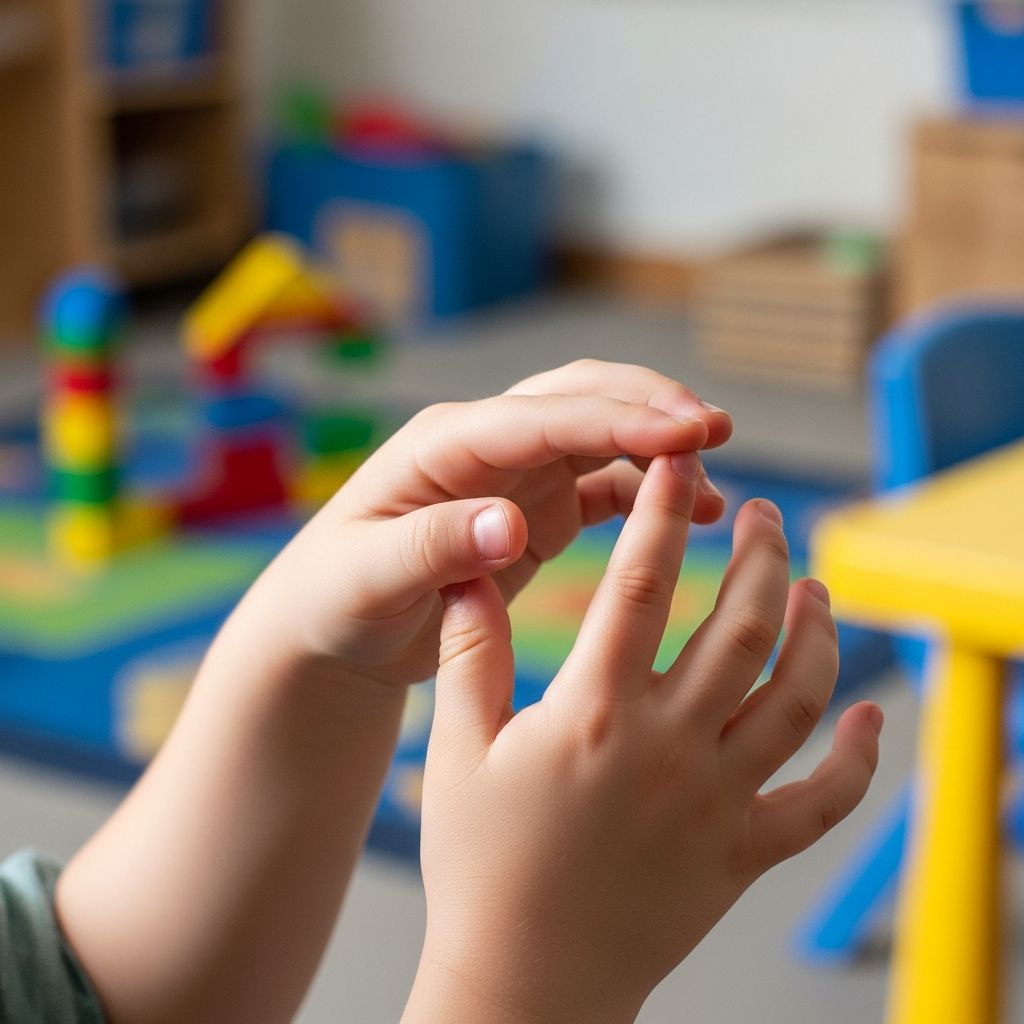
Fingerplay is a playful activity that combines short rhymes, songs, or chants with deliberate hand and finger movements. Instead of using toys or screens, children use their own hands to act out tiny stories, count, or pretend.
These mini-performances are especially well suited to preschoolers because they are short, repetitive, and easy to imitate. Children do not need advanced language or coordination to join in, and with each repetition, they gain confidence and mastery.
Hidden Benefits Behind Simple Hand Rhymes
While adults may see fingerplay as a cute filler activity, it supports an impressive list of developmental skills. Below are some of the most important ways fingerplay helps preschoolers grow.
Boosting Language and Communication
- Vocabulary growth: Repeated rhymes expose children to new words, sounds, and sentence patterns in a playful, low-pressure way.
- Listening skills: Children learn to attend to a sequence of words and motions, then copy them in order.
- Conversation practice: Call-and-response and partner fingerplays encourage turn-taking and early dialogue.
Because the hand motions mirror the meaning of the words, children attach concrete actions to abstract language. This connection helps them understand and remember what they hear.
Supporting Fine Motor and Body Awareness
- Finger strength and dexterity: Small actions such as tapping, pinching, or wiggling fingers help prepare hands for writing, drawing, and self-care tasks like buttoning.
- Hand-eye coordination: Matching movements to a rhythm or to an adult’s demonstration teaches children to control and coordinate their bodies.
- Spatial awareness: Actions like “up,” “down,” “behind,” and “around” help children understand where their bodies are in space.
Consistent practice with playful movements gradually builds the muscle control preschoolers need for more complex tasks in school and daily life.
Strengthening Memory and Early Math Skills
- Sequential memory: Remembering the order of a rhyme and its gestures is a gentle introduction to the idea of sequence and pattern.
- Counting and number sense: Many fingerplays ask children to count fingers, add, or subtract characters (like ducks, frogs, or cars).
- Pattern recognition: Rhythmic clapping or repeating motion patterns lays groundwork for later math and reading skills.
When children can predict what comes next in a rhyme, they start to understand patterns and cause-and-effect relationships, which are fundamental concepts in early math learning.
Nurturing Social-Emotional Growth
- Connection with adults: Snuggling together for a hand rhyme strengthens relationships and creates warm, predictable routines.
- Self-regulation: Fingerplays can calm an overstimulated child, offer a reset during transitions, or gently guide behavior.
- Group belonging: When everyone in a circle moves in sync, children experience a sense of belonging and shared joy.
These moments of shared laughter and rhythm can transform tense transitions into enjoyable connection points throughout the day.
When and Where to Use Fingerplay
Fingerplay is flexible and portable, which makes it easy to weave into everyday routines. Instead of carving out a large block of time, think of these rhymes as small sparks you can sprinkle throughout the day.
Daily Moments Made Easier
- Morning startup: Use an energetic hand rhyme to welcome children into the day and set a positive tone.
- Transitions: Switch from outdoor play to snack time with a short counting or clapping rhyme to gather attention.
- Waiting times: Turn grocery lines, car rides, or doctor’s office waits into learning opportunities with quiet fingerplays.
- Bedtime wind-down: Gentle, slow rhymes with soothing motions can help children relax before sleep.
The key is consistency: the more often a specific rhyme is used in the same context, the more children learn to anticipate what comes next.
Home and Classroom Settings
At home, fingerplays fit easily into storytime, bath time, or while cooking together. Adults can improvise rhymes about household tasks like washing hands or putting on shoes.
In the classroom, fingerplays work well in circle time, small group instruction, and individual one-on-one support for children who need extra practice with language or self-regulation.
Planning Your Own Fingerplay Sessions
Creating a simple structure for fingerplay sessions helps children know what to expect and makes it easier for adults to be consistent. You do not need a complicated plan to be effective.
Basic Fingerplay Session Flow
- Gather attention: Use a short signal (like a clapped pattern or a familiar phrase) to invite children to join.
- Warm-up movement: Start with broad, easy motions (stretching arms, rolling shoulders) before moving to precise finger actions.
- Main fingerplay: Choose one or two rhymes to focus on; repeat them several times.
- Cool-down: Finish with a slow or quiet rhyme to help children transition to the next activity.
Repetition is more valuable than variety for preschoolers. It is better to do the same rhyme well and often than to rush through a long list of unfamiliar ones.
Types of Fingerplays to Include
| Fingerplay Type | Main Focus | Example Themes |
|---|---|---|
| Counting rhymes | Number sense and sequence | Fingers as animals, vehicles, or snacks |
| Story rhymes | Imagination and narrative skills | Short adventures, weather changes, daily routines |
| Action and movement rhymes | Coordination and self-regulation | Fast/slow, big/small, stop/go motions |
| Social-emotional rhymes | Feelings and relationships | Sharing, kindness, calming down |
Select a mix of these types over the course of a week so children experience a balance of skills and themes.
Creating Your Own Fingerplay Rhymes
You do not have to be a songwriter to create effective fingerplays. The most successful rhymes are often the simplest and most specific to your child’s life.
Steps to Design a Simple Fingerplay
- Pick a focus skill: Decide what you want to highlight—counting, calming, new vocabulary, or movement practice.
- Choose a theme: Use familiar topics like snacks, pets, weather, or vehicles to keep interest high.
- Map out 3–5 motions: Plan a clear sequence of finger or hand actions that match the story or numbers.
- Add short phrases: Use small, rhythmic lines that are easy to repeat and remember.
- Test and adjust: Try the rhyme with your child or group and simplify any motions or words that feel confusing.
Building a short rhyme around your child’s name, favorite food, or a daily routine often leads to enthusiastic participation and frequent requests for “again!”
Movement Ideas That Work for Many Rhymes
- Wiggling each finger one at a time to build control.
- Touching thumb to each fingertip like a gentle finger “walk.”
- Opening and closing fists to show ideas like “wake/sleep” or “big/small.”
- Rolling hands around each other to show “turning,” “mixing,” or “changing.”
- Pointing up, down, left, and right to explore directions and prepositions.
Rotating a small set of movements makes it easier for preschoolers to transfer skills from one rhyme to another.
Adapting Fingerplay for Different Ages and Needs
Fingerplay can be adjusted to suit toddlers just learning to use their hands, older preschoolers who crave challenge, and children with diverse learning needs. Small tweaks in pace, complexity, and support make a big difference.
Toddlers and Young Preschoolers
- Use bigger, slower movements that involve whole hands and arms rather than tiny finger actions.
- Keep rhymes very short and repeat them often instead of introducing many different ones.
- Sit close so children can see your hands clearly and, if invited, gently guide their fingers.
For this age group, even imprecise participation has value; the goal is enjoyment and exposure, not perfect imitation.
Older Preschoolers
- Introduce more complex sequences, such as crossing hands, alternating fingers, or changing speed mid-rhyme.
- Invite children to help invent new verses or movements related to the original theme.
- Use fingerplays to reinforce classroom topics like shapes, seasons, or basic science concepts.
Encouraging children to become co-creators keeps them engaged and gives them ownership of the activity.
Inclusive Strategies for Diverse Learners
- Offer visual supports like picture cards or simple drawings to show each step of the rhyme.
- Allow children to participate using larger body movements if fine motor control is challenging.
- Pair children up so one partner can model motions or share the rhyme aloud.
Flexibility ensures that every child can enjoy the rhythm, connection, and learning fingerplay provides, regardless of ability level.
Tips for Confident, Engaging Fingerplay
Many adults hesitate to lead rhymes because they feel self-conscious or worry about getting the words wrong. Young children, however, care far more about your presence and enthusiasm than your performance quality.
Practical Tips for Adults
- Practice once alone: Run through the motions and words by yourself so you feel familiar with the sequence.
- Use expressive facial cues: Exaggerate smiles, surprise, or curiosity to help children follow the story.
- Slow down: Go at a pace that lets children watch, think, and react—speed can be added later for fun.
- Embrace mistakes: If you forget a line, laugh and improvise; modeling flexibility teaches children resilience.
Leaning into playfulness and connection makes your fingerplay sessions more memorable than any perfectly recited rhyme.
Making Fingerplay a Consistent Habit
- Link specific rhymes to regular parts of the day, like snack time or cleanup.
- Keep a small list of favorite rhymes on your phone or a card to reference when you feel stuck.
- Invite children to request their favorites, giving them a sense of choice and leadership.
Over time, these small routines create a rhythm to the day that children can count on and look forward to.
Sample Weekly Fingerplay Plan
Planning ahead helps you cover a range of skills while avoiding the feeling of repeating the same activity endlessly. The table below offers a simple approach for a week of preschool fingerplay.
| Day | Focus Skill | Theme Idea | Suggested Time |
|---|---|---|---|
| Monday | Counting | Fingers as little animals | Circle time warm-up |
| Tuesday | Language | Weather changes with hand motions | Transition from outdoor play |
| Wednesday | Fine motor | Finger “workers” building or cooking | Before snack or lunch |
| Thursday | Social-emotional | Sharing, kindness, or feelings | Storytime introduction |
| Friday | Review and creativity | Children invent motions or new verses | End-of-week celebration |
Using this kind of simple plan ensures variety throughout the week while keeping each day’s routine manageable.
Frequently Asked Questions About Fingerplay
1. How often should I do fingerplays with preschoolers?
Short, frequent bursts work best. Many families and educators find that two or three quick rhymes spread across the day keep children engaged without overwhelming them. Even a single two-minute fingerplay session can make transitions smoother and support learning.
2. Do I need musical talent to lead fingerplays?
Musical expertise is not required. Children benefit from rhythm and repetition, not flawless pitch or complex melodies. A simple chant with clapped or tapped beats is just as effective as a sung rhyme, and your natural voice is more than enough.
3. What if children lose interest or become too silly?
It is normal for preschoolers to drift in and out of focus. Keep rhymes short, adjust the speed or volume to recapture attention, and end the activity while it still feels fun rather than forcing it to continue. Over time, children build stamina and learn to follow a full sequence.
4. Can fingerplays work for bilingual or multilingual children?
Fingerplays are powerful tools for learning new languages. Repetition, clear gestures, and predictable patterns help children link words from different languages to the same motion. You can alternate verses in two languages or keep the motions constant while changing the words.
5. How can I tell if fingerplay is actually helping my child learn?
Look for small signs of growth, such as improved ability to copy motions, increased eagerness to join, better memory of sequences, or new words showing up in daily conversation. These gradual changes demonstrate that playful hand rhymes are quietly building important skills.
Bringing It All Together
Fingerplay may be a small part of the day, but it carries a big impact on a preschooler’s development. With each playful rhyme, children practice language, coordination, memory, and social skills while feeling safe, connected, and seen.
By weaving a few simple hand rhymes into your regular routines at home or in the classroom, you offer children a powerful combination of learning and delight—no special equipment, loud toys, or screens required, just tiny hands ready to move and minds eager to grow.